
 Predogled v realnem okolju
 Pošlji
 Deli
Deli
 Podrobnosti o delu
 Priročnik

 Prenesi sliko
 Podobni izdelki
 Rentgenski posnetek
 Predvajaj diaporama
 Q&A
Q&A Statistika
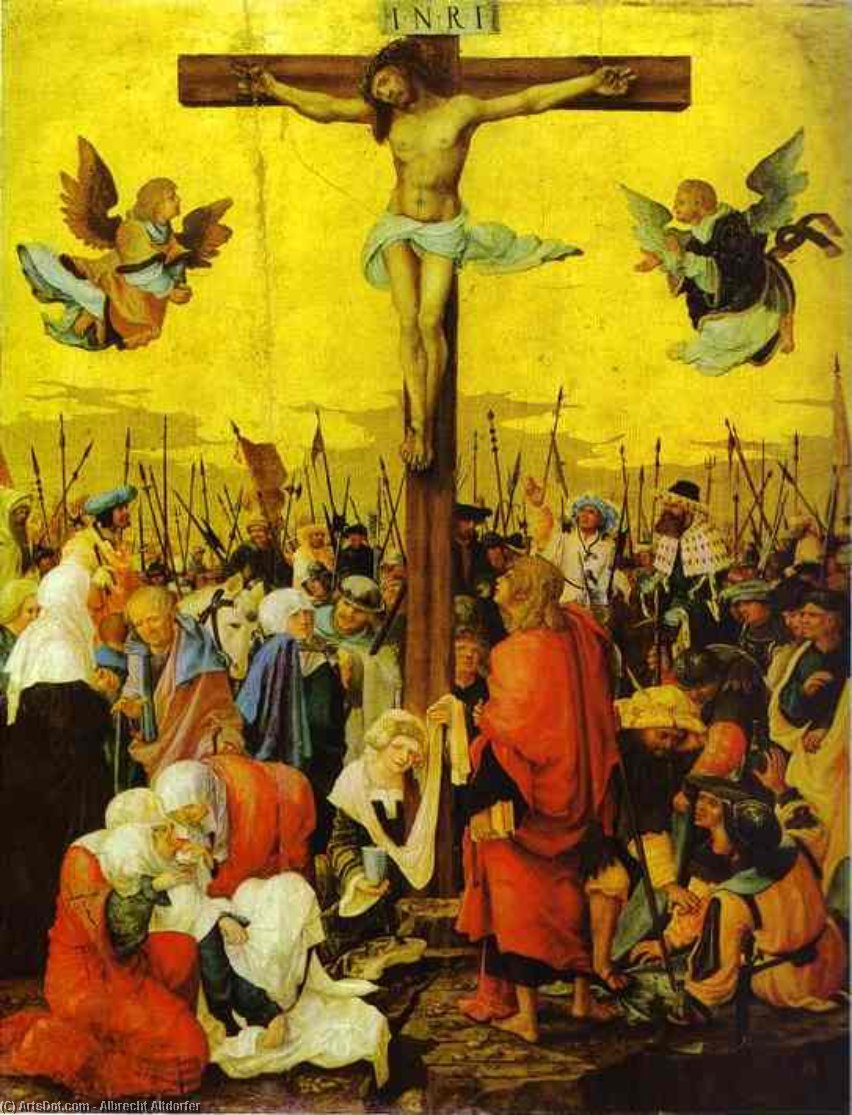
Crucifixion

- 29.0 x 21.0 cm


Albrecht Altdorfer's "Crucifixion" (1526) is a dramatic, evocative depiction of Christ’s suffering, showcasing the artist's pioneering landscape style and masterful use of color within the Northern Renaissance.
 Preberi več
Albrecht Altdorfer (1480-1538): Vodilna figura nemške renesanse in Danubske šole. Raziskujte njegove gravure, religiozne kompozicije ter inovativno slikarstvo krajine, vključno z znamenito bitko pri Issu.
Pridobite datoteko, pripravljeno za tiskanje, ki presega kakovost spletnega predogleda. Vsaka digitalna slika v naši ponudbi izvira iz visoko ločljive izvirne datoteke v naši bazi — običajno široke od 5.000 do 15.000 pikselov — zato lahko z zaupanjem tiskate v večji format, tesno izrezujete ali reproducirate fine podrobnosti.
Nobena datoteka ne zapusti našega studia nedotiknjena. Digitalni strokovnjak preveri barve v primerjavi z izvirno sliko in jih po potrebi popravi, nato pa s profesionalnimi orodji za retuširanje izboljša jasnost in podrobnosti — pri čemer vedno ostaja zvest umetnikovim potezam in slogu. Rezultat je slika, ki izgleda kot samo slikarstvo, ne pa kot le filtriran sken.
Potrditev pred dokončanjem dela: naš strokovnjak vam v roku 72 ur pošlje sliko po e-pošti na pregled. Niste zadovoljni? Zahtevajte izboljšave ali popravke ali prosite za povračilo denarja, če kakovost ni v skladu z pričakovanimi standardi.
To je kakovost, po kateri temeljijo založniki, oblikovalni studii, galerije in tiskarne.
Digitalna slika
Prenesite datoteko visoke ločljivosti za osebno uporabo, tiskanje in kreativne projekte. ( Preklop na tiskanine Kupite ročno slikano delo)
Vključeno v vsako naročilo digitalne slike
Zagotovljena strokovna digitalna dostava
Z izbiro TopImpressionists.com ne prejmete le slike – prejmete profesionalno urejeno digitalno umetniško delo, izdelano z največjo natančnostjo in zavestno podprto z garancijo za zadovoljstvo. Tukaj je vse, kar bo z vašim naročilom samodejno priloženo:

Hitra dostava prek e-pošte
Vaša digitalna slika visoke ločljivosti bo na vaš e-naslov poslana v roku 72 ur od zaklopa naročila – pripravljena za takojšnjo uporabo.

Digitalna datoteka z uporabo AI
Vaše umetniško delo je strokovno optimizirano z uporabo naprednih orodij umetne inteligence in ročne obdelave, kar zagotavlja največjo stopnjo podrobnosti, jasnosti in barvne natančnosti.

Brezplačna doletna ponovna dostava
Ste datoteko zaradi nespremietne napake izgubili ali izbrisali? Ni težav – vam jo bomo ponovno poslali kadar koli in brezplačno.

Brez uvoznih pristojbin – vedno
Svoje umetniško del uživajte takoj, brez carin, davkov ali stroškov dostave – digitalni prenosi so vedno brezdavčni.

Zagotovilo natančnosti barv
Z uporabo profesionalnih orodij in procesov upravljanja barv zagotavljamo, da vaša digitalna slika čim bolj natančno odraža prvotne barve.

100-dnevna garancija zadovoljstva
Če niste zadovoljni s svojo digitalno sliko, jo bomo uredili ali vam v 100 dneh povrnili 100% denarja – brez kakršnih koli vprašanj.

100% Garancija povračila denarja
Niste zadovoljni? Zagotavljamo vam popoln povračilo sredstev v 100 dneh po prejemu digitalne datoteke – brez dodatnih vprašanj.

Popusti pri večjih naročilih
Kupite 3 slike, prihranite 10% - Kupite 5 slik, prihranite 15% - Kupite 10+ slik, prihranite 20%. Odlično za kreativne projekte, galerije in agencije.
The Weight of Sorrow: Albrecht Altdorfer’s “Crucifixion”
Albrecht Altdorfer's "Crucifixion," painted in 1526, isn’t merely a depiction of a pivotal religious event; it’s a visceral experience. Emerging from the burgeoning German Renaissance, Altdorfer wasn’t simply replicating biblical narratives; he was forging a new visual language, one deeply rooted in the natural world yet imbued with profound spiritual intensity. This particular rendition transcends simple illustration, becoming a landscape saturated with grief and a haunting meditation on sacrifice. The painting immediately commands attention not through grand scale – it's remarkably intimate, measuring just 29 x 21 cm – but through its masterful manipulation of light, color, and composition to evoke an overwhelming sense of sorrow.
The scene unfolds against a dramatically rendered landscape—a brooding, almost primeval forest. The trees, rendered in thick, layered brushstrokes of deep greens, browns, and purples, seem to writhe with the weight of the event. This isn’t a picturesque vista; it's a wilderness imbued with an unsettling energy. Altdorfer deliberately eschews traditional depictions of serene backgrounds, instead presenting a landscape actively participating in the drama. The distant mountains, shrouded in mist and shadow, amplify the feeling of isolation and despair. Notice how the artist uses atmospheric perspective – lighter hues for objects further away – to create a sense of depth and distance, drawing the viewer’s eye into the heart of the scene.
A Pioneer of Landscape
Albrecht Altdorfer stands as a pivotal figure in art history, largely credited with establishing landscape painting as an independent artistic subject within Europe. Prior to his work, landscapes were typically relegated to mere backgrounds for religious or mythological scenes. However, Altdorfer recognized the power of the natural world to convey emotion and meaning. His meticulous observation of nature—evident in the detailed rendering of foliage, rocks, and atmospheric conditions—transformed the landscape from a passive backdrop into an active participant in the narrative. This shift was revolutionary, paving the way for later generations of landscape artists like Albert Bierstadt and Frederic Church.
His background as a town architect and council member further informs his artistic approach. Altdorfer possessed a keen eye for spatial relationships and a deep understanding of how to create a sense of harmony and balance within a composition. This skill is brilliantly demonstrated in “Crucifixion,” where the human figure—Jesus—is carefully positioned within the landscape, creating a dynamic interplay between the earthly realm and the divine.
Symbolism and Emotional Resonance
Beyond its technical brilliance, "Crucifixion" resonates deeply with viewers through its potent symbolism. The stark simplicity of Jesus’s pose – arms outstretched, head bowed – is profoundly moving. Altdorfer avoids any overtly dramatic or theatrical elements, opting instead for a quiet, understated portrayal of suffering. The figures surrounding the cross—angels and soldiers—are rendered in muted tones, emphasizing the central tragedy. Even the light itself seems to weep, casting long shadows across the landscape.
The choice of a dark, foreboding forest as the setting is particularly significant. Forests have historically been associated with death, mourning, and the unknown. In this context, it serves as a powerful metaphor for the spiritual darkness surrounding Jesus’s sacrifice. The painting isn't simply depicting an event; it’s exploring the profound emotional consequences of that event—the grief, despair, and sense of loss experienced by those who witnessed it.
A Timeless Masterpiece
“Crucifixion” is more than just a religious painting; it’s a testament to Altdorfer's artistic genius and his ability to capture the essence of human emotion. The meticulous detail, masterful use of color and light, and profound symbolism combine to create an unforgettable image that continues to resonate with viewers centuries after its creation. Reproductions, like this one, offer a remarkable opportunity to experience the power and beauty of this iconic work, bringing its haunting message into our own spaces.
Vprašanja in odgovori
Za kakšno vrsto umetniškega dela velja "Crucifixion" avtorja Albrecht Altdorfer?
"Crucifixion" is a WallArt piece.
Kaj ima "Crucifixion" skupnega z ostalo celotno tvorbino umetnika Albrecht Altdorfer?
"Crucifixion" z ostalimi deli Albrecht Altdorfer deli svoj German Renaissance Landscape slog in zastopljene teme: danube school landscape influence, medieval religious symbolism strong, early renaissance artistic trends, german cultural identity depicted, altdorfer's innovative landscape role.
Ali se delo "Crucifixion" nahaja v državi svojega ustvarjalca?
Ne – umetniško delo se nahaja v tujini. Rodna država umetnika Albrecht Altdorfer je Nemčija, original dela "Crucifixion" pa se nahaja v muzeju v državi Germany.
Biografija umetnika
Pionir Severnorenesančne Krajine
Albrecht Altdorfer, rojen okoli leta 1480 v Regensburgu, Nemčija, je ključna osebnost, ki povezuje pozno gotiko in razcvet nemške renesanse. Ni bil zgolj umetnik *svojega* časa; aktivno je preoblikoval njegovo umetniško smer, še posebej na področju krajinarstva. Iz družine z globokimi umetnostnimi koreninami – njegov oče, Ulrich Altdorfer, je bil slikar in miniaturist – se je mlajši Altdorfer hitro izkazal ne kot sledilec, temveč inovator. Regensburg, svobodno cesarsko mesto strateško umeščeno na reki Donavi, je zagotovil živahno kulturno ozadje za njegove formativne leta. Ta lokacija je globoko vplivala na njegovo umetniško občutljivost in spodbudila povezavo z naravnim svetom, ki bi postala osrednja tema njegovega opusa. Poleg umetnosti se je Altdorfer posvečal javnim dolžnostim, služil kot mestni arhitekt in član sveta – dokaz o njegovih vsestranskih talentih. Vendar pa je bila prav prek umetnosti – še posebej zgodnjih grafik in risb okoli leta 1506, kot sta *Stygmata svetega Frančiška* in *Sveti Jeremija* – prvič razkril edinstven umetniški glas, ki nakazuje na čustveno intenzivnost in natančnost, ki bi značilno zaznamovala njegov zrel slog.Šolska Družba Donave in Revolucionarna Vizija
Altdorfer je najbolj priznan kot vodilni član Šolske Družbe Donave (Donau Schule), vplivne skupine umetnikov, aktivnih v južni Nemčiji v zgodnjem 16. stoletju. Ta umetniški krog je delila skupna fascinacija z raziskovanjem ekspresivnega potenciala krajine in jo povzdignila iz samega ozadja v osrednjo temo. Pred Altdorferjem so krajine predvsem služile kot prizorišča za verske ali zgodovinske pripovedi; upal je prikazati naravo *sama po sebi*, prežeto z vzdušjem in čustvenim odmevom. Transformacijsko potovanje po reki Donavi in v Alpe okoli leta 1511 se je izkazalo za ključno za njegov umetniški razvoj. Dramatični razgledi, goste goščave in impozantne gore so prižgale strast do prikazovanja narave z neprimerljivo natančnostjo in občutkom. Postal je morda prvi moderni slikar krajine, ki ni preprosto prepisoval tega, kar je videl, temveč sporočal čustven odziv – občutek strahu, skrivnosti in celo duhovne povezanosti. To ni bila samo topografska natančnost; šlo je za ujetje *doživetja* bivanja v krajini. Njegovo delo, kot na primer “Velika smreka”, ponazarja to spremembo in ponuja miren in podroben prikaz lepote narave.Mojstrovine in Umetnostni Vplivi
Čez celotno kariero je Altdorfer ustvaril raznoliko delo, ki obsega slike, gravure, risbe in arhitektonske zasnove. Med njegovimi najbolj znanimi dosežki je *Bitka pri Issu* (1529), naročena s strani vojvode Vilijema IV Bavarskega. Ta monumentalna slika prikazuje ne le njegovo mojstrstvo kompozicije in podrobnosti, temveč tudi inovativno uporabo krajine za poudarjanje dramatične napetosti bitke. Vrtinčaste oblake, ostre gore in kaotičen boj vojakov ustvarjajo občutek pretirane energije in spektakla. Njegovo sodelovanje z cesarjem Maksimilijanom I v Innsbrucku leta 1513 je dodatno razširilo njegove umetniške obzorja in mu ponudilo priložnosti za projekte velikega obsega. Altdorferjev slog se ni oblikoval v izolaciji; absorbiral je vplive iz različnih virov. Liričnost Giorgiona, ekspresivne figure Lucasa Cranacha Starejšega in natančnost Alberta Dürerja so pustili svoj pečat na njegovem delu. Vendar pa je te vplive sintetiziral v edinstveno osebno vizijo, za katero sta značilna čustvena intenzivnost, dramatična osvetlitev in sugestivne krajine. Njegove gravure, kot na primer “Venera po kopeli”, dokazujejo njegovo spretnost v tem mediju in prikazujejo nežne linije in zapletene podrobnosti.Zapuščina in Trajni Vpliv
Umetniška zapuščina Albrechta Altdorferja sega daleč onkraj 55 panelov, 120 risb in številnih grafik, ki jih je ustvaril med svojim življenjem. Temeljito je spremenil način, kako so umetniki pristopili k krajinarstvu, utirajo pot prihodnjim generacijam za raziskovanje njenih ekspresivnih možnosti. Njegov vpliv je mogoče opaziti v delih poznejših nemških romantičnih slikarjev, ki so prav tako iskali ujetje vzvišene lepote in čustvene moči narave. Danes so Altdorferjeva dela zastopana v pomembnih muzejskih zbirkah po vsem svetu, vključno z Museum Ostdeutsche Galerie v Nemčiji – kjer je shranjena njegova *Madonna (Čudovita Marija iz Regensburga)* – in Kunstsammlungen und Museen Augsburg v Avstriji. Njegov inovativni duh, tehnična spretnost in globoka povezanost z naravnim svetom še naprej navdihujeta umetnike in očarajo občinstvo stoletja po njegovi smrti leta 1538. Ostaja pomembna osebnost nemške renesanse, pravi pionir, ki si je upal videti krajino ne samo kot kuliso, temveč kot močno silo, sposobno izzvati globoka čustva in duhovni pomen. Njegovo delo je dokaz trajne moči umetnosti za preoblikovanje našega dojemanja sveta okoli nas – zapuščina, ki še naprej odmeva pri gledalcih danes.Raziskovanje Raznolikih Del Altdorferja
Poleg svojih ikoničnih krajin in bitk je Altdorferjev umetniški obseg zajemal verske teme, mitološke pripovedi in celo arhitektonske zasnove. Njegovi prikazi biblijskih zgodb, kot na primer “Abrahamska žrtev”, so prežeti z dramatično intenzivnostjo in čustveno globino, ki jih ločijo od prejšnjih interpretacij. Ni samo ilustriral Svetega pisma; raziskoval je človeško stanje skozi prizmo vere.- Gravure: Altdorferjeve gravure, kot na primer “Mucius Scaevola žge svojo roko”, dokazujejo njegovo mojstrstvo linije in podrobnosti, pogosto sporočajo občutek gibanja in drame.
- Risbe: Njegove risbe ponujajo intimne vpoglede v njegov ustvarjalni proces in razkrivajo njegovo natančno opazovanje ter ekspresivno uporabo senčenja.
- Arhitektonske zasnove: Kot mestni arhitekt Regensburga je Altdorfer prispeval k utrdbam mesta in urbanemu načrtovanju, kar prikazuje njegove praktične pa tudi umetniške talente.

Albrecht Altdorfer
1480 - 1538 , Nemčija
Ključne informacije
- Datum Rojstva: okoli 1480
- Datum Smrti: 1538
- Državljanstvo: Nemec
- Kraj Rojstva: Regensburg, Nemčija
- Polno Ime: Albrecht Altdorfer
- Pomembna Dela:
- Bitka pri Issu
- Velika smreka
- Sv. Jurij in zmaj
- Umetniki Pod Vplivom: ['Nemški romantični slikarji']
- Umetniški Smer: Danubska šola, Renesansa
- Vplivi Umetnikov:
- Giorgione
- Lucas Cranach Starejši
- Albrecht Dürer