


 Preverite v realnem okolju
 Pošlji kot čestitko
 Deli
Deli
 Podrobnosti
 Priročnik

 Prenesi
 Podobni artefakti
 Rentgenski posnetek
 Predvajaj diaporama
 Statistika
James Duff iz Corsindae


Živo portret Jamesa Duffa iz Corsindaeja od Cosma Alexandra iz leta 1760 – izjemna umetniška dela škotske nacionalne galerije. Podroben prikaz aristokratskega lika v času Jakobitskega ustroga.
 Preberi več
A classical realism portraitist and teacher of Gilbert Stuart. Discover the legacy of his historic American colonial works today.
Giclée tisk / Umetniški tisk
Giclée ali platnati odtis muzejske kakovosti z hitro proizvodnjo in prilagodljivimi možnostmi končne obdelave. ( Naročite ročno slikano reprodukcijo Preklop na digitalno sliko)




P118B €10

P118H €10

P118W €10

P438Z €10

P508JH €12

P508YH €12

P805H €10

P805Z €10

P919BZ €10

P919G €10

P919XJ €10

P959ZH €10

P968JZ €12

W106C €8

W218G €10

W218JH €8

W218Y €10

W307PJ €10

W316G €10

W316PJ €8

W316Y €10

W398PJ €8

W4111J €10

W500HY €15

W500JH €15

W692G €12

W849H €8

W940BG €15

W953PJ €8




Standardna velikost
po meri
CM
INCH
Izberite eno od naših vnaprej določenih velikosti, ki ustrezajo prvotnim proporcijam umetničkega dela.
Loading sizes...

širina
višina
Vnesite širino in višino, ki jih potrebujete za svoj okvir ali steno. Tiskanje se lahko le odreže, vendar ga ni mogoče narediti večjega od slike, zato format z drugačno obliko pomeni izgubo dela slike. Pred tiskanjem vam pošljemo digitalni predogled za potrditev. Slika, prikazana na tej strani, ne prikazuje dejanskega izrezkov — le predogled to omogoča.
Globalna dostava () v 2 tednih namesto standardnih 4/5 tednov. (23 oktober)

Brezplačna ekspresna dostava po vsem svetu

Visokokakovostno laneno platno

Popolno zavarovanje pošiljke

Garancija povračila carine in uvoznih davkov

Garancija popolnega barvnega ujemanja

Politika vračila v 100 dneh (le v primeru okvar)

Garancija 100% povračila denarja

Popust pri večjem naročilu
 Možnost stekla je na voljo le za velikosti pod 110 cm

James Duff iz Corsindae
Giclée tisk / Umetniški tisk
Velikost reprodukcije
-


Skupna cena
€ 61
James Duff of Corsindae: A Portrait Steeped in Scottish Tradition
- Subject Matter: Cosmo Alexander’s “James Duff of Corsindae” depicts James Duff, a prominent Scottish landowner and diplomat. The portrait captures him in a dignified pose, gazing directly at the viewer – a gesture intended to convey confidence and sincerity. This deliberate gaze establishes an intimate connection between subject and observer, inviting contemplation on Duff's character and status.
- Style: Alexander’s style aligns with the prevailing Neoclassical tradition of his time. Characterized by clarity of form, balanced composition, and restrained ornamentation, it reflects the intellectual fervor of the Enlightenment era. Unlike the exuberant Baroque style that preceded it, Neoclassicism prioritized reason and order, mirroring ideals championed by philosophers like Voltaire and Rousseau.
- Technique: The painting utilizes oil paint on canvas—a technique favored for its ability to achieve luminous colors and subtle tonal gradations. Alexander meticulously rendered Duff’s clothing and facial features with painstaking detail, demonstrating mastery of chiaroscuro – the dramatic interplay between light and shadow – which enhances the portrait's realism and contributes to its emotional depth.
- Historical Context: Created in 1760, “James Duff of Corsindae” reflects Scotland’s burgeoning role within the British Empire during the Georgian period. James Duff was a significant figure in Scottish diplomacy, serving as Ambassador to Portugal and advocating for Scottish interests abroad. The portrait commemorates his accomplishments and symbolizes the ambition and prestige associated with aristocratic lineage.
- Symbolism: Beyond its depiction of an individual, the painting embodies broader symbolic values prevalent during the Enlightenment. Duff’s gaze directs attention outwards, suggesting a focus on duty and responsibility – qualities admired in leaders and statesmen. The muted palette—primarily blues and browns—evokes tranquility and seriousness, reinforcing the portrait's solemn tone.
Displayed prominently at the Scottish National Gallery in Edinburgh, this reproduction offers an exceptional opportunity to appreciate Cosmo Alexander’s artistic prowess and immerse oneself in the cultural landscape of 18th-century Scotland. Its meticulous execution captures not only Duff’s physical appearance but also his inner spirit—a testament to Alexander's ability to translate intellectual ideals into visual beauty.
Vprašanja in odgovori
Kaj prikazuje "James Duff iz Corsindae" avtorja Cosmo Alexander in kakšen vzdušje prizadeva?
"James Duff iz Corsindae" avtorja Cosmo Alexander prikazuje scottish_portraiture, 18th_century_painting, military_officer, horseman, formal_dress, nobleman, classical_composition v Romantično vzdušju. Motiv in atmosfera skupaj opisujeta delo.
Kdaj je nastalo in kateri slog predstavlja "James Duff iz Corsindae" avtorja Cosmo Alexander?
"James Duff iz Corsindae" avtorja Cosmo Alexander datira v 1760 in pripada obdobju Baroque realism.
Ali je na voljo diaporama za "James Duff iz Corsindae" avtorja Cosmo Alexander?
Diaporama dela "James Duff iz Corsindae" si lahko ogledate na strani Diaporama za to umetniško delo.
Sorodna umetniška dela


Biografija umetnika
A Legacy of Portraiture and Pedagogy
The story of Cosmo Alexander is one of wandering brilliance and the profound influence of a master upon his pupil. Born in Scotland to the noted portrait painter John Alexander, Cosmo was destined for a life steeped in the traditions of fine art. Before his journey took him across the Atlantic, he refined his eye through extensive travels across Europe, documenting his presence in Italy between 1745 and 1751, including time in Rome. His artistic development continued in Holland, where he achieved professional recognition by joining the painters' guild at The Hague. These formative years in the great art centers of Europe provided him with a sophisticated foundation in classical techniques that would later define his work in the American colonies.
Though Alexander often referred to himself as a history painter, his enduring legacy resides in his mastery of the portrait. His style, which aligns closely with the Classical Realism later championed by John Singleton Copley, captured the essence of the Scottish community and the colonial elite with remarkable precision. As he moved through the American landscape between 1766 and 1772, his brush followed a path of significant historical importance. From the bustling streets of Philadelphia to the coastal elegance of Newport, Rhode Island, and even as far south as Charleston, South Carolina, Alexander sought to capture the likenesses of a burgeoning nation through a lens of European refinement.
The Teacher of a Master
Perhaps the most significant chapter in Alexander’s life was his role as a mentor. In Newport, Rhode Island, he encountered a young Gilbert Stuart, a meeting that would alter the course of American art history forever. Recognizing the potential in the fourteen-year-old, Alexander took Stuart on as an apprentice. This relationship was more than a mere professional arrangement; it was a passing of the torch from the Old World traditions to the New. The two traveled together through the colonies, eventually returning to Edinburgh in 1771, where the bond between master and student remained unbroken until Alexander’s sudden death.
Alexander's life was marked by both artistic triumph and personal hardship. Driven by financial debts that had forced him to leave London, he arrived in America with the hope of rebuilding his fortune through his craft. While his travels were frequent—visiting New York City, Boston, and Williamsburg—his ability to secure patrons remained a testament to his skill. In Burlington, New Jersey, he even resided within the governor's mansion, utilizing such high-profile connections to find sitters for his portraits. Though his life was cut short in Edinburgh, the impact of his work remains visible in the collections of prestigious institutions today.
- Key Artistic Contributions: Known for over twenty-five identified American portraits that showcase his skill in portraiture and historical genre painting.
- Notable Mentorship: Served as the primary teacher and mentor to the legendary American artist Gilbert Stuart.
- Geographic Reach: His career spanned Scotland, Italy, Holland, England, and various American colonies including New York, Pennsylvania, and Rhode Island.

Cosmo Alexander
1724 - 1772
Sorodni članki
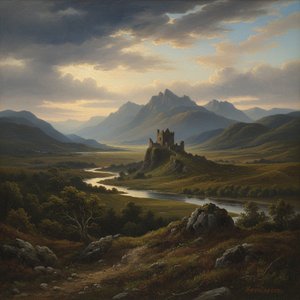
Alexander Nasmyth: Picturing Scotland's Romantic Landscape – Innovation & Identity
Explore the life & art of Alexander Nasmyth, a pivotal figure in Scottish Romantic landscape painting. Discover his iconic works, including portraits of Robert Burns, and learn about his lasting influence on national identity. Fine art reproductions available.

Romantic Realism's Finest: 10 Masterpieces for Your Home | TopImpressionists
Explore 10 defining masterpieces of Romantic Realism! Discover Courbet, Millet & Daumier's powerful paintings—capturing emotion and social realities. Find museum-quality reproductions for your home at TopImpressionists.com.

The Equine Muse: A Historical & Artistic Exploration of Horses in Painting
Explore the captivating history of horses in painting! Discover Renaissance masterpieces, Baroque grandeur & expert insights for collecting equestrian art. Learn about symbolism, techniques & lasting value with TopImpressionists.

The Noble Steed on Canvas: A Historical & Artistic Exploration of Horse Painting Across Cultures
Explore the rich history of horse painting! Discover masterpieces from Stubbs to Munnings & learn about symbolism, techniques & artists. Find museum-quality reproductions at TopImpressionists.

George Stubbs: Anatomical Precision & Romantic Vision in 18th-Century British Art
Explore the captivating world of George Stubbs, the 18th-century master renowned for his anatomical precision & Romantic animal paintings. Discover his legacy and investment potential.
Raziščite umetniška dela, razvrščena po temah, slogih in značilnostih.
