

 Pošlji
 Deli
Deli
 Podrobnosti o delu
 Priročnik

 Prenesi sliko
 Podobni izdelki
 Predvajaj diaporama
 Q&A
Q&A Statistika
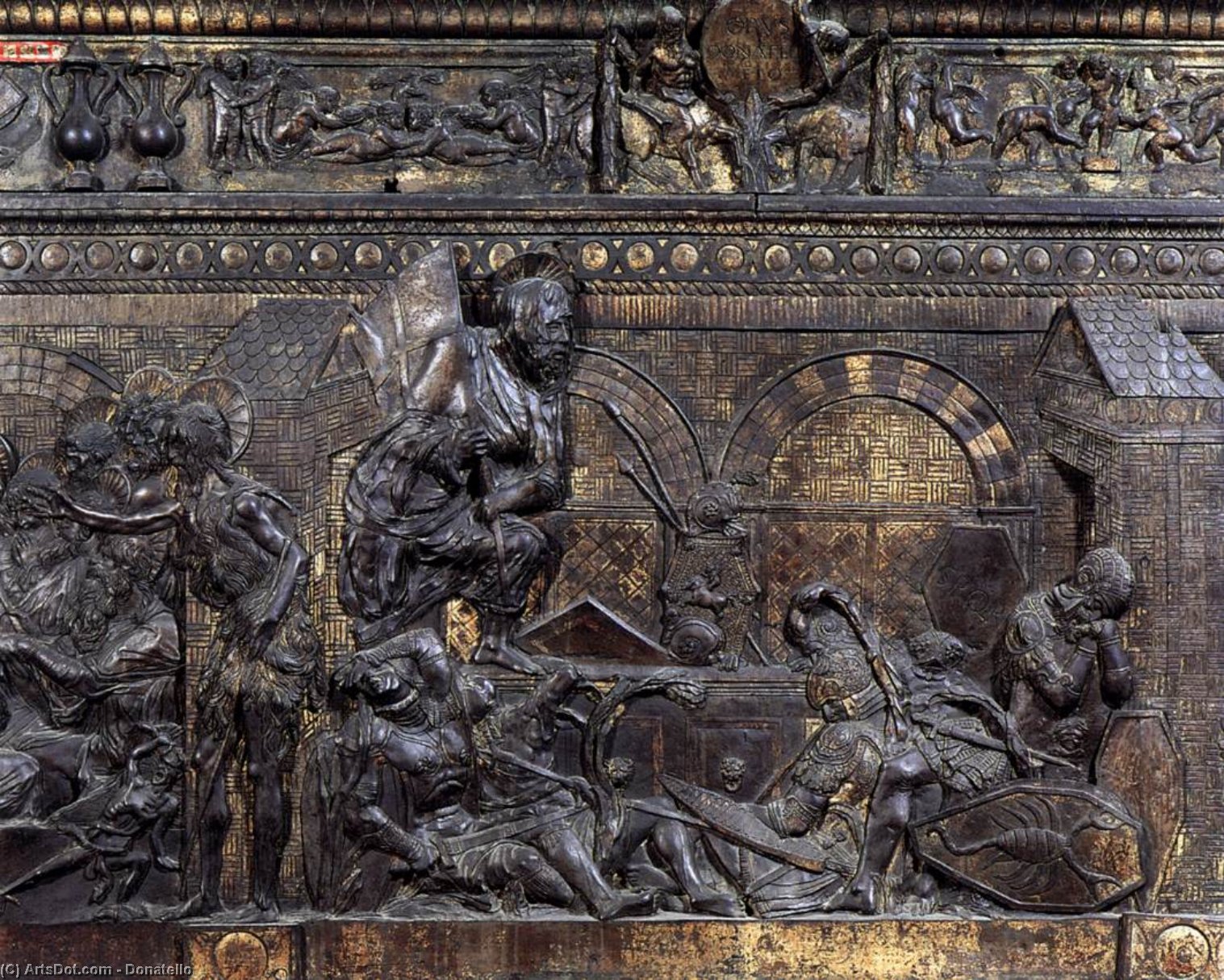
Christ before Pilate and Caiaphas


Explore Donatello's masterpiece, 'Christ before Pilate and Caiaphas,' a monumental bronze sculpture depicting Jesus’s trial before Roman authorities and Jewish leaders—a pivotal moment in Christian history.
 Preberi več
Donatello (1386-1466): Florentinski kipar zgodnje renesančne dobe. Pionir svobodno stojočih 닮nudih skulptur, kot je »David«, znan po ekspresivnem realizmu, klasičnem vplivu in inovativnih tehnikah. Raziskujte njegova vrhunska dela.
Giclée tisk / Umetniški tisk
Giclée ali platnati odtis muzejske kakovosti z hitro proizvodnjo in prilagodljivimi možnostmi končne obdelave. ( Kupite ročno slikano delo Preklop na digitalno sliko)




































Standardna velikost
po meri
CM
INCH
Izberite eno od naših vnaprej določenih velikosti, ki ustrezajo prvotnim proporcijam umetničkega dela.
Loading sizes...

širina
višina
Vnesite širino in višino, ki jih potrebujete za svoj okvir ali steno. Tiskanje se lahko le odreže, vendar ga ni mogoče narediti večjega od slike, zato format z drugačno obliko pomeni izgubo dela slike. Pred tiskanjem vam pošljemo digitalni predogled za potrditev. Slika, prikazana na tej strani, ne prikazuje dejanskega izrezka — le predogled to omogoča.
Globalna dostava () v 2 tednih namesto standardnih 4/5 tednov. (29 oktober)

Brezplačna ekspresna dostava po vsem svetu

Visokokakovostno laneno platno

Popolno zavarovanje pošiljke

Garancija povračila carine in uvoznih davkov

Garancija popolnega barvnega ujemanja

100-dnevna politika vračil (le v primeru okvar)

Garancija 100% povračila denarja

Popust pri večjem naročilu
 Možnost stekla je na voljo le za velikosti pod 110 cm

Christ before Pilate and Caiaphas
Giclée tisk / Umetniški tisk
Velikost reprodukcije
-


Skupna cena
€ 61
Donatello’s ‘Christ Before Pilate and Caiaphas’: A Crucible of Renaissance Emotion
Donatello's 1460 bronze sculpture, “Christ Before Pilate and Caiaphas,” stands as a monumental achievement within the burgeoning artistic landscape of the Italian Renaissance. Housed in the San Lorenzo museum in Florence, this work transcends mere biblical representation; it’s a visceral exploration of human drama, political intrigue, and spiritual torment – a testament to Donatello's revolutionary approach to sculpture that profoundly shaped the course of Western art. The sheer density of figures, meticulously rendered in warm bronze tones, immediately draws the viewer into the heart of the scene: Christ, positioned at the apex of the composition, confronts the Roman governor and the Jewish high priest, their faces etched with a potent blend of authority, doubt, and perhaps even veiled judgment.
- A Masterclass in Renaissance Realism: Donatello’s genius lies not just in his technical skill but in his ability to imbue stone – or in this case, bronze – with palpable emotion. The figures are not idealized abstractions; they possess a raw humanity, evident in the strained expressions and subtly shifting postures that convey the weight of the moment.
- The Power of Bronze Casting: The sculpture’s creation involved the complex process of bronze casting, a technique perfected by Donatello himself. This method, utilizing molds and molten metal, allowed for incredible detail – from the folds of Christ's garment to the stern features of Pilate – while simultaneously lending the piece an inherent sense of age and gravitas.
Historical Context and Symbolism
Created during a period of intense religious and political upheaval, “Christ Before Pilate and Caiaphas” reflects the anxieties and tensions of its time. The Renaissance was witnessing a renewed interest in classical antiquity, yet simultaneously grappling with the profound questions posed by Christianity. Donatello’s depiction of Christ is deliberately ambiguous, refusing to offer easy answers or simplistic moral judgments. The scene isn't merely a historical record; it’s an allegory for human fallibility and the struggle between good and evil. The inclusion of Roman soldiers and Jewish leaders underscores the political context of Christ’s trial – a microcosm of power struggles and accusations.
- Pilate’s Hesitation: Pilate's posture, often interpreted as one of reluctant compromise, is particularly compelling. His hands are clasped in a gesture of uncertainty, suggesting the moral dilemma he faced.
- Caiaphas’s Sternness: Conversely, Caiaphas embodies unwavering authority and religious zeal, his gaze fixed upon Christ with an expression of resolute condemnation.
Technique and Materiality
Donatello's mastery is immediately apparent in the sculpture’s surface treatment. The bronze has been skillfully patinated to achieve a rich, aged appearance, enhancing the sense of history and lending a tactile quality to the work. The artist employed strong lines to define the figures and their drapery, while finer details – such as the expressions on Christ's face and the folds in Pilate’s toga – are rendered with remarkable precision. The use of light and shadow further emphasizes the three-dimensionality of the sculpture, creating a dramatic effect that draws the viewer into the scene. The choice of bronze itself was significant; it was a material associated with strength, durability, and divine authority, perfectly suited to represent this pivotal moment in Christian history.
A Legacy of Innovation
"Christ Before Pilate and Caiaphas" is more than just a beautiful sculpture; it’s a cornerstone of Renaissance art. Donatello's innovative approach – his emphasis on realism, emotional expression, and the exploration of complex human themes – paved the way for generations of artists to come. Its influence can be seen in countless subsequent works, solidifying its place as one of the most important sculptures of the era. A hand-painted reproduction offers a remarkable opportunity to experience this masterpiece firsthand, bringing its power and beauty into your own space.
Vprašanja in odgovori
Na katero državo izvira Renaissance Sculpture dela "Christ before Pilate and Caiaphas"?
Del v slogu Renaissance Sculpture, "Christ before Pilate and Caiaphas", je ustvaril umetnik, rojen v državi Italija.
Kje se "Christ before Pilate and Caiaphas" uvršča v celotno stvar umetnika Donatello?
"Christ before Pilate and Caiaphas" pripada Renaissance Sculpture obdobju v ustvarjalnosti umetnika Donatello, katerega značilne teme vključujejo classical antiquity, human emotion, religious judgment, florentine patronage, sculptural innovation.
Ali je "Christ before Pilate and Caiaphas" avtorja Donatello svetlo ali temno umetniško delo?
V smislu zaznane svetlobnosti je "Christ before Pilate and Caiaphas" avtorja Donatello shadow.
Biografija umetnika
zgodno zgodna mladost in začetki kariere
Donato di Niccolò di Betto Bardi, v zgodovini umetnosti bolj znan kot Donatello, se je rodil v Firenci v Italiji okoli leta 1386. Njegovo globoko zanimanje za klasično kiparstvo je močno oblikovalo njegov razvoj sloga zgodnje renesanse, saj je s svojo inovativno pristopom k umetnosti in kulturi postavil temelje, ki so postali nedeljenljiv znak florentinske renesanse.ključna dela in inovacije
Donatellovo najslavnejše delo, David, je predstavljalo prvo svobodno stoječo moško golič skulpturo od dob antičnosti. To delo, ki ga je naročila plemenita družina Medici, je s svojo tehnično dovršenostjo in inovativno estetiko razkazalo njegovo izjemno umetniško znanje. Poleg tega so v njegovem bogatem izročilu izpostavljena še druga znamenita dela:- Sveti Louis iz Toulousea (zdaj v muzeju bazilike Santa Croce), ki vključuje klasičen okvir, ki ga je zasnoval sam Donatello.
- Žrtvovanje Isaka, ustvarjeno za zvonik cerkve Santa Maria del Fiore v Firenci, ki s svojo močno portretno natančnostjo navdušuje gledalca.
- Križ (1425) za Santa Croce, ki prikazuje Krista v trenutku neizmerne bolečine in agonije.
umetnični slog in dediščina
Donatellov umetniški razvoj lahko razdelimo na širše faze, ki se začnejo z razvojem izrazljivosti in klasične monumentalnosti. Čeprav njegovo del v skupnosti sprva ni bilo takoj sprejeto, je sčasoma postalo izjemno priljubljeno ter močno vplivalo na druge italijanske dvore in evropske umetnike. ključni umetniški pogreti:osebno življenje in delovni slog
Donatello je bil poznan po svoji prijaznosti in ljubimosti med ljudmi, vendar pa je bil v poslovnih vidikih svoje kariere precej manj usposobljen. Pogosto se je zgodilo, da je sprejel več naročil, kot jih je zmožnost obdelati, zaradi česa so bila dela pogosto zaključena zamudno ali pa jih je prepustil drugim kiparjem. značitna umetniška dela in umetniki:- Leonardo da Vinci: Objemljanje (detajl)
- Amico Aspertini: Statua Pana / Lev, ki grize konja
- Michelangelo Buonarroti: Tondo Pitt
muzeji in umetniške zbirke:
- Museo della Collegiata (Empoli, Italija): skriti dragulj renesanse, ki v svoji zbirki vsebuje dela Francesco Botticinija in Raffaella Botticinija.
- gibanje zgodnje italijanske renesančne umetnosti

Donatello
1386 - 1466 , Italija
Hitri podatki
- Artistic Movement Or Style: Early Renaissance
- Artists Or Movements Influenced By This Artist:
- Italian Renaissance
- Early Renaissance
- Florentine Renaissance
- Artists Who Influenced This Artist: ['Classical sculpture']
- Date Of Birth: okoli 1386
- Date Of Death: 1466
- Full Name: Donatello di Niccolò
- Nationality: italijanski
- Notable Artworks:
- David
- Sveti Louis iz Tuluze
- Žrtvovanje Isaka
- Križ
- Place Of Birth: Firene, Italija
Sorodni članki

The Enduring Form: Sculpture Across History, Technique & Emotional Resonance
Explore the rich history of sculpture with TopImpressionists. Discover key techniques, influential artists & investment potential for discerning collectors. Expert insights into valuing and collecting timeless masterpieces.

Bronze Sculptures That Defined Art History | TopImpressionists
Journey through art history with our Top 10 bronze sculptures! Explore masterpieces by Rodin, Michelangelo & more. Discover stories behind iconic statues and find museum-quality reproductions for your home decor at TopImpressionists.com.

Trajna Dedščina Bronaste Skulpture: Zgodovina, Tehnike in Sodobne Interpretacije
Odkrijte bogato zgodovino bronaste skulpture, tehniko izgubljenega voska in sodobne interpretacije. Strokovni vpogledi za zbiratelje in ljubitelje umetnosti. Kvalitetna analiza, restavracija in vrednotenje.

The Enduring Form: Exploring Themes & Techniques in Sculpture Across Historical Periods
Explore the rich history of sculpture from ancient masterpieces to contemporary innovations. Discover key techniques, influential artists & investment potential for discerning art collectors.

Bronze Age to Modern Masters: 10 Sculptures That Redefined Art | TopImpressionists
Journey through art history with 10 legendary bronze sculptures – from Michelangelo's David to Rodin’s Thinker. Explore the stories, techniques & timeless beauty of these masterpieces. Find museum-quality reproductions & elevate your home decor on TopImpressionists.com.