

Prikazano: · Vključno z okvirjem:
 Predogled v realnem okolju
 Pošlji
 Deli
Deli
 Podrobnosti o delu
 Priročnik

 Prenesi sliko
 Podobni izdelki
 Rentgenski posnetek
 Predvajaj diaporama
 Vprašanja in odgovori
 Statistika
- 51.0 x 41.0 cm


€ 240
Ročno izdelana oljna reprodukcija
Ročno slikano olje na platnu v vaši izbiri velikosti in okvirja, izdelano po naročilu naših umetnikov. ( Preklop na tiskanine Preklop na digitalno sliko)
To umetniško delo je zaščiteno z avtorskimi pravicami
Umetniška dela, prikazana na tej strani, so zaščitena z avtorskimi pravicami, kar pomeni, da po zakonu ne moremo ustvarjati ali prodajati identičnih reprodukcij. Ta zaščita se izvaja v skladu z mednarodnimi sporazumi, kot so Bernska konvencija in po nacionalnih zakonih, vključno s tistimi, ki jih določa Zakon o avtorskih pravicah ZDA – naslov 17.
Kot spoštljiva in zakonita alternativa ponujamo prilagojena, ročno slikana umetniška dela, navzornena na original. Naši sposobni in profesionalni umetniki skrbno preučijo stil, vzdušje in umetniško bistvo originala, da ustvarijo novo, edinstveno delo, ki vzbudi enak občutek – pri čemer ostaja popolnoma nova, samostojna izvirna stvar.
Ta način v celoti upošteva zakonodajo o avtorskih pravicah, saj ne vključuje kopiranja ali podvajanja zaščitenga umetniškega dela. Namesto tega gre za kreativno preinterpretacijo – novo sliko, ki je navdihnjen rezultat originala, vendar ni z njim identična.
 Preberi več
Velikost
·Standardna velikost
po meri
CM
INCH
Izberite eno od naših vnaprej določenih velikosti, ki ustrezajo prvotnim proporcijam umetničkega dela.
Nalagovanje velikosti...

širina
višina
Vnesite širino in višino, ki jih potrebujete, da se slika prilega vašemu okviru ali steni. Ker je delo ročno slikano, lahko umetnik pri različnih oblikih slik pri robovih doda malo več barve ali pa jih malo odreže — izberite sami. Pred začetkom slikanja vam pošljemo digitalni predogled za potrditev. Slika, prikazana na tej strani, ni končni rezultat — le predogled prikazuje dejansko podobo.
Zaključek
·
Beli rob €1

zamegljen rob €1

Razširjen rob €1

P118B €10

P118H €10

P118W €10

P438Z €10

P508JH €12

P508YH €12

P805H €10

P805Z €10

P919BZ €10

P919G €10

P919XJ €10

P959ZH €10

P968JZ €12

W106C €8

W218G €10

W218JH €8

W218Y €10

W307PJ €10

W316G €10

W316PJ €8

W316Y €10

W398PJ €8

W4111J €10

W500HY €15

W500JH €15

W692G €12

W849H €8

W940BG €15

W953PJ €8

H24-GOLD €30

H24-SILVER €30

H36-GOLD €45

H36-SILVER €45
Pošiljanje v zaščitni tubi, pripravljeno za vaš lastni okvir.
Nad 105 cm se okvir pošlje v obliki kompleta za profesionalnega okvirja — preberite podrobnosti.
Dodatne storitve
po izbogiKaj vse vključujejo dodatki?
Primeri sprememb, ki jih je mogoče izvesti: zamenjava obraza s fotografijo stranke; dodajanje hišnega ljubljenčka (npr. zamenjava mačke s psom); vključitev skritega sporočila v ozadje; sprememba krajine ali elementov v ozadju.
Po oddaji naročila bo ekipa TopImpressionists.com stranki po e-pošti poslala navodila in zagotovila predogled makete
Po oddaji naročila bo ekipa TopImpressionists.com stranki po e-pošti poslala navodila in zagotovila predogled makete
Mednarodna dostava () v 3/4 tednih namesto običajnih 5 tednov. (8 november). Brez kompromisov pri kakovosti.
Zaščitni lak
Značka z imenom
Podrobnosti o gravirani bronasti plošči
This elegant plaque features the artist's name and the title of the artwork, finely engraved for a timeless presentation.
It is made from bronze with a refined, elegant finish. The text is precisely laser-engraved for a sharp and permanent result. Measuring 9x2 cm, the plaque is compact yet easy to read. It's built to be durable and scratch-resistant, offering a professional, museum-quality look. Mounting is simple thanks to the included adhesive backing.
Podrobnosti o transparentni akrilni plošči
The plaque includes essential engraved details such as the artist's name, the title of the artwork, the date it was created, the type of media used-like oil on canvas or watercolor-a brief description of the piece, and a QR code that links to the complete artwork information.
It is crafted from clear acrylic, offering a sleek, modern appearance. The text is UV-engraved in black to ensure strong visual contrast. With a size of 10x15 cm, it ensures optimal readability. It comes equipped with two metal hooks for secure wall mounting. The plaque is designed to be weather-resistant, making it suitable for various environments, and it includes interactive features that work seamlessly with smartphone scanning.
Podrobnosti o črni akrilni plošči
This elegant plaque includes engraved information such as the artist's name, the title of the artwork, the date it was created, the type of media used (like oil on canvas or watercolor), a short description of the artwork, and a QR code for quick access to more information.
The plaque itself is made from refined black acrylic with a premium finish. The text is laser-engraved in white for high contrast and readability. Its size is 10x15 cm, designed to be easy to read. It comes with two metal hooks for professional mounting. The design is sleek and fits any interior style. It is also weather-resistant and durable, with built-in digital integration for mobile compatibility.
Možnost stekla je na voljo le za velikosti pod 110 cm
 Možnost stekla je na voljo le za velikosti pod 110 cm
- Brezplačna ekspresna dostava po vsem svetu
- Visokokakovostno laneno platno
- Popolno zavarovanje pošiljke
- Garancija povračila carine in uvoznih davkov
- Garancija popolnega barvnega ujemanja
- 100-dnevna politika vračil (le v primeru okvar)
- Garancija 100% povračila denarja
- Popust pri večjem naročilu


Opis zbirateljskega predmeta
Edward Hopper's 'Self-Portrait' (1903) captures the artist’s introspective gaze and embodies his signature style of quiet American realism. Explore this iconic work reflecting solitude and modern life.
Biografija umetnika
Edward Hopper: Ameriški slikar znan po svoji spretnosti pri zajemanju osamljenosti in urbanskega življenja skozi svoje ikonične slike kot Nighthawks ter njegovo jedrarno umetnost. Raziskoval je teme izolacije, nostalgije za prejšnjim časom.
O sliki
The Quiet Intensity of Observation
Edward Hopper's 1903 “Self-Portrait” isn’t a flamboyant declaration of ego, but rather a profoundly intimate glimpse into the artist’s soul. Rendered in oil on canvas with a deliberate simplicity that belies its emotional depth, this work immediately draws the viewer into a space of quiet contemplation. The stark black background serves not as mere absence, but as an active participant, amplifying the subject's presence and intensifying the sense of isolation—a hallmark of Hopper’s mature style. The photograph depicts a man with a thoughtful expression, his dark hair neatly combed, a brown beard and mustache framing a face etched with a subtle melancholy. He wears a tie, suggesting a professional life, yet there’s an undeniable air of detachment, as if observing the world rather than actively participating in it.
A Bridge Between Impressionism and Modernism
Painted during Hopper's formative years at the New York School of Art under the tutelage of William Merritt Chase and Robert Henri, this self-portrait represents a crucial transition. While influenced by the realism championed by Henri – particularly his emphasis on capturing fleeting moments and the psychological states of individuals – Hopper quickly developed a unique voice. The work demonstrates an early mastery of observation, mirroring the meticulous detail evident in his childhood sketches (as documented in biographies like “A Solitude Observed”). Notice the loose brushstrokes, reminiscent of Impressionism, yet combined with a distinctly modern sensibility; Hopper wasn’t simply replicating what he saw, but distilling it into its essential elements – light, shadow, and mood. The composition itself is carefully constructed, guiding the eye across the face and subtly hinting at an inner world.
Symbolism of Form and Gesture
The pose of the subject is particularly revealing. He’s not gazing directly at the viewer with a welcoming smile; instead, his gaze is averted, directed inward. This subtle shift in perspective invites us to share in his solitude, to feel the weight of unspoken thoughts. The tie, a symbol of formality and societal expectation, feels slightly out of place, further emphasizing the sense of detachment. The dark hair and mustache contribute to an air of seriousness, suggesting a contemplative nature—a man accustomed to introspection. Hopper’s use of light is masterful; it illuminates his face without overwhelming it, creating a luminous quality that simultaneously highlights his features and casts subtle shadows that deepen the mood.
Echoes of Loneliness in American Life
“Self-Portrait” foreshadows the themes that would dominate Hopper’s career: loneliness, isolation, and the alienation of modern urban life. While painted at a relatively early stage in his artistic development, it already possesses the hallmarks of his future style – a poignant depiction of individuals adrift in a vast and impersonal world. The painting speaks to a universal human experience—the feeling of being alone even amidst crowds, the quiet yearning for connection. It’s a remarkably prescient work, anticipating the anxieties and uncertainties that would come to define much of 20th-century American art. The piece serves as a powerful reminder of Hopper's ability to capture not just appearances, but the underlying emotions that shape our lives.
Vprašanja in odgovori
Ali lahko s pomočjo proširjene stvarnosti vidim "Self-Portrait" avtorja Edward Hopper v svojem prostoru?
Delo "Self-Portrait" ima predogled z augmented reality: stran Predogled v AR za to umetnino prikazuje delo v vašem lastnem prostoru na združljivi napravi.
Hram kateri barvni ton se nagiba "Self-Portrait"?
Ochre to Sepia odtenek prežema celotno skladbo "Self-Portrait" avtorja Edward Hopper.
Ali so barve dela "Self-Portrait" živahne ali utemeljene?
Barvna zasičenost dela "Self-Portrait" znaša Muted, njegova intenzivnost pa je Monochromatic.
Hitri podatki in kviz o umetnosti
O Edward Hopper

Edward Hopper
1931 - 1967, Združene države Amerike
Biografija umetnika
A Solitude Observed: The Life and Art of Edward Hopper
Edward Hopper, ameriški slikar in grafik, * 22. julij 1882, Nyack, New York, Združene države Amerike, † 15. maj 1967, New York. Je eden najbolj priznanih ameriških umetnikov in znan po svoji spretnosti pri zajemanju ameriškega življenja in pokrajine skozi svojo umetnost. Hopperjevo delo, ki zajema oljne slike, akvarele in jedkanice, pretežno raziskuje teme osamljenosti in iz Hopper je začel svoje umetniško potovanje že kot otrok, ko je z zanimanjem opazoval svet okoli sebe. Od zgodnjih risank, ki so bile skrbno datirane in podpisane, je bilo evidentno, da ima znanje za risanje in sposobnost pozornosti ključnega pomena za njegovo biti. Čeprav ga starši niso spodbudili k komercialni ilustraciji – kar je bila praktična priporočila –, Hopperjeve ambicije so bile usmerjene proti umetnosti, kar ga je vodilo v Šolo umetnosti New York, kjer je študiral pod Williamom Merritt Chaseom in Robertom Henrijem. Te zgodnje leta so mu ni le osvojili tehničnih znanja, ampak tudi občutek za realizm in zavzetje za prikazovanje sveta kot ga je videl – brez okrasja in iskrenosti. Ralph Waldo Emersonovi zapisi so Hopperja globoko resonirali, kar je okrepilo njegovo individualistično zavest in pozornost – kvalitete, ki sta postala značilnosti njegove umetniške vizije. Čez svoje zgodnje potovanje v Pariz je bil izpostavljen impresionizmu, vendar Hopper je hitro odstopil od njegovih časaških žarek, oblikoval pa si svoj slog, ki ga je razlikoval od drugih.Finding His Voice: Realism and the American Scene
Hopperjev umetniški pohod ni bila nemočna ali brez težav. Борba za odkrivanje njegovega edinstvenega glasu je vodila skozi različne sloge, preden se je ustalil v realizmu, ki ga je definiral svoj kariera. To ni bila samo kopija resnice; bila je ekstrakcija njene esence, odstranitev dodatnih podrobnosti za raziskovanje osnovnih čustvenih pravic. Njegove slike so začele koncentrirati pozornost na vsakodnevne prizori – hiše, gostilnice, pisarne, hotelski prostori – ki jih je napolnil z občutkom tišče in pogosto osamljenosti. Zelo dobro je osvojil psihologijo svojih subjektov, kar je vodilo skozi zgodbe brez izraznega povedanja. Napredek svetla in sence je postal ključna komponenta njegove umetnosti – ni bila samo opisna komponenta, amprav tudi čustvena vodila, ustvarjala vzdušja, ki sta bila privlačna in nelagodna. *House by the Railroad* (1925), zgodnja mojstrovska dela, kažejo na ta pristop – kot običajno prizor iz svetla in sence, ki je zelo lep. Hopperjev grafizem je šel skupaj z njegovimi slikami, delil podobne teme in slogovne značilnosti, kar dokazuje njegovo znanje različnih medijskih možnosti. Ni ga zanimajo velike zgodovinske narative ali alegorična simbolika; fokusiral se je na vsakodnevno življenje, ki ga je podpiral z pozornostjo in čustveno resonanco.Iconic Visions: Nighthawks and Beyond
Čeprav Hopperjeva kariera ni bila nemočna ali brez težav, so nekateri dela spremenila njegovo priznanje široko publiko. *Nighthawks* (1942) je prav gotovo njegov najbolj znan obraz – gostilniška scena ponoči je popolno zajela osamljenost in anonimnost sodobnega mesta življenja. Časovniki v ospredju so izgubljeni sami v svojih mislih, odmakniti se od drugih kljub bližnosti – osupljiv komentar človeške kondicije. *Gas* (1940), ki prikazuje cestno gostilnico z osupljivo svetlobo fluorescenčnih žarek, kaže Hopperjevo fascinacijo ameriško pokrajino in vzpostavljajočo se avtomobilsko kulturo. Druge pomembne slike kot *Automat*, *Pisarna v majhnem mestu* in *Poletje* vsako ponuja edinstvene vpoglede kompleksnosti sodobnega ameriškega življenja. Njegove slike niso samo prizori mesta; raziskovanje vzdušja, psihologije in subtilnih dram, ki se zgodijo v običajnih okoljih. Ženska figura je bila ključna komponenta njegove umetnosti – kot njegov soproga, *Josephine Nivison Hopper*, je igrala pomembno vlogo ne le kot njegovo življenje partnerka ampak tudi kot pogosto model, kar je prispevalo k karakterizaciji ženskih likov.Themes and Legacy: A Lasting Influence
Nekateri ponavljajoči se motivi prodrevajo Hopperjevo umetnost. Osamljenost mesta je najbolj izrazna – občutek osamljenosti, ki jo oseba doživlja tudi kljub množicam. Pogosto raziskoval ameriško pokrajino, tako kmetijo kot mesto življenja, pogosto poudaril njeno ostrino in praznoto. Njegovo delo je prodrevajoča nostalgija za bolj preprostim časom – kontrastirana z الاعترافom kompleksnosti in nelagodje sodobnega življenja. Hopperjev vpliv na kasnejše umetnike je nezadostna – njegov slog je navdihnil številne slikarje, tudi Pierre Sanford Ross, in še vedno resonira z današnjimi umetniki, ki iščejo zajemanje bistva človeške izkušnje. Njegove slike ostajajo zelo željeni zbiralcev in so razstavljene v velikih muzejih po svetu – zagotavljajo njegovo mesto kot ključna figura ameriške umetnosti zgodovine. Več kot umetnik je Edward Hopper vizualni filozof, ki nam ponuja globoke vpoglede v človeško kondicijo skozi svoj maestralno uporabo svetla, sence in kompozicije.Kratek pregled o Edward Hopper
- Artistic Movement Or Style: Realizem
- Artists Who Influenced This Artist:
- William Merritt Chase
- Robert Henri
- Date Of Birth: 22. julij 1882
- Date Of Death: 15. maj 1967
- Full Name: Edward Hopper
- Nationality: Ameriški
- Notable Artworks:
- Nighthawks
- House by the Railroad
- Gas
- Place Of Birth: Nyack, Združene države Amerike
Raziščite umetniška dela, razvrščena po temah, slogih in značilnostih.


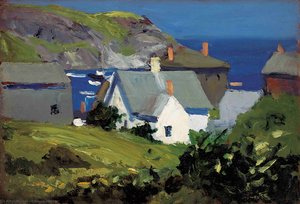


Edward Hopper
Self-Portrait
() ·
Vključno z okvirjem: · Ročno slikano z oljem na platnu
Skupni znesek