

 Predogled v realnem okolju
 Pošlji
 Deli
Deli
 Podrobnosti o delu
 Priročnik

 Prenesi sliko
 Podobni izdelki
 Rentgenski posnetek
 Predvajaj diaporama
 Q&A
Q&A Statistika
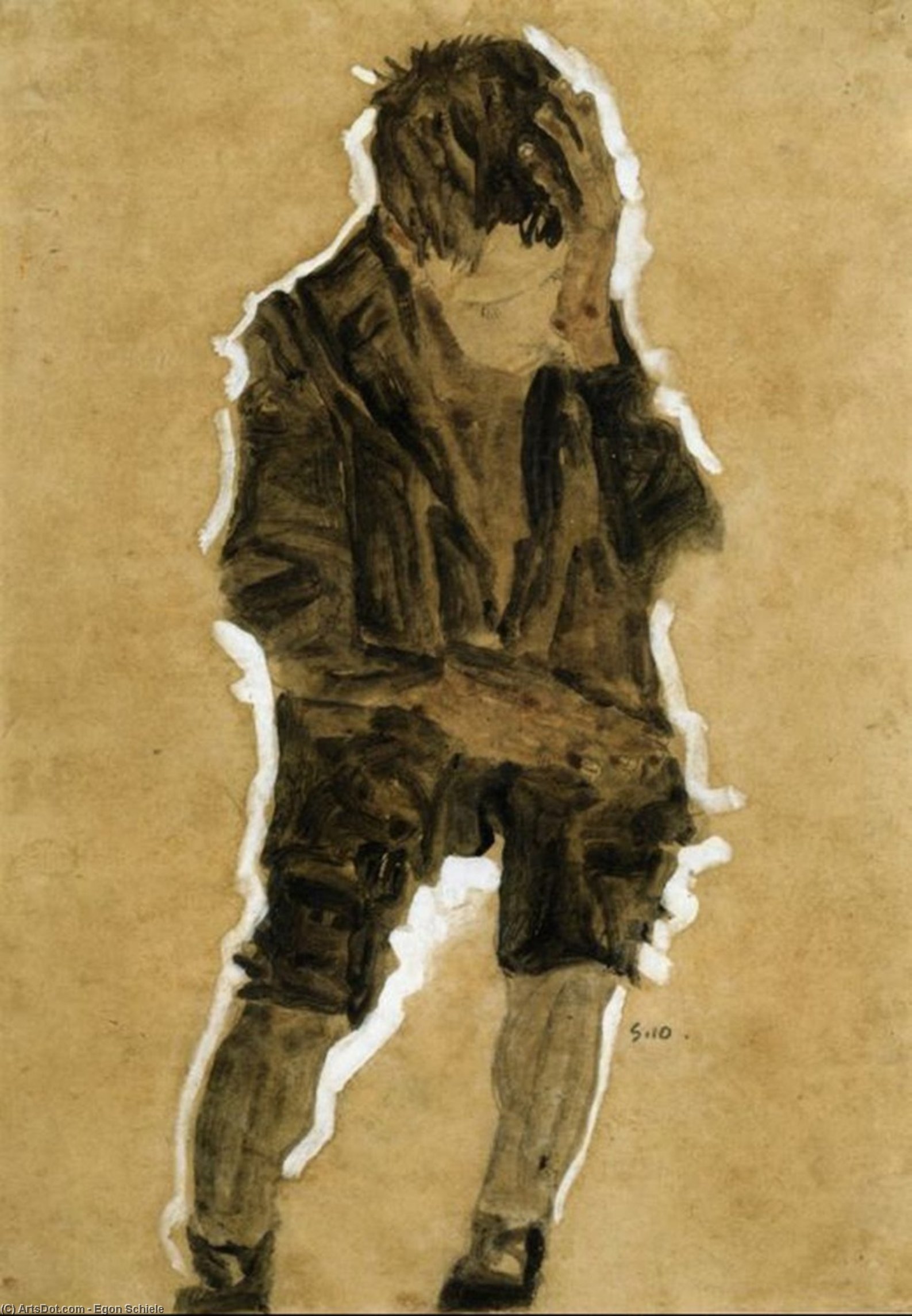
Očak z roko na obraz
 Akril na platnu
- Stenska umetnost
- Ekspresionizem
 1910
1910 43.0 x 33.0 cm
Odkrij Egon Schielejevo 'Očak z roko na obraz'. Ponkrajna ekspresionistična akvarel, ki uvariva surov čustvenost in ranljivost. Istraži stil in dediščino tega ikoničnega dela.
 Preberi več
Raziskujte intenzivne ekspresionistične umetnosti Egon Schieleja (1890-1918): izrazite portrete, psihološke teme in edinstvene črte. Odkrijte reprodukcije že danes!
Giclée tisk / Umetniški tisk
Giclée ali platnati odtis muzejske kakovosti z hitro proizvodnjo in prilagodljivimi možnostmi končne obdelave. ( Kupite ročno slikano delo Preklop na digitalno sliko)




P118B €10

P118H €10

P118W €10

P438Z €10

P508JH €12

P508YH €12

P805H €10

P805Z €10

P919BZ €10

P919G €10

P919XJ €10

P959ZH €10

P968JZ €12

W106C €8

W218G €10

W218JH €8

W218Y €10

W307PJ €10

W316G €10

W316PJ €8

W316Y €10

W398PJ €8

W4111J €10

W500HY €15

W500JH €15

W692G €12

W849H €8

W940BG €15

W953PJ €8




Standardna velikost
po meri
CM
INCH
Izberite eno od naših vnaprej določenih velikosti, ki ustrezajo prvotnim proporcijam umetničkega dela.
Loading sizes...

širina
višina
Vnesite širino in višino, ki jih potrebujete za svoj okvir ali steno. Tiskanje se lahko le odreže, vendar ga ni mogoče narediti večjega od slike, zato format z drugačno obliko pomeni izgubo dela slike. Pred tiskanjem vam pošljemo digitalni predogled za potrditev. Slika, prikazana na tej strani, ne prikazuje dejanskega izrezka — le predogled to omogoča.
Globalna dostava () v 2 tednih namesto standardnih 4/5 tednov. (29 oktober)

Brezplačna ekspresna dostava po vsem svetu

Visokokakovostno laneno platno

Popolno zavarovanje pošiljke

Garancija povračila carine in uvoznih davkov

Garancija popolnega barvnega ujemanja

100-dnevna politika vračil (le v primeru okvar)

Garancija 100% povračila denarja

Popust pri večjem naročilu
 Možnost stekla je na voljo le za velikosti pod 110 cm

Očak z roko na obraz
Giclée tisk / Umetniški tisk
Velikost reprodukcije
-


Skupna cena
€ 61
Okno v adolescenci skozi: Egon Ščilevo ‘Očak z roko na obrazu’
Egon Ščileva akvarel iz leta 1910, *Očak z roko na obrazu*, je več kot le portret; je visceralno raziskovanje notranjega nemira in kompleksnosti adolescenci. Z merami 43 x 33 cm ta prevarantno preprosto delo v gradbi čisti emocionalnosti, ki definira Ščilevo prispevek k ekspresionizmu. Slika nas ne zgolj pokaže očka; spodbudi nas, da z njim počutujemo.Razčlenitev gesta in forme
Kompozicija je močno neposredna. Mladinski moški lik, prikazan v tonih zbledelih braunov in kremnih barv, pomanjkanje ostre beline, dominira okvirju. Njegova roka, pritisnjena na obraz, ni gesta skrbi, temveč gesta globoke introspekcije – ali morda celo očaja. Položaj namestrova odločitev od sveta, vturnost proti sebi za konfrontacijo z neudobnimi resnicami. Ščile zavestno dekonstruira proporcije; telo je prodeljeno in kotnjatno, kar prispeva k splošnemu občutju nelagosti. To ni zgodba o anatomski točnosti, temveč o prenosu psihološkega stanja.Ščileva ekspresionistična tehnika
Ščile izjemno uporablja akvarel za doseganje delikatnega, a vznemirjujočega učinka. Razboji so naloženi, ustvarjajo subtilne variacije v tonu in teksturi, ki povečajo čustveni udar. Njegovo podpisano uporabo močnih, pogosto zobatastih črt – zlasti belih obremenjevalnih linij – ne definira forme toliko kot jo vključuje, kar sugerira skrbljivost in izolacijo. Ta tehnika je značilna za njegov ekspresionistični stil, pri katerem je subjektivno izkušnjo prednost v objektivi reprezentaciji. Trdost brušilja prispeva k neposrednosti in avtentičnosti dela.Zgodnovni kontekst: Dunaj 1910
Ustvarjeno v obdobju pomembnega socialnega in umetniškega premika, *Očak z roko na obrazu* odraža anksioznost začetka 20. stoletja v Dunaju. Ščile je bil del generacije, ki se je borila s spreminjajočimi se družbenimi normami, psihološko raziskavo (pod vplivom Freuda) in naraščajočo občutje tujosti. Njegovo delo je izzvalo tradicionalno akademsko sliko, zbranilo subjektivnost in čustveno intenzivnost. Odbrazil se idealizirani lepoti prejšnjih epoh v korist bolj iskrivnega – in pogosto nemirnega – prikazovanja človeške kondicije.Simbolika in čustveni rezonans
Simbolika znotraj dela je močna, a hkrati odprta za interpretacijo. Zaklonjen obraz povabi na projekcijo; ostajamo v pričakovanju izvorja očkačnega stresa. Ostre bele linije lahko gledamo kot bariere, ki predstavljajo čustveno odločitev ali občutek uwiętenosti. Skrbljivost, žalo in *izolacija* so očitne čustva, ki porabijo iz platna. Ščile ne ponuja odgovorov; pred nami stoji vprašanje – pikantna meditacija nad človeško izkušnjo.Ščilevo dedišče in zbiranje danes
Vpliv Egana Ščile prekorači njegovo tragično kratko življenje (1890-1918). Njegova neprekorena eksploracija psiholoških tem je pavedel pot za prihodnje generacije umetnikov. Danes se originalni Ščilevi portreti nahajajo v velikih muzejih, kot so Österreichische Galerie Belvedere in Leopoldjev muzej v Dunaju. Za tiste, ki želijo prinesiti del tega umetniškega dedišča v svoje domove ali projektiranje, ponujajo visoko kakovostne reprodukcije dostopno alternativo.Raziskajte več s Egonom Ščilevnim:
- Sedeči moški goljuf, desna roka raztegana – Študij v skrbljivosti in človeški formi.
- Stojači moški goljuf – Demonstracija Ščileve odločnega in neljškotnega pristopa k portretu.
- Poldi Lodzinski – Prekujoč primer Ščileve portretne umetnosti.
Vprašanja in odgovori
Pri katerih letih je Egon Ščile ustvaril/a "Očak z roko na obraz"?
Ko je bilo delo "Očak z roko na obraz" ustvarjeno leta 1910, je bil Egon Ščile – rojen leta 1890 – star 20 let.
Ali si lahko ogledam "Očak z roko na obraz" avtorja Egon Ščile pred naročilom?
Stran Predogled dela za delo "Očak z roko na obraz" vam omogoča ogled umetnin pred naročilom.
Kdo je ustvaril "Očak z roko na obraz"?
Avtor dela "Očak z roko na obraz" je Egon Ščile. Del je katalogiran pod imenom Egon Ščile.
Biografija umetnika
Egon Schiele: Austrian Expressionist Painter
Austrian art has since acquired legendary status in interdisciplinary cultural studies. Histories of modern Austrian art generally begin with the architectural boom that swept Vienna in the second half of the nineteenth century. During this period of strong economic growth, the Emperor Franz Josef constructed a necklace of public edifices along the broad Ringstrasse that encircles Vienna’s inner city, prompting artists to flock to the capital from all over to compete for decorative mural commissions. The most renowned painter of the era was Hans Makart, but the young Gustav Klimt also earned his reputation executing commissions on the interior walls of structures such as theaters and museums. The favored style combined a sort of blowsy eroticism with a firm grip on classical and historical allegory. Starting from his masterpiece *The Kiss*, Klimt gradually moved away from the accepted formula, however, evolving a personal symbolism that was less conventionally readable as well as more overtly sexual. This combination proved devastating so far as the tasted of staid Vienna were concerned: Klimt was banished from the ranks of public muralists, and henceforth had to seek support solely from well-heeled private patrons.
Early Life & Influences
Egon Schiele was born in Tulln an der Donau – a picturesque region with vineyards, onion-domed towers and Baroque monasteries. Yet this idyllic setting is hardly reflected in his work.
Instead, many of his landscapes appear melancholic, sometimes sombre. Perhaps he was processing the early death of his father from syphilis and the subsequent loss of his sister Elvira.
Raised initially by his mother and then under the somewhat controlling guardianship of his uncle Leopold Czihaczek, Schiele’s childhood lacked conventional stability but fostered a fiercely independent spirit. Even as a boy, he displayed an intense fascination with trains—a motif that subtly reappeared in later paintings—and a burgeoning talent for drawing, though this was initially met with disapproval from his father who saw it as a distraction from more practical pursuits. The early death of his sister Elvira also cast a long shadow over the young artist’s psyche. These formative experiences instilled within him a sensitivity and an emotional rawness that would become hallmarks of his artistic expression, a constant grappling with themes of life, death, and the human condition.
Vienna Secession & Artistic Breakthrough
Schiele's formal artistic training began at the Kunstgewerbeschule (School of Arts and Crafts) in Vienna, but he quickly found itself stifled by its conservative approach. He transferred to the Akademie der bildenden Künste (Academy of Fine Arts), only to become further disillusioned with its rigid academic traditions. This dissatisfaction led him to abandon formal training altogether, choosing instead to forge his own path, a testament to his unwavering artistic conviction.
The influence of Gustav Klimt was pivotal during these early years; Schiele admired Klimt’s decorative style and exploration of symbolism, even receiving mentorship from the established artist.
He co-founded the Neues Wiener Kunstgruppe (New Viennese Art Group) in 1909, aligning himself with other progressive artists who challenged the prevailing artistic norms. His distinctive style features elongated figures, contorted poses, and expressive lines that convey a sense of unease and emotional intensity.
Style Characteristics & Recurring Themes
Schiele’s art is immediately recognizable for its raw honesty and psychological depth.
He fearlessly confronted themes often considered taboo – sexuality, death, anxiety, isolation – with an unflinching gaze.
His distinctive style features elongated figures, contorted poses, and expressive lines that convey a sense of unease and emotional intensity. The human form, particularly the nude, became his primary subject, not as an object of idealized beauty but as a vessel for exploring the complexities of human experience.
Schiele didn’t shy away from depicting himself in unflattering or vulnerable poses, revealing a profound level of self-awareness and introspection.
Legacy & Recognition
Despite facing censorship and legal challenges – including a brief imprisonment for allegedly corrupting minors with his art – Schiele gained recognition within Vienna’s avant-garde circles.
His work challenged the conventions of the time, provoking both admiration and outrage.
By the time of his untimely death during the Spanish flu pandemic in 1918 at the age of twenty-eight, he had established himself as a leading figure in Austrian Expressionism. Significant works such as *Self-Portrait with Physalis*, *Couple Embracing*, and *Field Landscape (Kreuzberg near Krumau)* stand as testaments to his artistic genius.
His influence on subsequent generations of artists is undeniable, particularly those interested in exploring psychological themes and challenging conventional artistic norms.

Egon Ščile
1890 - 1918 , Avstrija
Hitri podatki
- Artistic Movement Or Style: Expresionismo
- Artists Who Influenced This Artist: ['Gustav Klimt']
- Date Of Birth: 12 giugno 1890
- Date Of Death: 31 octubre 1918
- Full Name: Egon Schiele
- Nationality: Austriaco
- Notable Artworks:
- Autoritratto con Physalis
- Giovane coppia
- Paesaggio campo (Kreuzberg)
- Place Of Birth: Tulln an der Donau, Austria
Sorodni članki

Ephemeral Visions: Exploring the History & Emotional Resonance of Watercolor Painting
Explore the captivating history of watercolor painting, from ancient techniques to modern masters like Kandinsky & Blake. Discover essential artists, collecting tips & the emotional power of this luminous medium. Expert insights for art enthusiasts.

Egon Schiele: 25 Mojstrovin Ekspresionizma za Vaš Dom | TopImpressionists
Odkrijte 25 mojstrovin Egona Schieleja – avstrijskega ekspresionista! Preberite zgodbe za vsako sliko, tehnike in simbolizem. Kvalitetne reprodukcije slik za vaš dom na TopImpressionists.com. Raziskajte celotno zbirko online!

Ephemeral Visions: Exploring the Artistic Legacy & Nuances of Watercolor Painting
Explore the captivating world of watercolor painting! Discover its rich history, essential techniques, influential artists & collecting tips from art experts. A comprehensive guide for enthusiasts.

Watercolor Wonders: 10 Masterpieces That Redefined Art History | TopImpressionists
Journey through 10 legendary watercolor masterpieces by Sargent, Turner & Homer! Explore iconic landscapes, portraits & floral art that redefined history. Find museum-quality reproductions and curated decor ideas at TopImpressionists.com.

Ephemeral Visions: Exploring the Artistic Legacy & Contemporary Practice of Watercolor Painting
Explore the captivating world of watercolor painting! Discover its rich history, essential techniques, influential artists & collecting tips. A comprehensive guide for art enthusiasts from TopImpressionists.
Raziščite umetniška dela, razvrščena po temah, slogih in značilnostih.


