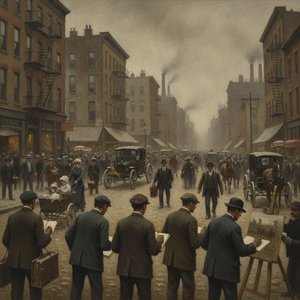
Življenje in zgodnji vplivi Georgea Wesleyja Bellowsa
George Wesley Bellows, rojen v Columbusu, Ohio, 12. ali 19. avgusta 1882, je bil sinonim za surovo energijo in razcvetajočo modernost zgodnjega 20. stoletja Amerike. Njegova pot od obetavnega športnika do priznanega slikarja je dokaz moči strasti in neomajne predanosti. Že v mladosti je pokazal naraven talent za risanje, zapolnil zvezke skicami, ki so nakazovale opazovalni pogled in rastoče spretnosti. Vzgoja ni bila izključno usmerjena k umetnosti; odlično se je prebijal v športu, igral baseball in košarko na Državni univerzi Ohio – dvojnost, ki bi globoko vplivala na njegov umetniški pogled, vsilila njegovem delu občutek dinamičnega gibanja in fizičnosti. Ta atletska ozadja mu niso dala le discipline, temveč tudi spoštovanja do človeške oblike v akciji – tema, ki bi postala osrednja v njegovih najbolj znanih slikah. Univerzo je zapustil tik pred diplomo, vodila ga je neustavljiva privlačnost New Yorka in obljuba umetniškega usposabljanja.
Formiranje poti: Šola Ashcan in širše
Po prihodu v New York leta 1904 je Bellows hitro našel mentorstvo pri Robertu Henriju, vodilni figuri šole Ashcan. Ta skupina umetnikov – med njimi John Sloan, William Glackens in George Luks – se je namerno odvrnila od akademskih konvencij in se raje posvečala surovi resničnosti mestnega življenja: prenatrpanim stanovanji, živahnih ulicah in vsakdanjih težavah delavskega razreda. Bellows je to etos navdušeno sprejel, sprva odražal Henrijev sproščeni slog črtanja in zavezanost socialnemu realizmu. Vendar se ni zadovoljil s tem, da bi samo ponavljal učiteljev slog; imel je ambicijo oblikovati svoj prepoznaven umetniški glas. Leta 1906 je skupaj s kolegom Edwardom Keefejem ustanovil studio, kar je pomenilo začetek plodnega obdobja eksperimentiranja in rasti. Njegova zgodnja dela, razstavljena leta 1908, so bila sprejeta z mešanimi odzivi – nekateri kritiki so jih našli groba, drugi pa prepoznali njihovo drzno pogumnost in inovativni duh. Bellowsova tematika je bila v tistem času pogosto kontroverzna, saj je izpodbijala prevladujoče predstave o tem, kaj predstavlja "sprejemljiva" umetnost. Ni se izogibal prikazovanju manj glamuroznih vidikov mestnega življenja in zajemal prizore revščine, dela in prostega časa z neomajno iskrenostjo.
Arena življenja: Boks in urbana spektakularnost
Čeprav je obseg Bellowsovega opusa vključeval široko paleto tem – portrete, pokrajine, morske krajine –, je najbolj znan po močnih upodobitvah boksarskih tekem. Zanj to niso bili zgolj športni dogodki; bili so mikrokosmi človeške drame, ki uteleljajo teme boja, odpornosti in prvotnih instinktov, ki poganjajo tekmovanje. Pogosto je obiskoval zadimljene boksarske klube, natančno preučeval gibanje borcev, intenzivnost njihovega pogleda in surovo energijo množice. Slike kot *Both Members of This Club* (1909) in *Stag at Sharkey’s* (1909) so mojstrovinski primeri njegove sposobnosti zajeti to vzdušje, pri čemer uporablja dramatično osvetlitev, dinamične kompozicije in otipljiv občutek napetosti. Boksarski prizori niso bili samo o športu; bili so metafore za življenjske bitke, ki odražajo socialni darvinizem, prevladujoč v ameriški družbi tistega časa. Poleg boksa je navdih našel tudi v drugih spektakularnih vidikih mestnega življenja – paradah, cirkusih in gneči ulic –, ki so ponujali priložnosti za raziskovanje tem gibanja, energije in kolektivne izkušnje.
Razvijajoči se slog in trajna zapuščina
Ko je Bellows dozorel kot umetnik, je njegov slog doživel subtilno, a pomembno evolucijo. Čeprav je ohranil svojo zavezanost realizmu, se je začel oddaljevati od sproščenega črtanja zgodnjih let in sprejel bolj stiliziran estetski vid, za katerega so bili značilni gladke krivulje, monumentalne oblike in povečan občutek drame. Ta premik je očiten v poznejših delih, kot je *Dempsey and Firpo* (1924), monumentalno platno, ki osupljivo zajema vrhunec legendarne boksarske tekme z dih jemajočo intenzivnostjo. Eksperimentiral je tudi z litografijo in ustvaril serijo izjemnih odtisov, ki so prikazovali njegovo mojstrstvo linije in tona. Kljub pomembnemu uspehu v življenju – vključno s sprejemom v Nacionalno akademijo za dizajn leta 1913 – je Bellows ostal zavezan premikanju umetniških meja in izzivanju konvencionalnih norm. Njegova prezgodnja smrt leta 1925 pri starosti 42 let je prekinila obetavno kariero, a njegova zapuščina vztraja kot ena najpomembnejših ameriških realistov. Pustil je za seboj delo, ki še danes odmeva pri občinstvu in ponuja močan in neomajno portret ameriškega življenja v zgodnjem 20. stoletju – svet, prežet z energijo, konflikti in trajnim duhom človeštva. Njegov vpliv je mogoče videti v naslednjih generacijah umetnikov, ki so si prizadevali zajeti dinamiko in kompleksnost sodobne mestne izkušnje.
George Bellows ni samo slikal slike; dokumentiral je obdobje.
Glavna dela in priznanja
- *Both Members of This Club* (1909) – Pomembno delo, ki zajame vzdušje boksarskega kluba.
- *Stag at Sharkey’s* (1909) – Še en ikoničen prikaz boksarske tekme, znan po dramatični osvetlitvi in kompoziciji.
- *Men of the Docks* (1912) – Močan portret delavskega razreda, ki prikazuje Bellowsovo spretnost zajemanja fizičnosti in teksture.
- *The Germans Arrive* (1918) – Serija litografij, ki prikazujejo grozodejstva, storjena med prvo svetovno vojno, kar dokazuje njegovo vpletenost v družbene in politične zadeve.
- *Dempsey and Firpo* (1924) – Monumentalno platno, ki zajame ključni trenutek v zgodovini boksa, prikazuje Bellowsov razvit slog in mojstrstvo kompozicije.
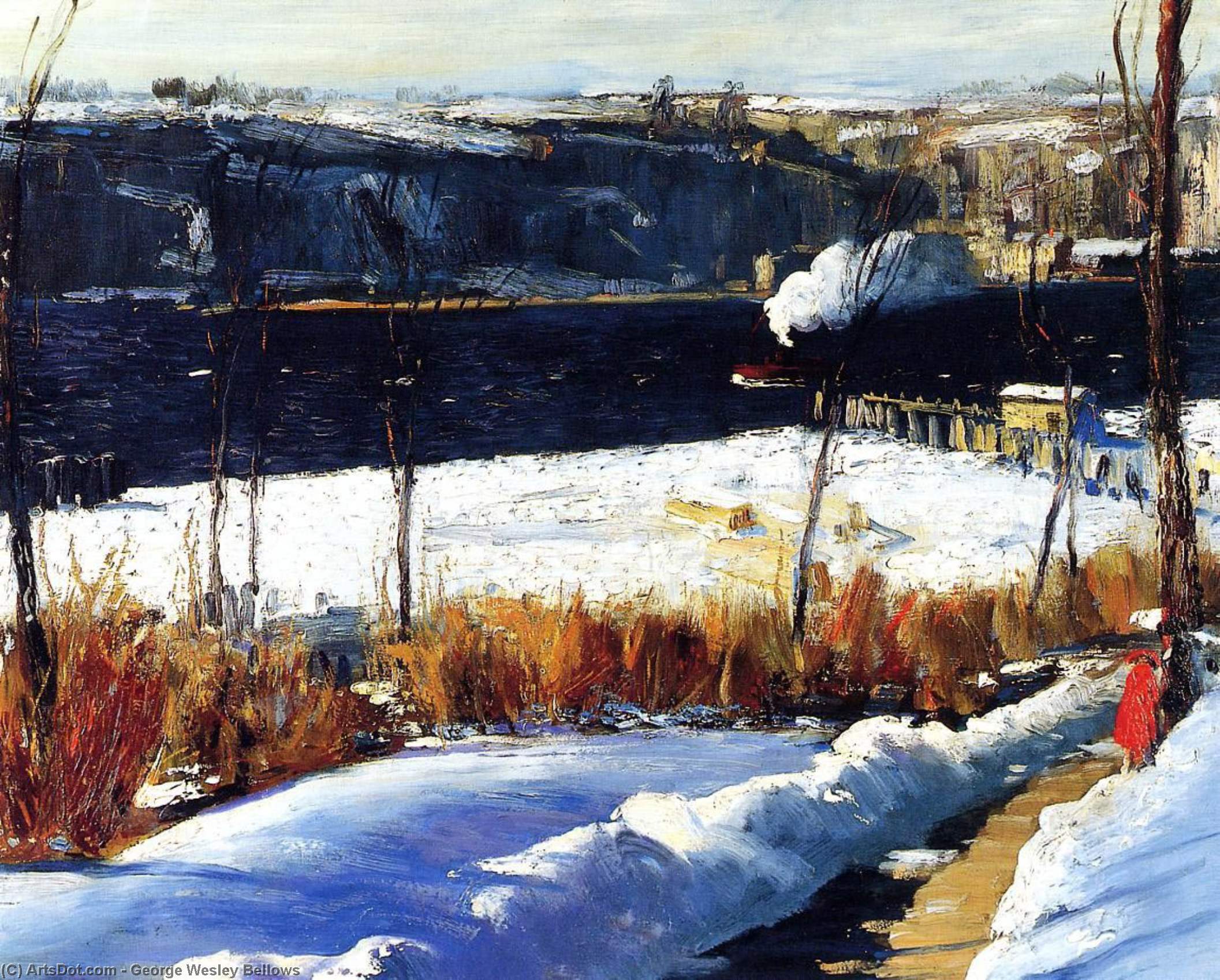
Bellowsovo delo je shranjeno v pomembnih muzejskih zbirkah po Združenih državah Amerike, vključno z Muzejom moderne umetnosti (New York), Nacionalno galerijo umetnosti (Washington D.C.), Smithsonian American Art Museum in Whitney Museum of American Art. Njegove slike še naprej razstavljajo in jih proučujejo zgodovinarji umetnosti in navdušenci, kar utrjuje njegov položaj kot temeljnega kamna ameriške umetniške dediščine.


 Predogled
 Kupi ročno naslikano sliko
 Pošlji
 Deli
Deli
 Podrobnosti o delu

 Prenesi
 Podobni izdelki
 Rentgenski posnetek
 Predvajaj diaporama


 Razviljaj več






































 Možnost stekla je na voljo le za velikosti pod 110 cm