

 Predogled v realnem okolju
 Pošlji
 Deli
Deli
 Podrobnosti o delu
 Priročnik

 Prenesi sliko
 Podobni izdelki
 Rentgenski posnetek
 Predvajaj diaporama
 Q&A
Q&A Statistika
untitled (372)


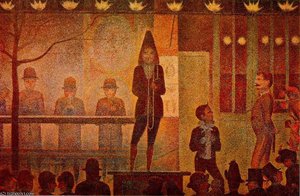
Experience the brilliance of Georges Seurat's "Untitled (372)" – a captivating Pointillist portrait capturing a vibrant stage performance. Explore its luminous precision and discover the legacy of Impressionism’s innovator.
 Preberi več
Georges Seurat je francoski slikar znan po svojem inovativnem tehniki Pointillizma – umetniški pristop, ki uporablja majhne pike svetleče barve za ustvarjanje impresionističnih slik. Znani so predvsem zaradi mojstrovskih del kot La Grande Jatte in Bathers at Asnières ter njegove revolucionarne teorije barve, ki prikazuje življenje modernega človeka.
Giclée tisk / Umetniški tisk
Giclée ali platnati odtis muzejske kakovosti z hitro proizvodnjo in prilagodljivimi možnostmi končne obdelave. ( Kupite ročno slikano delo Preklop na digitalno sliko)




P118B €10

P118H €10

P118W €10

P438Z €10

P508JH €12

P508YH €12

P805H €10

P805Z €10

P919BZ €10

P919G €10

P919XJ €10

P959ZH €10

P968JZ €12

W106C €8

W218G €10

W218JH €8

W218Y €10

W307PJ €10

W316G €10

W316PJ €8

W316Y €10

W398PJ €8

W4111J €10

W500HY €15

W500JH €15

W692G €12

W849H €8

W940BG €15

W953PJ €8




Standardna velikost
po meri
CM
INCH
Izberite eno od naših vnaprej določenih velikosti, ki ustrezajo prvotnim proporcijam umetničkega dela.
Loading sizes...

širina
višina
Vnesite širino in višino, ki jih potrebujete za svoj okvir ali steno. Tiskanje se lahko le odreže, vendar ga ni mogoče narediti večjega od slike, zato format z drugačno obliko pomeni izgubo dela slike. Pred tiskanjem vam pošljemo digitalni predogled za potrditev. Slika, prikazana na tej strani, ne prikazuje dejanskega izrezka — le predogled to omogoča.
Globalna dostava () v 2 tednih namesto standardnih 4/5 tednov. (1 november)

Brezplačna ekspresna dostava po vsem svetu

Visokokakovostno laneno platno

Popolno zavarovanje pošiljke

Garancija povračila carine in uvoznih davkov

Garancija popolnega barvnega ujemanja

100-dnevna politika vračil (le v primeru okvar)

Garancija 100% povračila denarja

Popust pri večjem naročilu
 Možnost stekla je na voljo le za velikosti pod 110 cm

untitled (372)
Giclée tisk / Umetniški tisk
Velikost reprodukcije
-


Skupna cena
€ 61
A Symphony of Light and Color: The Visionary World of Georges Seurat
In the quiet revolution of late 19th-century Paris, Georges Seurat emerged not merely as a painter, but as a conductor of light. His work, exemplified by the mesmerizing "Untitled (372)," represents a profound departure from the spontaneous, fleeting brushstrokes of his Impressionist contemporaries. While others sought to capture the ephemeral shimmer of a passing moment, Seurat embarked on a meticulous scientific investigation into the very mechanics of human perception. This particular piece invites the viewer into a vibrant stage scene, where a woman stands bathed in radiant hues, delivering a performance that feels both intimate and monumental. Through his eyes, a simple theatrical moment is transformed into a structured exploration of how color and light dance upon the retina.
The magic of this masterpiece lies in its revolutionary technique: Pointillism. Rather than the traditional method of blending pigments on a palette to create smooth transitions, Seurat applied tiny, distinct dots of pure, unadulterated color directly onto the canvas. This method, often referred to as chromoluminarism, relies on the viewer's eye to perform the work of blending. As you stand before the painting, the individual specks of pigment merge in your mind, creating a luminous, vibrating effect that traditional blending could never achieve. This creates a textured, almost breathing surface that captures the shimmering atmosphere of the stage, making the light feel as though it is pulsing with its own internal energy.
A Bridge Between Eras: Historical and Emotional Resonance
To behold "Untitled (37 and 2)" is to witness a pivotal moment in art history, where the subjective beauty of Impressionism met the objective rigor of modern science. Seurat was deeply influenced by contemporary research into optics and color theory, particularly the work of Eugène Chevreuil. By treating the canvas as a laboratory for light, he bridged the gap between the romanticized landscapes of the past and the structured abstraction of the future. The scene itself—a woman performing before an attentive, scattered audience—serves as a beautiful metaphor for this intersection. There is a sense of shared focus, a collective breath held in anticipation, which mirrors the way the viewer must focus to allow the Pointillist dots to coalesce into a coherent image.
For the discerning collector or interior designer, this artwork offers more than just visual splendor; it provides an emotional anchor of sophistication and intellectual depth. The vibrant palette and dynamic composition bring a lively, sophisticated energy to any space, making it an ideal centerpiece for a room designed for contemplation or grand entertaining. Whether placed in a contemporary gallery setting or a classic study, the painting’s ability to evoke both scientific precision and poetic beauty ensures it remains a timeless conversation piece. Owning a high-quality reproduction of such a seminal work allows one to bring the luminous, transformative spirit of Seurat into the modern home, celebrating a legacy of light that continues to captivate the human soul.
Vprašanja in odgovori
Ali se lahko slika "untitled (372)" avtorja Žorž Pjer Ser prosto reproducira?
V zvezi z avtorskimi pravicami je "untitled (372)" v v javni domeni – avtorska pravica je zastarela.
Kako se v delu "untitled (372)" prepletata material in gibanje?
"untitled (372)" je izdelano z uporabo Oil v slogu Impressionistic Precision.
Ali so barve dela "untitled (372)" avtorja Žorž Pjer Ser nasičene ali utemeljene?
Barve dela "untitled (372)" avtorja Žorž Pjer Ser imajo Subtle Color zasičenost. Zasičenost opisuje, kako živahne ali utišane so barve.
Sorodna umetniška dela




Biografija umetnika
Življenje in umetnost: Georges Seurat, pionir svetlobe in barve
Georges Pierre Seurat, rojen leta 1859 v Parizu, je bil slikar in risar, katerega kratko, a izjemno intenzivno ustvarjanje je za vedno spremenilo potek umetnosti. Njegova zapuščina se nadaljuje skozi generacije, saj njegovo delo še danes navdušuje občinstvo po vsem svetu. Seurat ni bil le slikar; bil je znanstvenik barve, matematični mislec in vizionarski umetnik, ki je s svojo edinstveno tehniko Pointillizma ustvaril svet, kjer se barva premika, diha in živi. Njegova zgodnja leta so bila zaznamovana z akademsko izobrazbo – študiral je na École Municipale de Sculpture et Dessin ter kasneje na prestižni École des Beaux-Arts, kjer je osvojil tehnične veščine, ki so bile ključne za njegovo poznejše inovacije. Vendar pa ga ni zadovoljila le reprodukcija tradicionalnih tem; želel je raziskati naravo svetlobe in barve na način, ki bi presegel meje impresionizma.Od akademskih korenin do chromoluminarizma
Seuratovo umetniško potovanje ni bilo nagel prelom, ampak postopna evolucija, podpirana z intelektualno radovednostjo in natančnim eksperimentiranjem. Čeprav so se njegove zgodnje slike odlikovale s tradicionalnimi akademskimi pristopi, je kmalu začel dvomiti o teh konvencijah in iskal bolj znanstveni pristop k slikanju. Potapljal se je v raziskave teorije barve, proučeval dela znanstvenikov, kot sta Michel Eugène Chevreul in Ogden Rood, ki so raziskovali optične učinke združenih barv. Ta raziskava je postala temelj njegove revolucionarne tehnike – chromoluminarizma, znanosti o barvi, in njene praktične uporabe, Pointillizma. Osrednja ideja je bila preprosta: nanašati majhne, ločljive pike čiste barve na platno, pri čemer se zanaša na oko gledalca, da jih optično združi in ustvari živahni učinek. To ni bilo le o doseganju svetlejših barv; šlo je za razumevanje tega, kako človeški vidni sistem zaznava svetlobo in barvo ter izkoriščanje tega znanja za ustvarjanje bolj dinamičnega in privlačnega slikarskega doživetja. Njegova dela so bila temeljito pripravljena s Conté kredo na grobem papirju, kjer je skrbno načrtoval postavitev vsake pike, kar kaže na skoraj matematično natančnost v njegovem umetniškem procesu.Pomembna dela in umetniška vizija
Kronanje Seuratovih raziskav in eksperimentiranja je morda najboljši primer A Sunday Afternoon on the Island of La Grande Jatte (1884-1886), monumentalno delo, ki je zaznamovalo začetek Neo-Impresionizma. Ta ikonična slika, ki prikazuje parižane, ki uživajo v sproščenem popoldnevu ob Seni, razstavlja njegovo pointilistično tehniko v polni meri. Figure, upodobljene kot skrbno postavljene pike barve, se zdijo sijajne in vibrirajoče s svetlobo, kar ustvarja vzdušje mirne tišine. Alfalfa, Saint-Denis (1886-1887) prikazuje uporabo teorije barve v podeželski pokrajini, medtem ko zgodnja dela, kot je Landscape at Saint-Ouen (1882-1883), razkrivajo njegovo razvijajočo se tehniko in naraščajoče zanimanje za zajem učinkov svetlobe in atmosfere. Celotna upodabljanje sodobnega pariškega življenja, kot je The Eiffel Tower (1889), je bila spremenjena s pomočjo njegove edinstvene tehnike, kar kaže na harmonično združevanje industrijske moderne in umetniške inovacije. Bathers at Asnières (1884), še eno pomembno delo, je raziskovalo teme prostega časa in sodobnega življenja s svojim značilnim stilom, napovedujoč bolj izpopolnjeno tehniko, ki jo vidimo v *La Grande Jatte*. Ta dela niso bila le upodobitve prizorov; bili so skrbno konstruirani vizualni poskusi, namenjeni raziskovanju možnosti barve in percepcije.Trajna zapuščina: Vpliv in zgodovinski pomen
Kljub kratkemu življenju – Seurat je umrl leta 1891 pri le 31 letih – je njegov vpliv na svet umetnosti bil globok in daleč segajoč. Njegovo delo je izzvalo tradicionalne umetniške konvencije, odprlo pot številnim kasnejšim gibanjem. Poudarek na subjektivnem izrazu in raziskovanju novih tehnik je resoniral z umetniki, ki so si želeli prestopiti akademske omejitve. Seuratov vpliv je mogoče opaziti pri delih Fauvistov, ki so sprejeli krepko barvo in izrazito črtanje; Kubistov, ki so razgradili oblike na geometrijske elemente; ter Abstract Expressionistov, ki so dali prednost čustveni intenzivnosti in spontanemu gestu. Njegov znanstveni pristop k slikanju, čeprav sprva kontroverzen, je sčasoma razširil definicijo umetniške možnosti. Dokazal je, da lahko umetnost združuje intelektualno rigorost in čustveno izraznost – sintezo, ki še danes navdihuje umetnike. Seuratova zapuščina sega onkraj njegovih tehničnih inovacij; pustil je za sabo korpus del, ki ujame bistvo sodobnega življenja z neprimerljivo natančnostjo in lepoto, s čimer je utrdil svoj položaj pravega pionirja moderne umetnosti. Njegova dela ostajajo priče moči opazovanja, eksperimentiranja in trajne človeške želje, da razume svet okoli sebe skozi lečo umetniškega izražanja.
Žorž Pjer Ser
1859 - 1891 , Francija
Hitri podatki
- Datum Rojstva: 2. december 1859
- Datum Smrti: 29. marec 1891
- Kraj Rojstva: Pariz, Francija
- Nacionalnost: Francoska
- Pod Vplivom:
- Fauvizem
- Kubizem
- Abstrakcionizem
- Polno Ime: Georges Pierre Seurat
- Umetniški Slog: Neo-impresionizem, Pointilizem
- Vplivneži:
- Michel Eugène Chevreul
- Ogden Rood
- Znani Dela:
- La Grande Jatte
- Bathers at Asnières
- Alfalfa, Saint-Denis
Sorodni članki

The Symphony of Dots: Unveiling the Luminous Magic and Optical Brilliance of Pointillism
Discover the luminous magic of Pointillism and the scientific brilliance of Georges Seurat. Explore our exquisite, hand-painted oil reproductions, meticulously crafted to bring the timeless elegance and optical beauty of Neo-Impressionism into your home with museum-grade quality.

The Magic of Pointillism: How Seurat and Signac Revolutionized Color and Light
Discover the luminous revolution of Pointillism. Explore how masters Georges Seurat and Paul Signac used scientific color theory and optical mixing to transform light and art history in this deep dive into Neo-Impressionist brilliance.
Raziščite umetniška dela, razvrščena po temah, slogih in značilnostih.


