

Prikazano: · Vključno z okvirjem:
 Predogled v realnem okolju
 Pošlji
 Deli
Deli
 Podrobnosti o delu
 Priročnik

 Prenesi sliko
 Podobni izdelki
 Rentgenski posnetek
 Predvajaj diaporama
 Vprašanja in odgovori
 Statistika

€ 239
Ročno izdelana oljna reprodukcija
Ročno slikano olje na platnu v vaši izbiri velikosti in okvirja, izdelano po naročilu naših umetnikov. ( Preklop na tiskanine Preklop na digitalno sliko)
Velikost
·Standardna velikost
po meri
CM
INCH
Izberite eno od naših vnaprej določenih velikosti, ki ustrezajo prvotnim proporcijam umetničkega dela.
Nalagovanje velikosti...

širina
višina
Vnesite širino in višino, ki jih potrebujete, da se slika prilega vašemu okviru ali steni. Ker je delo ročno slikano, lahko umetnik pri različnih oblikih slik pri robovih doda malo več barve ali pa jih malo odreže — izberite sami. Pred začetkom slikanja vam pošljemo digitalni predogled za potrditev. Slika, prikazana na tej strani, ni končni rezultat — le predogled prikazuje dejansko podobo.
 Preberi več
Zaključek
·
Beli rob €1

zamegljen rob €1

Razširjen rob €1

P118B €10

P118H €10

P118W €10

P438Z €10

P508JH €12

P508YH €12

P805H €10

P805Z €10

P919BZ €10

P919G €10

P919XJ €10

P959ZH €10

P968JZ €12

W106C €8

W218G €10

W218JH €8

W218Y €10

W307PJ €10

W316G €10

W316PJ €8

W316Y €10

W398PJ €8

W4111J €10

W500HY €15

W500JH €15

W692G €12

W849H €8

W940BG €15

W953PJ €8

H24-GOLD €30

H24-SILVER €30

H36-GOLD €45

H36-SILVER €45
Pošiljanje v zaščitni tubi, pripravljeno za vaš lastni okvir.
Nad 105 cm se okvir pošlje v obliki kompleta za profesionalnega okvirja — preberite podrobnosti.
Dodatne storitve
po izbogiKaj vse vključujejo dodatki?
Primeri sprememb, ki jih je mogoče izvesti: zamenjava obraza s fotografijo stranke; dodajanje hišnega ljubljenčka (npr. zamenjava mačke s psom); vključitev skritega sporočila v ozadje; sprememba krajine ali elementov v ozadju.
Po oddaji naročila bo ekipa TopImpressionists.com stranki po e-pošti poslala navodila in zagotovila predogled makete
Po oddaji naročila bo ekipa TopImpressionists.com stranki po e-pošti poslala navodila in zagotovila predogled makete
Mednarodna dostava () v 3/4 tednih namesto običajnih 5 tednov. (5 november). Brez kompromisov pri kakovosti.
Zaščitni lak
Značka z imenom
Podrobnosti o gravirani bronasti plošči
This elegant plaque features the artist's name and the title of the artwork, finely engraved for a timeless presentation.
It is made from bronze with a refined, elegant finish. The text is precisely laser-engraved for a sharp and permanent result. Measuring 9x2 cm, the plaque is compact yet easy to read. It's built to be durable and scratch-resistant, offering a professional, museum-quality look. Mounting is simple thanks to the included adhesive backing.
Podrobnosti o transparentni akrilni plošči
The plaque includes essential engraved details such as the artist's name, the title of the artwork, the date it was created, the type of media used-like oil on canvas or watercolor-a brief description of the piece, and a QR code that links to the complete artwork information.
It is crafted from clear acrylic, offering a sleek, modern appearance. The text is UV-engraved in black to ensure strong visual contrast. With a size of 10x15 cm, it ensures optimal readability. It comes equipped with two metal hooks for secure wall mounting. The plaque is designed to be weather-resistant, making it suitable for various environments, and it includes interactive features that work seamlessly with smartphone scanning.
Podrobnosti o črni akrilni plošči
This elegant plaque includes engraved information such as the artist's name, the title of the artwork, the date it was created, the type of media used (like oil on canvas or watercolor), a short description of the artwork, and a QR code for quick access to more information.
The plaque itself is made from refined black acrylic with a premium finish. The text is laser-engraved in white for high contrast and readability. Its size is 10x15 cm, designed to be easy to read. It comes with two metal hooks for professional mounting. The design is sleek and fits any interior style. It is also weather-resistant and durable, with built-in digital integration for mobile compatibility.
Možnost stekla je na voljo le za velikosti pod 110 cm
 Možnost stekla je na voljo le za velikosti pod 110 cm
- Brezplačna ekspresna dostava po vsem svetu
- Visokokakovostno laneno platno
- Popolno zavarovanje pošiljke
- Garancija povračila carine in uvoznih davkov
- Garancija popolnega barvnega ujemanja
- 100-dnevna politika vračil (le v primeru okvar)
- Garancija 100% povračila denarja
- Popust pri večjem naročilu


Opis zbirateljskega predmeta
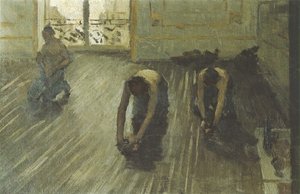
Gustave Caillebotte's 'The Floor Scrapers (study)' captures Parisian laborers with striking realism and light. Explore this iconic Impressionist work depicting urban life, showcasing Caillebotte’s unique perspective.
Biografija umetnika
Gustave Caillebotte (1848-1894): Odkrijte realizem in impresionizem francoskega mojstra pariškega življenja, znan po 'Paris Street; Rainy Day' ter edinstvenih perspektivah. Pomemben slikar 19. stoletja.
O sliki
The Floor Scrapers (Study) 02: A Glimpse into Parisian Labor
Gustave Caillebotte’s “The Floor Scrapers (Study) 02,” painted in 1875, isn't merely a depiction of three men diligently working; it’s a meticulously observed and subtly powerful portrait of urban life in late 19th-century Paris. This early work, often considered a pivotal piece in Caillebotte’s artistic development, offers a rare and intimate view into the lives of the city's working class – a subject largely absent from the grand narratives of the era. The painting immediately draws the eye with its stark contrast: the muted tones of the darkened room, punctuated by the bright white of the freshly sanded floorboards, create an almost photographic realism that was revolutionary for its time.
Caillebotte’s artistic journey began with a formal training in law and engineering, but it was his encounter with photography – particularly the work of Nadar – that profoundly shaped his approach to painting. He recognized the power of capturing fleeting moments and precise details, mirroring the photographic process. This influence is evident in the meticulous rendering of the men’s postures, their tools, and the textures of the wood. The composition itself feels deliberately staged, reminiscent of a photograph, with its careful attention to perspective and lighting. The figures are not idealized; they are presented as ordinary laborers, their faces obscured by shadow, emphasizing their anonymity within the bustling city.
Impressionistic Techniques and a Revolutionary Perspective
“The Floor Scrapers” exemplifies Caillebotte’s early embrace of Impressionism, though with a distinct realism that sets him apart from many of his contemporaries. He employed broken brushstrokes to capture the play of light on the wood and the men's clothing, creating a sense of movement and atmosphere. The use of complementary colors – the cool blues and greens of the shadows against the warm browns and yellows of the floor – adds depth and vibrancy to the scene. Notably, Caillebotte’s decision to depict these laborers in a darkened room, bathed in the diffused light of an unseen window, was a bold departure from traditional studio settings. This choice immediately imbued the painting with a sense of immediacy and authenticity.
Furthermore, Caillebotte's innovative perspective—a low-angle shot that emphasizes the scale of the men and their work—was groundbreaking. It forces the viewer to confront the scene directly, fostering a feeling of intimacy and engagement. The composition isn’t about glorifying labor; it’s about presenting it as a fundamental aspect of urban existence. The painting's technical mastery lies in its ability to convey both the physical reality of the work and the emotional weight of the men’s efforts.
Symbolism and Social Commentary
While seemingly straightforward, “The Floor Scrapers” carries subtle layers of symbolism. The act of scraping floors represents a repetitive, demanding task – a symbol of the daily grind endured by countless working-class individuals in Paris at the time. The absence of any discernible hierarchy or leadership among the men suggests a shared experience of labor and resilience. It’s important to note that Caillebotte was one of the first artists to depict urban proletariat, a subject rarely addressed in art during this period. This choice speaks volumes about his desire to challenge conventional artistic norms and offer a more nuanced representation of Parisian society.
The painting's historical context is crucial to understanding its significance. Paris in the 1870s was undergoing rapid industrialization, leading to significant social and economic changes. The working class faced harsh conditions, long hours, and low wages. Caillebotte’s work serves as a poignant reminder of these realities, offering a glimpse into the lives of those often overlooked by history.
A Timeless Reflection on Labor and Urban Life
“The Floor Scrapers (Study) 02” remains a powerful and evocative artwork. It's not just a depiction of three men working; it’s a meditation on labor, poverty, and the human condition. Caillebotte’s meticulous observation, innovative perspective, and subtle symbolism combine to create a work that continues to resonate with viewers today. Reproductions of this painting offer an opportunity to appreciate Caillebotte's artistic vision and gain a deeper understanding of Parisian life in the 19th century – a testament to the enduring power of art to illuminate social realities.
Vprašanja in odgovori
S kakšno tehniko je izdelano "The Floor Scrapers (study) 02" in v katerem slogu?
"The Floor Scrapers (study) 02" je izdelano z uporabo Acrylic On Canvas v slogu Impressionist Painting.
Ali obstaja informativni list o delu "The Floor Scrapers (study) 02" avtorja Gustave Caillebotte za študente?
Stran Informacije za učence za delo "The Floor Scrapers (study) 02" avtorja Gustave Caillebotte ponuja datoteko z informacijami v dveh straneh, ki je pripravljena za tiskanje: sliko umetninine z identifikacijsko tabelo, časovni obroč, ki delo postavlja v obdobje umetnikovega življenja, druge umetninine tega umetnika, izmerjeno paleto barv ter citate v štirih slogih, pripravljene za kopiranje.
Katera barva najbolj izstopa v delu "The Floor Scrapers (study) 02"?
Barva, ki najbolj izstopa v delu "The Floor Scrapers (study) 02", je Espresso (#504d40). Prevladujoča barva je koristna pri združevanju umetniškega dela z notranjo opremo.
Hitri podatki in kviz o umetnosti
O Gustave Caillebotte

Gustave Caillebotte
1848 - 1894, Francija
Biografija umetnika
Parižan nove dobe: Življenje in umetnost Gustava Caillebotta
Gustave Caillebotte, rojen leta 1848 v bogati parižski družini, je bil umetnik edinstveno umeščen v dramatične spremembe, ki so preoblikovale njegovo mesto. Njegov oče, Martial Caillebotte, je podedoval uspešno tekstilno podjetje in služil kot sodnik, kar Gustavu ni nudilo le finančne varnosti, ampak tudi opazovalni punkt, iz katerega je lahko spremljal razcvetajoći moderni svet. Čeprav se je sprva posvečal pravnim študijem – pridobil diplomi prava leta 1868 in 1870 – je bil Gustavov pravi poklic v svetu umetnosti. Začel je resno usposabljanje pod Leońom Bonnatom, se potopil v slikarstvo in hkrati razvil živo zanimanje za fotografijo, nastajaći medij, ki bi globoko vplival na njegov umetniški vid. Ta zgodnji stik s fotografskimi principi – uokvirjanjem, perspektivo in ujemanjem minljivih trenutkov – je postal značilnost njegovega izstopajoćega sloga. Caillebotte ni samo dokumentiral spremembe; aktivno se je ukvarjal z estetskimi možnostmi, ki so jih ponujale.Realizem prelivan v impresionistično svetlobo
Caillebottova umetniška pot se je odklonila od strogih akademskih tradicij, vendar nikoli ni v celoti sprejel čisto optiških raziskav mnogih njegovih impresionističnih sodobnikov. Našel je sorodnost z umetniki kot sta Edgar Degas in Giuseppe de Nittis, delil fascinacijo s modernim življenjem, vendar se ga je lotil skozi pričko natančnega realizma. Njegovo zgodnje mojstrino, Les Raboteurs de Parquet (Strugalci parketa), razstavljeno na Salonu leta 1875, je takoj uveljavilo njegov ugled kot držnega in nekonvencionalnega slikarja. Delo prikazuje tri delavce, ki skrbno strugejo leseni pod, upodobljeni z neomilostno iskrenostjo, ki je šokirala nekatere gledalce, medtem ko so jo drugi občudovali. Ni šlo samo za tematiko – delavski razred se redko pojavlja na platnih visoke umetnosti –, ampak tudi za kompozicijo: odrezano, skoraj žgočjo direktno in brez sentimentalne idealizacije. Ta predanost prikazovanju sodobnega življenja brez olepšav se je nadaljevala v delih kot je The Iron Bridge, kjer je spretno ujel industrijski kraj hitro spreminjajoćega se Pariza. Vendar Caillebotte ni bil imuniteten na vpliv impresionizma; njegova paleta se je postopoma posvetlila in začel je eksperimentirati z lomljenimi črtami in atmosferskimi efekti, kar je še posebej očitno v njegovih osupljivih pogledih na parižske strehe pokrite s snegom, kot je View of Rooftops (Snow).Pokrovitelj in pionir: navigacija po svetu umetnosti
Poleg lastnih umetniških prizadevanj je Caillebotte igral ključno vlogo pri podpiranju impresionističnega gibanja. Njegova finančna neodvisnost mu je omogočila, da postane značiljen pokrovitelj in kupoval dela Monetja, Renoira, Pissarra, Cézanna, Degasa in drugih v času, ko so bila njihova dela večinoma zavrnjena s strani uradnega Salona. Ni bil samo zbiratelj; aktivno je promoviral te umetnike, organiziral in financiral več impresionističnih razstav, ki so izpodbijale konvencionalne umetniške norme. Ta predanost spodbujanju inovacij se je razširila na lastno zbirko, ki jo je ob smrti leta 1894 zapustil francoski državi – dediščino, ki so jo sprva srečali z odporom, a je končno postala temelj priznane impresionistične zbirke v Musée d’Orsayu. Caillebottova edinstvena perspektiva se je odrazila tudi v njegovih kompozicijah; dela kot Boulevard vu d’en haut (Boulevard Seen from Above), naslikano leta 1880, prikazujejo izstopajočo moderno čutnost, z uporabo visoke perspektive in dinamičnega uokvirjanja, ki predvideva fotografske perspektive 20. stoletja. Ta inovativni kompozicijski pristop, morda vplivan z japonskimi tiskami in njegovimi lastnimi fotografskimi eksperimenti, ga je ločil kot pravega pionirja.Zapuščina in ponovno odkrivanje: ponovno uveljavljen moderni mojster
Več desetletij po njegovi smrti je Caillebottovo delo ostalo relativno neznano, zasenčeno s slavnejšimi figurami impresionizma. Šele v poznem 20. stoletju se je začelo celovito ponovno ocenjevati njegovo umetnost, spodbudljeno znanstvenimi raziskavami in večjimi razstavami. To ponovno odkrivanje je razkrilo umetnika izjemne tehnične spretnosti, intelektualne globine in vizionarskega uvida. Caillebottove slike niso samo upodobitve modernih življenjskih stilov; so globoke meditacije o kompleksnosti urbanega življenja, spreminjajoćem se družbenem krajini in razvijajočem se odnosu med umetnostjo in resničnostjo. Njegova sposobnost brezšivne kombinacije realizma z impresionističnimi tehnikami, inovativne kompozicije in neomajna predanost prikazovanju sveta okoli njega so utrdile njegov položaj kot ključne figure v 19. stoletni umetnosti. Danes so Caillebottova dela slavljena zaradi njihove edinstvene perspektive, mojstrske izvedbe in trajne relevantnosti – dokaz umetnika, ki si je upal ujeti duh nove dobe.Pomembna dela
- Les Raboteurs de Parquet (Strugalci parketa) (1875): Pomembno delo, ki prikazuje Caillebottov realizem in nekonvencionalno kompozicijo.
- View of Rooftops (Snow) (1878): Demonstrira uporabo visokih perspektiv in atmosferskih efektov, vplivanih s fotografijo in japonskimi tiskami.
- Boulevard vu d’en haut (Boulevard Seen from Above) (1880): Izstopajoča moderna kompozicija z dinamično perspektivo.
- Paris Street; Rainy Day (1877): Morda njegovo najbolj znano delo, ki ujame živahno energijo parižskega življenja na edinstven in sugestiven način.
- The Bezique Game(1881) : Captivating Impressionist painting of Parisian leisure.
Kratek pregled o Gustave Caillebotte
- Datum Rojstva: 19. avgust 1848
- Državljanstvo: Francoz
- Kraj Rojstva: Pariz, Francija
- Polno Ime: Gustave Caillebotte
- Pomembna Dela:
- Les Raboteurs de Parquet
- Prizor streh (sneg)
- Boulevard seen from above
- Umetniški Smer: Realizem, Impresionizem
- Umetniški Vpliv: ['Impresionizem']
- Vplivi Umetnikov:
- Edgar Degas
- Giuseppe de Nittis
Sorodna umetniška dela


Raziščite umetniška dela, razvrščena po temah, slogih in značilnostih.


Gustave Caillebotte
The Floor Scrapers (study) 02
() ·
Vključno z okvirjem: · Ročno slikano z oljem na platnu
Skupni znesek