

 Preverite v realnem okolju
 Pošlji kot čestitko
 Deli
Deli
 Podrobnosti
 Priročnik

 Prenesi
 Podobni artefakti
 Rentgenski posnetek
 Predvajaj diaporama
 Statistika
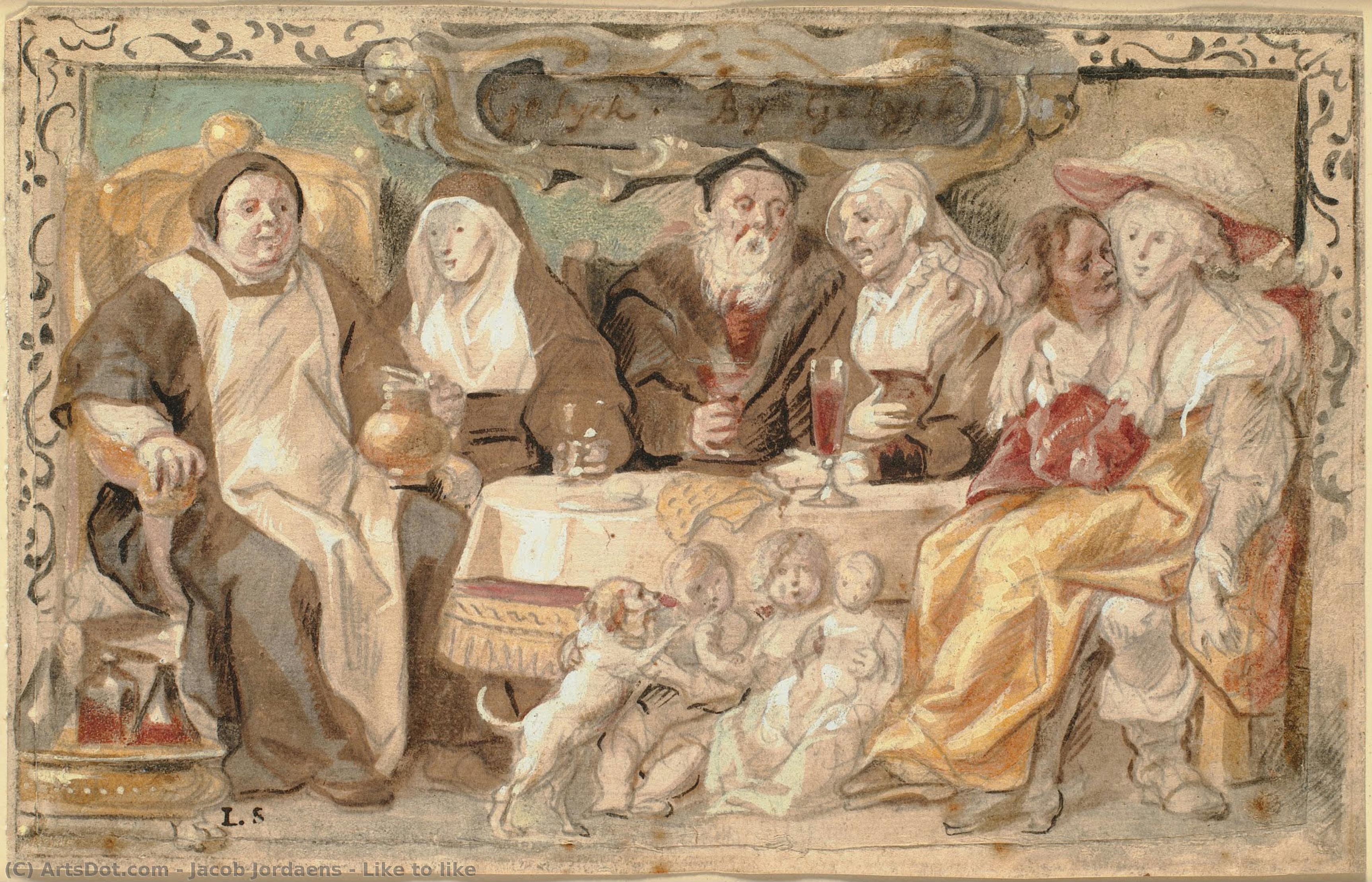
Like to like
 Oil On Canvas
- WallArt
- Baroque
 1645
1645- Renaissance
 21.0 x 13.0 cm
 National Gallery of Denmark
Jacob Jordaens’ ‘Like to Like’ captures a vibrant 17th-century Dutch proverb scene with richly detailed figures and a bustling dining table. This Baroque masterpiece celebrates everyday life, offering a timeless depiction of human connection and social order.
 Preberi več
Jacob Jordaens (1593-1678), mojster baročnega slikarstva. Znani po živahnih prizorih kmečkih veselic, alegorijah in realističnem upodabljanju vsakdanjega življenja. Vplival na Jan Steena!
Giclée tisk / Umetniški tisk
Giclée ali platnati odtis muzejske kakovosti z hitro proizvodnjo in prilagodljivimi možnostmi končne obdelave. ( Naročite ročno slikano reprodukcijo Preklop na digitalno sliko)




P118B $10

P118H $10

P118W $10

P438Z $10

P508JH $12

P508YH $12

P805H $10

P805Z $10

P919BZ $10

P919G $10

P919XJ $10

P959ZH $10

P968JZ $12

W106C $8

W218G $10

W218JH $8

W218Y $10

W307PJ $10

W316G $10

W316PJ $8

W316Y $10

W398PJ $8

W4111J $10

W500HY $15

W500JH $15

W692G $12

W849H $8

W940BG $15

W953PJ $8




Standardna velikost
po meri
CM
INCH
Izberite eno od naših vnaprej določenih velikosti, ki ustrezajo prvotnim proporcijam umetničkega dela.
Loading sizes...

širina
višina
Svoje dimenzije lahko vnesete sami, da bodo ustrezne za določen okvir ali prostor. Če izbrana velikost ne bo skladna z razmerji izvirne slike, bomo umetniško delo orezali ali podaljšali s pomočjo ogledalnega odraza ali barvno polnega roba. Pred začetkom proizvodnje vam bomo poslali digitalni predogled za potrditev.
Upoštevajte, da predogled na zaslonu ne prikazuje dejanskega orezovanja ali podaljševanja. Le digitalni predogled bo natančno prikazal končno kompozicijo.
Čeprav so na voljo prilagojene velikosti, priporočamo izbiro dimenzije s predhodno določenega seznama, da ohranite prvotna razmerja.
Globalna dostava () v 2 tednih namesto standardnih 4/5 tednov. (26 september)

Brezplačna ekspresna dostava po vsem svetu

Visokokakovostno laneno platno

Popolno zavarovanje pošiljke

Garancija povračila carine in uvoznih davkov

Garancija popolnega barvnega ujemanja

Politika vračila v 100 dneh (le v primeru okvar)

Garancija 100% povračila denarja

Popust pri večjem naročilu
 Možnost stekla je na voljo le za velikosti pod 110 cm

Like to like
Giclée tisk / Umetniški tisk
Velikost reprodukcije
-


Skupna cena
$ 69
A Window into Flemish Wisdom: Jordaens’ “Like to Like”
Jacob Jordaens' "Like to Like," painted in 1645, is more than just a group portrait; it’s a meticulously crafted visual sermon, a testament to the enduring power of proverb and social commentary within the vibrant world of Flemish Baroque art. Executed during a period when artists like Bosch and Bruegel had established the tradition of illustrating moral lessons through captivating scenes, Jordaens continues this legacy with remarkable clarity and detail. This particular work, measuring 21 x 13 cm, offers a poignant glimpse into the lives and values of a prosperous Antwerp family, inviting viewers to contemplate their own place within the social order.
- Subject Matter: The painting depicts a gathering around a richly appointed dining table, populated by a diverse cast of characters – men, women, and children – each embodying a specific facet of societal expectation.
- Composition: Jordaens’ masterful composition utilizes theatrical staging, with the figures arranged as if on a stage, their faces turned towards the viewer, drawing us directly into the scene.
- Details: The inclusion of wine glasses, cups, and bowls adds to the sense of conviviality and abundance, while the presence of a boy and girl further emphasizes the theme of familial bonds and generational continuity.
The Language of Proverbs and Symbolism
At its core, “Like to Like” is an illustration of a fundamental proverb: "Stick with one’s own class." This message is powerfully conveyed through the carefully constructed groupings within the painting. Four distinct couples represent this principle – a friar and nun, an elderly married couple, young lovers, and a simple family – each pair visually reinforcing the idea of maintaining social standing and adhering to established norms. The artist's didacticism isn’t heavy-handed; rather, it’s subtly woven into the fabric of the scene, inviting contemplation rather than demanding obedience.
Beyond this central theme, the painting is rich in symbolic detail. The vase positioned near the center adds an element of decorative elegance, while the presence of a boy and dog – or girl and doll – speaks to childhood innocence and the importance of nurturing young generations. Even the clothing worn by each figure contributes to the overall narrative, reflecting their respective social roles and status.
A Masterful Exercise in Technique
Jordaens’ skill as a painter is immediately apparent in the meticulous rendering of textures – from the velvet upholstery of the chairs to the folds of the fabrics worn by the figures. His use of light and shadow creates a sense of depth and realism, while his brushwork is both precise and expressive. The painting demonstrates a mastery of *alla prima* technique, applying paint directly to the canvas in broad strokes, creating a vibrant and dynamic effect. This approach, favored by Rubens himself, contributes significantly to the work’s energetic feel.
Emotional Resonance and Lasting Appeal
"Like to Like" transcends its historical context to offer a timeless meditation on social order, family values, and the enduring wisdom of proverbs. Jordaens' ability to capture human emotion – tenderness, affection, contemplation – ensures that this painting continues to resonate with viewers centuries later. This hand-painted reproduction offers an exceptional opportunity to own a piece of art history, bringing the richness and complexity of Flemish Baroque into your home or office.
Biografija umetnika
Življenje in zgodnji razvoj Jacoba Jordaensa
Jacob Jordaens, rojen v Antwerpnu leta 1593, je izhajal iz bogate družine lanarjev. Že od mladih let se je kazala njegova umetniška nadarjenost, vendar pa ni sledil tipični poti svojih sodobnikov, ki so se za usposabljanje podali v Italijo. Namesto tega je ostal zvest svojemu rojstnemu mestu in razvil edinstven, robusten ter zemeljski slog, ki je slavil užitke in resničnost vsakdanjega življenja. Njegov oče mu je omogočil udobno otroštvo in izobrazbo, preden se je začela njegova umetniška pot pri Adamu van Noortu – prav tako mentorju Petra Paula Rubensa. Ta zgodnje usposabljanje mu je dalo temeljito tehniko in razumevanje kompozicije, a se je hitro odločil za lastno izraznost. Leta 1616 je s poroko Katharine, hčerke van Noorta, utrdil svojo povezavo z uveljavljenim umetniškim svetom Antwerpena. Ta zveza ni bila le osebna, temveč tudi strateška, saj mu je omogočila nadaljnji dostop do pomembnih naročil in vplivov.Slikar kmečkega veselja in baročne veličine
Jordaensovo ustvarjalnost je bila izjemno raznolika, zajemala pa je verske prizore, mitološke scene, alegorične kompozicije, žanrske slike polne življenja ter celo portrete. Najbolj ga poznajo po bučnih upodobitvah kmečkih festivalov in tavern – delih, ki izžarevajo oprijemljivo energijo in neobremenjeno veselje do zemeljskih užitkov. Slike kot je *Kralj pije* (znana tudi kot Gostija kralja fižola) so tipičen primer njegovega značilnega sloga: natrpane kompozicije, polne robustnih figur, ki se živahno zabavajo, upodobljene v toplih, žarečih barvah in dramatični chiaroscuro tehniki. Ti prizori niso bili zgolj proslavljanje veselja; pogosto so bili prežeti s subtilnimi moralizatorskimi podtoni, ki odražajo kompleksno razmerje med uživanjem in zadržanostjo v družbi 17. stoletja. Vendar pa je bil Jordaens prav tako sposoben obvladati večje, formalnejše naročnike. Njegova udeležba pri dekoraciji palače Huis ten Bosch blizu Haage – skupaj s sodelovanjem z Rubensom – je pokazala njegovo sposobnost ustvarjanja monumentalnih alegoričnih del, ki so brezhibno združevala slikarstvo in arhitekturo.Vplivi in značilen umetniški glas
Čeprav Jordaens nikoli ni potoval v Italijo, so ga globoko vplivali italijanski mojstri kot Jacopo Bassano, Paolo Veronese in Caravaggio – umetniki, katerih dela so do Flandrije prispela prek gravur in slik, ki so jih prinesli drugi slikarji. Vpliv Caravaggia je še posebej očiten v njegovi dramatični uporabi svetlobe in sence, tehniki znani kot tenebrism, ki poudarja čustveno intenzivnost njegovih prizorov. Jordaens pa se ni zgolj posnemal teh vplivov; sintetiziral jih je s svojimi flandrijskimi občutljivostmi in ustvaril slog, ki je bil edinstven. Od Rubensa in Van Dycka se je razlikoval po svoji prednostni izbiri realizma pred idealizmom, sprejemal pa je bolj neposreden in manj prefinjen pristop k upodabljanju človeške figure. Njegove figure so pogosto močne, celo debeluhaste, njihovi obrazi pa rdečkajo od zdravja in vitalnosti. Ta predanost naturalizmu, skupaj z njegovim mojstrskim obvladovanjem barve in kompozicije, ga je ločil od sodobnikov in uveljavil kot vodilno figuro flandrijskega baročnega slikarstva.Zapuščina in trajni vpliv
Čez dolgo in plodno kariero je Jordaens usposobil številne učence – petnajst jih je uradno zabeležila cehovska druščina sv. Luke med letoma 1621 in 1667 – kar je zagotovilo nadaljevanje njegove umetniške zapuščine. Njegov vpliv je mogoče opaziti pri delih poznejših umetnikov, kot je Jan Steen, ki si deli njegovo naklonjenost k upodabljanju živahnih žanrskih prizorov. Poleg neposrednega vpliva na druge slikarje so imele Jordaensove klasično navdihnene teme o kmečkem življenju trajni učinek na umetniški svet, saj so izzvale tradicionalne hierarhije in slavile dostojanstvo vsakdanjega življenja. Tudi danes njegove slike še vedno očarajo občinstvo s svojo energijo, vitalnostjo in iskreno upodobitvijo človeške izkušnje. Njegova sposobnost prepletanja realizma z alegorijo, čutnosti z moralnostjo ter veličine z intimnostjo ga uvršča med najbolj prepričljive in trajne figure baročnega obdobja. Odkrijte več Jordaensovih mojstrskih del in raziščite bogato umetniško pokrajino baročne dobe prek spletnih virov, vključno s podrobnimi bazami podatkov njegovih del in vpoglednimi analizami njegovega življenja in umetnosti.
Jacob Jordaens
1593 - 1678 , Belgija
Ključne informacije
- Datum Rojstva: 19. maj 1593
- Datum Smrti: 1678
- Državljanstvo: Flandrijski
- Kraj Rojstva: Antwerp, Belgija
- Polno Ime: Jacob Jordaens
- Pomembna Dela:
- Čaščenje pastirjev
- Argus in Merkur
- Umetniki Vplivani: ['Jan Steen']
- Umetniški Slog: Barok
- Vplivi Umetnikov:
- Jacopo Bassano
- Paolo Veronese
- Caravaggio
Sorodni članki

Golden Light & Dutch Skies: The Timeless Magic of Dutch Golden Age Landscapes
Discover the breathtaking beauty of Dutch Golden Age landscapes. Explore the mastery of light, chiaroscuro, and 17th-century realism through an expert art history lens, celebrating the enduring legacy of the Dutch Masters for discerning collectors and art lovers.

Mastering Light & Shadow: A Journey Through the Dutch Golden Age's Luminous Legacy
Embark on a cultural journey through the Dutch Golden Age. Explore the masterful interplay of light and shadow in 17th-century masterpieces, from Rembrandt to Vermeer, and discover how this era of profound realism continues to inspire fine art collectors today.
Raziščite umetniška dela, razvrščena po temah, slogih in značilnostih.

