

 Predogled v realnem okolju
 Pošlji
 Deli
Deli
 Podrobnosti o delu
 Priročnik

 Prenesi sliko
 Podobni izdelki
 Rentgenski posnetek
 Predvajaj diaporama
 Vprašanja in odgovori
 Statistika
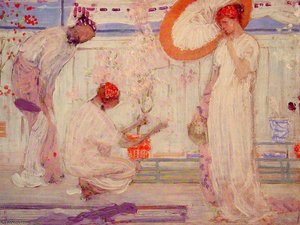
The Violet Note

- 18.0 x 26.0 cm


 Preberi več
Odkrijte Jamesa Abbotta McNeilla Whistlerja (1834–1903), ameriškega umetnika tonalizma in estetizma. Spoznajte 'Whistlerjevo mater', nokturne, portrete ter njegovo filozofijo 'umetnost zaradi umetnosti'.
Pridobite datoteko, pripravljeno za tiskanje, ki presega kakovost spletnega predogleda. Vsaka digitalna slika v naši ponudbi izvira iz visoko ločljive izvirne datoteke v naši bazi — običajno široke od 5.000 do 15.000 pikselov — zato lahko z zaupanjem tiskate v večji format, tesno izrezujete ali reproducirate fine podrobnosti.
Nobena datoteka ne zapusti našega studia nedotiknjena. Digitalni strokovnjak preveri barve v primerjavi z izvirno sliko in jih po potrebi popravi, nato pa s profesionalnimi orodji za retuširanje izboljša jasnost in podrobnosti — pri čemer vedno ostaja zvest umetnikovim potezam in slogu. Rezultat je slika, ki izgleda kot samo slikarstvo, ne pa kot le filtriran sken.
Potrditev pred dokončanjem dela: naš strokovnjak vam v roku 72 ur pošlje sliko po e-pošti na pregled. Niste zadovoljni? Zahtevajte izboljšave ali popravke ali prosite za povračilo denarja, če kakovost ni v skladu z pričakovanimi standardi.
To je kakovost, po kateri temeljijo založniki, oblikovalni studii, galerije in tiskarne.
Digitalna slika
Prenesite datoteko visoke ločljivosti za osebno uporabo, tiskanje in kreativne projekte. ( Preklop na tiskanine Kupite ročno slikano delo)
Vključeno v vsako naročilo digitalne slike
Zagotovljena strokovna digitalna dostava
Z izbiro TopImpressionists.com ne prejmete le slike – prejmete profesionalno urejeno digitalno umetniško delo, izdelano z največjo natančnostjo in zavestno podprto z garancijo za zadovoljstvo. Tukaj je vse, kar bo z vašim naročilom samodejno priloženo:

Hitra dostava prek e-pošte
Vaša digitalna slika visoke ločljivosti bo na vaš e-naslov poslana v roku 72 ur od zaklopa naročila – pripravljena za takojšnjo uporabo.

Digitalna datoteka z uporabo AI
Vaše umetniško delo je strokovno optimizirano z uporabo naprednih orodij umetne inteligence in ročne obdelave, kar zagotavlja največjo stopnjo podrobnosti, jasnosti in barvne natančnosti.

Brezplačna doletna ponovna dostava
Ste datoteko zaradi nespremietne napake izgubili ali izbrisali? Ni težav – vam jo bomo ponovno poslali kadar koli in brezplačno.

Brez uvoznih pristojbin – vedno
Svoje umetniško del uživajte takoj, brez carin, davkov ali stroškov dostave – digitalni prenosi so vedno brezdavčni.

Zagotovilo natančnosti barv
Z uporabo profesionalnih orodij in procesov upravljanja barv zagotavljamo, da vaša digitalna slika čim bolj natančno odraža prvotne barve.

100-dnevna garancija zadovoljstva
Če niste zadovoljni s svojo digitalno sliko, jo bomo uredili ali vam v 100 dneh povrnili 100% denarja – brez kakršnih koli vprašanj.

100% Garancija povračila denarja
Niste zadovoljni? Zagotavljamo vam popoln povračilo sredstev v 100 dneh po prejemu digitalne datoteke – brez dodatnih vprašanj.

Popusti pri večjih naročilih
Kupite 3 slike, prihranite 10% - Kupite 5 slik, prihranite 15% - Kupite 10+ slik, prihranite 20%. Odlično za kreativne projekte, galerije in agencije.
A Moment of Quiet Anticipation: Unpacking “The Violet Note”
James Abbott McNeill Whistler’s "The Violet Note," painted in 1886, isn't a grand statement of narrative or dramatic action; it’s a carefully constructed tableau of quiet contemplation and the subtle poetry of everyday life. This intimate portrait captures a woman, her back turned to the viewer, engaged in the seemingly simple act of preparing for travel – a moment frozen in time that speaks volumes about Whistler’s core aesthetic philosophy: “art for art’s sake.” The painting immediately draws us in with its muted palette dominated by blues and greens, creating an atmosphere of subdued elegance and a sense of veiled mystery. It's a deliberate departure from the prevailing Victorian obsession with grand historical scenes or emotionally charged portraits, reflecting Whistler’s commitment to capturing the essence of beauty through form, color, and light rather than storytelling.
The Language of Form and Color: Whistler’s Aesthetic Vision
Whistler was deeply influenced by Japanese prints – particularly *ukiyo-e* – which emphasized flattened perspectives, bold outlines, and a focus on decorative elements. This influence is evident in the painting's composition; the figures are rendered with a sense of detachment, almost as if viewed through a slightly removed lens. The use of color is equally deliberate. Whistler favored a technique he called “tonal harmony,” prioritizing subtle gradations of tone over bright, saturated hues. Notice how the violet – hinted at in the title and subtly reflected in the arrangement of objects – acts as a unifying element, grounding the scene and lending it an air of sophisticated restraint. The careful placement of each object—the vase, the potted plant, the books—contributes to a carefully balanced visual rhythm, suggesting a considered aesthetic rather than a spontaneous one.
Symbolism in the Details: A Journey Within
Beyond its formal qualities, “The Violet Note” is rich with symbolic potential. The woman’s posture, leaning on her suitcase, immediately evokes travel and departure – but it's not a joyous or celebratory departure. There’s a hint of melancholy in her stance, suggesting perhaps a bittersweet farewell or the quiet solitude of a journey undertaken alone. The suitcase itself, placed squarely on the floor, is a potent symbol of both practicality and vulnerability. The books, stacked neatly together, could represent knowledge, experience, or even a longing for intellectual stimulation during her travels. Even the vase with its single bloom – a violet, no doubt – speaks to beauty, fragility, and the transient nature of life. Whistler wasn’t simply depicting a scene; he was layering it with subtle suggestions and inviting the viewer to project their own interpretations onto the canvas.
Historical Context: The Rise of Aestheticism
“The Violet Note” emerged during a pivotal moment in art history – the height of the Aesthetic movement. Whistler, along with figures like Oscar Wilde, rejected the didactic and moralistic tendencies of much 19th-century art, arguing that art should exist solely for its own beauty and pleasure. This philosophy challenged the established conventions of the time, leading to considerable controversy and criticism. Whistler’s work was often dismissed as “mere decoration,” but his insistence on prioritizing formal qualities over narrative content paved the way for modernism and profoundly influenced subsequent generations of artists. Understanding this context illuminates why "The Violet Note" is not a painting about *what* is happening, but rather about *how* it's being seen – a testament to Whistler’s dedication to capturing the essence of visual experience.
Bringing “The Violet Note” Home: A Reproduction for Your Space
TopImpressionists.com offers meticulously crafted hand-painted reproductions of "The Violet Note," allowing you to bring this evocative masterpiece into your own home or office. Our skilled artisans replicate Whistler’s tonal harmony and subtle details with exceptional precision, ensuring that the painting's atmosphere and symbolic depth are faithfully preserved. Whether you appreciate Whistler’s pioneering aestheticism or simply admire its quiet beauty, a reproduction of “The Violet Note” is a timeless addition to any collection – a reminder of the power of art to evoke emotion and inspire contemplation.
Vprašanja in odgovori
Na kakšen način "The Violet Note" avtorja James Mcneill Whistler povezuje Aestheticism and Symbolism z domovino umetnika?
"The Violet Note" je ustvaril/a James Mcneill Whistler, rojen/a v državi Združene države Amerike, v okviru gibanja Aestheticism and Symbolism. Umetnikova izhodno točka povezuje del z Aestheticism and Symbolism, kot ga je praticiral/a umetniki iz države Združene države Amerike.
Kako se motiv dela "The Violet Note" povezuje s tipičnimi temami umetnika James Mcneill Whistler?
James Mcneill Whistlerove ponavljajoče se teme vključujejo aestheticism, european avant-garde, sensibility, mood, atmosphere, travel, preparation, journey; "The Violet Note" se osredotoča na woman, travel, packing, suitcase, vase, books, anticipation.
Kje lahko najdem vodnik za "The Violet Note"?
Za delo "The Violet Note" avtorja James Mcneill Whistler je na voljo stran Informacije za učence: natisljiv informativni list o umetninah, zasnovan za uporabo v šolskih prostorih in za učence.
Sorodna umetniška dela



Biografija umetnika
James Abbott McNeill Whistler: Ameriški umetnik, ki je posvečal lepoti
James Abbott McNeill Whistler, rojen leta 1834 v Lowellu, Massachusetts, je bil ameriški slikar, graver in ilustrator, ki je večino svojega življenja preživel in ustvarjal v Evropi. Njegova zgodnja pot je bila zaznamovana z selitvami zaradi očetove službe, kar mu je omogočilo izpostavljenost različnim okoljem in kulturem. Čeprav je nekaj časa obiskoval West Point, se ni mogel prilagoditi vojaškemu načinu življenja, nato pa je delal pri geodetskem uradu ZDA, a njegova strast do umetnosti je bila neomajna. Ta obdobja so ga oblikovala v ustvarjalno silo, ki jo je vodila želja po izstopanju in raziskovanju novih umetniških poti. Že zgodaj se je Whistler začel upirati konvencijam in moralističnim prikazom v slikarstvu, kar je utrlo pot njegovi kasnejši zavezanosti "umetnosti zaradi umetnosti".Pariz in rojstvo nove estetike
Ključni trenutek v Whistlerjevi karieri je bila selitev v Pariz leta 1855. Tam se je izpopolnjeval pri Sébastienne Bouréu, kjer je osvojil tehnike oljnega slikarstva, akvarela in grafike. Vendar pa Whistler ni ostal zvest le imitaciji; hitro je razvil prepoznaven stil, ki je poudarjal tonalne harmonije in atmosfere. Njegova umetnost ni bila namenjena natančnemu prikazovanju resničnosti, temveč ujetim trenutkom, subtilnim odtenki čustev in vzdušij. V Parizu se je Whistler začel opredelitevati k ideji, da mora biti umetnost ocenjena izključno po svoji estetski vrednosti, brez moralnih ali didaktičnih omejitev – filozofiji, ki je postala temelj njegovega ustvarjanja in definicija estetističnega gibanja. Ta prelomnica je Whistlerja postavila na pot k inovativnemu razumevanju umetnosti, kjer je oblika in tonalnost prevladovala nad naravoslovnim prikazom.Nokturne, portreti in iskanje harmonije
Whistlerjeva vizija se je kristalizirala v več ključnih temah in stilskih odločitvah. Zavrgel je prizore, preobremenjene z moralnimi ali družbenimi komentarji, in se osredotočil na ujetje subtilnih odtenkov svetlobe, barve in atmosfere – iskanje, ki je privedlo do njegovih ikoničnih *Nokturn*. Te atmosferske slike nočnih prizorov, pogosto prikazujoč Temzo v mraku, niso bile namenjene natančni reprodukciji, temveč evokativnim vtiskom, študijam tonalne harmonije in razpoloženja. Pogosto je uporabljal omejeno paleto barv in nežno tehniko nanašanja barve, kar je ustvarjalo občutek eterične lepote in tihe kontemplacije. Portreti so imeli prav tako pomembno mesto v njegovem delu, vendar jih je pristopil z edinstvenim razumevanjem. Whistler ni bil skrb za popoln prikaz podobe; namesto tega se je osredotočil na formalne aranžmaje in tonalne odnose, obravnavajoč svoje modele kot kompozicijske elemente v skrbno zasnovanem estetskem okviru. Delo *Arrangement in Grey and Black No. 1* – bolj znano kot *Whistlerjeva mati* – to pristop popolnoma prikazuje, spreminjajoč družinski portret v ikonično podobo viktorijanske materinstva s pomočjo mojstrske uporabe oblike in tona.Spori, vpliv in trajna zapuščina
Whistlerjeva kariera ni bila brez kontroverz. Znani sodni proces z umetnostnim kritikom Johnom Ruskinom leta 1878, sprožen zaradi *Nokturna v črnem in zlatem – padajoča raketa*, je postal mejnik v zgodovini umetnosti. Whistler je uspešno branil svojo umetniško avtonomijo in trdil, da njegove slike niso namenjene realističnim prikazom, temveč estetskim aranžmajem barve in oblike. Ta zadeva je povišala njegov ugled in sprožila pomembne debate o naravi umetnostnega kriticizma in umetniške svobode. Poleg tega se je Whistlerjev vpliv razprostiral daleč in široko. Globoko ga je navdihnil japonski tisk (ukiyo-e), ki je oblikoval njegove kompozicijske načine in poudaril dekorativne vzorce, pa tudi tonalno mojstrstvo španskih slikarjev, kot je Velázquez. Njegov zagovarjanje "umetnosti zaradi umetnosti" je močno vplivalo na estetistično gibanje v Angliji in Ameriki, odpirajoč pot modernizmu in izzivajoč konvencionalne predstave o umetniškem namenu. Ostavil je neizbrisov sled v ameriški umetnosti, navdihujoč generacije umetnikov, da sprejmejo formalistične pristope in raziskujejo ekspresivni potencial barve in kompozicije.- Pomembna dela: *Kovaštvo* (1861), *Portret Charlesa Lang Freerja* (1873), *Brown and Gold: The Gold Girl—Connie Gilchrist* (1876-77), *Arrangement in Grey and Black No. 1 (Whistler’s Mother)* (1871), *Nokturno v črnem in zlatem – padajoča raketa* (1875).
- Vplivi: Japonski tisk, Velázquez.

James Mcneill Whistler
1834 - 1903 , Združene države Amerike
Ključne informacije
- Datum Rojstva: 14. julij 1834
- Kraj Rojstva (Mesto In Država): Lowell, ZDA
- Nacionalnost: Ameriški
- Polno Ime: James Abbott McNeill Whistler
- Umetniki, Ki So Vplivali Nanj:
- Velázquez
- Japonski natis (ukiyo-e)
- Značilna Dela:
- The Forge (1861)
- Portret Charlesa Lang Freerja
- Brown and Gold: The Gold Girl
- Arrangement in Grey and Black No. 1
- Nocturne in Black and Gold
- Značilni Umetniški Slogi:
- Tonalizem
- Estetizem