


 Predogled v realnem okolju
 Pošlji
 Deli
Deli
 Podrobnosti o delu
 Priročnik

 Prenesi sliko
 Podobni izdelki
 Rentgenski posnetek
 Predvajaj diaporama
 Statistika
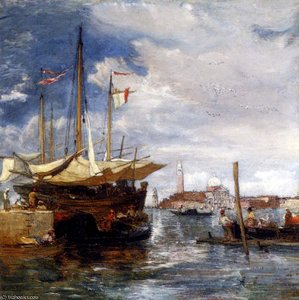
Evening stroll, venice

Experience 'Evening Stroll, Venice' by James Wilson Morrice – a captivating Impressionist painting of Venetian canals at dusk. Loose brushstrokes & warm colors evoke tranquility. Hand-painted reproductions available.
James Wilson Morrice (1865-1924) was a pioneering Canadian painter known for his evocative landscapes & scenes of Paris, Venice & the Caribbean. Influenced by Whistler & Impressionism, he bridged European modernism with Canadian art. Discover his del
 Preberi več
Pridobite datoteko, pripravljeno za tiskanje, ki presega kakovost spletnega predogleda. Vsaka digitalna slika v naši ponudbi izvira iz visoko ločljive izvirne datoteke v naši bazi — običajno široke od 5.000 do 15.000 pikselov — zato lahko z zaupanjem tiskate v večji format, tesno izrezujete ali reproducirate fine podrobnosti.
Nobena datoteka ne zapusti našega studia nedotiknjena. Digitalni strokovnjak preveri barve v primerjavi z izvirnim sliko in jih po potrebi popravi, nato pa s profesionalnimi orodji za retuširanje izboljša jasnost in podrobnosti — pri čemer vedno ostaja zvest originalnemu slikarskiemu črtam in slogu. Rezultat je slika, ki izgleda kot sama slika, ne pa kot le filtriran sken.
Potrditev poteka pred dokončanjem dela: naš strokovnjak vam v roku 72 ur pošlje sliko po e-pošti na pregled. Niste zadovoljni? Zahtevajte izboljšave ali popravke ali prosite za povračilo denarja, če kakovost ni v skladu z pričakovanimi standardi.
To je kakovost, po kateri temeljijo založniki, oblikovalni studii, galerije in tiskarne.
Digitalna slika
Prenesite datoteko visoke ločljivosti za osebno uporabo, tiskanje in kreativne projekte. ( Preklop na tiskanine Kupite ročno slikano delo)
Vključeno v vsako naročilo digitalne slike
Zagotovljena strokovna digitalna dostava
Z izbiro TopImpressionists.com ne prejmete le slike – prejmete profesionalno urejeno digitalno umetniško delo, izdelano z največjo natančnostjo in zavestno podprto z garancijo za zadovoljstvo. Tukaj je vse, kar bo z vašim naročilom samodejno priloženo:

Hitra dostava prek e-pošte
Vaša digitalna slika visoke ločljivosti bo na vaš e-naslov poslana v roku 72 ur od zaklopa naročila – pripravljena za takojšnjo uporabo.

Digitalna datoteka z uporabo AI
Vaše umetniško delo je strokovno optimizirano z uporabo naprednih orodij umetne inteligence in ročne obdelave, kar zagotavlja največjo stopnjo podrobnosti, jasnosti in barvne natančnosti.

Brezplačna doletna ponovna dostava
Ste datoteko zaradi nespremietne napake izgubili ali izbrisali? Ni težav – vam jo bomo ponovno poslali kadar koli in brezplačno.

Brez uvoznih pristojbin – vedno
Svoje umetniško del uživajte takoj, brez carin, davkov ali stroškov dostave – digitalni prenosi so vedno brezdavčni.

Zagotovilo natančnosti barv
Z uporabo profesionalnih orodij in procesov upravljanja barv zagotavljamo, da vaša digitalna slika čim bolj natančno odraža prvotne barve.

100-dnevna garancija zadovoljstva
Če niste zadovoljni s svojo digitalno sliko, jo bomo uredili ali vam v 100 dneh povrnili 100% denarja – brez kakršnih koli vprašanj.

100% Garancija povračila denarja
Niste zadovoljni? Zagotavljamo vam popoln povračilo sredstev v 100 dneh po prejemu digitalne datoteke – brez dodatnih vprašanj.

Popusti pri večjih naročilih
Kupite 3 slike, prihranite 10% - Kupite 5 slik, prihranite 15% - Kupite 10+ slik, prihranite 20%. Odlično za kreativne projekte, galerije in agencije.
Sorodna umetniška dela



Biografija umetnika
The Bohemian Visionary: The Life and Legacy of James Wilson Morrice
In the grand tapestry of Canadian art history, few threads are as vibrant or as cosmopolitan as those woven by James Wilson Morrice. Born in 1865 to a prosperous merchant family in Montreal, Morrice possessed a spirit that could not be contained by the rigid structures of his upbringing. Though he initially pursued the disciplined path of law at the University of Toronto, the siren call of the canvas proved irresistible. By 1890, he had abandoned the courtroom for the studios of Europe, setting in motion a journey that would transform him from a Canadian student into an international modernist. His life was a delicate dance between the stability of his wealthy roots and the wandering, often turbulent, existence of a true bohemian.
Morrice’s arrival in Paris marked the beginning of a profound artistic metamorphosis. Immersed in the heart of the art world, he became a bridge between the fading echoes of Whistlerian tonalism and the burgeoning energy of Impressionism and Fauvism. He did not merely observe these movements; he lived them, absorbing the subtle atmospheric nuances of James McNeill Whistler and later experimenting with the bold, emotive palettes of Henri Matisse. His time at the Académie Julian provided the technical foundation, but it was his wanderlust that provided his soul. From the sun-drenched streets of Tangiers to the misty canals of Venice and the bustling café cultures of Paris, Morrice captured the world through a lens of "sudden vision," a quality so striking that contemporaries described his paintings as if they flew out of a box of butterflies.
A Mastery of Light, Color, and the Pochade
The true genius of Morrice lay in his ability to distill vast landscapes and complex urban scenes into intimate, evocative moments. He became particularly renowned for his use of pochades—small, rapid oil sketches that captured the fleeting essence of light and atmosphere with remarkable immediacy. These works were not merely studies but complete emotional experiences, characterized by a loose, fluid brushstroke and a sophisticated understanding of color harmony. His early work often leaned toward a muted, tonal palette, reflecting a deep respect for the atmospheric subtleties of Whistler. However, as his travels took him to North Africa and the Caribbean, his work underwent a luminous evolution.
As his style matured, the influence of Post-Impressionism became increasingly evident. The shadows in his landscapes began to pulse with color, and the light of the Mediterranean or the warmth of a Quebec winter was rendered with an unprecedented vibrancy. His subject matter was as diverse as his travels, ranging from:
- Urban Intimacy: Capturing the ephemeral magic of Parisian street scenes, café culture, and public gatherings.
- Serene Landscapes: Evoking the quiet majesty of Canadian winters and the lush, tropical rhythms of the Caribbean.
- Atmospheric Voyages: Documenting the shimmering reflections of Venice and the dusty, sun-soaked textures of North Africa.
A Tragic End and an Enduring Impression
Despite his immense professional triumphs—including being the first Canadian painter to achieve true international renown and serving as vice-president of the Salon d'Automne—Morrice’s personal life was marked by profound struggle. The later years of his life were shadowed by the hardships of war and the heavy toll of alcoholism. His journey, which had spanned the most celebrated art capitals of the world, reached a somber conclusion in 1924 at a military hospital in Tunis. He died far from the Montreal streets of his youth, yet his presence remained etched into the very identity of Canadian modernism.
The historical significance of James Wilson Morrice cannot be overstated. He was the pioneer who broke the provincial boundaries of Canadian art, proving that a painter from the North could speak the universal language of modernism. By synthesizing European aesthetic innovations with a uniquely sensitive observation of the natural world, he paved the way for future generations of Canadian artists to explore identity through light and color. Today, his works reside in the most prestigious collections, including the National Gallery of Canada, serving as a testament to a man who saw the world not just as it was, but as a shimmering, transient masterpiece waiting to be captured.

James Wilson Morrice
1865 - 1924 , Canada
Ključne informacije
- Full Name: James Wilson Morrice
- Nationality: Canadian
- Date Of Birth: 1865
- Date Of Death: 1924
- Place Of Birth: Montreal, Canada
- Notable Artworks:
- Venice
- Evening Stroll, Venice
- QUAI DES GRANDS AUGUSTINS
- Artistic Movement Or Style: Impressionism & Post-Impressionism
- Artists Who Influenced This Artist:
- Whistler
- Brymner
- Artists Or Movements Influenced By This Artist: ['Van Gogh']