Predogled v realnem okolju
 Pošlji
 Deli
Deli
 Podrobnosti o delu
 Priročnik

 Prenesi sliko
 Podobni izdelki
 Rentgenski posnetek
 Predvajaj diaporama
 Vprašanja in odgovori
 Statistika
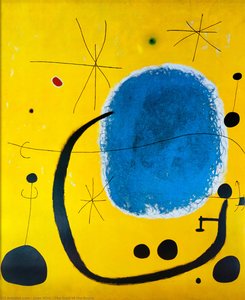
Mujer y perro cara a la luna

 Preberi več
Odkrijte svet Joana Mirója! Oglejte si surrealistična in abstraktna mojstrovina, katalonsko simboliko ter igrive oblike. Pionir sodobne umetnosti – oglejte si dela na TopImpressionists!
Umetniška dela, prikazana na tej strani, so zaščitena z avtorskimi pravicami, kar pomeni, da po zakonu ne moremo ustvarjati ali prodajati identičnih reprodukcij. Ta zaščita se izvaja v skladu z mednarodnimi sporazumi, kot so Bernska konvencija in po nacionalnih zakonih, vključno s tistimi, ki jih določa Zakon o avtorskih pravicah ZDA – naslov 17.
Ta način v celoti upošteva zakonodajo o avtorskih pravicah, saj ne vključuje kopiranja ali podvajanja zaščitenga umetniškega dela. Namesto tega gre za kreativno preinterpretacijo – novo sliko, ki je navdihnjen rezultat originala, vendar ni z njim identična.
Giclée tisk / Umetniški tisk
Giclée ali platnati odtis muzejske kakovosti z hitro proizvodnjo in prilagodljivimi možnostmi končne obdelave. ( Kupite ročno slikano delo Preklop na digitalno sliko)




P118B €10

P118H €10

P118W €10

P438Z €10

P508JH €12

P508YH €12

P805H €10

P805Z €10

P919BZ €10

P919G €10

P919XJ €10

P959ZH €10

P968JZ €12

W106C €8

W218G €10

W218JH €8

W218Y €10

W307PJ €10

W316G €10

W316PJ €8

W316Y €10

W398PJ €8

W4111J €10

W500HY €15

W500JH €15

W692G €12

W849H €8

W940BG €15

W953PJ €8




Standardna velikost
po meri
CM
INCH
Izberite eno od naših vnaprej določenih velikosti, ki ustrezajo prvotnim proporcijam umetničkega dela.
Loading sizes...

širina
višina
Vnesite širino in višino, ki jih potrebujete za svoj okvir ali steno. Tiskanje se lahko le odreže, vendar ga ni mogoče narediti večjega od slike, zato format z drugačno obliko pomeni izgubo dela slike. Pred tiskanjem vam pošljemo digitalni predogled za potrditev. Slika, prikazana na tej strani, ne prikazuje dejanskega izrezka — le predogled to omogoča.
Globalna dostava () v 2 tednih namesto standardnih 4/5 tednov. (7 november)

Brezplačna ekspresna dostava po vsem svetu

Visokokakovostno laneno platno

Popolno zavarovanje pošiljke

Garancija povračila carine in uvoznih davkov

Garancija popolnega barvnega ujemanja

100-dnevna politika vračil (le v primeru okvar)

Garancija 100% povračila denarja

Popust pri večjem naročilu
 Možnost stekla je na voljo le za velikosti pod 110 cm

Mujer y perro cara a la luna
Giclée tisk / Umetniški tisk
Velikost reprodukcije
-


Skupna cena
€ 62
A Portrait of Dreams and Catalan Identity
Joan Miró’s “Mujer y perro cara a la luna” (“Woman and Dog Facing the Moon”) transcends mere visual representation; it embodies the spirit of Surrealism and delves into the subconscious depths of Catalan culture. Painted in 1936, during a period marked by political upheaval and artistic experimentation—specifically coinciding with the Spanish Civil War—the artwork serves as a poignant reflection on anxieties surrounding conflict and an affirmation of resilience.
Born in Barcelona in 1893, Miró’s formative years were steeped in the vibrant atmosphere of Gaudí’s architectural legacy. This fascination for organic forms would permeate his artistic endeavors, shaping his distinctive style characterized by biomorphic shapes, simplified lines, and a palette dominated by earthy hues punctuated with bursts of color.
Stylistic Innovation: Abstract Expressionism Meets Catalan Folklore
Miró’s approach to painting defied conventional realism. He embraced abstraction as a vehicle for conveying emotion and exploring inner landscapes—a technique that aligns seamlessly with the burgeoning movement of Abstract Expressionism in America. However, unlike many of his contemporaries who sought purely formal explorations, Miró infused his work with elements rooted in Catalan folklore and mythology.
The composition itself is deliberately unsettling yet captivating. A woman’s figure—a recurring motif in Miró's oeuvre—is positioned alongside a dog’s head, which rests upon her shoulder. The dog’s open mouth suggests a gesture of repose or perhaps even yearning, creating an interplay between stillness and vulnerability.
Symbolism Under Moonlight
The moon dominates the canvas, serving as both a visual focal point and a symbolic representation of contemplation and transformation. Miró's use of color—primarily ochre and crimson—further amplifies the artwork’s emotional resonance. These hues evoke feelings of warmth, passion, and primal instinct.
Adding to the surrealist atmosphere are subtle details: two birds scattered across the background—one on the left and another near the top right corner—represent freedom and aspiration. A solitary cat nestled in the lower left quadrant embodies quiet observation and resilience. Collectively, these elements contribute to a tapestry of imagery that invites viewers to contemplate themes of solitude, vulnerability, and the enduring power of nature.
Technical Mastery: Pochoir Printing
“Mujer y perro cara a la luna” was executed using oil on canvas—a medium favored by Miró for its ability to capture nuanced tonal variations. However, what distinguishes this particular reproduction is its printing technique: pochoir. This method involves transferring ink onto paper through stencils, resulting in exceptionally precise and luminous prints that faithfully reproduce the artist’s original vision.
The Museo Nacional Centro de Arte Reina Sofía houses a stunning example of this artwork, offering visitors an opportunity to experience Miró's distinctive style firsthand. Its enduring appeal lies not only in its aesthetic beauty but also in its profound exploration of human emotion and the subconscious—a testament to Miró’s genius as one of the most influential artists of the 20th century.
Vprašanja in odgovori
Kako znano je delo "Mujer y perro cara a la luna" avtorja Joan Miró?
"Mujer y perro cara a la luna" avtorja Joan Miró ima Iconic stopnjo priljubljenosti. Ta razvrstitev odraža, kako široko je del prepoznano.
Ali je "Mujer y perro cara a la luna" v javni domeni?
V zvezi z avtorskimi pravicami je "Mujer y perro cara a la luna" v še vedno pod avtorsko zaščito.
Ali lahko s pomočjo proširjene stvarnosti vidim "Mujer y perro cara a la luna" avtorja Joan Miró v svojem prostoru?
Delo "Mujer y perro cara a la luna" avtorja Joan Miró si lahko ogledate na svoji steni s stranjo Predogled v AR, z uporabo tehnologije augmented reality na združljivi napravi.
Biografija umetnika
Katalonski vizionar: Življenje in umetnost Joana Mira
Joan Miró i Ferrà, rojen v Barceloni leta 1893, stoji kot ena najpomembnejših osebnosti umetnosti 20. stoletja. Njegova pot ni bila le napredovanje skozi različne stile, temveč raziskovanje notranjih svetov, ki je sanje, spomine in katalonsko identiteto prenašal na platno z edinstveno poetsko vizualno govorico. Od skromnih začetkov, zaznamovanih z boleznijo in prvotnimi starševskimi zadržki glede njegovih umetniških ambicij, je Miró vztrajal, gonjen s prirojeno potrebo po izražanju neopredeljenih – čustev, občutkov in podzavestnih tokov, ki se skrijejo pod površjem resničnosti. Njegovo zgodnje življenje je bilo prežeto s tradicijami Barcelone, mesta, polnega arhitekturnih mojstrovin zahvaljujoč Antoni Gaudíju, katere organske oblike so subtilno vplivale na Mirójeve poznejše abstrakcije. Poklic zlatarja njegovega očeta je vzgojil občudovanje za natančno izdelavo, medtem ko je surov katalonski pokrajina postala ponavljajoči se motiv in vir navdiha skozi njegovo kariero.Začetni vplivi in pot do surrealizma
Mirójeva formalna umetniška izobrazba se je začela na Akademiji za umetnost v Barceloni, kjer je brusil svoje veščine v tradicionalnih tehnikah. Vendar pa je ravno izpostavljenost avantgardnim gibanjem, ki so valovale skozi Pariz, resnično prižgala njegovo ustvarjalno evolucijo. Živeče barve fauvisma in razdrobljene oblike kubizma so se mu globoko odzivale, kar ga je leta 1920 spodbudilo k preselitvi v Pariz. Ta obdobje se je izkazalo za ključnega pomena, saj je srečal umetnike, kot je Pablo Picasso, in začel eksperimentirati s čedalje bolj abstraktnimi kompozicijami. Miró ni le posvojil teh stilov; sintetiziral jih je, ustvarjajoč pot k svoji značilni estetiki. Išče raztopiti oblike v bistvo, odvreči reprezentativne podrobnosti in se raje opreti na simbolične oblike ter izrazite barve. Ta raziskovanje ga je leta 1924 pripeljalo do skupine surrealistov, kjer se je povezoval z umetniki, kot sta Max Ernst in Salvador Dalí. Čeprav je sprejel surrealistični interes za podzavest, je Miró ohranil edinstveno občutljivost – njegova dela niso bila toliko o šokantnih podobah ali freudovski simboliki, kolikor o ustvarjanju sveta igrivih oblik in poetskih namigov.Govor znakov: Ključna dela in umetniške inovacije
V letih med 1920 in 30 je Miró razvil svojo značilno vizualno slovnico – svet, naseljen z biomorfnimi oblikami, lebdečimi formami in živahnimi barvami. Kmetija (1922), ki se pogosto šteje za temeljni kamen njegovega dela, uteleša ta prehod. Ni le prikaz podeželskega življenja, temveč evokacija katalonske identitete in simbolična predstavitev narave. Njegov sodelujoči duh je vodil do inovativnih tehnik, kot je *grattage*, ki jo je leta 1926 razvil z Maxom Ernstom za scenografijo baleta Sergeja Djagiljeva, kjer so teksture nastajale s strganjem barve po platnu. Serija Nizozemski notranjosti (1928) je pokazala njegovo sposobnost reinterpretacije starih mojstrov skozi izrazito moderno prizmo, spreminjanje domačih prizorov v sanjarstvo abstraktnih podob. Slikanje (1933), s svojimi krepkimi barvami in poenostavljenimi oblikami, uteleša Mirójevo raziskovanje podzavesti in zavrnitev konvencionalnih umetniških meja. Poleg slikanja se je Miró pogumno posvečal kiparstvu, keramiki in grafiki, s tem ko je razširil svoje ustvarjalne obzorje in pokazal izjemno vsestranost.Zapuščina in trajni vpliv
Vpliv Joana Mira na umetnost 20. stoletja je neizogiben. Ni bil le slikar; bil je vizionar, ki je izzval samopomenek umetniškega izraza. Njegovo delo je utrlo pot abstraktnem ekspresionizmu in še naprej navdihuje umetnike v različnih disciplinah. Ustanovil je dva sklada – Fundació Joan Miró v Barceloni (1975) in Fundació Pilar i Joan Miró na Mallorci (1981), s tem ko je zagotovil, da bo njegova zapuščina živela dalje, pri čemer je ustvarjal prostore za umetniško raziskovanje in izobraževanje. Vse skozi svojo dolgo kariero je ostal zavezan spodbujanju meja, izzivanju konvencij in raziskovanju globin človeške domišljije. Mirójeva dela so priča moči abstrakcije, simbolizma in poetskega izraza – živahno praznovanje življenja, sanj in trajnega duha katalonske kulture. Njegova dela še danes odzvenevajo pri občinstvu po vsem svetu, vabijo nas v svet, kjer je vse mogoče in se meje med resničnostjo in fantastiko zlijejo v očarljiv ples barv in oblik.
Joan Miró
1893 - 1983 , Španija
Hitri podatki
- Datum Rojstva: 20. april 1893
- Datum Smrti: 25. december 1983
- Kraj Rojstva: Barcelona, Španija
- Nacionalnost: Španski
- Pod Vplivom:
- Surlizem
- Abstrakcijska umetnost
- Polno Ime: Joan Miró i Ferrà
- Umetniški Slog: Surlizem, Abstrakcijska umetnost
- Vplivneži:
- Van Gogh
- Cézanne
- Znani Dela:
- Kmečka posest
- Notranjosti Nizozemske
Sorodni članki

The Soul of Color: A Journey into the Emotional Resonance of Lyrical Abstraction
Embark on a cultural journey through Lyrical Abstraction. Explore how masters like Kandinsky used color and motion to translate emotion into visual poetry. Discover the profound beauty of abstract expressionism and learn to curate emotional resonance in your own art collection.
Raziščite umetniška dela, razvrščena po temah, slogih in značilnostih.