

 Predogled v realnem okolju
 Pošlji
 Deli
Deli
 Podrobnosti o delu
 Priročnik

 Prenesi sliko
 Podobni izdelki
 Rentgenski posnetek
 Predvajaj diaporama
 Q&A
Q&A Statistika
Srečen dan

- 83.0 x 116.0 cm


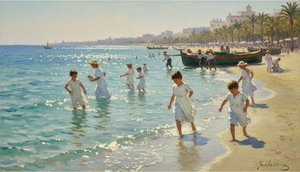
„Srečen dan“ Joaquina Sorolle y Bastide zajema trenutek enotnosti in veselja devetih ljudi ob opravljenju na čolnu na prostem, osvetljenih s toplo svetlobo in živopisnimi barvami – spomin na Sorollino vrhunsko tehniko.
 Preberi več
Joaquin Sorolla: Španielski mistr svetla in barve! Pogledujte njegove živahne portrete ter plažni motivi. Raziskajte njegovo dediščino danes!
Giclée tisk / Umetniški tisk
Giclée ali platnati odtis muzejske kakovosti z hitro proizvodnjo in prilagodljivimi možnostmi končne obdelave. ( Kupite ročno slikano delo Preklop na digitalno sliko)




P118B €10

P118H €10

P118W €10

P438Z €10

P508JH €12

P508YH €12

P805H €10

P805Z €10

P919BZ €10

P919G €10

P919XJ €10

P959ZH €10

P968JZ €12

W106C €8

W218G €10

W218JH €8

W218Y €10

W307PJ €10

W316G €10

W316PJ €8

W316Y €10

W398PJ €8

W4111J €10

W500HY €15

W500JH €15

W692G €12

W849H €8

W940BG €15

W953PJ €8




Standardna velikost
po meri
CM
INCH
Izberite eno od naših vnaprej določenih velikosti, ki ustrezajo prvotnim proporcijam umetničkega dela.
Loading sizes...

širina
višina
Vnesite širino in višino, ki jih potrebujete za svoj okvir ali steno. Tiskanje se lahko le odreže, vendar ga ni mogoče narediti večjega od slike, zato format z drugačno obliko pomeni izgubo dela slike. Pred tiskanjem vam pošljemo digitalni predogled za potrditev. Slika, prikazana na tej strani, ne prikazuje dejanskega izrezka — le predogled to omogoča.
Globalna dostava () v 2 tednih namesto standardnih 4/5 tednov. (31 oktober)

Brezplačna ekspresna dostava po vsem svetu

Visokokakovostno laneno platno

Popolno zavarovanje pošiljke

Garancija povračila carine in uvoznih davkov

Garancija popolnega barvnega ujemanja

100-dnevna politika vračil (le v primeru okvar)

Garancija 100% povračila denarja

Popust pri večjem naročilu
 Možnost stekla je na voljo le za velikosti pod 110 cm

Srečen dan
Giclée tisk / Umetniški tisk
Velikost reprodukcije
-


Skupna cena
€ 61
Slavljenje svetlobe in družbenosti: Raziskovanje Sorollinega »Srečnega dneva«
Joaquín Sorolla y Bastida (1863 – 1923), valencijski slikar, katerega platna žarijo s zlatimi odmesi mediteranskih let, ostaja ena najbolj ljubljenih umetniških osebnosti Španije. Njegovo deloznamuje neomrna predanost zajemanju bežiglavih trenutkov radosti in povezanosti – filozofija, ki najčistejši izraz najde v delu »Srečen dan«, dokončanem leta 1892.
- Tema: Slika prikazuje skupino devetih ljudi, vključenih v skupno popravljanje čolna v delavnici. Ta na videz vsakdanja dejavnost dobi globoko pomen skozi Sorollin vrhunski prikaz človeškega stika in skupne izkušnje.
- Stil: Sorollin slog je trdno zakorenjen v impresionizmu, vendar presega zgolj kopiranje vizualnih občutkov. Namesto tega si želi prenesti čustveno resonanco – oprijemljiv občutek topline, optimizma in skupnega duha.
Sorollina tehnika je izstopajoča zaradi svoje sposobnosti, da svetlobo prikaže z nepreverljivo natančnostjo. Uporablja lase v čopičih, ki se prekrivajo drug z drugim, da ustvari luminosno površino, ki posnema preprožirano svetlobo, ko se prežari skozi listovje. Umetnik skrbno opazuje, kako svetloba spreminja barvo, in zajema subtilne odtenke ter nijanse, ki prispevajo k splošnemu vzduju slike.
- Tehnika: Sorolla je na platno uporabljal oljne barve, ki jih je nanašal z hitrimi, ekspresivnimi potezami – kar je značilnost impresionistične prakse. Sestavna barvna paleta je bila tako veščo združena, da je dosegle zamenljivo teksturo in ustvarila iluzijo globine, s čimer je gledalce privlačno vključila v živahno okolje scene.
- <Barvna paleta: Dominantna barvna paleta slike sestoji iz toplih rumenih, oranžnih in rdečih tonov – barv, ki vzbujajo povezave s sončnim sinarjem, toplino in vitalnostjo. Ti odmesi so postavljeni v kontrast z hladnejšimi zelenimi in modrimi toni, kar ustvarja harmonično ravnovesje in povečuje občutek miru.
Del »Srečen dan« se nahaja v galeriji Galleria d’Arte Moderna di Udine v Udine, Italija, kjer še vedno očaruje občred s svojo brezčasno lepoto. Poleg svoje estetične vrednosti slika govori o širših temah človeške povezanosti in transformativne moči skupnega prizadevanja. Sorollina namena ni bil le prikaz delavnice; želel je zajeti bistvo sreče – trenutek zamrznjen v času, ki izžareva toplino in vabi k razmišljanju.
Zgodovinski kontekst:
Naslikano v obdobju Belle Époque, del »Srečen dan« odraža optimizem in dinamiko tistega časa. Sorollino delo se alinira z širšjim umetniškim gibanjem, ki je zagovarjalo realizem skupaj z ekspresivno barvo – zavestno odstopanje od akademskih konvencij, ki so predlagale natančno podrobnost nad čustvenim vplivom.
Simbolika:
Sam čoln služi kot močan simbol – ne predstavlja le praktičnega dela, temveč tudi ambicijo, napredek in težnjo po kolektivnih ciljih. Ob njega okoližujoče postave personificirajo družbenost in sodelovanje – vrednote, ki so prisotne skozi celotno Sorollino delo.
Končno »Srečen dan« presega svoje formalne elemente, da bi izrazil trajen sporočilo: da prava sreča prebiva v sprejemanju preprostih življenjskih uživkov in negovanju pomembnih vezi z drugimi. Ostaja spomen Sorollinemu umetniškemu geniju – pravo mojstrovino impresionizma, ki še vedno navdihuje občudovanje in čudenost.
Vprašanja in odgovori
Priporočena velikost in orientacija za tiskanje dela "Srečen dan" – kakšna velikost, kakšna orientacija?
Za "Srečen dan" priporočamo tiskanje v velikosti Velik format in z orientacijo Vodoravna orientacija.
Ali so barve v delu "Srečen dan" avtorja Joaquin Sorolla nasičene ali utemeljene?
Zasičenost barvne palete dela "Srečen dan" je Subtilne barve.
Ali je delo "Srečen dan" avtorja Joaquin Sorolla v javni lastini in zakaj?
Del "Srečen dan" avtorja Joaquin Sorolla je v javni domeni – avtorska pravica je zastarela. Avtorske pravice se izračunajo od smrti umetnika, pri čemer je Joaquin Sorolla umrl leta 1923.


Biografija umetnika
Joaquín Sorolla y Bastida - A Life Bathed in Light
Joaquín Sorolla y Bastida, a name synonymous with the radiant light and vibrant energy of Spain, was more than just a painter; he was a chronicler of his nation’s soul. Born in Valencia in 1863, Sorolla's early life was marked by tragedy. Orphaned at the tender age of two following a cholera epidemic that claimed both parents, young Joaquín and his sister were raised by their maternal aunt and uncle. This early experience with loss perhaps instilled within him a profound appreciation for the fleeting beauty of life – a sentiment that would permeate his art. Though hardship shadowed his beginnings, it did not dim the spark of artistic talent that quickly became apparent. He received initial instruction in Valencia, demonstrating an aptitude that led to studies under established artists like Cayetano Capuz and José Benlliure, eventually culminating in a four-year grant to study in Rome. It was there, amidst the classical grandeur of Italy, that Sorolla began to forge his unique artistic path, absorbing influences while simultaneously developing a style distinctly his own.Early Life and Influences
Joaquín Sorolla’s formative years were shaped by profound loss and circumstance. Born on February 27th, 1863, in Valencia, Spain, he descended from a modest family – his father was a tradesman, and his wife Concepción Bastida. Tragically, both parents succumbed to cholera just two years later, leaving Joaquín and his sister under the care of their maternal aunt and uncle. This early exposure to grief undoubtedly instilled within him an awareness of mortality and a deep sensitivity to human emotion—themes that would recur throughout his oeuvre. Recognizing Sorolla’s exceptional talent from a young age, he commenced formal artistic training at Valencia's School of Artisans, where he honed his skills under the tutelage of prominent Valencian painters. Subsequently, he pursued further studies in Madrid with Salustiano Asenjo, immersing himself in the artistic traditions of Spain’s capital. His fascination with Velázquez—particularly the masterful use of light and shadow—became a cornerstone of his artistic vision. This admiration for the Old Master profoundly impacted Sorolla's technique and compositional choices.Rome and Impressionistic Exploration
At eighteen, Sorolla embarked on a transformative journey to Rome, Italy, securing a prestigious scholarship from the Valencian government. During his four-year residency, he absorbed the influence of Italian Renaissance art while simultaneously encountering the burgeoning currents of Impressionism—a movement that would revolutionize European painting. He found inspiration in artists such as Francisco Pradilla Ortiz, the director of the Spanish Academy in Rome, who championed Sorolla’s artistic ambitions and encouraged him to experiment with innovative approaches. Exposure to Parisian exhibitions featuring Jules Bastien-Lepage and Adolph von Menzel further broadened his horizons, introducing him to new stylistic ideas and techniques. Sorolla skillfully blended these influences into a distinctive style characterized by loose brushstrokes, vibrant color palettes, and an unwavering dedication to capturing the ephemeral effects of sunlight—a hallmark of Luminism, as championed by artists like Claude Monet and Frederic Bazille.The Valencian Coast: A Celebration of Light
Sorolla’s artistic focus shifted decisively upon his return to Valencia in 1888, where he married Clotilde García del Castillo, daughter of Antonio García Peris—a supporter who recognized Sorolla's prodigious talent and championed his endeavors. Together they established a family in Madrid, relocating there in 1890, and Sorolla dedicated the subsequent decade to producing monumental canvases depicting scenes from the Valencian coast—a region he adored for its dazzling sunlight and expansive horizon. He became renowned for his depictions of bathing children and adolescents, meticulously studying the interplay between light and color as it illuminated skin and reflected on water surfaces. Paintings like *Children on the Seashore* exemplify Sorolla’s unparalleled ability to convey atmosphere and emotion with breathtaking immediacy—a testament to his unwavering commitment to plein air painting and Luminist principles. His meticulous observation of nature served not merely as subject matter but as a catalyst for artistic innovation, propelling him to the forefront of Spanish Impressionism.Major Achievements and Legacy
Sorolla’s career blossomed throughout the late 1890s and early 20th century, marked by prolific exhibitions in Madrid, Paris, Venice, Munich, Berlin, and Chicago—each showcasing his mastery of technique and capturing the spirit of his time. He garnered considerable acclaim for *The Return from Fishing*, acquired by the Musée du Luxembourg, cementing his reputation as a leading figure on the international stage. Sorolla’s artistic prowess was recognized with numerous honors and commissions, including the Grand Prix and medal of honor at the Universal Exhibition in Paris for *Sad Inheritance*. His monumental mural cycle commissioned by the Hispanic Society of America—*Vision of Spain*, completed posthumously—stands as an enduring symbol of his artistic vision and technical brilliance. Sorolla’s influence extended far beyond his lifetime, inspiring generations of artists who embraced Luminism and sought to emulate his distinctive style. Today, his paintings reside in prestigious museums worldwide—most notably the Museo Sorolla in Valencia—where they continue to captivate audiences with their luminous beauty and profound emotional resonance—a testament to Joaquín Sorolla y Bastida’s enduring legacy as one of Spain's greatest painters.
Joaquin Sorolla
1863 - 1923 , Španija
Hitri podatki
- Artistic Movement Or Style: Luminizem, Impresionizem
- Artists Or Movements Influenced By This Artist: ['Špansko impresionistično umetnost']
- Artists Who Influenced This Artist:
- Francisco Pradilla
- Jules Bastien-Lepage
- Date Of Birth: 27 februarja 1863
- Date Of Death: 10 avgusta 1923
- Full Name: Joaquín Sorolla y Bastida
- Nationality: Špansko
- Notable Artworks:
- Marguerite
- Povratek iz ribolova
- Ženska na plaži
- Place Of Birth: Valencia, Španija
Sorodni članki
Joaquín Sorolla: Capturing Spanish Light & Life – A Legacy of Impressionism
Explore the luminous world of Joaquín Sorolla, Spanish master of Impressionism. Discover his life, techniques & legacy – a guide for art collectors and enthusiasts. Invest in timeless beauty.

Manuel Benedito Vives: A Study of Light, Color & Emotional Resonance in Contemporary Spanish Painting
Explore the captivating world of Manuel Benedito Vives, a celebrated Spanish painter influenced by Sorolla. Discover his masterful portraits, luminous landscapes & enduring legacy – a favorite of the Spanish Royal Family. Art collectors will appreciate this in-depth study.

Evocations of Open Air: A Comprehensive Exploration of Outdoor Scenes in Art History
Explore the rich history of outdoor painting! Discover Impressionism, en plein air techniques & renowned landscape artists. Learn about light, color & enduring artistic legacies with TopImpressionists.

Impressionism's Masterpieces: 10 Paintings That Defined a Movement | TopImpressionists
Journey through Impressionism's heart with 10 iconic paintings by Monet, Renoir & Degas. Explore light, color & the stories behind these masterpieces. Find museum-quality art reproductions and elevate your home decor on TopImpressionists.com.

Boats on Canvas: 10 Masterpieces of Maritime Art for Your Home Decor
Sail away with 10 iconic boat paintings! Explore masterpieces by Monet, Van Gogh & Turner. Discover the stories behind these timeless seascapes and find museum-quality art reproductions for your home decor at TopImpressionists.com.
Raziščite umetniška dela, razvrščena po temah, slogih in značilnostih.


