

Prikazano: · Vključno z okvirjem:
 Predogled v realnem okolju
 Pošlji
 Deli
Deli
 Podrobnosti o delu
 Priročnik

 Prenesi sliko
 Podobni izdelki
 Rentgenski posnetek
 Predvajaj diaporama
 Vprašanja in odgovori
 Statistika
- 75.0 x 63.0 cm


€ 239
Ročno izdelana oljna reprodukcija
Ročno slikano olje na platnu v vaši izbiri velikosti in okvirja, izdelano po naročilu naših umetnikov. ( Preklop na tiskanine Preklop na digitalno sliko)
Velikost
·Standardna velikost
po meri
CM
INCH
Izberite eno od naših vnaprej določenih velikosti, ki ustrezajo prvotnim proporcijam umetničkega dela.
Nalagovanje velikosti...

širina
višina
Vnesite širino in višino, ki jih potrebujete, da se slika prilega vašemu okviru ali steni. Ker je delo ročno slikano, lahko umetnik pri različnih oblikih slik pri robovih doda malo več barve ali pa jih malo odreže — izberite sami. Pred začetkom slikanja vam pošljemo digitalni predogled za potrditev. Slika, prikazana na tej strani, ni končni rezultat — le predogled prikazuje dejansko podobo.
 Preberi več
Zaključek
·
Beli rob €1

zamegljen rob €1

Razširjen rob €1

P118B €10

P118H €10

P118W €10

P438Z €10

P508JH €12

P508YH €12

P805H €10

P805Z €10

P919BZ €10

P919G €10

P919XJ €10

P959ZH €10

P968JZ €12

W106C €8

W218G €10

W218JH €8

W218Y €10

W307PJ €10

W316G €10

W316PJ €8

W316Y €10

W398PJ €8

W4111J €10

W500HY €15

W500JH €15

W692G €12

W849H €8

W940BG €15

W953PJ €8

H24-GOLD €30

H24-SILVER €30

H36-GOLD €45

H36-SILVER €45
Pošiljanje v zaščitni tubi, pripravljeno za vaš lastni okvir.
Nad 105 cm se okvir pošlje v obliki kompleta za profesionalnega okvirja — preberite podrobnosti.
Dodatne storitve
po izbogiKaj vse vključujejo dodatki?
Primeri sprememb, ki jih je mogoče izvesti: zamenjava obraza s fotografijo stranke; dodajanje hišnega ljubljenčka (npr. zamenjava mačke s psom); vključitev skritega sporočila v ozadje; sprememba krajine ali elementov v ozadju.
Po oddaji naročila bo ekipa TopImpressionists.com stranki po e-pošti poslala navodila in zagotovila predogled makete
Po oddaji naročila bo ekipa TopImpressionists.com stranki po e-pošti poslala navodila in zagotovila predogled makete
Mednarodna dostava () v 3/4 tednih namesto običajnih 5 tednov. (5 november). Brez kompromisov pri kakovosti.
Zaščitni lak
Značka z imenom
Podrobnosti o gravirani bronasti plošči
This elegant plaque features the artist's name and the title of the artwork, finely engraved for a timeless presentation.
It is made from bronze with a refined, elegant finish. The text is precisely laser-engraved for a sharp and permanent result. Measuring 9x2 cm, the plaque is compact yet easy to read. It's built to be durable and scratch-resistant, offering a professional, museum-quality look. Mounting is simple thanks to the included adhesive backing.
Podrobnosti o transparentni akrilni plošči
The plaque includes essential engraved details such as the artist's name, the title of the artwork, the date it was created, the type of media used-like oil on canvas or watercolor-a brief description of the piece, and a QR code that links to the complete artwork information.
It is crafted from clear acrylic, offering a sleek, modern appearance. The text is UV-engraved in black to ensure strong visual contrast. With a size of 10x15 cm, it ensures optimal readability. It comes equipped with two metal hooks for secure wall mounting. The plaque is designed to be weather-resistant, making it suitable for various environments, and it includes interactive features that work seamlessly with smartphone scanning.
Podrobnosti o črni akrilni plošči
This elegant plaque includes engraved information such as the artist's name, the title of the artwork, the date it was created, the type of media used (like oil on canvas or watercolor), a short description of the artwork, and a QR code for quick access to more information.
The plaque itself is made from refined black acrylic with a premium finish. The text is laser-engraved in white for high contrast and readability. Its size is 10x15 cm, designed to be easy to read. It comes with two metal hooks for professional mounting. The design is sleek and fits any interior style. It is also weather-resistant and durable, with built-in digital integration for mobile compatibility.
Možnost stekla je na voljo le za velikosti pod 110 cm
 Možnost stekla je na voljo le za velikosti pod 110 cm
- Brezplačna ekspresna dostava po vsem svetu
- Visokokakovostno laneno platno
- Popolno zavarovanje pošiljke
- Garancija povračila carine in uvoznih davkov
- Garancija popolnega barvnega ujemanja
- 100-dnevna politika vračil (le v primeru okvar)
- Garancija 100% povračila denarja
- Popust pri večjem naročilu


Opis zbirateljskega predmeta
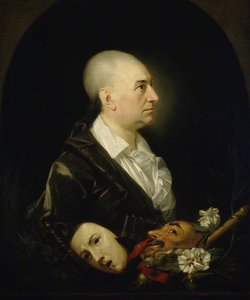
Admire Johann Zoffany's iconic portrait of David Garrick alongside Eva Maria Veigel, capturing the theatrical spirit of Georgian England at The Ashmolean Museum.
Biografija umetnika
Odkrijte mojstrovine Johanna Zoffanyja! Slavni po 'pogovorih', združuje nemško natančnost in italijanski stil. Portreti, zgodovinske slike in Tribuna Uffizi – na voljo!
O sliki
A Theatrical Soul Captured in Oil
In the quiet halls of The Ashmolean Museum of Art and Archaeology, there exists a portrait that does more than merely record a likeness; it breathes with the very essence of the eighteenth-century stage. Johann Zoffany’s 1763 masterpiece, David Garrick, is an evocative window into the heart of Enlightenment England. At first glance, we encounter the commanding presence of Garrick, the most celebrated actor of his era, rendered with a profound sense of dignity and intellectual depth. Zoffny does not present us with a mere performer in costume, but with a man whose very existence was intertwined with the dramatic arts. The composition is intimate yet grand, focusing on Garrick from the chest up against a somber, dark background that pushes his luminous features toward the viewer, demanding an immediate and visceral connection.
The technique employed by Zoffany is nothing short of masterful, showcasing the meticulous precision characteristic of the finest oil-on-canvas works of the period. Through subtle tonal gradations and a sophisticated command of light, the artist breathes life into the textures of the subject's attire—the crisp white collar contrasting sharply against the deep black of his formal coat. This interplay of light and shadow, or chiaroscuro, serves to sculpt Garrick’s face, highlighting a contemplative gaze that seems to look beyond the frame, perhaps lost in thought regarding a recent performance or a future script. For the discerning collector or interior designer, this painting offers a profound sense of classical elegance, making it an ideal centerpiece for spaces that value historical gravity and sophisticated drama.
The Dual Faces of Drama
Beyond the physical representation of a legendary actor, Zoffany weaves a complex tapestry of symbolism into the very fabric of the portrait. Floating near Garrick’s face are two iconic theatrical masks: the smiling visage of Comedy and the furrowed, mournful brow of Tragedy. These are not mere decorative elements; they are the dual pillars of the human experience that Garrick mastered on stage. The presence of these masks transforms the portrait from a standard biographical study into a profound meditation on the nature of performance and emotion. It suggests that behind the dignified gentleman lies the capacity for both joyous exuberance and profound sorrow, mirroring the duality of the human condition itself.
This symbolic layer adds an intellectual richness that elevates the artwork, making it much more than a decorative piece. It invites the viewer to contemplate the boundaries between reality and artifice, between the man and the persona. For those looking to adorn a home or gallery with a reproduction of this caliber, the painting provides a continuous source of conversation and inspiration. It embodies a period where art, intellect, and social status converged in a beautiful, theatrical display. To possess such a work is to hold a fragment of history—a moment frozen in 1763, where the spirit of the theatre remains eternally vibrant and hauntingly beautiful.
Vprašanja in odgovori
Ali avtorske pravice za "David Garrick" avtorja Johann Zoffany dovoljujejo reprodukcijo?
Delo "David Garrick" avtorja Johann Zoffany, ki se nahaja v muzeju Muzej umetnosti in arheologije Ashmolean, je v javni domeni (v javni domeni – avtorska pravica je zastarela). Ta status določa, ali je dovoljeno izdelovati reprodukcije slike.
Kakšnih je originalnih dimenzij "David Garrick"?
Dimenzije originalnega dela "David Garrick" avtorja Johann Zoffany so 75 x 63 cm.
Ali lahko "David Garrick" ogledam kot diaporama v celotnem zaslonu?
Diaporama dela "David Garrick" si lahko ogledate na strani Slidešov za to umetniško delo.
Hitri podatki in kviz o umetnosti
O Johann Zoffany

Johann Zoffany
1733 - 1810, Nemčija
Biografija umetnika
Johann Zoffany: Življenje in Zapuščina
Johann Zoffany, rojen Johannes Josephus Zaufallij leta 1733 v Freiburgu, Nemčija, je bil slikar, ki si je uveljavil sloves predvsem v Angliji in Italiji. Podrobnosti o njegovem zgodnjem otroštvu so redke, vendar vemo, da je že od mlada prejel umetniško izobrazbo. Sprva se je učil pri kiparju, morda Melchiorju Paulusu v Ellwangenu, nato pa pri Martinu Speerju v Regensburgu. To temeljno obdobje je postavilo temelje za njegovo prihodnjo kariero.
Potovanje v Italijo in Anglijo
Leta 1750 se je Zoffany odpravil v Rim, kjer je vstopil v studio Agostina Masuccija in izpilil svoje spretnosti znotraj italijanske umetniške tradicije. Kasneje se je leta 1760 preselil v Anglijo, kjer si je sprva zagotavljal preživetje z ustvarjanjem dekorativnih načrtov za ure, ki jih je izdeloval Stephen Rimbault. To obdobje je pomenilo prelomnico, saj je začel vzpostavljati stike in pridobivati priznanje v londonskem umetniškem krogu.
Kraljeva podpora in umetnostni razvoj
Zoffany je hitro pritegnil pozornost kralja Jurija III. in kraljice Charlotte, postal pa je priljubljen portretist kraljeve družine. Njegova sposobnost ujemanja neformalnih trenutkov – kot na primer Kraljica Charlotte in njena dva starejša otroka (1765) – ga je ločila od bolj formalnih dvornega slikarjev. Bil je priljubljen tudi pri avstrijski cesarski družini in leta 1776 ga je cesarica Marija Terezija povzdignila v barona Svetega rimskega cesarstva.
Mojster ‘Konverzacijskih slik’
Zoffany je postal znan po svojih “konverzacijskih slikah” ali *conversazione* – neformalnih skupinskih portretih, ki prikazujejo družabna srečanja. Odlično mu je uspelo ujeti osebnosti in interakcije v teh prizorih, pogosto pa so bili upodobljeni pomembni predstavniki družbe, gledališča in literature. Njegova dela, kot na primer Družina Cope (1775), ponazarjajo ta slog in ponujajo vpogled v življenje njegovih pokroviteljev.
Pomembni dosežki in pomembna dela
- Tribuna Uffizi (1772-1778): Morda njegovo najbolj znano delo, natančen prikaz galerije Uffizi v Firencah.
- Dr William Hunter poučuje anatomijo na Kraljevi akademiji (1779): Fascinanten portret medicinske izobrazbe in znanstvenih raziskav.
- Jurij III. (1771): Velikanski portret, ki prikazuje kraljevo moč in eleganco.
- Kokin boj polkovnika Mordaunta (1784-1786): Živahna upodobitev kolonialnega življenja v Indiji, ki ujame edinstven kulturni dogodek.
Leta v Indiji in poznejše življenje
Od leta 1783 do 1789 je Zoffany prebival v Indiji, kjer je portretiral pomembne osebnosti, kot sta Warren Hastings in Asaf-ud-Daula. Njegove izkušnje so vplivale na njegov umetniški slog in teme. Pomembna zgodba iz tega obdobja se nanaša na ladijsko brodolom pri Andamanih, kjer so preživeli prisiljeni k skrajnim ukrepom za preživetje.
Vplivi in zapuščina
Zoffanyevo delo odraža vplive nemške natančnosti in italijanske umetnosti. Navdihnila ga je dela Agostina Masuccija in baročna tradicija. Njegov slog je vplival na sodobnike in poznejše umetnike, ki so se zanimali za portretiranje in družbeno kritiko. Zoffany je združil umetniške tradicije in pustil trajen pečat v 18-letnem stoletju.
Zgodovinski pomen
Slikarstvo Johanna Zoffanyja nam ponuja dragocene vpoglede v družbene navade, intelektualno življenje in kulturne vrednote njegovega časa. Njegove “konverzacijske slike” ponujajo intimne portrete pomembnih osebnosti in njihovega sveta, medtem ko so njegovi prikazi Indije prispevali k našemu razumevanju kolonialne zgodovine. Ostaja pomembna figura v umetniški zgodovini, ki je priznan po svoji tehnični spretnosti, vpoglednih opazovanjih in edinstveni umetniški viziji.
Kratek pregled o Johann Zoffany
- Datum Rojstva: 1733
- Datum Smrti: 1810
- Državljanstvo: Nemški
- Kraj Rojstva: Frankfurt, Nemčija
- Polno Ime: Johann Zoffany
- Pomembna Dela:
- Tribuna Uffizi
- Dr. Hunter
- Umetniški Slog: Neoklasicizem, Realizem
- Vpliv Na Umetnost: ['Portretiranje']
- Vplivi Umetnikov: ['Agostino Masucci']
Johann Zoffany
David Garrick
() ·
Vključno z okvirjem: · Ročno slikano z oljem na platnu
Skupni znesek