

Prikazano: · Vključno z okvirjem:
 Predogled v realnem okolju
 Pošlji
 Deli
Deli
 Podrobnosti o delu
 Priročnik

 Prenesi sliko
 Podobni izdelki
 Rentgenski posnetek
 Predvajaj diaporama
 Vprašanja in odgovori
 Statistika
- 120.0 x 100.0 cm


€ 262
Ročno izdelana oljna reprodukcija
Ročno slikano olje na platnu v vaši izbiri velikosti in okvirja, izdelano po naročilu naših umetnikov. ( Preklop na tiskanine Preklop na digitalno sliko)
Velikost
·Standardna velikost
po meri
CM
INCH
Izberite eno od naših vnaprej določenih velikosti, ki ustrezajo prvotnim proporcijam umetničkega dela.
Nalagovanje velikosti...

širina
višina
Vnesite širino in višino, ki jih potrebujete, da se slika prilega vašemu okviru ali steni. Ker je delo ročno slikano, lahko umetnik pri različnih oblikih slik pri robovih doda malo več barve ali pa jih malo odreže — izberite sami. Pred začetkom slikanja vam pošljemo digitalni predogled za potrditev. Slika, prikazana na tej strani, ni končni rezultat — le predogled prikazuje dejansko podobo.
 Preberi več
Zaključek
·
Beli rob €1

zamegljen rob €1

Razširjen rob €1

P118B €10

P118H €10

P118W €10

P438Z €10

P508JH €12

P508YH €12

P805H €10

P805Z €10

P919BZ €10

P919G €10

P919XJ €10

P959ZH €10

P968JZ €12

W106C €8

W218G €10

W218JH €8

W218Y €10

W307PJ €10

W316G €10

W316PJ €8

W316Y €10

W398PJ €8

W4111J €10

W500HY €15

W500JH €15

W692G €12

W849H €8

W940BG €15

W953PJ €8

H24-GOLD €30

H24-SILVER €30

H36-GOLD €45

H36-SILVER €45
Pošiljanje v zaščitni tubi, pripravljeno za vaš lastni okvir.
Nad 105 cm se okvir pošlje v obliki kompleta za profesionalnega okvirja — preberite podrobnosti.
Dodatne storitve
po izbogiKaj vse vključujejo dodatki?
Primeri sprememb, ki jih je mogoče izvesti: zamenjava obraza s fotografijo stranke; dodajanje hišnega ljubljenčka (npr. zamenjava mačke s psom); vključitev skritega sporočila v ozadje; sprememba krajine ali elementov v ozadju.
Po oddaji naročila bo ekipa TopImpressionists.com stranki po e-pošti poslala navodila in zagotovila predogled makete
Po oddaji naročila bo ekipa TopImpressionists.com stranki po e-pošti poslala navodila in zagotovila predogled makete
Mednarodna dostava () v 3/4 tednih namesto običajnih 5 tednov. (7 november). Brez kompromisov pri kakovosti.
Zaščitni lak
Značka z imenom
Podrobnosti o gravirani bronasti plošči
This elegant plaque features the artist's name and the title of the artwork, finely engraved for a timeless presentation.
It is made from bronze with a refined, elegant finish. The text is precisely laser-engraved for a sharp and permanent result. Measuring 9x2 cm, the plaque is compact yet easy to read. It's built to be durable and scratch-resistant, offering a professional, museum-quality look. Mounting is simple thanks to the included adhesive backing.
Podrobnosti o transparentni akrilni plošči
The plaque includes essential engraved details such as the artist's name, the title of the artwork, the date it was created, the type of media used-like oil on canvas or watercolor-a brief description of the piece, and a QR code that links to the complete artwork information.
It is crafted from clear acrylic, offering a sleek, modern appearance. The text is UV-engraved in black to ensure strong visual contrast. With a size of 10x15 cm, it ensures optimal readability. It comes equipped with two metal hooks for secure wall mounting. The plaque is designed to be weather-resistant, making it suitable for various environments, and it includes interactive features that work seamlessly with smartphone scanning.
Podrobnosti o črni akrilni plošči
This elegant plaque includes engraved information such as the artist's name, the title of the artwork, the date it was created, the type of media used (like oil on canvas or watercolor), a short description of the artwork, and a QR code for quick access to more information.
The plaque itself is made from refined black acrylic with a premium finish. The text is laser-engraved in white for high contrast and readability. Its size is 10x15 cm, designed to be easy to read. It comes with two metal hooks for professional mounting. The design is sleek and fits any interior style. It is also weather-resistant and durable, with built-in digital integration for mobile compatibility.
Možnost stekla je na voljo le za velikosti pod 110 cm
 Možnost stekla je na voljo le za velikosti pod 110 cm
- Brezplačna ekspresna dostava po vsem svetu
- Visokokakovostno laneno platno
- Popolno zavarovanje pošiljke
- Garancija povračila carine in uvoznih davkov
- Garancija popolnega barvnega ujemanja
- 100-dnevna politika vračil (le v primeru okvar)
- Garancija 100% povračila denarja
- Popust pri večjem naročilu


Opis zbirateljskega predmeta
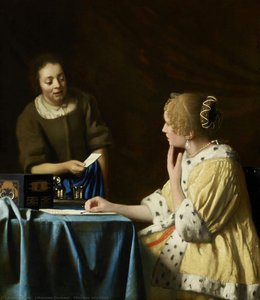
Umetnost risanja od Vermeera - Ikonična italijanska baročna slikarska dela iz leta 1665, ki prikazuje umetnika v njegovem studiju in žensko modeljo. Raziskajte lepoto znanega nizozemskega mojstra!
Biografija umetnika
Odkrijte Johanesa Vermeerja (1632-1675), nizozemskega mojstra svetlobe in intimnih prizorov. Oglejte si 'Deklico z biserom' ter njegove ikonične slike iz Zlate dobe, znane po realizmu in spokojnosti.
O sliki
The Art of Painting by Johannes Vermeer
Johannes Vermeer (1632-1675), a name synonymous with the quiet intimacy of 17th-century Dutch life, remains an enigma despite centuries of scholarship. Born in Delft in October 1632, his existence unfolded against the backdrop of the Dutch Golden Age—a period of unprecedented prosperity, artistic innovation, and burgeoning civic pride. His father, Reijnier Janszoon, was a silk weaver and art dealer, a combination that subtly shaped young Johannes’s path. Exposure to both the tactile world of craftsmanship and the discerning eye of the art market instilled in him an understanding of materials, composition, and the delicate dance between creation and commerce. This early immersion wasn't merely observational; it provided a foundation upon which Vermeer would build his own unique artistic vision. He wasn’t born into privilege, but rather into a world where artistry was interwoven with everyday practicality, a sensibility that would profoundly influence his oeuvre.- Overview: The Art of Painting (also known as *Allegory of Painting*) is Vermeer's masterpiece—a monumental achievement in perspective and illumination—that embodies the spirit of the Dutch Golden Age. Executed around 1665-1668, it depicts an artist at work in his studio alongside a woman posing as a model by a window.
- Subject Matter: The painting is an allegory of painting itself, reflecting Vermeer’s intellectual curiosity and fascination with the craft. It embodies the humanist ideals prevalent during this era—a celebration of knowledge, beauty, and contemplation.
- Style & Technique: Vermeer's style is characterized by its remarkable realism and meticulous attention to detail. He achieved this through masterful use of chiaroscuro—the dramatic interplay of light and shadow—creating depth and texture that captivate the viewer’s eye. His brushwork is incredibly precise, layering pigments with painstaking care to produce a luminous quality that brings the scene to life.
- Historical Context: Created during the Dutch Golden Age (1588-1672), “The Art of Painting” reflects the era's fascination with domestic interiors and intellectual pursuits—a testament to Vermeer’s place within one of history’s most fertile artistic landscapes.
Composition & Perspective
Vermeer’s compositional genius is immediately apparent upon viewing *The Art of Painting*. The artist sits at an easel, bathed in soft light emanating from a window—a deliberate choice that underscores the painting's central theme: illumination. He is accompanied by a woman dressed in blue who poses as his model—a figure imbued with symbolic significance representing Clio, Muse of History. Behind them hangs a large map of the Low Countries, meticulously rendered to convey spatial depth and contribute to the overall atmosphere of erudition. The artist’s gaze directs the viewer's eye across the canvas, creating a dynamic yet balanced visual experience. Vermeer skillfully employs linear perspective—a technique pioneered during this period—to create an illusion of three-dimensionality that draws the viewer into the studio space.- The Window: The window serves as a focal point, casting light onto the woman and highlighting the textures of the drapery—creating a sense of realism and inviting contemplation.
- The Map: The map symbolizes knowledge and exploration—reflecting the humanist spirit of the time and reinforcing Vermeer’s artistic vision.
- Spatial Depth: Vermeer's masterful use of perspective establishes a convincing illusion of space, transporting the viewer to the artist’s studio and immersing him in the scene’s atmosphere.
Symbolism & Meaning
The painting is rich with symbolic elements that invite deeper interpretation—a testament to Vermeer’s artistic sophistication and his engagement with humanist thought. The woman embodies Clio, Muse of History—representing the pursuit of knowledge and artistic inspiration. The artist himself symbolizes creativity and craftsmanship—reflecting Vermeer's dedication to his craft. Furthermore, the inclusion of instruments like a lute and a violin underscores the importance of music in Renaissance culture—a subtle nod to Vermeer’s intellectual interests. The map represents the Low Countries—the center of European commerce and artistic innovation during this period—affirming Vermeer’s place within the cultural landscape of his time. Overall, *The Art of Painting* is an emblem of enlightenment—a celebration of beauty, intellect, and artistic excellence.- Clio: Represents History and Inspiration
- Instruments: Symbolize Musical Culture
- Map: Reflects the Importance of Geography & Commerce
Technical Achievement
Vermeer’s technique—characterized by meticulous brushwork and layering—is unparalleled in its ability to capture light and texture with astonishing accuracy. He achieves this through a process known as glazing—applying thin layers of translucent pigment over previous coats—creating a luminous quality that imbues the painting with an ethereal glow. The artist's attention to detail is evident in every aspect of the composition—from the folds of the drapery to the subtle nuances of color—demonstrating Vermeer’s mastery of artistic craftmanship. This level of precision and artistry distinguishes *The Art of Painting* as one of Vermeer’s most ambitious achievements—a testament to his genius and a cornerstone of Baroque art history.Vprašanja in odgovori
Ali je "Umetnost risanja" avtorja Jan Vermeer Van Delft portretna, krajinska ali kvadratna kompozicija?
"Umetnost risanja" avtorja Jan Vermeer Van Delft je Portretni format kompozicija. Pred izbiro velikosti tiska je priporočljivo preveriti njene proporcije.
Kakšno barvno harmonijo prikazuje "Umetnost risanja" avtorja Jan Vermeer Van Delft?
Barve v delu "Umetnost risanja" avtorja Jan Vermeer Van Delft odražajo Močna barvna enotnost harmonijo. Harmonija opisuje odnos barv med seboj.
S kakšnimi pseudonimi ali alternativnimi imeni je znan/a Jan Vermeer Van Delft?
Jan Vermeer Van Delft je znana tudi pod imenom Johannes Vermeer, Ver Meer.
Hitri podatki in kviz o umetnosti
O Jan Vermeer Van Delft

Jan Vermeer Van Delft
1632 - 1675, Nizozemska
Biografija umetnika
Jan Vermeer: Mojster svetlobe in intimnih prizorov
Jan Vermeer van Delft, pogosto imenovan Johannes Vermeer, je nizozemski slikar, ki se je rodil v letu 1632 v Delptu in umrl leta 1675. Njegovo ime je sinonim za tiho eleganco življenja v 17. stoletju, a kljub številnim raziskavam ostaja obdano z skrivnostjo. Rojen v obdobju nizozemske zlatodobje – dobe izjemnega blagostanja, umetniškega napredka in rastoče državljanske ponosnosti –, je Vermeer odraščal v okolju, ki je oblikovalo njegovo edinstveno vizijo. Njegov oče, Reijnier Janszoon, je bil tkalec svile in trgovec z umetninami, kar mu je omogočilo zgodnje izpostavljanje tako praktičnemu obrtništvu kot zahtevam umetniškega trga. Ta kombinacija je v njem gojila občutljivost za materiale, kompozicijo in kompleksno igro med ustvarjanjem in poslovanjem. Že zgodaj se je poročil s Catharino Bolnes, katoličanko, kar je dodalo subtilen sloj zapletenosti njegovi življenjski poti v večinoma protestantskem Delptu.Od zgodnjih del do intimnih prizorov: Vermeerjeva umetniška pot
Vermeer se je sprva posvečal zgodovinskim in mitološkim temam, a kmalu je našel svojo pravo poklicanost v žanrskih slikah – upodobitvah vsakdanjega življenja. Ni ga zanimalo prikazovanje veličastnih pripovedi ali junakov; namesto tega je lepot in pomen odkrival v običajnem: ženi, ki bere pismo ob oknu, sirarki, ki vliva svoje izdelke, natančni izdelovalki čipk. Te slike niso bile zgolj upodobitve vsakdanjega življenja; temveč premišljene študije svetlobe, barve in človeške prisotnosti. Njegova tehnika je bila izjemno zahtevna, zaznamovana s premišljenostjo in skoraj znanstvenim pristopom k optiki. Ni pogosto skiciral ali ustvarjal številnih različic iste kompozicije; vsaka slika je bila temeljito načrtovana, zgrajena plast za plastjo s tankimi sloji barve, ki so ustvarili edinstveno svetlobno kakovost. Ta natančnost je pripeljala do relativno majhne produkcije – danes se mu univerzalno pripisuje le okoli 34 slik –, a vsaka od njih je dokaz njegove neomajne predanosti in umetniškega mojstrstva. Vermeer ni le *predstavljal* resničnosti; zajemal je bistvo svetlobe, ko je delovala na površinah, ustvarjal vzdušje mirne tišine in umirjenega razmišljanja.Svetloba kot jezik: Vermeerjeva mojstrstvo
Kaj Vermeerja ločuje od drugih slikarjev, je njegovo izjemno obvladovanje svetlobe. Svetloba ni le osvetljevala njegovih prizorov; definirala jih je. Ni bila groba ali dramatična iluminacija, temveč mehka, razpršena sijaj, ki se je zdelo, da izvira neposredno iz slik samih. Ta učinek je dosegel s kombinacijo natančnega opazovanja in tehničnih spretnosti – globokega razumevanja tega, kako svetloba odseva na različnih površinah, in sposobnostjo pretvoriti te opazovalnice v osupljivo natančnost na platnu. Uporabljal je tehniko *camera obscura*, naprave, ki je projicirala sliko na površino, kar mu je verjetno pomagalo pri natančnem upodabljanju perspektive in podrobnosti. Vendar Vermeer ni le kopiral tega, kar je videl; interpretiral ga je s svojo umetniško občutljivostjo, vsako sceno napolnil z emocionalnim odmehom in psihološko globino. Njegovi notranji prostori niso zgolj prostore; so svetovi zase, polni subtilnih nians in skritih pomenov. Postavitve predmetov, kot svetloba pada, izraz na obrazu subjekta – vse prispeva k premišljeni kompoziciji, ki vabi gledalce, da se zadržajo in razmislijo.Odkrita genialnost: Vermeerjeva trajna vpliv
Kljub svojemu talentu je Vermeer med svojim življenjem užival le skromno prepoznavanje. Boril se je s finančnimi težavami, obremenjen z dolgovi družine in gospodarskim upadom 70. let 17. stoletja. Njegova smrt leta 1675 je njegovo ženo in otroke pustila v negotovem položaju. Skoraj dva stoletja kasneje so njegove slike ostale skoraj pozabljene, zasenčene s strani bolj produktivnih in slavnih umetnikov. Šele v 19. stoletju so ga ponovno odkrili umetnostni zgodovinarji, kot sta Gustav Friedrich Waagen in Théophile Thoré-Bürger, ki so proslavili njegovo genialnost in njegove slike predstavili širši javnosti. Ta ponovna odkritje je sprožilo val zanimanja, Vermeerjev ugled pa se še naprej povečuje. Danes ga častijo kot enega največjih slikarjev nizozemske zlatodobje – mojstra svetlobe, barve in kompozicije, katere dela še vedno očarajo in navdihujejo. Njegov vpliv je mogoče zaznati pri številnih umetnikih, ki so sledili njegovim stopinjam, pritegnjeni k njegovi sposobnosti zajeti lepoto in dostojanstvo vsakdana.- Pomembna dela: *Sirarka*, *Pogled na Delft*, *Deklica s biserom*, *Umetnost slikanja*, *Ljubiteljska pisma*.
- Tematsko raziskuje intimnost, svetlo in senco, perspektivo ter tiho lepoto vsakdanjega življenja.
Kratek pregled o Jan Vermeer Van Delft
- Datum Rojstva: 31. oktober 1632
- Datum Smrti: December 1675
- Kraj Rojstva: Delft, Nizozemska
- Nacionalnost: Nizozemec
- Pod Vplivom: Generacije umetnikov
- Polno Ime: Johannes Vermeer
- Umetniški Slog: Zlata doba Nizozemske
- Vplivneži:
- Pieter de Hooch
- Gerard ter Borch
- Znani Dela:
- Deklica z biserom
- Prizor iz Delfta
- Mlekarica
- Ljubiteljska pisma
Raziščite umetniška dela, razvrščena po temah, slogih in značilnostih.



Jan Vermeer Van Delft
Umetnost risanja
() ·
Vključno z okvirjem: · Ročno slikano z oljem na platnu
Skupni znesek