

 Predogled v realnem okolju
 Pošlji
 Deli
Deli
 Podrobnosti o delu
 Priročnik

 Prenesi sliko
 Podobni izdelki
 Rentgenski posnetek
 Predvajaj diaporama
 Q&A
Q&A Statistika
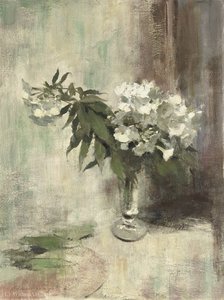
Goblet with Forget-me-nots


Admire Léon Bonvin’s "Goblet with Forget-me-nots" (1863). A poignant French watercolor capturing delicate still life beauty. Hand-painted reproduction available.
 Preberi več
Discover Léon Bonvin: French watercolorist of poignant genre scenes & delicate landscapes. Explore his realist still lifes & haunting beauty, a tragic artist's legacy.
Pridobite datoteko, pripravljeno za tiskanje, ki presega kakovost spletnega predogleda. Vsaka digitalna slika v naši ponudbi izvira iz visoko ločljive izvirne datoteke v naši bazi — običajno široke od 5.000 do 15.000 pikselov — zato lahko z zaupanjem tiskate v večji format, tesno izrezujete ali reproducirate fine podrobnosti.
Nobena datoteka ne zapusti našega studia nedotiknjena. Digitalni strokovnjak preveri barve v primerjavi z izvirno sliko in jih po potrebi popravi, nato pa s profesionalnimi orodji za retuširanje izboljša jasnost in podrobnosti — pri čemer vedno ostaja zvest umetnikovim potezam in slogu. Rezultat je slika, ki izgleda kot samo slikarstvo, ne pa kot le filtriran sken.
Potrditev pred dokončanjem dela: naš strokovnjak vam v roku 72 ur pošlje sliko po e-pošti na pregled. Niste zadovoljni? Zahtevajte izboljšave ali popravke ali prosite za povračilo denarja, če kakovost ni v skladu z pričakovanimi standardi.
To je kakovost, po kateri temeljijo založniki, oblikovalni studii, galerije in tiskarne.
Digitalna slika
Prenesite datoteko visoke ločljivosti za osebno uporabo, tiskanje in kreativne projekte. ( Preklop na tiskanine Kupite ročno slikano delo)
Vključeno v vsako naročilo digitalne slike
Zagotovljena strokovna digitalna dostava
Z izbiro TopImpressionists.com ne prejmete le slike – prejmete profesionalno urejeno digitalno umetniško delo, izdelano z največjo natančnostjo in zavestno podprto z garancijo za zadovoljstvo. Tukaj je vse, kar bo z vašim naročilom samodejno priloženo:

Hitra dostava prek e-pošte
Vaša digitalna slika visoke ločljivosti bo na vaš e-naslov poslana v roku 72 ur od zaklopa naročila – pripravljena za takojšnjo uporabo.

Digitalna datoteka z uporabo AI
Vaše umetniško delo je strokovno optimizirano z uporabo naprednih orodij umetne inteligence in ročne obdelave, kar zagotavlja največjo stopnjo podrobnosti, jasnosti in barvne natančnosti.

Brezplačna doletna ponovna dostava
Ste datoteko zaradi nespremietne napake izgubili ali izbrisali? Ni težav – vam jo bomo ponovno poslali kadar koli in brezplačno.

Brez uvoznih pristojbin – vedno
Svoje umetniško del uživajte takoj, brez carin, davkov ali stroškov dostave – digitalni prenosi so vedno brezdavčni.

Zagotovilo natančnosti barv
Z uporabo profesionalnih orodij in procesov upravljanja barv zagotavljamo, da vaša digitalna slika čim bolj natančno odraža prvotne barve.

100-dnevna garancija zadovoljstva
Če niste zadovoljni s svojo digitalno sliko, jo bomo uredili ali vam v 100 dneh povrnili 100% denarja – brez kakršnih koli vprašanj.

100% Garancija povračila denarja
Niste zadovoljni? Zagotavljamo vam popoln povračilo sredstev v 100 dneh po prejemu digitalne datoteke – brez dodatnih vprašanj.

Popusti pri večjih naročilih
Kupite 3 slike, prihranite 10% - Kupite 5 slik, prihranite 15% - Kupite 10+ slik, prihranite 20%. Odlično za kreativne projekte, galerije in agencije.
Léon Bonvin was born in Vaugirard, just outside Paris in 1834. Despite displaying great talent in the medium of watercolor he was largely unrecognized by his contemporaries. In 1866 he hanged himself at the age of 32, apparently due to financial difficulties. Working at his family
Vprašanja in odgovori
Kje lahko kupim tiskanino dela "Goblet with Forget-me-nots" avtorja Léon Bonvin?
"Goblet with Forget-me-nots" je na voljo kot umetniška grafika na bombažnem platnu ali arhivskem papirju za platno. Naročila lahko oddate na strani Kakovostna umetniška tiskanina v izbrani velikosti.
Kdo je avtor dela "Goblet with Forget-me-nots"?
"Goblet with Forget-me-nots" pripisujemo Léon Bonvin.
Kje je danes razstavljeno "Goblet with Forget-me-nots" avtorja Léon Bonvin?
Originalno delo "Goblet with Forget-me-nots" lahko vidite v muzeju The Walters Art Museum, Baltimore, Združene države Amerike.
Sorodna umetniška dela




Biografija umetnika
Léon Bonvin: A Tragic Master of Melancholy
Born in the humble outskirts of Paris in 1834, Léon Bonvin’s life was a poignant paradox—a soul deeply attuned to beauty and melancholy, yet tragically cut short before his artistic potential could fully blossom. His story is not merely that of an artist; it's one of quiet resilience, profound observation, and the heartbreaking struggle against poverty and despair. His legacy resides in a collection of delicate watercolors, imbued with a haunting stillness that continues to captivate viewers today.
Bonvin’s early life was marked by hardship. The son of a constable and a seamstress who operated a small guinguette (a popular outdoor tavern), he grew up amidst scarcity and the constant awareness of his family's limited resources. His older stepbrother, François Bonvin, recognizing Léon’s nascent talent, provided him with rudimentary art supplies—paints and encouragement—and instilled in him a deep appreciation for the works of the Dutch masters, particularly their meticulous attention to detail and atmospheric perspective. While he likely attended some classes at the École royale gratuite de dessin, his primary education came from self-study and an innate sensitivity to light and shadow. Adding another layer to his life was a passion for music; he learned to play the harmonium, finding solace in its melodies amidst the difficulties of his existence.
A World Rendered in Watercolor
Bonvin’s artistic style is immediately recognizable—a quiet realism characterized by an exquisite delicacy and a pervasive sense of melancholy. He primarily worked in watercolor, a medium he favored for its affordability and ability to capture fleeting atmospheric effects. His subjects were often humble: domestic scenes, still lifes of fruit and flowers, and solitary figures immersed in contemplation. He meticulously studied the works of Jean Siméon Chardin, replicating his ability to convey profound emotion through seemingly simple objects. His still lifes are not merely depictions of items; they’re imbued with a sense of quiet dignity and a poignant awareness of mortality.
Unlike many artists of his time who sought grand narratives or dramatic events, Bonvin focused on the everyday—the ordinary moments of life that often go unnoticed. He possessed an extraordinary eye for detail, rendering textures and light with remarkable precision. His landscapes are particularly noteworthy, capturing the subtle shifts in mood and atmosphere with a sensitivity rarely seen. He was known to work at dawn, dusk, or late into the night, seeking out those quiet moments when the world seemed most receptive to his artistic vision.
Struggles and Rejection
Despite his undeniable talent, Bonvin faced significant challenges throughout his career. He struggled financially, working as an innkeeper alongside his wife, a venture that ultimately proved unsuccessful. He approached numerous Parisian gallerists—particularly those on Rue Laffitte and Rue du Bac—hoping to gain recognition for his work, but was largely dismissed due to his lack of fame and the prevailing preference for more established artists. His watercolors, though admired by some, were deemed too dark and melancholic for the tastes of the commercial art market.
In January 1866, driven by desperation and rejection, Bonvin traveled to Paris one last time, seeking a dealer who might appreciate his work. When this attempt failed, he tragically took his own life in the forest outside the city on January 30th of that year, at the young age of 32. His death was a devastating loss for the artistic community and a stark reminder of the precariousness faced by many artists during that era.
A Lasting Legacy
Remarkably, Bonvin’s work gained recognition posthumously thanks to the efforts of his stepbrother, François. A special art sale was organized in 1866, featuring works by both brothers and including donations from prominent artists like Claude Monet, Henri Fantin-Latour, and Johan Barthold Jongkind—individuals who recognized the quality of Léon’s art or knew of his brother's artistic abilities. This event helped to establish a collection of Bonvin’s watercolors that continues to be studied and admired today.
Today, Bonvin’s paintings reside in prestigious collections around the world, including those at the Metropolitan Museum of Art, the Walters Art Museum, and the J. Paul Getty Museum. His work is celebrated for its quiet beauty, its poignant observation of human experience, and its enduring sense of melancholy. Léon Bonvin's story serves as a testament to the power of art to transcend hardship and a reminder that even in the darkest of times, beauty can still be found—and captured with exquisite sensitivity.

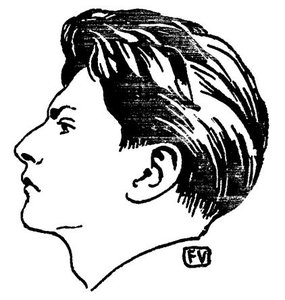
Léon Bonvin
1834 - 1866
Ključne informacije
- Full Name: Léon Bonvin
- Nationality: French
- Date Of Birth: 1834
- Date Of Death: 1866
- Place Of Birth: Vaugirard, France
- Notable Artworks:
- Goblet with Forget-me-nots
- Maisons au bord d'une route
- Moonlight Scene, Houses in the Background
- Artistic Movement Or Style: Watercolorist; Realism
- Artists Who Influenced This Artist: ['Jean Siméon Chardin']
- Artists Or Movements Influenced By This Artist: ['Dutch Golden Age']