

 Predogled v realnem okolju
 Pošlji
 Deli
Deli
 Podrobnosti o delu
 Priročnik

 Prenesi sliko
 Podobni izdelki
 Rentgenski posnetek
 Predvajaj diaporama
 Vprašanja in odgovori
 Statistika
A la gloire de Rubens


Explore 'A la gloire de Rubens' by Louis Beroud – a vibrant Baroque masterpiece inspired by Rubens! Capturing opulent revelry & sensual energy, this oil painting offers a glimpse into 19th-century Parisian art.
 Preberi več
Odkrijte Louisa Berouda (1852–1930), francoskega slikarja, znanega po podrobnejih prikazih parizških notranjih prostorov in znamenitosti, vključno z Louvrom in Opero Garnier.
Giclée tisk / Umetniški tisk
Giclée ali platnati odtis muzejske kakovosti z hitro proizvodnjo in prilagodljivimi možnostmi končne obdelave. ( Kupite ročno slikano delo Preklop na digitalno sliko)




P118B €10

P118H €10

P118W €10

P438Z €10

P508JH €12

P508YH €12

P805H €10

P805Z €10

P919BZ €10

P919G €10

P919XJ €10

P959ZH €10

P968JZ €12

W106C €8

W218G €10

W218JH €8

W218Y €10

W307PJ €10

W316G €10

W316PJ €8

W316Y €10

W398PJ €8

W4111J €10

W500HY €15

W500JH €15

W692G €12

W849H €8

W940BG €15

W953PJ €8




Standardna velikost
po meri
CM
INCH
Izberite eno od naših vnaprej določenih velikosti, ki ustrezajo prvotnim proporcijam umetničkega dela.
Loading sizes...

širina
višina
Vnesite širino in višino, ki jih potrebujete za svoj okvir ali steno. Tiskanje se lahko le odreže, vendar ga ni mogoče narediti večjega od slike, zato format z drugačno obliko pomeni izgubo dela slike. Pred tiskanjem vam pošljemo digitalni predogled za potrditev. Slika, prikazana na tej strani, ne prikazuje dejanskega izrezka — le predogled to omogoča.
Globalna dostava () v 2 tednih namesto standardnih 4/5 tednov. (6 november)

Brezplačna ekspresna dostava po vsem svetu

Visokokakovostno laneno platno

Popolno zavarovanje pošiljke

Garancija povračila carine in uvoznih davkov

Garancija popolnega barvnega ujemanja

100-dnevna politika vračil (le v primeru okvar)

Garancija 100% povračila denarja

Popust pri večjem naročilu
 Možnost stekla je na voljo le za velikosti pod 110 cm

A la gloire de Rubens
Giclée tisk / Umetniški tisk
Velikost reprodukcije
-


Skupna cena
€ 62
À la gloire de Rubens – A Celebration of Baroque Grandeur
Louis Béroud’s “À la gloire de Rubens” is more than just a depiction of a painting; it's an embodiment of the artistic spirit of its time—the fervent embrace of academic tradition alongside a keen observation of modern life that characterized Parisian art in the early 20th century. Painted in 1905, this monumental canvas captures the atmosphere of the Louvre Museum during a period marked by significant cultural renewal and intellectual curiosity. The artwork’s subject matter is deceptively simple: a young woman diligently sketching “The Coronation” by Peter Paul Rubens from his celebrated Marie de Medici cycle—a masterpiece that embodies the Baroque ideal of dramatic grandeur and emotional intensity.- Composition & Style: Béroud adheres to the stylistic conventions of the École de Beaux-Arts, prioritizing clarity of form and meticulous detail. The scene unfolds within a richly ornamented interior space reminiscent of Rubens’s own studio, emphasizing architectural perspective and creating a sense of spatial depth. However, unlike Rubens's canvases which aim for idealized beauty, Béroud presents a realistic portrayal of artistic practice—a testament to the artist’s commitment to capturing the essence of his subject matter.
- Technique: Employing oil paint on canvas with visible brushstrokes, Béroud utilizes impasto – thick application of pigment – particularly noticeable in areas depicting drapery and skin tones. This technique lends texture and luminosity to the painting, mirroring the dramatic chiaroscuro employed by Rubens himself. The artist’s careful attention to light and shadow contributes significantly to the overall theatrical quality of the composition.
- Historical Context: Béroud's work emerged during a period of artistic debate following Impressionism’s dominance. Artists like Béroud sought to reaffirm classical principles while acknowledging the influence of contemporary life—a dynamic tension that reflects broader cultural shifts occurring in France at the time. The painting’s inclusion within the Louvre’s collection underscores its significance as an exemplar of academic art and a celebration of Rubens's legacy.
- Symbolism: The central figure, sketching “The Coronation,” symbolizes the dedication to artistic craft and the pursuit of excellence—values deeply ingrained in the Beaux-Arts tradition. The inclusion of Rubens’s monumental painting serves as a visual reminder of the Baroque aesthetic’s ambition to inspire awe and convey profound emotion.
- Emotional Impact: “À la gloire de Rubens” evokes a feeling of reverence for artistic heritage combined with an appreciation for meticulous observation. It invites viewers to contemplate the role of art in capturing beauty, conveying emotion, and preserving cultural memory—themes that resonate powerfully across generations.
Detailed Description & Artistic Considerations
The painting’s palette is dominated by muted earth tones – ochre, umber, Sienna – reflecting the subdued lighting of the Louvre’s galleries. Béroud skillfully renders textures with remarkable precision, capturing the folds of fabric and the subtle nuances of skin tone. The artist's meticulous brushwork contributes to a palpable sense of movement—suggesting the dynamism inherent in artistic creation itself. Careful attention is paid to architectural elements – moldings, arches – reinforcing the spatial illusion and enhancing the grandeur of the setting. Béroud’s masterful technique elevates the depiction beyond mere representation, transforming it into an evocative meditation on art history and artistic practice.Provenance & Acquisition
“À la gloire de Rubens” entered the Louvre's collection in 1993 as a bequest from Micheline Héblot (1930-1990), honoring her parents’ memory. The painting was originally exhibited at the Salon of Société des Artistes français in 1905 and subsequently reproduced as prints during that era. Its inclusion in Musée Carnavalet's permanent collection provides invaluable insight into Parisian artistic culture at the turn of the century.Further Research & Artistic Influences
Louis Béroud’s artistic trajectory was profoundly shaped by his training at the École Supérieure des Beaux-Arts, where he absorbed the precepts of classical art and technique. His unwavering devotion to realism combined with an artist's sensitivity distinguishes him as a pivotal figure in late 19th-century French painting—a legacy that continues to inspire artists today. References: Musée Carnavalet; Louvre éditions / Somogy, 2008, p. 149, coul. n°178; Bresc-Bautier, Geneviève ; Foucart, Jacques, « Le tableau du mois n° 9 : trois nouveaux tableaux pour l’histoire du Louvre : Louis Béroud, Henri Coroënne », Tableau du mois, 9, du 7 septembre au 3 octobre 1994, 1994, 1-4, p. 1-4, n&b, p. 1, B; Musée du Louvre, Département des Peintures; Bresc-Bautier, Geneviève ; Foucart, Jacques, « Le tableau du mois n° 9 : trois nouveaux tableaux pour l’histoire du Louvre : Louis Béroud, Henri Coroënne », Tableau du mois, 9, du 7 septembre au 3 octobre 1994, 1994, 1-4, p. 1-4, n&b, p. 1, B; Musée Carnavalet; Louvre éditions / Somogy, 2008, p. 149, coul. n°178; Musée du Louvre, Département des Peintures; Bresc-Bautier, Geneviève ; Foucart, Jacques, « Le tableau du mois n° 9 : trois nouveaux tableaux pour l’histoire du Louvre : Louis Béroud, Henri Coroënne », Tableau du mois, 9, du 7 septembre au 3 octobre 1994, 1994, 1-4, p. 1-4, n&b, p. 1, B; Musée Carnavalet; Louvre éditions / Somogy, 2008, p. 149, coul. n°178Vprašanja in odgovori
Kako lahko odkrijem umetniška dela, podobna delu "A la gloire de Rubens" avtorja Louis Beroud?
Podobna dela delu "A la gloire de Rubens" si lahko ogledate na strani Podobna dela.
Ali so barve dela "A la gloire de Rubens" živahne ali utemeljene?
Barve dela "A la gloire de Rubens" avtorja Louis Beroud prikazujejo Balanced Soft zasičenost z intenzivnostjo Balanced.
Kaj prikazuje "A la gloire de Rubens" avtorja Louis Beroud?
"A la gloire de Rubens" avtorja Louis Beroud prikazuje: mythological feast, nude figures, baroque revelry, sensual celebration, opulent interior, venus mythology, dynamic composition.
Biografija umetnika
Louis Beroud: Pariški vizionar, ki je ujel duh svojega časa
Louis Beroud (1852–1930) predstavlja izstopajoco osebnost v francoski umetnosti konca 19. in začetka 20. stoletja, ki je zaslužil slavo s svojo natančno prikazovanjem pariskih notranjih prostorov in znamenitosti—predvsem muzeja Louvre in opere Garnier. Beroud, rojen v Lyonu, je svojo umetniško pot razvijal v času, ko se je vpliv impresionizma počasi zmanjševal, kar mu je omogočilo, da se je trdno utrdil znotraj akademske tradicije, hkrati pa je sprejel subtilno razumevanje sodobnega življenja. Njegova platna ponujajo vpogled v svet, navlačen s veličastnostjo, detajli in psihološko opazovanjem—kar je dokaz njegove neomajne zavezanosti realizmu, zdranjene z umetniško senzibilnostjo.- Zgodnje življenje in umetniška izobrazba: Beroud je svoje prve umetniške izobraževanje prejel na École Supérieure des Beaux-Arts v Parizu, kjer je pod vodstvom vplivnih učiteljev, ki so zagovarjali klasična načela kompozicije in tehnike, izpiljal svoje veščine. To oblikovalno obdobje je v njem vzpostavilo globoko spoštovanje do tradicije, hkrati pa je spodbudilo raziskovalnega duha, ki ga je nato vodil skozi raznolike teme in sloge.
- Pomembna dela in umetniški slog: Beroudovo celotno delo obsega izjemno paleto motivov, od monumentalnih arhitekturnih prikazov—kot so njegovi slavljeni prikazi Louvra in opere Garnier—do intimnih portretov, ki zajimajo bistvo pariskega življenacija. Njegove slike odlikuje skrbna pozornost do detajlov, mojstorska uporaba svetlobe in senc ter sposobnost izjemno natančnega prenosa vzdušja. S spretnostjo je združil akademski realizem z ekspresivnimi potezami črte, s čimer je ustvaril slike, ki odmevajo tako z intelektualno doslednostjo kot z čustveno globino.
Incident v Louvru: Trenutek surrealističnega humora
Morda pa Beroudova najbolj trajna slava izvira iz nepozabnega dogodka med njegovim obiskom muzeja Louvre v avgustu leta 1911. Ko je iskal navdih za sliko ob proslavitvi stoletnice muzeja, je Beroud prišel, da bi skiciral »Mona Liso v Louvru«, le da je ugotovil, da ikonografskega portreta Leonarda da Vinci je ni več—namesto njega so na steni ostale le štiri železne zaponke. Ta bizarna okoliščina je sprožila preiskavo kraje mojstra in očarala pariško javnost. Incident je postal simbol tesnobe glede umetniške avtentičnosti in vstopa modernosti v zastavljene institucije.- Muzejske naročila in umetniško priznanje: Beroudov ugled slikarja je pridobil precejšen zalet zaradi štežnih naročil prestižnih kulturnih organizacij, vključno z revnim Louvrom. Ti projekti so mu omogočili, da je svoje talente predstavil na velikem ravni in utrdil svoj položaj med najpomembnejšimi umetniki svoje dobe.
- Vpliv in dediščina: Beroudov umetniški slog—značilen zaradi natančnega realizma in psihološkega vpogleda—je vplival na naslednje generacije slikarjev, zlasti tiste, ki so bili zainteresirani za zajemanje kompleksnosti urbanega življenja. Njegova dela še vedno navdušujejo s svojo tehnično briljantnostjo in evokativnim prikazom pariške družbe v obdobju Belle Époque, s čimer utrjujejo njegovo dediščino ključne osebnosti v zgodovini francijske umetnosti.
Raziskovanje pariskih prostorov: Od veličastnih dvoran do mirnih kotičkov
Beroudova umetniška osredotočenost je bila usmerjena v natančno dokumentiranje pariskih okolij—tako monumentalnih kot domačih. Z dihovitostjo je zajel veličastnost arhitekturnih prostorov, kot sta opera Garnier in Louvre, pri čemer je uporabljal tehnike, ki so odražale tiste, ki so jih v svojem času raje uporabljali akademski slikarji. Hkrati je raziskoval subtilnosti vsakdana skozi intimne portrete in scene, ki prikazujejo običajne Parižane v njihovi dnevni rutini. Ta platna ponujajo neprecenljiv vpogled v socialno in kulturno pokrajino obdobja Belle Époque—časa, ki ga zaznamujejo hitra industrializacija, umetniška inovacija in naraščajoča fascinacija s sodobnostjo.Pomembne slike in muzejske izložbe
Med Beroudovimi najbolj slavljenimi deli sta »Avenue de la Gare v Nice« in »Le dôme central de la galerie des machines à l'exposition universelle de 1889«, ki utemeljujejo njegovo predanost zajemanju duha svojega časa. Njegove slike lahko najdemo v prestižnih muzejih po Franciji, vključno z museum Louvre in Saint Louis Art Museum, kjer še vedno navdušujejo gledalce s svojo umetniško vrednostjo in zgodovinskim pomennom.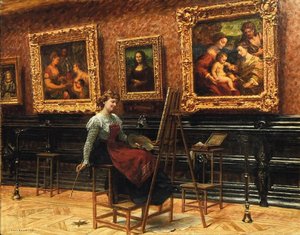
Louis Beroud
1852 - 1930 , Francija
Hitri podatki
- Artistic Movement Or Style: Akademski realizem
- Artists Or Movements Influenced By This Artist: ['Art Deco']
- Artists Who Influenced This Artist: ['Gustave Moreau']
- Date Of Birth: 1852 Lyon, Francija
- Date Of Death: 1930
- Full Name: Louis Beroud
- Nationality: Francoz
- Notable Artworks:
- Avenue de la Gare v Nice
- Le dôme central de la galerie des machines à l'exposition universelle de 1889
- Bureau du Baron Schlichting
- Place Of Birth: Lyon, Francija
Sorodni članki

Drama and Light: Discover the Captivating Grandeur of Baroque Art
Immerse yourself in the dramatic splendor of Baroque art. Explore the profound impact of light, shadow, and the Counter-Reformation through an expert historical lens, celebrating the masters who defined an era of unparalleled grandeur and emotional intensity.

The Drama of Light: Capturing the Grandeur and Emotional Intensity of Baroque Art
Explore the breathtaking drama of Baroque art. Discover how masters like Rubens and Caravaggio used chiaroscuro to evoke profound emotion, faith, and grandeur through the masterful interplay of light and shadow in this expert art history guide.

Drama in Nature: The Captivating Grandeur of Baroque Landscapes and the Art of Emotional Spectacle
Explore the breathtaking drama of Baroque landscapes. From Rubens's grand vistas to the mastery of chiaroscuro, discover how 17th-century artists transformed nature into a theatrical stage of emotion and light. A deep dive for true art enthusiasts.