

 Preverite v realnem okolju
 Pošlji kot čestitko
 Deli
Deli
 Podrobnosti
 Priročnik

 Prenesi
 Podobni artefakti
 Rentgenski posnetek
 Predvajaj diaporama
 Statistika
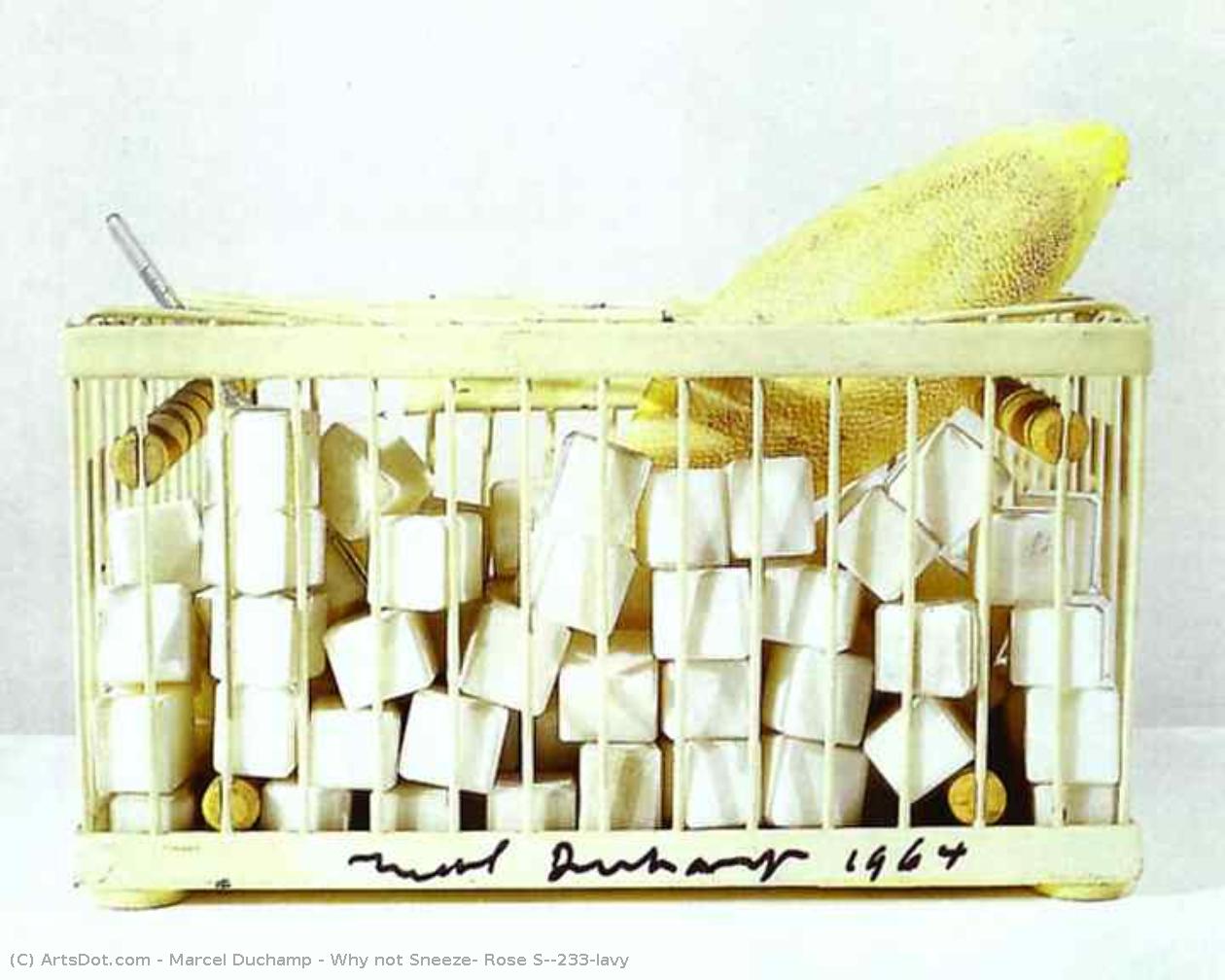
Why not Sneeze, Rose Sélavy
 Acrylic On Canvas
- WallArt
- Dada Gesamtkunstwerk
 1921
1921 12.0 x 22.0 cm
 Tate Modern
 Preberi več
Marcel Duchamp: revolucionarni umetnik, ki je izzval definicijo umetnosti s Dadaizmom in readymade objekti, kot je 'Fountain'. Raziščite njegove ikonične dela in filozofski vpliv!
Umetniška dela, prikazana na tej strani, so zaščitena z avtorskimi pravicami, kar pomeni, da po zakonu ne moremo ustvarjati ali prodajati identičnih reprodukcij. Ta zaščita se izvaja v skladu z mednarodnimi sporazumi, kot so Bernska konvencija in po nacionalnih zakonih, vključno s tistimi, ki jih določa Zakon o avtorskih pravicah ZDA – naslov 17.
Kot spoštljiva in zakonita alternativa ponujamo prilagojena, ročno slikana umetniška dela, navzornena na original. Naši sposobni in profesionalni umetniki skrbno preučijo stil, vzdušje in umetniško bistvo originala, da ustvarijo novo, edinstveno delo, ki vzbudi enak občutek – pri čemer ostaja popolnoma nova, samostojna izvirna stvar.
Ta način v celoti upošteva zakonodajo o avtorskih pravicah, saj ne vključuje kopiranja ali podvajanja zaščitena umetniškega dela. Namesto tega gre za kreativno preinterpretacijo – novo sliko, ki je navdihnjen rezultat originala, vendar ni z njim identična.
Ročno izdelana oljna reprodukcija
Ročno slikano olje na platnu v vaši izbiri velikosti in okvirja, izdelano po naročilu naših umetnikov. ( Preklop na tiskanine Preklop na digitalno sliko)




P118B €10

P118H €10

P118W €10

P438Z €10

P508JH €12

P508YH €12

P805H €10

P805Z €10

P919BZ €10

P919G €10

P919XJ €10

P959ZH €10

P968JZ €12

W106C €8

W218G €10

W218JH €8

W218Y €10

W307PJ €10

W316G €10

W316PJ €8

W316Y €10

W398PJ €8

W4111J €10

W500HY €15

W500JH €15

W692G €12

W849H €8

W940BG €15

W953PJ €8




Standardna velikost
po meri
CM
INCH
Izberite eno od naših vnaprej določenih velikosti, ki ustrezajo prvotnim proporcijam umetničkega dela.
Loading sizes...

širina
višina
Vnesite širino in višino, ki jih potrebujete, da se slika prilega vašemu okviru ali steni. Ker je delo ročno slikano, lahko umetnik pri različnih oblikih slik pri robovih doda malo več barve ali pa jih malo odreže — izberite sami. Pred začetkom slikanja vam pošljemo digitalni predogled za potrditev. Slika, prikazana na tej strani, ni končni rezultat — le predogled prikazuje dejansko podobo.
Primeri možnih sprememb: Zamenjava obraza s fotografijo stranke; Dodajanje hišnega ljubljenčka (npr. zamenjava mačke s psom); Vključitev skritega sporočila v ozadje; Sprememba pokrajine ali elementov v ozadju.
Po oddaji naročila bo ekipa TopImpressionists.com stranki po e-pošti poslala navodila in predogled digitalnega predogleda.
Po oddaji naročila bo ekipa TopImpressionists.com stranki po e-pošti poslala navodila in predogled digitalnega predogleda.
Mednarodna dostava () v 3/4 tednih namesto običajnih 5 tednov. (21 oktober). Brez kompromisov pri kakovosti.

Brezplačna ekspresna dostava po vsem svetu

Visokokakovostno laneno platno

Popolno zavarovanje pošiljke

Garancija povračila carine in uvoznih davkov

Garancija popolnega barvnega ujemanja

Politika vračila v 100 dneh (le v primeru okvar)

Garancija 100% povračila denarja

Popust pri večjem naročilu
 Možnost stekla je na voljo le za velikosti pod 110 cm

Why not Sneeze, Rose Sélavy
Tehnika reprodukcije
Velikost reprodukcije
-


Skupna cena
€ 235
A Provocative Pause: Unpacking “Why Not Sneeze, Rose Sélavy”
Marcel Duchamp’s "Why Not Sneeze, Rose Sélavy," painted in 1921, isn't merely a still life; it’s an audacious declaration. This deceptively simple image – a white box containing a yellow banana alongside several cups and spoons – immediately throws the viewer off balance, demanding they reconsider their assumptions about art itself. Duchamp, a pivotal figure in the Dada movement, wasn’t interested in replicating reality or expressing personal emotion through traditional means. Instead, he sought to dismantle established artistic conventions, forcing us to confront the very definition of what constitutes “art” and its role within society.
The painting's genesis lies within Duchamp’s exploration of chance and readymades – everyday objects presented as art without alteration. "Why Not Sneeze" exemplifies this approach perfectly. The choice of a banana, an utterly mundane item, elevates it to the status of subject matter through its placement within the box, transforming it into something worthy of contemplation. The inclusion of the cups and spoons further complicates the scene, suggesting a potential for consumption or ritual – elements deliberately devoid of inherent meaning, yet imbued with a subtle tension.
Dadaist Disruptions: Style and Technique
“Why Not Sneeze” is firmly rooted in the principles of Dadaism, a movement born from the disillusionment following World War I. Rejecting logic and reason, Dada artists embraced absurdity, chance, and anti-art sentiments. Duchamp’s technique reflects this ethos; he employed a precise, almost clinical approach to rendering the objects, using oil paint on canvas with a smooth, matte finish. There's no attempt at illusionistic depth or vibrant color – instead, the focus is entirely on the arrangement of the elements and their juxtaposition. The stark white box acts as a frame, isolating the objects and intensifying their impact.
Interestingly, Duchamp’s process involved a degree of chance. He reportedly placed the banana in the box after it had been emptied, allowing the positioning to be determined by accident. This element of randomness underscores the movement's core belief that art should not be dictated by conscious intention but rather emerge from unexpected encounters and unforeseen circumstances.
Symbolic Whispers: Interpretation and Context
The symbolism within “Why Not Sneeze” is deliberately ambiguous, inviting multiple interpretations. The banana itself has been suggested to represent fertility, sexuality, or even a subtle critique of consumer culture – a small, yellow object placed in an enclosed space, hinting at both abundance and confinement. The cups and spoons could symbolize hospitality, offering, or perhaps the act of consuming – again, devoid of any specific narrative but laden with potential meanings.
Furthermore, the title itself, “Why Not Sneeze?”, is a direct challenge to conventional artistic expectations. Duchamp’s question implies that there are no rules governing art, no prescribed methods for creating it. It's an invitation to embrace spontaneity and reject rigid constraints. The painting can be viewed as a meditation on the absurdity of artistic norms and a playful provocation against established aesthetic values.
A Timeless Dialogue: Emotional Impact and Legacy
Despite its seemingly simple composition, “Why Not Sneeze, Rose Sélavy” possesses a profound emotional impact. It’s unsettling, humorous, and thought-provoking – qualities that have cemented its place as one of the most significant works in modern art history. Duchamp's work continues to resonate today, prompting us to question our own perceptions of beauty, value, and the very nature of artistic expression. A reproduction of this iconic piece offers a unique opportunity to engage with a pivotal moment in art history and contemplate the enduring legacy of Marcel Duchamp’s revolutionary spirit.
Vprašanja in odgovori
Ali je "Why not Sneeze, Rose Sélavy" na voljo kot umetniški tisk?
Če želite naročiti tiskanino dela "Why not Sneeze, Rose Sélavy" avtorja Marcel Dušan, jo preprosto naročite na njegovi strani Kakovostna tiskanina: umjetnička grafika na bombažnem platnu ali arhivskem papirju za platno.
Kakšno vzdušje in čustvo se prepletata v "Why not Sneeze, Rose Sélavy"?
V "Why not Sneeze, Rose Sélavy" spremlja Playful vzdušje in Playful čustvo.
V katero obdobje Marcel Dušanove kariere spada delo "Why not Sneeze, Rose Sélavy"?
"Why not Sneeze, Rose Sélavy" pripada Dada Phase v karieri umetnika Marcel Dušan. Ta razvrstitev povezuje delo z umetnikovim razvojnim obdobjem.
Biografija umetnika
Marcel Duchamp: Umetniški Revolucionar in Izpodbijanje Konvencij
Marcel Duchamp, rojen kot Henri-Robert-Marcel Duchamp v Blainville-Crevonu, Normandiji, leta 1887, je bil več kot le slikar; bil je filozofski provokator, ki je temeljito spremenil pot modne umetnosti. Njegovo zgodnje življenje, čeprav se zdi konvencionalno – negovano v družini, ki je cenila umetniško izražanje, pri čemer sta oba brata sledila uspešnim karieram kot umetnika – je napovedovalo prihajajočo ikono klašt. Duchamp je sprva nadaljeval formalno usposabljanje, obvladal tradicionalne tehnike in eksperimentiral s postimpresionističnimi slogi. Vendar ta akademska podlaga ni služila kot cilj sam po sebi, temveč kot odskočna deska za vprašanje same narave umetnosti, njene namembnosti in definicije. Ni želel le prikazati sveta; je hotel izzvati, kako ga dojemamo, in kaj predstavlja umetniško vrednost. Ta nemiren intelektualni navdušenje bi postalo opredalna značilnost njegove plodne kariere.Od Kubizma do Dadaizma: Zavrnitev Konvencij
Duchampova umetniška pot je bila zaznamovana s stalno evolucijo, namenitnim odvrglom uvelavljenih norm. Njegov začetni stik z kubizmom, očitna v delih kot je *Portret šahistov* (1911), je pokazal zanimanje za razdrobljene oblike in več perspektiv – odstop od tradicionalne reprezentacije. Vendar pa je hitro presegel izključno estetske skrbi, pri čemer je ugotavljal, da preprosto prestrukturiranje vizualnih elementov ni dovolj za naslovitev globih vprašanj, ki so se mu vrtela po glavi. Groza prve svetovne vojne je spodbudila to nezadovoljstvo, kar ga je pripeljalo do sprejetja dadaizma, gibanja, ki se je rodilo iz razočaranosti in zavrnitve logike, razuma in tradicionalnih umetniških vrednosti. V okviru dadaističnega gibanja je Duchamp res začel rušiti konvencionalne ideje o umetnosti. Ni želel ustvarjati lepih predmetov; hotel je spodbujati misli, izzivati predpostavke in razkriti arbitrarnost estetske presoje. V tem obdobju se je rodovala njegova najradikalnejša inovacija: 'readymade'.Readymades in Subverzija Umetnosti
Uvedba readymades – navadnih izdelanih predmetov, izbranih in predstavljenih kot umetnost – je bil Duchampov najbolj pomemben prispevek k 20. stoletju. To niso bili le najdeni predmeti; bile so namenjene udeležitve v umetniški subverziji. Z uporabo vsakdanjega predmeta, kot je stranišče (*Fountain*, 1917), ga podpisal z "R. Mutt" in poslal na razstavo umetnosti, je Duchamp izzval samo definicijo umetniškega znanja in avtorstva. Je roke umetnika ustvarile delo ali idejo umetnika? To vprašanje je postalo središčno za njegovo prakso in položilo temelj za konceptualno umetnost. Druga pomembna readymade, kot je *L.H.O.O.Q.* (1919), reprodukcija slike Mona Lise na kartončku, ki jo je poslikal z brko in gornjiškom, so bile šaljive, a ostre kritike umetnostne zgodovine in uvelavljenih kulturnih ikon. Ta dela niso bila namenjena občudovanju zaradi estetskih lastnosti; bili so namenjeni spodbujanju razprav in prisiliti gledalce, da ponovno premislijo o tem, kaj šteje za umetnost. Duchamp je verjel, da bi morala umetnost bivati v umu, ne le v očesu.Zapuščina in Trajna Vpliv
Vpliv Marcela Duchampa na prihodnje generacije umetnikov je nemerljiv. Temeljito je spremenil naše razumevanje umetnosti, tlakoval pot gibanjem, kot so konceptualna umetnost, minimalizem, pop art in številne druge. Njegov poudarek na ideji umetnika – konceptu za delom – namesto njegovih estetskih lastnosti še danes navdihuje umetnike.- Kubizem: Zgodnje raziskovanje razdrobljenih oblik in prostorske reprezentacije.
- Dadaizem: Zavrnitev logike, razuma in tradicionalnih umetniških vrednosti v odziv na prvo svetovno vojno.
- Konceptualna umetnost: Poudarek ideje za umetniškim delom namesto njegovih estetskih lastnosti.

Marcel Dušan
1887 - 1968 , Francija
Ključne informacije
- Datum Rojstva: 28. julij 1887
- Kraj Rojstva: Blainville, Francija
- Nacionalnost: Francosko-ameriška
- Podobni Umetniki:
- Konceptualna umetnost
- Pop Art
- Minimalizem
- Polno Ime: Marcel Duchamp
- Umetniški Slog:
- Kubizem
- Dadaizem
- Konceptualna umetnost
- Znani Deli:
- Fountain
- L.H.O.O.Q.
- The Large Glass
Sorodni članki

Dadaism Unveiled: The Beautiful Chaos of Art's Most Rebellious Movement
Explore the profound rebellion of Dadaism. Discover how this avant-garde movement emerged from the chaos of WWI to redefine art through absurdity, anti-logic, and a legacy that shaped Surrealism and Pop Art. A deep dive into the beautiful chaos of art history for the true enthusiast.

Pop Surrealism Unveiled: The Sophisticated Intersection of Vibrant Pop Art and Dreamlike Subconscious Landscapes
Explore the captivating world of Pop Surrealism. Discover how vibrant Pop Art meets dreamlike subconscious imagery through the works of masters like Jeff Soto and Ryan Heshka. An expert guide for discerning collectors seeking to understand this profound contemporary art movement.
Raziščite umetniška dela, razvrščena po temah, slogih in značilnostih.


