
 Predogled v realnem okolju
 Pošlji
 Deli
Deli
 Podrobnosti o delu
 Priročnik

 Prenesi sliko
 Podobni izdelki
 Rentgenski posnetek
 Predvajaj diaporama
 Q&A
Q&A Statistika
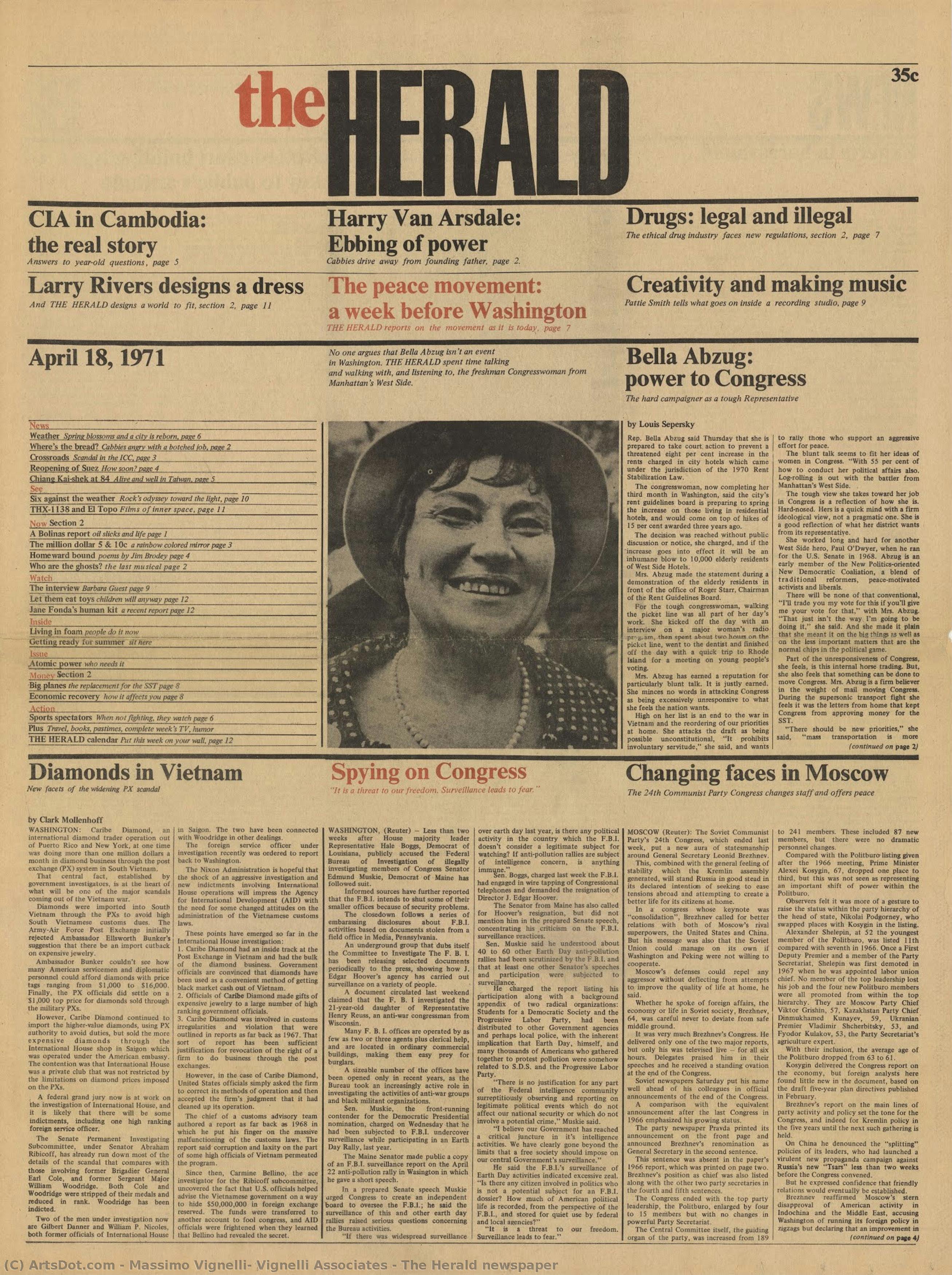
The Herald newspaper

- 43.0 x 57.0 cm


Experience the modernist grid design of The Herald newspaper by Massimo Vignelli (1971), showcasing vintage graphic communication art; discover this iconic piece today.
 Preberi več
Massimo Vignelli (1931-2014): Italijanska ikona oblikovanja, znana po minimalističnih grafičnih oblikovanjih, vključno z zemljevidom metra v NYC in korporativnimi identitetami. Raziskujte njegovo dediščino!
Umetniška dela, prikazana na tej strani, so zaščitena z avtorskimi pravicami, kar pomeni, da po zakonu ne moremo ustvarjati ali prodajati identičnih reprodukcij. Ta zaščita se izvaja v skladu z mednarodnimi sporazumi, kot so Bernska konvencija in po nacionalnih zakonih, vključno s tistimi, ki jih določa Zakon o avtorskih pravicah ZDA – naslov 17.
Ta način v celoti upošteva zakonodajo o avtorskih pravicah, saj ne vključuje kopiranja ali podvajanja zaščitenga umetniškega dela. Namesto tega gre za kreativno preinterpretacijo – novo sliko, ki je navdihnjen rezultat originala, vendar ni z njim identična.
Giclée tisk / Umetniški tisk
Giclée ali platnati odtis muzejske kakovosti z hitro proizvodnjo in prilagodljivimi možnostmi končne obdelave. ( Kupite ročno slikano delo Preklop na digitalno sliko)




P118B €10

P118H €10

P118W €10

P438Z €10

P508JH €12

P508YH €12

P805H €10

P805Z €10

P919BZ €10

P919G €10

P919XJ €10

P959ZH €10

P968JZ €12

W106C €8

W218G €10

W218JH €8

W218Y €10

W307PJ €10

W316G €10

W316PJ €8

W316Y €10

W398PJ €8

W4111J €10

W500HY €15

W500JH €15

W692G €12

W849H €8

W940BG €15

W953PJ €8




Standardna velikost
po meri
CM
INCH
Izberite eno od naših vnaprej določenih velikosti, ki ustrezajo prvotnim proporcijam umetničkega dela.
Loading sizes...

širina
višina
Vnesite širino in višino, ki jih potrebujete za svoj okvir ali steno. Tiskanje se lahko le odreže, vendar ga ni mogoče narediti večjega od slike, zato format z drugačno obliko pomeni izgubo dela slike. Pred tiskanjem vam pošljemo digitalni predogled za potrditev. Slika, prikazana na tej strani, ne prikazuje dejanskega izrezka — le predogled to omogoča.
Globalna dostava () v 2 tednih namesto standardnih 4/5 tednov. (1 november)

Brezplačna ekspresna dostava po vsem svetu

Visokokakovostno laneno platno

Popolno zavarovanje pošiljke

Garancija povračila carine in uvoznih davkov

Garancija popolnega barvnega ujemanja

100-dnevna politika vračil (le v primeru okvar)

Garancija 100% povračila denarja

Popust pri večjem naročilu
 Možnost stekla je na voljo le za velikosti pod 110 cm

The Herald newspaper
Giclée tisk / Umetniški tisk
Velikost reprodukcije
-


Skupna cena
€ 61
The Grid of Modern Communication: Vignelli's The Herald
To encounter this piece is to step directly into the vibrant, structured chaos of mid-century New York journalism. This reproduction of The Herald newspaper from April 1971, conceived by Massimo Vignelli and his associates, is far more than mere ephemera; it is a meticulously designed artifact of visual communication history. It captures a moment when design principles—simplicity, functionality, and rigorous structure—were being aggressively applied to the seemingly unruly medium of print journalism. The very act of presenting this newspaper front page transforms what might be considered disposable media into a profound study in modernist graphic discipline.
A Masterclass in Structured Design
Vignelli’s genius, always rooted in an almost architectural understanding of space, is on full display here. The description notes the structure: a rigid grid of six columns and sixteen modules per column. This underlying skeleton dictates every element—the placement of headlines like "Diamonds in Vietnam," the accompanying portrait of the smiling woman, and the smaller articles detailing everything from spying congress to changing leaves in Moscow. Vignelli’s commitment to using a single typeface, Times Roman, across various weights and sizes, speaks volumes about his belief in universal legibility. It is a powerful testament to the idea that restraint—the disciplined use of negative space and consistent typography—can generate an overwhelming sense of order and sophistication.
Historical Resonance and Materiality
The year 1971 places this work within a fascinating cultural nexus, post-war modernism grappling with the burgeoning media landscape. While the paper itself ultimately folded due to distribution issues, its surviving design remains potent. For the collector or designer, understanding this context is key. This piece speaks to an era obsessed with efficiency and clarity in information transfer. When considering a reproduction for your space, you are not just acquiring art; you are curating a dialogue about how we consume knowledge—a conversation between the fleeting headline and the enduring power of good design.
Symbolism of the Grid
The grid itself functions as the primary symbolic element. In an age where digital information often feels overwhelming, this physical manifestation of order offers a visual anchor. It symbolizes control, but not oppressive control; rather, it suggests that even complex narratives—the confluence of international events and local interest—can be organized into digestible, beautiful patterns. The interplay between the large, arresting photograph and the tightly packed textual modules creates a dynamic tension, mirroring the very energy of a bustling city like New York in that era.
Bringing Modernist Precision Home
For interior design or gallery display, this piece offers an unparalleled opportunity to inject intellectual rigor into a space. It pairs beautifully with minimalist furniture, mid-century modern accents, or any setting that appreciates the clean lines of 20th-century industrial aesthetics. Owning this reproduction is an homage to Massimo Vignelli’s lifelong dedication to elevating the mundane—the daily newspaper—into something enduringly beautiful and intellectually stimulating.
Vprašanja in odgovori
Kateri umetniški slog pripada "The Herald newspaper"?
Umetnostni smer, ki jo zastopa "The Herald newspaper" avtorja Massimo Vignelli, Vignelli Associates, je Modernism. Ta klasifikacija delo uvršča med sorodne umetnike in umetniška dela.
Za kakšno uporabo se priporoča tiskanina dela "The Herald newspaper"?
Priporočena uporaba tiska dela "The Herald newspaper" je Statement.
Kakšne so proporcije dela "The Herald newspaper" avtorja Massimo Vignelli, Vignelli Associates in kakšna je njegova velikost?
Format dela "The Herald newspaper" je Portrait, njegova prvotna velikost pa znaša 43 x 57 cm. Oba podatka sta koristna pri načrtovanju reprodukcije.
Biografija umetnika
Življenje posvečeno obliki: Svet Massima Vignellija
Rod v Milanu leta 1931, je pot Massima Vignellija bila pot neomajne predanosti načelom modernističnega oblikovanja. Že od mladega sta v njem izražala vroče razumevanje vizualne komunikacije, ko je svoje formalno izobraževanje v arhitekturi začel na Politecnico di Milano in ga nadaljeval na Università Iuav di Venezia. Vendar pa je šele pripravništvo pri prestižnih bratov Castiglioni – pionirih v italijanskem industrijskem oblikovanju – v njem v Živo vžgalo strast do oblikovanja sveta skozi premišljeno ustvarjanje. Ta zgodnji stik mu je vdelestvo v funkcionalnost, preprostost in moč elegantnih rešitev za vsakdanje težave. Ni oblikoval le predmetov; on je oblikoval izkušnje, izpopoljeval interakcije in običajno preživljanje dvignil v nekaj nepozabnega. To obdobje oblikovanja je postavilo temelje za kariero, ki bo ponovno definirala vizualno kulturo na več kontinentov.Od Italije do New Yorka: Transatlantski vidik
Vignellijeva pot ga je leta 1966 vodila v Ameriko, kjer je igral ključno vlogo pri ustanovitvi newyorškega urada podjetja Unimark International. To je bil prelomni trenutek, ne le za njegovo kariero, temveč tudi za celotno pokrajino ameriškega oblikovanja. Unimark se je hitro vznesel na vrh, Vignellijevi prispevki – najbolj opazni pa je trajen logotip za American Airlines – pa so utrdili njegov ugled mojstra korporativnega identiteta. Vendar pa ga je vse večja razlika v kreativni filozofiji spodbudila k samostojnemu podvagu. Leta zględ 1971 je skupaj s svojo ženo in življenjsko sodelavko, Lello Vignelli, ustanovil podjetje Vignelli Associates. To partnerstvo se je izkazalo za izjemno plodno in je postalo sinonim za sofisticirana oblikovalna rešitve, ki so obsegala grafično oblikovanje, oblikovanje notranjih prostorov, izdelkov in arhitekturo. Etos podjetja je bil utemeljen v prepričanju, da mora biti dobra oblika dostopna, brezčasna in globoko uporabna – načeli, ki jih so dosledno zastopali skozi celotno svojo kariero.Ikonična ustvarjalnost: Dedstvo jasnosti
Vignellijev vpliv je vpleten v tkivo sodobnega življenja. Morda njegovo najbolj prepoznavno dosežek je redesign zemljevoda metro v New Yorku leta 1972. Čeprav je bil sprva kontroverzen zaradi odstopanja od stroge geografske natančnosti, je predstavljal drzen izkaz jasnosti in uporabnosti. Vignelli je prednost dali čitljivosti in intuitivni navigaciji nad dobesedno predstavitvijo, s čimer je ustvaril diagramski zemljevod, ki še danes vsakodnevno vodi milijone potnikov. Ta projekt je zrcal pri njegovi jedrni filozofiji oblikovanja: postavljanju komunikacije na prvo mesto. Poleg zemljevoda metro je Vignelli Associates pustil neizbrisno sled številnim blagovnim znamkam in institucijam. Njihovo del za Bloomingdale’s – vključno z ikonično rjavo papirnato vrečko z preprostim belim logotipom – je izkušnjo nakupovanja spremenilo v izjava o slogu. Oblikovali so pohištvo za Knoll, embalažo za Heller in korporativne identitete, ki so postali takoj prepoznavni simboli kakovosti in inovacije. Njegova *Heller Rainbow Dinnerware* linija kot pričevanje stoji za njegovo minimalistično estetiko, kjer vibrirajoče barve izstopajo znotraj čistih geometričnih oblik. Poster *Tredicesima Triennale di Milano* prikazuje njegovo drzne uporabo barv in oblik, medtem ko okrov *Knoll Design* dokazuje njegovo sposobnost ustvarjanja osupljivih vizualnih vsebin za svetovno znane blagovne znamke.Trajen vpliv: Več kot le estetika
Vignellijev vpliv sega daleč presega posamezne projekte; on je temeljito preoblikoval način, kako dojemamo samo oblikovanje. Bil je vztrajen zagovornik tipografske discipline in je slavno zagovarjal omejeno paleto pisav – verjel je, da prava kreativnost ne leži v neskončnih možnostih, temveč v mojstrski izvedbi z premišljeno izbranimi orodji. Njegova knjiga, *The Vignelli Canon*, je postala manifest za oblikovalce, ki je izločila njegove načele jasnosti, preprostosti in trajne elegance. Ni ustvarjal le vizualno prijetnih predmetov; trudil se je ustvariti red iz kaosa, učinkovito komunicirati in dvigniti človeško izkušnjo skozi premišljeno oblikovanje. Njegovo del še vedno navdihuje generacije oblikovalcev in jih opominja, da prava inovacija leži v odstranjevanju nepotrebnega in osredotočanju na bistvo. Vignelli Center for Design Studies na Rochester Institute of Technology služi kot trajen spomnik na njegovo dediščino, saj ohranja obsežen arhiv njegovega dela in spodbuja nadaljnje raziskovanje njegovih revolucionarnih idej. Umrl je leta 2014, vendar njegove zasnove ostajajo močno prisotne in oblikujejo naš svet s svojo trajno eleganco ter neomajno predanostjo jasnosti.
Massimo Vignelli, Vignelli Associates
1931 - 2014 , Italija
Hitri podatki
- Artistic Movement Or Style: Modernizem, Minimalizem
- Date Of Birth: 10. januar 1931
- Date Of Death: 27. maj 2014
- Full Name: Massimo Vignelli
- Nationality: Italijan
- Notable Artworks:
- Heller Rainbow Dinnerware
- Tredicesima Triennale di Milano
- Knoll Design (ovitek)
- Place Of Birth: Milano, Italija
Sorodni članki

TopImpressionists.com F.A.Q.: Discover the Vibrant Beauty of Our Premium Art Poster Prints
Explore the technical excellence of TopImpressionists.com's premium art poster prints. Discover how our 12-color pigment system and archival inks capture the luminous beauty of Impressionist masterpieces with unmatched color fidelity and museum-grade durability for the discerning collector.
Raziščite umetniška dela, razvrščena po temah, slogih in značilnostih.


