
 Predogled v realnem okolju
 Pošlji
 Deli
Deli
 Podrobnosti o delu
 Priročnik

 Prenesi sliko
 Podobni izdelki
 Rentgenski posnetek
 Predvajaj diaporama
 Vprašanja in odgovori
 Statistika
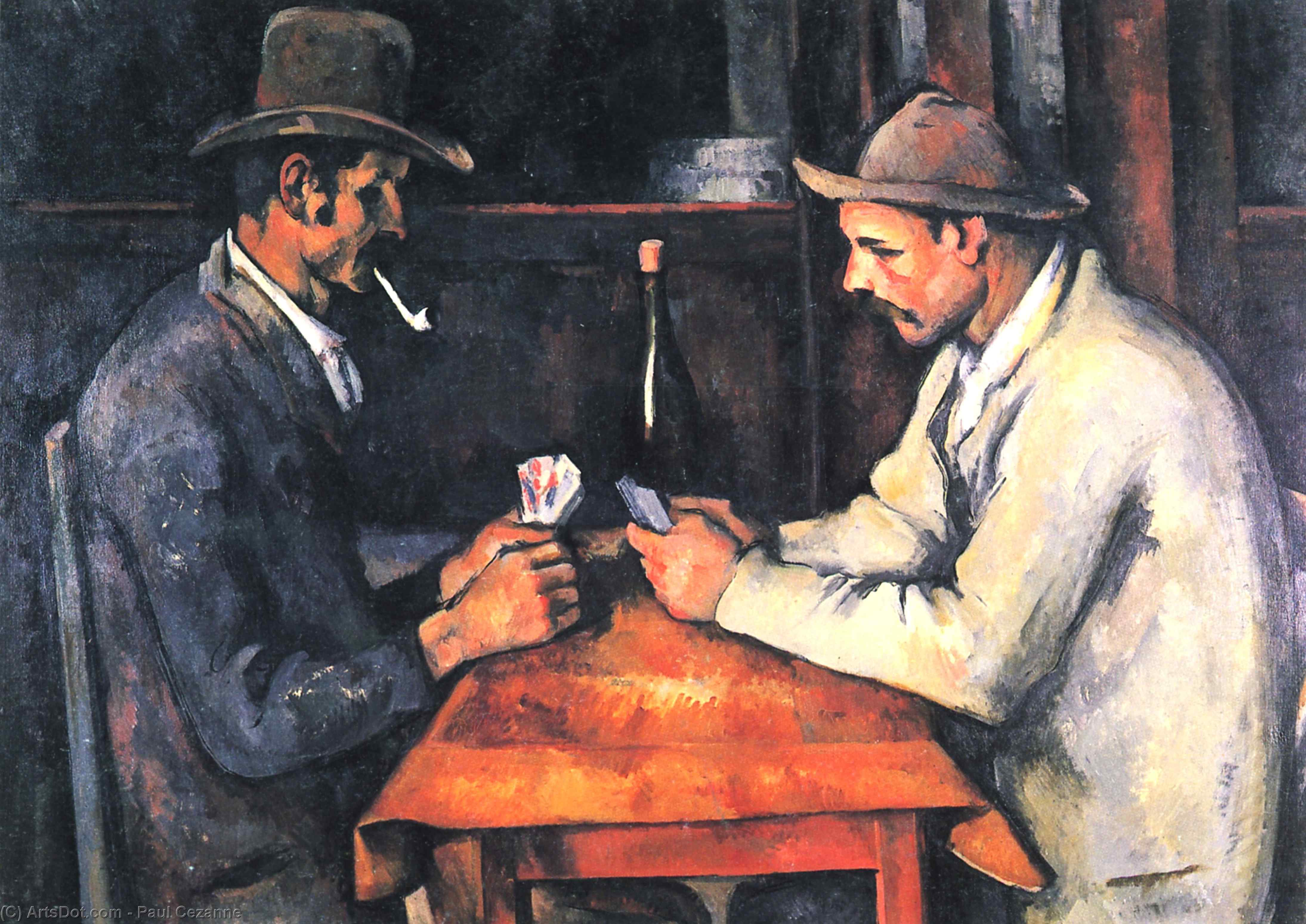
Četrta igralca

- 97.0 x 130.0 cm


Četrta igralca je ikonična slika Paul Cézanneja iz leta 1893, ki prikazuje dva moža pri igri kart ter predstavlja globoko raziskovanje človeške povezanosti in družbenega položaja. Postmodernistična mojstrovska dela.
 Preberi več
Paul Cézanne (1839-1906): pionir postimpresionizma, ki je premostil razliko med impresionizmom in kubizmom. Odkrijte geometrijske oblike, nativnosti & njegov trajni vpliv na moderno umetnost! #Cezanne #PostImpresionizem
Giclée tisk / Umetniški tisk
Giclée ali platnati odtis muzejske kakovosti z hitro proizvodnjo in prilagodljivimi možnostmi končne obdelave. ( Kupite ročno slikano delo Preklop na digitalno sliko)




P118B €10

P118H €10

P118W €10

P438Z €10

P508JH €12

P508YH €12

P805H €10

P805Z €10

P919BZ €10

P919G €10

P919XJ €10

P959ZH €10

P968JZ €12

W106C €8

W218G €10

W218JH €8

W218Y €10

W307PJ €10

W316G €10

W316PJ €8

W316Y €10

W398PJ €8

W4111J €10

W500HY €15

W500JH €15

W692G €12

W849H €8

W940BG €15

W953PJ €8




Standardna velikost
po meri
CM
INCH
Izberite eno od naših vnaprej določenih velikosti, ki ustrezajo prvotnim proporcijam umetničkega dela.
Loading sizes...

širina
višina
Vnesite širino in višino, ki jih potrebujete za svoj okvir ali steno. Tiskanje se lahko le odreže, vendar ga ni mogoče narediti večjega od slike, zato format z drugačno obliko pomeni izgubo dela slike. Pred tiskanjem vam pošljemo digitalni predogled za potrditev. Slika, prikazana na tej strani, ne prikazuje dejanskega izrezka — le predogled to omogoča.
Globalna dostava () v 2 tednih namesto standardnih 4/5 tednov. (7 november)

Brezplačna ekspresna dostava po vsem svetu

Visokokakovostno laneno platno

Popolno zavarovanje pošiljke

Garancija povračila carine in uvoznih davkov

Garancija popolnega barvnega ujemanja

100-dnevna politika vračil (le v primeru okvar)

Garancija 100% povračila denarja

Popust pri večjem naročilu
 Možnost stekla je na voljo le za velikosti pod 110 cm

Četrta igralca
Giclée tisk / Umetniški tisk
Velikost reprodukcije
-


Skupna cena
€ 62
Paul Cézanne: The Card Players – A Quiet Revolution in Color and Form
Paul Cézanne’s “The Card Players,” completed in 1893, stands as an emblem of the burgeoning Post-Impressionist movement—a pivotal moment where Impressionism's fleeting impressions yielded to a deeper exploration of artistic structure. More than just a depiction of men engrossed in a game, it embodies Cézanne’s audacious challenge to academic conventions and his unwavering pursuit of capturing the essence of reality through innovative techniques.
- Subject Matter: The painting portrays two figures seated at a table playing cards in what appears to be a dimly lit tavern interior. Cézanne deliberately eschewed grand narratives, focusing instead on the subtle interplay between light and shadow—a characteristic that distinguishes his work from the dramatic spectacles of Impressionism.
- Style: Cézanne’s style is undeniably Post-Impressionist, prioritizing subjective perception and emotional resonance over objective representation. Unlike Impressionists who sought to capture momentary sensations, Cézanne aimed to distill the underlying geometric forms that constitute visual experience.
- Technique: Cézanne employed a distinctive technique characterized by thick impasto—applying paint thickly onto the canvas—creating palpable textural surfaces that convey the materiality of pigment itself. Visible brushstrokes are interwoven with carefully modulated earthy tones—browns, greys, and muted greens—constructing a sense of solidity and permanence.
- Historical Context: Created during Cézanne’s formative years in Aix-en-Provence, France, “The Card Players” reflects the broader cultural currents of the late 19th century. Cézanne drew inspiration from Dutch genre paintings—particularly those depicting card games—which had established a precedent for portraying everyday life with psychological depth.
- Symbolism: The game of cards itself serves as a potent symbol—representing chance, fate, and the complexities of human relationships. Cézanne’s masterful composition subtly underscores these themes, inviting contemplation on the nature of existence and the passage of time.
The Pioneering Use of Geometric Forms
Cézanne's revolutionary approach to perspective—rejecting linear convergence in favor of flattened planes—represents a radical departure from traditional artistic conventions. This decision wasn’t merely stylistic; it stemmed from Cézanne’s conviction that visual perception operates on fundamentally different principles than those articulated by Euclid and other mathematicians.
He meticulously analyzed the underlying structure of objects, reducing them to simplified geometric forms—cubes, cylinders, and spheres—that constitute their essential essence. This method foreshadowed Cubism, cementing Cézanne’s legacy as “the father of us all” among artists like Picasso and Matisse.
A Masterful Blend of Color and Texture
The painting's palette is dominated by earthy tones—browns, greys, and muted greens—creating a harmonious visual atmosphere that evokes a sense of quiet dignity. Cézanne skillfully modulated color to convey depth and volume—a technique that anticipates the advancements of Futurism and Expressionism.
Furthermore, Cézanne’s masterful use of impasto—thickly applied paint—generates remarkable textural surfaces that engage the viewer's senses. Visible brushstrokes are interwoven with careful attention to detail—revealing Cézanne’s meticulous process and emphasizing the materiality of pigment itself.
Legacy and Influence
"The Card Players" continues to captivate audiences worldwide, serving as an enduring testament to Cézanne’s artistic genius. Its influence extends far beyond the realm of painting—inspiring artists across disciplines—from sculpture to architecture—to embrace innovative techniques and explore new modes of representation.
Cézanne's unwavering commitment to capturing the essence of reality—rather than merely reproducing its surface appearance—established a paradigm for modern art—challenging academic conventions and paving the way for groundbreaking artistic movements.
Vprašanja in odgovori
Kako lahko ogledam "Četrta igralca" avtorja Paul Cézanne v obliki diorama?
Delo "Četrta igralca" avtorja Paul Cézanne si lahko ogledate v obliki diaporame na strani Slidešov za to umetniško delo.
Kaj predstavlja "Četrta igralca" in kakšno vzdušje prikliče?
"Četrta igralca" prikazuje provence, card players, geometric forms, earth tones, texture, light play, rural life, njegovo udejanjeno vzdušje pa je Skošnja.
Ali je "Četrta igralca" avtorja Paul Cézanne slika, risba ali grafika?
"Četrta igralca" avtorja Paul Cézanne je razvrščeno v kategorijo Stenska umetnost. Ta kategorija opisuje vrsto umetniškega dela, da je original.
Sorodna umetniška dela


Biografija umetnika
Paul Cézanne: Med Impresionizmom in Kubizmom – Vizija, ki je Preoblikovala Umjetnost
Paul Cézanne, rojen leta 1839 v Aix-en-Provence, stoji kot pomemben lik, ki premoščuje razloček med minljivimi vtisi impresionizma in fragmentiranimi oblikami kubizma. Njegovo potovanje ni bilo zaznamovano z hitrim priznanjem; bolj je bila to počasen proces umetniškega raziskovanja, obarvan s časmi samozavesti in kritičnega zavračanja, ki se je končno izšlo v dediščini, ki bo za vedno spremenila pot moderne umetnosti. Rojen v uspešni družini – njegov oče sprva klobčar, nato pa bankir – je Cézanne užival v finančni varnosti, ki je bila redka med ambicioznimi umetniki, kar mu je omogočalo, da se posveti svoji strasti brez takojšnjih pritiskov komercialnega uspeha. Čeprav ga je njegov oče sprva usmerjal k pravni karieri, je moč umetniškega izražanja bila prevelika, in je kmalu zapustil pravo, da bi se posvetil slikanju – odločitvi, ki je definirala njegovo življenje. V začetku so ga vplivali romantični trendi njegove mladosti ter zavezanost Barbizonske šole pokrajini, vendar je bilo ravno srečanje z umetniki kot sta Paul Gauguin in Georges Seurat, s svojimi inovativnimi pristopi k barvi in obliki, tisto, kar je Cézanne začel krmariti po svoji lastni, značilni poti.Od Teme do Strukture: Razvoj Stil
Cézannova zgodnja dela so pogosto odražala dramatične, čustveno nabijene teme, ki so bile značilne za romantično slikarstvo – platna sta prevladovali temačna paleta in izrazni potezi čopiča. Vendar je bila ta začetna faza le korak k bolj analitičnemu in prelomnemu pristopu. Razočarovan nad zgolj zajemanjem minljivih svetlobnih vtisov, kot so to cenili impresionisti, se je Cézanne odpravil na iskanje razumevanja in upodobitve osnovne strukture predmetov. Ni želel prikazati le *kaj* vidi, temveč tudi *kako* dojema temeljne oblike, ki sestavljajo resničnost. To ga je pripeljalo do razgradnje naravnih oblik na njihove geometrijske ekvivalente – stožce, valje in sfere – s čimer je predhodil kubistični revoluciji desetletja prej. Njegova tehnika se je zaznamovala z majhnimi, ponavljajočimi se potezami čopiča, skrbno naloženimi, da bi ustvarile kompleksna barvna polja in teksture, kar je ustvarjalo občutek trdnosti in globine, ki je bila v slikarstvu doslej neznana. Ni bil zainteresiran za iluzionistični prostor; pogosto je namesto tega predstavljal predmete iz več perspektiv hkrati, s čimer je izzval tradicionalne pojme perspektive in prisilil gledalca, da aktivno sodeluje pri konstruirani naravi njegovih kompozicij. Ta namenoma izvrteno popačenje ni bilo arbitrarno, temveč poskus prenesti bolj celovito razumevanje oblike, predstaviti ne le en sam trenutek v času, ampak sintezo percepcije.Pokrajine, Natrpe in Človeška Figura: Ključna Dela in Ponavljajoči se Motivi
Cézannovo delo je izjemno raznoliko, obsega pokrajine, natrpje, portrete in prikaze kopljivk, vendar so vsa združena z njegovim edinstvenim pristopom k obliki in barvi. Reka v Jas de Bouffan, naslikana leta 1880, ponazori njegovo delo na področju pokrajin, pri čemer prikazuje njegovo sposobnost zajeti bistvo narave s skrbnim razporeditvijo oblik in tonov. Portret Émilea Zole, nastal leta 1866, razkriva njegov razvijajoči se slog in ponuja prepričljiv vpogled v intelektualno intenzivnost njegovega bliskega prijatelja in pisatelja. Njegovi natrpi, kot so tisti s sadjem in kuhinjskimi pripomočki, niso le upodobitve predmetov, temveč raziskovanja volumna, svetlobe in prostorskih odnosov. Serija Mont Sainte-Victoire je postala obsedenost Cézanna, ponavljajoči se motiv, ki mu je omogočil neprestano preučevanje oblike in perspektive skozi desetletja. Ta dela niso le prikazi gore; so študije o tem, kako zaznavamo globino, volumen ter igro svetlobe in sence. Nazadnje njegova serija Kopljivke, ki prikazuje gole figure v idiličnih pokrajinah, predstavlja poglobljeno raziskovanje človeške oblike in njene povezanosti z naravo, pogosto prežeta s čutom brezčasnosti in tihe kontemplacije.Dediščina Oblikovanih v Inovacijah: Cézannov Vpliv na Moderno Umetnost
Vpliv Paula Cézanna na prihodnje generacije umetnikov je neizmeren. Široko velja za "očeta moderne umetnosti" zaradi njegovih prelomnih prispevkov k slikarski govorici, ki so utrli pot mnogim od glavnih umetniških gibanj 20. stoletja. Pablo Picasso in Georges Braque sta bila globoko dolžna Cézannovemu poudarjanju geometrijskih oblik in več perspektiv, ki so postala osrednja načela kubizma. Njegova kretnica z barvo je navdihnila tudi gibanje Fauv, katerega vodja je bil Henri Matisse, ki je sprejel žive, ne-naravne odtenke. Celo surrealistični umetniki so našli resonanco v Cézannovem raziskovanju subjektivne percepcije in psihološke globine. Poleg specifičnih gibanj je Cézannova vztrajnost na osebni viziji umetnika in zavrnitev tradicionalnih akademskih omejitev osvobodila generacije slikarjev, da raziskujejo nove oblike izražanja. Izpodbijal je sam definicijo reprezentacije, s čimer je preusmeril pozornost z posnemanjem resničnosti na konstruiranje vizualne izkušnje, ki temelji na osnovni strukturi in subjektivni percepciji. Njegova smrt leta 1906 ni pomenila konca, temveč začetek – zoro nove dobe v zgodovini umetnosti, ki jo je globoko zaznamovala njegova revolucionarna vizija.
Paul Cézanne
1839 - 1906 , Francija
Hitri podatki
- Datum Rojstva: 1839-01-19
- Datum Smrti: 1906-10-22
- Kraj Rojstva: Aix-en-Provence, Francija
- Nacionalnost: Francoska
- Polno Ime: Paul Cézanne
- Umetniki/Stilovi Pod Vplivom:
- Kubinizem
- Fovizem
- Sursrealizem
- Umetniški Slog: Postimpresionizem
- Vplivne Umetnike:
- Romantizem
- Šola Barbizon
- Paul Gauguin
- Georges Seurat
- Znani Dela:
- Reka v Jas de Bouffan
- Portret Émilea Zole
- Gozd
- Serija Mont Sainte-Victoire
- Kopalke
Sorodni članki
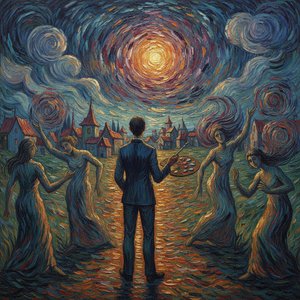
Beyond the Light: Capturing Emotion Through the Expressive Soul of Post-Impressionism
Explore the profound emotional depth of Post-Impressionism. Discover how masters like Van Gogh and Cézanne moved beyond light to capture raw feeling through color and texture. A journey into art history for the true connoisseur.
Raziščite umetniška dela, razvrščena po temah, slogih in značilnostih.


