


 Preverite v realnem okolju
 Pošlji kot čestitko
 Deli
Deli
 Podrobnosti
 Priročnik

 Prenesi
 Podobni artefakti
 Rentgenski posnetek
 Predvajaj diaporama
 Statistika
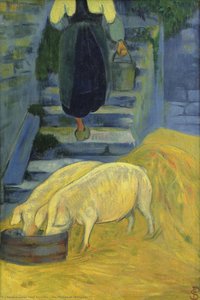
Celtic Tale
 Oil On Canvas
- WallArt
- Synthetist Painting
 1894
1894- 19th Century
 110.0 x 101.0 cm
 Dallas Museum of Art
Paul Sérusier's 'Celtic Tale' (1894) is a vibrant Synthetist masterpiece, showcasing bold forms and nature’s harmony within a lush forest setting. Explore this Cloisonnism-inspired artwork.
 Preberi več
Raziščite umetnost Paula Sérusiera (1864-1927), francoskega postimpresionističnega slikarja in pionirja abstraktne umetnosti. Odkrijte njegov slog cloisonnizma, vpliv na skupino Les Nabis ter ključna dela kot je 'Talisman'.
Kupite digitalno sliko visoke ločljivosti z izboljšano kakovostjo, ki je precej višja od spletnega predogleda.
Vsako datoteko naše strokovnjake v ekipi z največjo mero natančnosti pripravijo z uporabo naprednih orodij in strokovne ročne obdelave. Zagotovimo, da je vsaka slika izjemno jasna, barvno natančna in polna finih podrobnosti.
Končna datoteka je po e-pošti dostavljena v 72 urah, optimizirana za takojšnjo uporabo v profesionalnem, uredniškem in tiskarskem okolju. To je kakovost, ki ji zaupajo vrhunska oblikovalna studia, založniki in galerije.
Digitalna slika
Prenesite datoteko visoke ločljivosti za osebno uporabo, tiskanje in kreativne projekte. ( Preklop na tiskanine Naročite ročno slikano reprodukcijo)
Vključeno v vsako naročilo digitalne slike
Zagotovljena strokovna digitalna dostava
Z izbiro TopImpressionists.com ne prejmete le slike – prejmete profesionalno urejeno digitalno umetniško delo, izdelano z največjo natančnostjo in zavestno podprto z garancijo za zadovoljstvo. Tukaj je vse, kar bo z vašim naročilom samodejno priloženo:

Hitra dostava po e-pošti
Vaša digitalna slika visoke ločljivosti bo na vaš e-naslov poslana v roku 72 ur od zaklopa naročila – pripravljena za takojšnjo uporabo.

Digitalna datoteka z uporabo AI
Vaše umetniško delo je strokovno optimizirano z uporabo naprednih orodij umetne inteligence in ročne obdelave, kar zagotavlja največjo stopnjo podrobnosti, jasnosti in barvne natančnosti.

Brezplačna doletna ponovna dostava
Ste datoteko zaradi nespremietne napake izgubili ali izbrisali? Ni težav – vam jo bomo ponovno poslali kadar koli in brezplačno.

Brez uvoznih pristojbin – vedno
Svoje umetniško del uživajte takoj, brez carin, davkov ali stroškov dostave – digitalni prenosi so vedno brezdavčni.

Zagotovilo natančnosti barv
Z uporabo profesionalnih orodij in procesov upravljanja barv zagotavljamo, da vaša digitalna slika čim bolj natančno odraža prvotne barve.

100-dnevna garancija zadovoljstva
Če niste zadovoljni s svojo digitalno sliko, jo bomo uredili ali vam v 100 dneh povrnili 100% denarja – brez kakršnih koli vprašanj.

100% Garancija povračila denarja
Niste zadovoljni? Zagotavljamo vam popoln povračilo sredstev v 100 dneh po prejemu digitalne datoteke – brez dodatnih vprašanj.

Popusti pri večjih naročilih
Kupite 3 slike, prihranite 10% - Kupite 5 slik, prihranite 15% - Kupite 10+ slik, prihranite 20%. Odlično za kreativne projekte, galerije in agencije.
Paul Sérusier’s “Celtic Tale”: A Window into Synthetist Vision
Paul Sérusier's "Celtic Tale," painted in 1894, isn’t merely a depiction of a forest scene; it’s a profound exploration of light, color, and the nascent principles of abstract art. This oil on canvas, now residing within the Dallas Museum of Art, offers a captivating glimpse into the artist's innovative approach to capturing the essence of nature – a style he would later define as Synthetism. Born in Paris in 1864, Sérusier’s artistic journey was marked by a restless pursuit of new forms of expression, culminating in his groundbreaking work with the Nabis movement and his pioneering experiments with Cloisonnism.
The painting immediately draws the eye with its vibrant palette. Bold swathes of emerald green, sapphire blue, and ochre yellow dominate the composition, creating a sense of luminous intensity. These colors aren’t applied realistically; instead, Sérusier employs them in a flattened, almost geometric manner – a hallmark of Synthetism. He deliberately rejects traditional perspective, opting for simplified forms and strong contours that delineate shapes rather than mimicking their three-dimensional appearance. This technique, reminiscent of the decorative art of cloisonné enamelwork (hence “Cloisonnism”), creates an arresting visual effect, pulling the viewer into the heart of the scene.
The Spirit of Pont-Aven: Synthetism and its Roots
Sérusier’s artistic evolution was profoundly shaped by his summer sojourn in 1888 to Pont-Aven, a small village in Brittany. There, he encountered Paul Gauguin, who became a mentor and introduced him to the principles of Synthetism. Gauguin encouraged Sérusier to abandon academic realism and instead focus on capturing the *feeling* of a subject – its essence rather than its literal representation. This shift is powerfully evident in "Celtic Tale," where the forest itself becomes a symbolic entity, imbued with an almost mystical quality.
The painting’s composition echoes the work of Seurat and Signac, key figures in Pointillism and Neo-Impressionism, both movements that influenced Sérusier's development. However, unlike their meticulous application of tiny dots of color, Sérusier utilizes broader brushstrokes and bolder blocks of pigment to achieve a similar effect – creating an impression of light and atmosphere through the manipulation of color itself. The figures within the scene are deliberately simplified, almost dissolving into the surrounding landscape, further emphasizing the painting’s abstract qualities.
Symbolism Within the Scene: Nature, Community, and Mystery
Beyond its formal innovations, “Celtic Tale” is rich in symbolic meaning. The gathering of individuals amidst the forest evokes a sense of community and shared experience – a celebration of life and connection with nature. The two dogs present add to this feeling of warmth and conviviality. However, there’s also an underlying current of mystery and perhaps even melancholy. The cloaked figures, their faces obscured, suggest a ritualistic gathering, hinting at ancient Celtic traditions and the enduring power of myth.
The dappled sunlight filtering through the trees creates a sense of ethereal beauty, while the dark, rocky outcrop in the background provides a stark contrast, representing both obstacles and hidden depths. The painting’s overall mood is one of serene contemplation – an invitation to lose oneself in the beauty of the natural world and reflect on its timeless mysteries. It's a testament to Sérusier's ability to translate complex emotions and ideas into a visually arresting and deeply resonant work of art.
A Legacy of Innovation: Paul Sérusier’s Enduring Influence
Paul Sérusier’s “Celtic Tale” stands as a pivotal work in the history of modern art. It represents a crucial step towards abstraction, demonstrating the power of color and form to convey emotion and meaning independently of representational accuracy. His pioneering use of Synthetism paved the way for subsequent movements such as Fauvism and Cubism, solidifying his place as one of the most important figures in the development of 20th-century art. Reproductions of this captivating painting continue to inspire artists and collectors alike, offering a window into the visionary world of Paul Sérusier.
Sorodna umetniška dela




Biografija umetnika
Zgodnje življenje in umetniški začetki Paula Sérusierja
Paul Sérusier, rojen 9. novembra 1864 v Parizu, je bil francoski slikar, ki se ga danes spominjamo kot pomembnega pionirja abstraktne umetnosti in navdihovalca avantgardnega gibanja Nabis. Že v mladosti je pokazal zanimanje za likovno ustvarjanje, zato se je vpisal na Académie Julian, kjer je kmalu postal monitor. Ta korak je pomenil začetek njegove umetniške poti, ki ga bo vodila k revolucionarnim idejam in tehnikam, odpirajoč vrata novim smerem v slikarstvu – sintetizmu in klavzonizmu. Njegova zgodnja dela so bila sicer še vedno tesno povezana s tradicionalnimi postopki, vendar se je že takrat kazala njegova želja po eksperimentiranju z barvo in formo.Pont-Aven in rojstvo novega sloga
Poletja 1888 je Sérusier odpotoval v Pont-Aven na Bretaniji, kjer se je pridružil majhni skupini umetnikov okoli Paula Gauguina. To srečanje je bilo ključno za njegov umetniški razvoj. Pod Gauguinovo budnim očesom je ustvaril sliko *Le Talisman*, ki jo lahko smatramo za izjemno vajo v klavzonizmu, skorajda pa se približuje čisti abstrakciji. Sérusier je s tem delom pokazal svojo inovativnost in pripravljenost preizkušati nove pristope k slikanju. *Le Talisman* ni bil le slika; to je bila manifestacija novega načina gledanja na svet, kjer so barve in oblike prevzele primarno vlogo, podreditev naravnega prikaza pa je postala namerna izbira. Ta slika je postala simbol gibanja Nabis, ki se je zavzemalo za odmik od naturalizma in poudarek na subjektivni viziji umetnika.Nabis in iskanje novega jezika
Kot postimpresionistični slikar je bil Sérusier del skupine Les Nabis – Pierre Bonnard, Édouard Vuillard, Maurice Denis in drugi. Čeprav ni bil tako odmeven kot nekateri njegovi sodobniki, so bili njegovi prispevki k razvoju abstraktne umetnosti nesporni. Skupina je bila znana po svojem eksperimentiranju z barvami, vzorci in dekorativnimi elementi. Sérusier se je v tem kontekstu posvetil iskanju novega vizualnega jezika, ki bi izražal notranje občutke in ideje. Njegova dela so bila pogosto intimna in kontemplativna, odlikovala pa jih je subtilnost barvne palete in harmonična kompozicija.Pomembna dela in umetniški vpliv
Med pomembnejša Sérusierjeva dela spadajo:- L'Averse (1893), Musée d’Orsay, Pariz
- Portret Paula Ransona (1890), Musée d’Orsay, Pariz
- Melancholy (1890)
- The Snake Eaters (1894), Muzeum Narodowe, Varšava
Zapuščina Paula Sérusierja
Ključna ugotovitev: Paul Sérusier je bil francoski slikar, ki je utriral pot abstraktni umetnosti in navdihnil gibanje Nabis. Študiral je na Académie Julian in kasneje poučeval na Académie Ranson. Na njegovo delo so vplivali klavzonizem, stil, ki se odlikuje z drznimi in ploskimi oblikami. Sérusierjeva dela so bila pomembna za razvoj moderne umetnosti in so navdihnila številne umetnike po vsem svetu. Njegova prispevek k razumevanju barve kot nosilke samostojnega pomena je neprecenljiv, njegov opus pa ostaja vir navdiha za ustvarjalce danes.
Paul Sérusier
1864 - 1927 , Francija
Kratek pregled
- Datum Rojstva: 9. november 1864
- Datum Smrti: 7. oktober 1927
- Državljanstvo: Francoz
- Kraj Rojstva: Pariz, Francija
- Polno Ime: Louis-Paul-Henri Sérusier
- Pomembna Dela:
- Talisman
- L'averse
- Umetniški Smer: Post-Impresionizem
- Vpliv Na Umetnost: ['Nabis gibanje']
- Vplivi Umetnikov: ['Paul Gauguin']