

Shown: · With its frame:
 Predogled v realnem okolju
 Pošlji
 Deli
Deli
 Podrobnosti o delu
 Priročnik

 Prenesi sliko
 Podobni izdelki
 Rentgenski posnetek
 Predvajaj diaporama
 Q&A
Q&A Statistika
 Acrylic On Canvas
- WallArt
- German Romanticism
 1809
1809- 19th Century
 225.0 x 189.0 cm
 Hamburger Kunsthalle
€ 239
Ročno izdelana oljna reprodukcija
Ročno slikano olje na platnu v vaši izbiri velikosti in okvirja, izdelano po naročilu naših umetnikov. ( Preklop na tiskanine Preklop na digitalno sliko)
Size
·Standardna velikost
po meri
CM
INCH
Izberite eno od naših vnaprej določenih velikosti, ki ustrezajo prvotnim proporcijam umetničkega dela.
Loading sizes...

širina
višina
Vnesite širino in višino, ki jih potrebujete, da se slika prilega vašemu okviru ali steni. Ker je delo ročno slikano, lahko umetnik pri različnih oblikih slik pri robovih doda malo več barve ali pa jih malo odreže — izberite sami. Pred začetkom slikanja vam pošljemo digitalni predogled za potrditev. Slika, prikazana na tej strani, ni končni rezultat — le predogled prikazuje dejansko podobo.
 Preberi več
Finish
·
White €1

Blurside €1

Extended €1

P118B €10

P118H €10

P118W €10

P438Z €10

P508JH €12

P508YH €12

P805H €10

P805Z €10

P919BZ €10

P919G €10

P919XJ €10

P959ZH €10

P968JZ €12

W106C €8

W218G €10

W218JH €8

W218Y €10

W307PJ €10

W316G €10

W316PJ €8

W316Y €10

W398PJ €8

W4111J €10

W500HY €15

W500JH €15

W692G €12

W849H €8

W940BG €15

W953PJ €8

H24-GOLD €30

H24-SILVER €30

H36-GOLD €45

H36-SILVER €45
Shipped in a protective tube, ready for your own framer.
Above 105 cm the frame is shipped as a kit for a professional framer — read the details.
Extras
optionalWhat do the extras include?
Examples of what can be changed: Replace face with customer photo; Add pet (e.g., replace cat with dog); Include hidden message in background; Change background landscape or elements.
After order, TopImpressionists.com team will email client for instructions and provide a mockup preview
After order, TopImpressionists.com team will email client for instructions and provide a mockup preview
Mednarodna dostava () v 3/4 tednih namesto običajnih 5 tednov. (31 oktober). Brez kompromisov pri kakovosti.
Zaščitni lak
Značka z imenom
Podrobnosti o gravirani bronasti plošči
This elegant plaque features the artist's name and the title of the artwork, finely engraved for a timeless presentation.
It is made from bronze with a refined, elegant finish. The text is precisely laser-engraved for a sharp and permanent result. Measuring 9x2 cm, the plaque is compact yet easy to read. It's built to be durable and scratch-resistant, offering a professional, museum-quality look. Mounting is simple thanks to the included adhesive backing.
Podrobnosti o transparentni akrilni plošči
The plaque includes essential engraved details such as the artist's name, the title of the artwork, the date it was created, the type of media used-like oil on canvas or watercolor-a brief description of the piece, and a QR code that links to the complete artwork information.
It is crafted from clear acrylic, offering a sleek, modern appearance. The text is UV-engraved in black to ensure strong visual contrast. With a size of 10x15 cm, it ensures optimal readability. It comes equipped with two metal hooks for secure wall mounting. The plaque is designed to be weather-resistant, making it suitable for various environments, and it includes interactive features that work seamlessly with smartphone scanning.
Podrobnosti o črni akrilni plošči
This elegant plaque includes engraved information such as the artist's name, the title of the artwork, the date it was created, the type of media used (like oil on canvas or watercolor), a short description of the artwork, and a QR code for quick access to more information.
The plaque itself is made from refined black acrylic with a premium finish. The text is laser-engraved in white for high contrast and readability. Its size is 10x15 cm, designed to be easy to read. It comes with two metal hooks for professional mounting. The design is sleek and fits any interior style. It is also weather-resistant and durable, with built-in digital integration for mobile compatibility.
Možnost stekla je na voljo le za velikosti pod 110 cm
 Možnost stekla je na voljo le za velikosti pod 110 cm
- Brezplačna ekspresna dostava po vsem svetu
- Visokokakovostno laneno platno
- Popolno zavarovanje pošiljke
- Garancija povračila carine in uvoznih davkov
- Garancija popolnega barvnega ujemanja
- 100-dnevna politika vračil (le v primeru okvar)
- Garancija 100% povračila denarja
- Popust pri večjem naročilu


Opis zbirateljskega predmeta
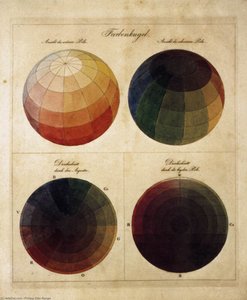
Experience 'Colour Spheres' by Philipp Otto Runge – a mesmerizing 1809 engraving depicting vibrant color spheres arranged in a harmonious circular design. A captivating piece of Romantic art.
Biografija umetnika
Philipp Otto Runge (1777-1810) je bil nemški romantik, znan po simboličnih krajinah, portretih in pionirski teoriji barv ('Barvna sfera'). Odkrijte njegovo mistično umetnost in trajni vpliv.
About the painting
A Symphony of Color: Philipp Otto Runge’s “Colour Spheres”
Philipp Otto Runge's "Colour Spheres," painted in 1809, isn’t merely a depiction of spheres; it’s an intensely personal and profoundly symbolic exploration of color theory, spirituality, and the very essence of perception. Created during a pivotal moment in German Romanticism – a period grappling with tradition versus innovation, reason versus emotion – Runge sought to move beyond the constraints of academic painting and forge a new visual language rooted in his own deeply felt inner world. The work, now housed within the Kunsthalle in Hamburg, Germany, is a testament to this ambition, radiating an almost palpable sense of contemplative energy.
The composition itself is deceptively simple: four distinct spheres dominate the canvas, each imbued with a unique chromatic harmony. These aren’t static objects; they appear to pulse with light and movement, their surfaces shimmering with subtle gradations of color. Runge masterfully employs a technique reminiscent of both pastel drawing and early Impressionism – delicate layering of translucent washes creates an ethereal quality, while careful attention to value and hue establishes a remarkable sense of depth and luminosity. The spheres aren’t rendered with photographic realism; instead, they are idealized forms, suggesting a connection to the divine or the abstract realms of consciousness. The choice of materials—engraving media—contributes to this luminous effect, allowing for a richness of tone rarely achieved with oil paint alone.
The Roots of Color Theory and Spiritual Symbolism
Runge’s fascination with color stemmed from his deep engagement with the philosophy of Jakob Böhme, a 17th-century German mystic who believed that colors possessed inherent spiritual significance. Böhme posited that each hue corresponded to a specific stage of human development or a particular aspect of the divine. Runge sought to translate these esoteric ideas into visual form, believing that color could be used to unlock deeper levels of understanding and experience. His work reflects this intellectual pursuit, moving beyond mere representation to become a vehicle for conveying complex philosophical concepts.
The arrangement of the spheres themselves is laden with symbolic meaning. The central sphere, predominantly red, often represents passion, energy, and earthly existence – the realm of the senses. The green sphere embodies growth, harmony, and connection to nature. Blue signifies intellect, contemplation, and the spiritual realm. Yellow, positioned furthest from the viewer, evokes joy, enlightenment, and divine grace. The circular arrangement suggests a cyclical process—a journey through different states of consciousness or stages of life. It’s important to note that Runge's color theory was radically different from prevailing scientific understanding at the time; he prioritized subjective experience over objective measurement.
A Dialogue with Goethe and the Romantic Spirit
Runge’s work resonated deeply with his contemporary, Johann Wolfgang von Goethe, who shared a profound interest in color theory. The two artists engaged in extensive correspondence, exchanging ideas about the nature of perception and the expressive potential of color. Indeed, Runge's exploration of color was heavily influenced by Goethe’s theories on optics and aesthetics. This intellectual exchange highlights the vibrant artistic and philosophical ferment of the early 19th century – a period marked by a renewed interest in spirituality, emotion, and the power of individual experience.
Furthermore, “Colour Spheres” embodies the core tenets of German Romanticism: an emphasis on intuition, imagination, and the sublime. It rejects the rationalism of the Enlightenment in favor of a more subjective and emotionally charged approach to art. The painting’s evocative atmosphere—its sense of mystery, wonder, and spiritual yearning—captures the essence of this artistic movement perfectly. It invites the viewer not simply to *see* the colors but to *feel* them, to connect with their own inner world.
Collecting a Timeless Masterpiece
Reproductions of “Colour Spheres” offer a remarkable opportunity to bring Runge’s visionary aesthetic into any interior space. The delicate layering and luminous quality of the original are faithfully reproduced in high-quality prints, allowing the painting's subtle nuances to shine through. Whether displayed as a statement piece or incorporated into a more restrained color scheme, this artwork will undoubtedly serve as a focal point, sparking conversation and inspiring contemplation. Consider commissioning a hand-painted reproduction – a truly unique and authentic representation of this seminal work of German Romantic art.
Vprašanja in odgovori
Za kakšno uporabo se priporoča tiskanina dela "Colour Spheres"?
Priporočena uporaba tiska dela "Colour Spheres" je Statement.
Koliko je izražen kontrast v delu "Colour Spheres" avtorja Philipp Otto Runge?
Svetlo-temni kontrast dela "Colour Spheres" je zabeležen kot Statement. Kontrast opisuje stopnjo razlike med svetlim in temnimi conami.
Ali je za "Colour Spheres" na voljo predogled v augmented reality?
Stran Predogled v AR za delo "Colour Spheres" avtorja Philipp Otto Runge uporablja tehnologijo proširjene reality, da na vaši zd compatible napravi prikaže umetniško del v vašem lastnem prostoru.
Quick facts and art quiz
About Philipp Otto Runge

Philipp Otto Runge
1777 - 1810, Nemčija
Biografija umetnika
Življenje razsvetljeno z notranjo vizijo
Philipp Otto Runge, ime, ki odmeva v rodnem duhu nemškega romantizma, je bil umetnik, katerega tragično kratko življenje ni moglo zmanjšati globine in izvirnosti njegove vizije. Rodil se je leta 1777 v Wolgastu, takrat delu švedske Pomeranije, v družini, ki je bila močno povezana s pomorskim ladjedelstvom in plemiško rodbino. Njegovo zgodnje življenje so zaznamovale bolezni, ki so spodbudile premišljujočo naravo, ki bi globoko vplivala na njegove umetniške prizadevanja. To obdobje telesne krhkosti je negovalo tudi zgodnji talent za *silhuete iz papirja*, prakso, ki jo je nadaljeval skozi vse življenje – dokaz njegovega naravnega daru destilirati obliko in čustva z izjemno natančnostjo. Njegovo formalno usposabljanje se je začelo kasneje kot pri večini; sprva s trgovinskim vajništvom v Hamburgu v podjetju brata Daniela. Vendar pa je bil nagon do umetniškega izražanja premočan, kar ga je leta 1799 popeljal v København na študij slikarstva pri Jensu Juelu. To je pomenilo pravi začetek Rungejeve poti k temu, da postane eden najbolj inovativnih in duhovno navdihnjenih umetnikov Nemčije.Zore romantičnega simbolizma
Rungejev umetniški razvoj je močno vplival selitev v Dresden leta 1801, kjer se je srečal s pomembnimi osebnostmi, kot sta Caspar David Friedrich in Ludwig Tieck. Prav tam je spoznal Paulino Bassenge, za katero se je poročil leta 1804. V tem obdobju se je razvila njegova fascinacija z mističnimi spisi Jakoba Böhmeja, katerih filozofski vpogledi v skrite harmonije vesolja so globoko odmevali v Rungejevih lastnih duhovnih nagnjenjih. Pomemben trenutek je nastal leta 1803, ko se je nepričakovano srečal z Johannom Wolfgangom von Goethem v Weimarju in sklenil prijateljstvo, ki ga je gradilo na skupnem zanimanju za teorijo barv in umetniški izraz. To srečanje se je izkazalo za prelomno, saj je Rungeja spodbudilo, da še globlje raziskuje simbolični jezik umetnosti in raziskuje medsebojno povezanost vseh stvari. Njegova zgodnja dela so začela odražati ta naraščajoči romantični čut, se premikajo stran od neoklasicistične zadržanosti k emocionalno nabitim pokrajinam in portretom, prepojenim z osebnim pomenom. *Otroci Hülsenbeck* (1805), na primer, ni le portret, temveč ganljiva upodobitev družinske intimnosti in nedolžnosti otroštva, prikazana s skoraj eterično kakovostjo.Barva kot kozmični jezik
Rungejeva najtrajna zapuščina je v njegovem prelomnem delu o teoriji barv. Verjel je, da barva ni le vizualni fenomen, temveč temeljna sila, ki oblikuje našo dojemanje resničnosti in odraža božanski red. To prepričanje ga je pripeljalo do razvoja njegovega *Farben-Kugel* (Barvne krogle), objavljene leta 1810, kmalu pred njegovo prezgodnjo smrtjo zaradi tuberkuloze v starosti trideset treh let. Barvna krogla ni bila zgolj znanstveni traktat; bil je poskus preslikati celoten spekter barv na tridimenzionalno obliko, pri čemer sta bela in črna predstavljala nasprotne pole, primarne barve – modra, rumena in rdeča – pa so simbolizirale krščansko trojico. Modra je predstavljala Boga in noč, rdeča jutro, večer in Jezusa, medtem ko je rumena utelešala Svetega Duha. Njegovi natančni poskusi mešanja barv na disku so bili poskus zagotoviti empirično podporo njegovemu teoretičnemu okviru in pokazati, kako se lahko barve harmonično zmešajo za ustvarjanje široke palete odtenkov. To raziskovanje ni bilo osamljeno; prepletalo se je z njegovo umetniško prakso, ki je vplivala na simbolično uporabo barv v njegovih slikah in risbah.Nedokončana simfonija ‘Čas dneva’
Runge si je zamišljal *Gesamtkunstwerk* – celotno umetniško delo – ki bi združilo slikarstvo, poezijo, glasbo in arhitekturo v enotno čutno izkušnjo. Ta ambicija se je najbolj odražala v njegovi seriji *Tageszeiten* (Čas dneva), ki se je začela leta 1803. Projekt je obsegal štiri monumentalna platna, ki predstavljajo jutro, opoldne, večer in noč, vsako zasnovano za ogled v posebej zgrajeni stavbi skupaj z glasbo in poezijo. Čeprav sta bili dokončani le dve različici "Jutra", risbe za celoten cikel razkrivajo Rungejevo globoko razumevanje simbolizma in njegovo željo ujeti duhovno bistvo časa samega. Ta dela so pomenila odstop od tradicionalnega krajinarstva, ki je naravi vdihovalo verski in emocionalni pomen. Išče ni zgolj prikazal zunanjega sveta, temveč poskušal prenesti njegovo notranjo harmonijo in božansko prisotnost. Koncept je bil revolucionaren za svoj čas, saj je predvideval poznejši razvoj abstraktne umetnosti in multimedijskih instalacij.Trajni vpliv
Kljub kratekosti svoje kariere je Rungejev vpliv na nemški romantizem in razvoj moderne umetnosti nesporno dejstvo. Njegovo raziskovanje teorije barv je vplivalo na generacije umetnikov, vključno s tistimi, ki so bili povezani z gibanjem Bauhaus. Njegov poudarek na simbolizmu in čustvenem izražanju je utrlo pot poznejšim ekspresionističnim slikarjem. Rungejeva edinstvena mešanica znanstvenega raziskovanja, duhovnega prepričanja in umetniške inovacije še naprej očara in navdihuje. Ostaja ključna osebnost v zgodovini umetnosti – vizionarski umetnik, ki si je upal raziskati skrite globine človekovega zaznavanja in skrivnosti vesolja skozi jezik barve, oblike in simbolizma. Njegova dela niso zgolj slike; so okna v svet, osvetljen z notranjo vizijo, ki nas vabijo k premišljevanju o globoki medsebojni povezanosti vseh stvari.Quick facts about Philipp Otto Runge
- Datum Rojstva: 1777
- Datum Smrti: 1810
- Državljanstvo: Nemec
- Kraj Rojstva: Wolgast, Nemčija
- Polno Ime: Philipp Otto Runge
- Pomembna Dela:
- Hülsenbeckovi otroci
- Veliko jutro
- Barvna sfera
- Umetniki Vplivani: ['Caspar David Friedrich']
- Umetniški Smer: Romantizem
- Vplivi Umetnikov:
- Jakob Böhme
- Johann Goethe
Raziščite umetniška dela, razvrščena po temah, slogih in značilnostih.

Philipp Otto Runge
Colour Spheres
() ·
With its frame: · Hand-painted in oil on linen
Total