


 Preverite v realnem okolju
 Pošlji kot čestitko
 Deli
Deli
 Podrobnosti
 Navodila

 Prenesi
 Podobni artefakti
 Rentgenski posnetek
 Predvajaj diaporama
 Statistika
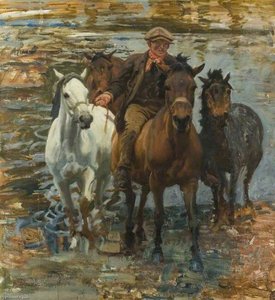
The Ford
 Acrylic On Canvas
- WallArt
- Newlyn School
 19th Century
 139.0 x 165.0 cm
 Wolverhampton Art Gallery
Experience 'The Ford' by Sir Alfred Munnings – a captivating 1910 painting of a man and horses navigating floodwaters. A stunning depiction of rural England’s adventurous spirit, rendered in rich detail.
 Preberi več
Sir Alfred James Munnings (1878-1959): Znani kot eden najboljših britanskih slikarjev konjev in izjemni zagovornik tradicionalne umetnosti. Raziskovalna študija lovca in črnejnice ter druge impresionistične slike prikazujejo življenje na podeželju.
Giclée tisk / Umetniški tisk
Giclée ali platnati odtis muzejske kakovosti z hitro proizvodnjo in prilagodljivimi možnostmi končne obdelave. ( Naročite ročno slikano reprodukcijo Preklop na digitalno sliko)




P118B $10

P118H $10

P118W $10

P438Z $10

P508JH $12

P508YH $12

P805H $10

P805Z $10

P919BZ $10

P919G $10

P919XJ $10

P959ZH $10

P968JZ $12

W106C $8

W218G $10

W218JH $8

W218Y $10

W307PJ $10

W316G $10

W316PJ $8

W316Y $10

W398PJ $8

W4111J $10

W500HY $15

W500JH $15

W692G $12

W849H $8

W940BG $15

W953PJ $8




Standardna velikost
po meri
CM
INCH
Izberite eno od naših vnaprej določenih velikosti, ki ustrezajo prvotnim proporcijam umetničkega dela.
Loading sizes...

širina
višina
Svoje dimenzije lahko vnesete sami, da bodo ustrezne za določen okvir ali prostor. Če izbrana velikost ne bo skladna z razmerji izvirne slike, bomo umetniško delo orezali ali podaljšali s pomočjo ogledalnega odraza ali barvno polnega roba. Pred začetkom proizvodnje vam bomo poslali digitalni predogled za potrditev.
Upoštevajte, da predogled na zaslonu ne prikazuje dejanskega orezovanja ali podaljševanja. Le digitalni predogled bo natančno prikazal končno kompozicijo.
Čeprav so na voljo prilagojene velikosti, priporočamo izbiro dimenzije s predhodno določenega seznama, da ohranite prvotna razmerja.
Globalna dostava () v 2 tednih namesto standardnih 4/5 tednov. (23 september)

Brezplačna ekspresna dostava po vsem svetu

Visokokakovostno laneno platno

Popolno zavarovanje pošiljke

Garancija povračila carine in uvoznih davkov

Garancija popolnega barvnega ujemanja

Politika vračila v 100 dneh (le v primeru okvar)

Garancija 100% povračila denarja

Popust pri večjem naročilu
 Možnost stekla je na voljo le za velikosti pod 110 cm

The Ford
Giclée tisk / Umetniški tisk
Velikost reprodukcije
-


Skupna cena
$ 69
A Moment Frozen in Time: The Ford by Sir Alfred Munnings
Sir Alfred James Munnings’s “The Ford,” painted in 1910, isn't merely a depiction of horses and riders; it’s a vibrant snapshot of a vanishing world – the heartland of rural England on the cusp of profound change. More than just a landscape painting, it’s an immersive experience, transporting the viewer to a flooded field teeming with life, action, and a palpable sense of camaraderie. Munnings, a master of capturing the essence of equine grace and the spirit of the countryside, skillfully renders this chaotic scene with remarkable precision and emotional depth.
The painting immediately draws the eye to the central figure on horseback, a man confidently leading a group through the turbulent waters. His posture exudes authority and leadership, while his attire – a crisp tie against the muddy backdrop – subtly anchors him in a world of gentlemanly pursuits. The horses themselves are rendered with breathtaking realism; each muscle flexes, each stride is captured with an almost photographic accuracy. Munnings’s ability to convey the power and movement of these animals is truly remarkable, highlighting their vital role within this community.
The Painter's Technique: Impressionism Meets Equestrian Detail
Munnings’s style seamlessly blends elements of Impressionism with his deep understanding of horses. He employs loose brushstrokes and a vibrant palette – dominated by earthy browns, greens, and blues – to create an atmosphere of immediacy and dynamism. The water itself is depicted not as a static element but as a swirling vortex of color and movement, reflecting the light and adding to the sense of unrestrained energy. Notice how he uses broken color to suggest depth and texture, particularly in the wet ground and the flowing garments of the riders.
The painting’s composition is carefully constructed to draw the viewer into the scene. The diagonal lines created by the horses and riders lead the eye across the canvas, while the use of atmospheric perspective – with distant figures appearing paler and less distinct – reinforces the sense of depth. Munnings' meticulous attention to detail extends beyond the horses; he captures the expressions on the faces of the riders, conveying a range of emotions from determination to amusement.
A Window into a Disappearing World
“The Ford” offers more than just a beautiful landscape; it’s a poignant reminder of a bygone era. Painted in 1910, the scene depicts a time when rural life was deeply intertwined with agriculture and hunting – activities that were increasingly threatened by industrialization and urbanization. The flooded field itself speaks to the unpredictable nature of the countryside, highlighting its vulnerability to the elements.
The painting’s historical context is crucial to understanding its significance. Munnings was a staunch defender of traditional rural values, and his work often served as a visual chronicle of a disappearing way of life. “The Ford” captures this sentiment perfectly, offering a glimpse into a world where horses were not just animals but essential partners in the daily rhythms of life. The painting’s enduring appeal lies in its ability to evoke a sense of nostalgia for a time when community and connection with nature held greater importance.
Symbolism and Emotional Resonance
Beyond its technical brilliance, “The Ford” is rich in symbolism. The flooded field represents both challenge and opportunity – a test of skill and resilience. The central figure on horseback embodies leadership and determination, while the other riders represent community and shared experience. The painting’s overall mood is one of optimism and camaraderie, suggesting that even amidst adversity, there is always reason for hope.
Ultimately, “The Ford” is a powerful testament to Munnings' artistic vision and his ability to capture the essence of rural England. It’s a timeless masterpiece that continues to resonate with viewers today, reminding us of the beauty and importance of preserving our cultural heritage.
Sorodna umetniška dela




Biografija umetnika
Življenje Prepleteno s Konjiško Gracioznostjo
Sir Alfred James Munnings, ime nerazdeljivo povezano z živahnimi prizori konjev in romantično privlačnostjo angleške podeželske pokrajine, zavzema ključno mesto v umetnosti 20. stoletja. Rojen leta 1878 sredi valovitih krajev Suffolk-a, je bila njegova življenjska pot globoko zaznamovana z vztrajno povezanostjo s konjskim svetom – vezjo, ki je opredelila njegovo umetniško vizijo in ga izstrelila v ospredje. Munnings ni le posnemal tega, kar je videl; ohranjal je občutek, vzdušje, svet na robu nepovratne spremembe. Ujel je minule čase, natančen prikaz Britanije, prežete s tradicijo, lovom in ritmi podeželja.Od Skromnih Korenin do Umjetniškega Razcveta
Munningsova umetniška pot se ni začela v formalnih mejah akademije, temveč v praktičnem svetu norviške tiskarne. Ta vajeništvo je izpililo njegove veščine oblikovanja in opazovanja, hkrati pa mu omogočalo študij na Norwich School of Art. Bila je formativna doba, ki mu je všla disciplino, ki ga je vodila skozi izzive uveljavljanja kot umetnika. Zgodnji vplivi so bili impresionistični slikarji Newlyn School v Cornwallu, kjer je sprejel njihovo zavezanost zajemanju svetlobe in atmosfere neposredno iz narave. Ta potopitev v impresionistične tehnike je položila temelj za njegov značilen slog – prosto črtanje, živahna paleta barv in opazna dinamika gibanja. Njegova zgodnja dela so pogosto prikazovala podeželske prizore, zlasti scene s Cigani in konji, ki se sprehajajo po Suffolk-u, prežete z romantično občutljivostjo, ki je razkazovala njegovo rast umetniških sposobnosti. Ta slika niso bile le ponazoritve; bile so izrazi globoke naklonjenosti do zemlje in njenih prebivalcev.Vojna, Priznanje in Zavetnik Tradicije
Prva svetovna vojna je hrupno zaznamovala tako Munningsovo umetniško perspektivo kot njegovo javno podobo. Čeprav sprva ni bil sprejet v aktivno službo, je deloval kot uradni vojni slikar z Kanadsko konjeniško brigado in dokumentiral ključno vlogo konj v konfliktu. Ta izkušnja ga je pripeljala v stik s tragičnimi resničnostmi vojne – trpljenjem, izgubami in trajno vezjo med ljudmi in živalmi. Njegova dela iz tega obdobja niso glorifikacije bitke, temveč ganljivi odsevi žrtve in odpornosti, ki zajamejo mračno lepoto sredi uničenja. Po vojni je doživela razcvet Munningsove priljubljenosti in finančne varnosti. Prestižne naloge so se kar vrstile, kar mu je omogočilo nakup Castle House v Dedhamu, Essex – posestva, ki je postalo dom in studio za preostanek njegovega življenja. Postal je cenjen portretist, ki je ujel podobo uglednih oseb iz aristokracije in dirkaške skupnosti. Njegova sposobnost, da prenese ne le fizično podobnost, temveč tudi značaj in duh, je utrdila njegov sloves kot enega vodilnih britanskih umetnikov. Munnings je bil pa tudi goreč zagovornik tradicionalnih umetniških vrednot.Kontroverzna Glasba in Trajna Zapuščina
Munningsova umetniška filozofija je bila globoko zakoreninjena v tradiciji, zato je postal glasen kritik nastajajočih modernističnih gibanj, ki so izzvala konvencionalne predstave o umetnosti. Njegov znameniti – in pogosto kontroverzni – radijski govor za BBC leta 1949 je zaznamoval ostrino kritike na kubizem in dadaizem, ki jo je izrazil s značilno odprtostjo (in navidezno pod vplivom alkohola). Čeprav so njegove besede sprožile ogorčenje med zagovorniki moderne umetnosti, so se dotaknile tudi tistih, ki cenijo reprezentativno slikanje in trajno moč umetniških veščin. Ni le nasprotoval spremembam same po sebi; verjel je v pomembnost ohranjanja umetniških standardov in praznovanja lepote v njenih tradicionalnih oblikah. Ta prepričanje se je kronalo z njegovo izvolitvijo za predsednika Kraljeve akademije leta 1944, položajem, ki ga je zasedel do leta 1949, kar je utrdilo njegov status v britanski umetniški ustanovitvi. Postal je sir leta 1944 in bil imenovan za viteza reda kraljevih viktorijanskih redov leta 1947, kar je dodatno priznalo njegove prispevke k kulturni življenjski sili države. Sir Alfred James Munnings je zapustil za seboj obsežno in prepričljivo delo, ki še danes očara občinstvo. Njegova dela ponujajo okno v preteklost – svet konj, lova in podeželske pokrajine, ki je skoraj izginila. Munningsov muzej, ki ga je ustanovila njegova žena Violet v Castle House, služi kot priča njegovi trajni zapuščini in zagotavlja prostor za prihodnje generacije, da cenijo njegovo edinstveno vizijo.Pomembni Dosežki
- Predsednik Kraljeve akademije: Izvoljen za predsednika Kraljeve akademije leta 1944 in služil do leta 1949.
- Vitez: Postal sir leta 1944 in imenovan za viteza reda kraljevih viktorijanskih redov leta 1947.
- Naloge uradnega vojaka: Priznan za svoje delo, ki je dokumentiral Kanadsko konjeniško brigado med prvo svetovno vojno.
- Kiparstvo: Ustvaril kipi, vključno s konjiškim kipom Edwarda Hornerja.
Njegova zapuščina živi ne le skozi njegova mojstrovita slikanja, temveč tudi kot strasten zagovornik umetniške tradicije v hitro spreminajočem se svetu.

Alfred James Munnings
1878 - 1959 , Združeno kraljestvo
Ključne informacije
- Datum Rojstva: 8. oktober 1878
- Datum Smrti: 17. julij 1959
- Kraj Rojstva: Mendham, Združeno kraljestvo
- Nacionalnost: Britanski
- Polno Ime: Sir Alfred James Munnings
- Umetniški Slog: Impresionizem
- Vplivneži: ['Newlyn School painters']
- Znani Dela:
- The Fancy Dress Ball
- A Piper
- Sky Study
Sorodni članki

Sir Alfred Munnings' Masterpieces: 25 Paintings That Define Equine Art | TopImpressionists
Explore 25 iconic Sir Alfred Munnings paintings! Discover the beauty of British Impressionism, equine art & rural England. Find museum-quality reproductions and elevate your home decor with TopImpressionists. Explore the full collection online.

James Abbott McNeill Whistler: 25 Mojstrovskih Del za Navdih v Vašem Domu
Odkrijte 25 mojstrovskih del Jamesa Abbotta McNeilla Whistlerja! Preučite zgodbe, tehnike in navdih za njegove ikonične nocturne, portrete in dela estetizma. Najboljše reprodukcije slik online na TopImpressionists.com – umetnost za vaš dom.

Cultivating Visions: A Historical Journey Through Rural Landscapes in Art
Explore the rich history of rural landscape painting with TopImpressionists. Discover Impressionist masterpieces, key artists & movements. Find your perfect serene artwork and bring nature's beauty home.

John Constable: 25 Mojstrovskih Del Angelskega Krajinarja | TopImpressionists.com
Odkrijte 25 mojstrovskih del Johna Constabla, angleškega slikarja romantizma. Preučite zgodbe za ikoničnimi krajinami, tehniko in lepoto narave. Kvalitetne reprodukcije slik na TopImpressionists.com – idealno za dekoracijo doma!

Capturing Motion: The Timeless Beauty of Sir Alfred James Munnings' Equestrian Masterpieces
Discover the breathtaking equestrian mastery of Sir Alfred James Munnings. Explore an art-history journey through his impressionistic captures of motion, light, and rural elegance, perfect for the discerning classic art enthusiast and collector.
Raziščite umetniška dela, razvrščena po temah, slogih in značilnostih.


