

Shown: · With its frame:
 Predogled v realnem okolju
 Pošlji
 Deli
Deli
 Podrobnosti o delu
 Priročnik

 Prenesi sliko
 Podobni izdelki
 Rentgenski posnetek
 Predvajaj diaporama
 Q&A
Q&A Statistika

€ 237
Ročno izdelana oljna reprodukcija
Ročno slikano olje na platnu v vaši izbiri velikosti in okvirja, izdelano po naročilu naših umetnikov. ( Preklop na tiskanine Preklop na digitalno sliko)
Size
·Standardna velikost
po meri
CM
INCH
Izberite eno od naših vnaprej določenih velikosti, ki ustrezajo prvotnim proporcijam umetničkega dela.
Loading sizes...

širina
višina
Vnesite širino in višino, ki jih potrebujete, da se slika prilega vašemu okviru ali steni. Ker je delo ročno slikano, lahko umetnik pri različnih oblikih slik pri robovih doda malo več barve ali pa jih malo odreže — izberite sami. Pred začetkom slikanja vam pošljemo digitalni predogled za potrditev. Slika, prikazana na tej strani, ni končni rezultat — le predogled prikazuje dejansko podobo.
 Preberi več
Finish
·
White €1

Blurside €1

Extended €1

P118B €10

P118H €10

P118W €10

P438Z €10

P508JH €12

P508YH €12

P805H €10

P805Z €10

P919BZ €10

P919G €10

P919XJ €10

P959ZH €10

P968JZ €12

W106C €8

W218G €10

W218JH €8

W218Y €10

W307PJ €10

W316G €10

W316PJ €8

W316Y €10

W398PJ €8

W4111J €10

W500HY €15

W500JH €15

W692G €12

W849H €8

W940BG €15

W953PJ €8

H24-GOLD €30

H24-SILVER €30

H36-GOLD €45

H36-SILVER €45
Shipped in a protective tube, ready for your own framer.
Above 105 cm the frame is shipped as a kit for a professional framer — read the details.
Extras
optionalWhat do the extras include?
Examples of what can be changed: Replace face with customer photo; Add pet (e.g., replace cat with dog); Include hidden message in background; Change background landscape or elements.
After order, TopImpressionists.com team will email client for instructions and provide a mockup preview
After order, TopImpressionists.com team will email client for instructions and provide a mockup preview
Mednarodna dostava () v 3/4 tednih namesto običajnih 5 tednov. (30 oktober). Brez kompromisov pri kakovosti.
Zaščitni lak
Značka z imenom
Podrobnosti o gravirani bronasti plošči
This elegant plaque features the artist's name and the title of the artwork, finely engraved for a timeless presentation.
It is made from bronze with a refined, elegant finish. The text is precisely laser-engraved for a sharp and permanent result. Measuring 9x2 cm, the plaque is compact yet easy to read. It's built to be durable and scratch-resistant, offering a professional, museum-quality look. Mounting is simple thanks to the included adhesive backing.
Podrobnosti o transparentni akrilni plošči
The plaque includes essential engraved details such as the artist's name, the title of the artwork, the date it was created, the type of media used-like oil on canvas or watercolor-a brief description of the piece, and a QR code that links to the complete artwork information.
It is crafted from clear acrylic, offering a sleek, modern appearance. The text is UV-engraved in black to ensure strong visual contrast. With a size of 10x15 cm, it ensures optimal readability. It comes equipped with two metal hooks for secure wall mounting. The plaque is designed to be weather-resistant, making it suitable for various environments, and it includes interactive features that work seamlessly with smartphone scanning.
Podrobnosti o črni akrilni plošči
This elegant plaque includes engraved information such as the artist's name, the title of the artwork, the date it was created, the type of media used (like oil on canvas or watercolor), a short description of the artwork, and a QR code for quick access to more information.
The plaque itself is made from refined black acrylic with a premium finish. The text is laser-engraved in white for high contrast and readability. Its size is 10x15 cm, designed to be easy to read. It comes with two metal hooks for professional mounting. The design is sleek and fits any interior style. It is also weather-resistant and durable, with built-in digital integration for mobile compatibility.
Možnost stekla je na voljo le za velikosti pod 110 cm
 Možnost stekla je na voljo le za velikosti pod 110 cm
- Brezplačna ekspresna dostava po vsem svetu
- Visokokakovostno laneno platno
- Popolno zavarovanje pošiljke
- Garancija povračila carine in uvoznih davkov
- Garancija popolnega barvnega ujemanja
- 100-dnevna politika vračil (le v primeru okvar)
- Garancija 100% povračila denarja
- Popust pri večjem naročilu


Opis zbirateljskega predmeta
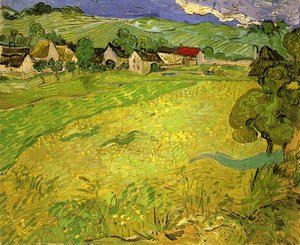
Experience Vincent van Gogh's 'Cottages,' a serene depiction of rural life brimming with vibrant colors and Post-Impressionist charm. A hand-painted reproduction captures the beauty of Dutch countryside.
Biografija umetnika
Vincent van Gogh (1853-1890): Odkrijte življenje in umetnost nizozemskega postimpresionističnega mojstra za 'Zvezdno noč' in 'Sončnice'. Spoznajte njegov drzne slog ter trajni vpliv na moderno umetnost.
About the painting
Cottages: A Window into Post-Impressionist Tranquility
Vincent van Gogh’s “Cottages,” painted in 1883, isn't merely a depiction of a rural village; it’s an immersive experience—a carefully constructed tableau designed to evoke a profound sense of peace and nostalgia. This oil on canvas, residing within the broader series exploring peasant life, offers a glimpse into Van Gogh’s evolving artistic vision during a pivotal period in his career. The scene unfolds with a quiet dignity: humble cottages, their thatched roofs blending seamlessly with the surrounding greenery, nestled beneath a serene sky. It's a landscape imbued with a palpable sense of warmth and community, yet simultaneously tinged with a subtle melancholy—a characteristic hallmark of Van Gogh’s mature style.
The painting’s genesis lies within the burgeoning Post-Impressionist movement, an era defined by artists seeking to move beyond the fleeting impressions of light and color favored by their predecessors. Post-Impressionism wasn't a rigid school but rather a diverse collection of artists—including Van Gogh himself, Paul Cézanne, Paul Gauguin, and Georges Seurat—who experimented with subjective expression, symbolic content, and emotional depth. Van Gogh’s “Cottages” exemplifies this shift; he abandons the purely observational approach of earlier Impressionists, instead layering his own feelings and interpretations onto the scene. The vibrant yellows dominating the cottages aren't simply a representation of color but rather convey warmth, light, and perhaps even a hint of optimism—a deliberate choice to imbue the humble dwellings with an aura of comfort and security.
The Language of Color and Texture
Van Gogh’s distinctive technique is immediately apparent. He employs thick, impasto brushstrokes – literally building up layers of paint directly onto the canvas – creating a tactile surface that invites close inspection. The individual strokes are visible, contributing to the painting's dynamism and energy. Notice how he uses short, broken lines to depict the thatched roofs, suggesting their texture and movement in the breeze. The greens and blues of the landscape aren’t blended smoothly; instead, they’re applied with a sense of urgency, conveying a feeling of vitality and growth. This deliberate manipulation of color and texture is central to Van Gogh's expressive style—a means of communicating not just what he *saw*, but how he *felt* about what he saw.
The composition itself is carefully considered. The cottages are arranged in a loose, asymmetrical grouping, creating a sense of visual interest and preventing the scene from feeling static. A few figures—likely peasants engaged in daily tasks—are scattered throughout the landscape, adding to the painting’s narrative quality. These figures aren't idealized or romanticized; they appear as ordinary people going about their lives, contributing to the overall sense of authenticity and realism.
Symbolism and Emotional Resonance
Beyond its visual appeal, “Cottages” is rich in symbolism. The humble cottages represent a connection to rural life, a theme that was increasingly important to Van Gogh during this period. He saw in these simple dwellings a sense of stability and community—a stark contrast to the alienation and uncertainty he often experienced in urban environments. The sky, painted in shades of blue and grey, suggests both tranquility and melancholy – reflecting the artist’s own complex emotional state. The presence of animals, likely dogs, adds another layer of meaning, symbolizing loyalty, companionship, and a connection to nature.
Van Gogh's fascination with rural life stemmed from his desire to understand the lives of ordinary people—particularly the working class. He believed that art should serve as a means of social commentary, offering insights into the experiences of those often overlooked by society. “Cottages” is therefore not just a pretty picture; it’s a poignant meditation on themes of poverty, community, and the beauty of the natural world.
Bringing "Cottages" Home: A Hand-Painted Reproduction
At TopImpressionists.com, we are proud to offer meticulously hand-painted oil reproductions of Van Gogh's “Cottages,” capturing the essence of this iconic artwork with unparalleled detail and authenticity. Our skilled artists utilize only the finest materials—traditional oil paints on archival canvas—to faithfully recreate every brushstroke, color nuance, and textural element of the original. Each reproduction is a testament to our commitment to preserving Van Gogh’s legacy and making his art accessible to collectors and admirers worldwide.
Whether you're an avid art collector, an interior designer seeking to add a touch of Post-Impressionist charm to your home, or simply someone who appreciates the beauty of Van Gogh’s work, our hand-painted reproduction of “Cottages” offers a unique opportunity to own a piece of art history. Explore our collection and discover how you can bring this timeless masterpiece into your life today. Special offer on oil paintings.
Vprašanja in odgovori
Ali se lahko slika "Cottages" avtorja Vincent Van Gogh prosto reproducira?
Status avtorskih pravic za "Cottages" avtorja Vincent Van Gogh: del je v javni domeni – avtorska pravica je zastarela. To določa, ali se lahko reprodukcije slike izdelujejo prosto.
Katera postavitev najbolje ustreza formatu dela "Cottages" avtorja Vincent Van Gogh?
Format Landscape dela "Cottages" avtorja Vincent Van Gogh priporočamo za Living Room. Format in prostor skupaj pomagata pri izbiri optimalne postavnitve reprodukcije.
Koliko svetlobe se zdi, da odražajo barve dela "Cottages"?
Luminanca, zabeležena za delom "Cottages" avtorja Vincent Van Gogh, znaša Soft Shadow.
Quick facts and art quiz
About Vincent Van Gogh

Vincent Van Gogh
1853 - 1890, Nizozemska
Biografija umetnika
Življenje, barvno prepleteno s strasti: Vincent van Gogh
Vincent Willem van Gogh, ime, ki je sinonim za živahne barve in surove čustva, ostaja ena najbolj prepoznavnih in ljubljenih osebnosti v zgodovini umetnosti. Rodil se je 30. marca 1853 v Zundertu na Nizozemskem, njegova pot od nemirnega mladeniča, ki je iskal smisel, do umetniškega vizionarja pa je ganljiva pripoved o predanosti, boju in končno trajni zapuščini. Čeprav je čez svoje življenje dosegel malo komercialne uspešnosti – pred smrtjo je prodal le eno sliko, Rdeči vinograd – je Van Gogov vpliv na moderno umetnost neizmeren, saj je utiral pot ekspresionizmu in navdihnil številne umetnike, ki so mu sledili. Njegova zgodba ni le o potezah čopiča in platnah; je spomenik moči človeškega izražanja v soočenju z nevoljo.
Zgodnja leta in umetniško prebujenje
Van Gogovo zgodnje življenje je bilo zaznamovano s serijo neizpolnjenih ambicij. V različnih poklicih je poskušal najti svojo pot – kot prodajalec umetnin, učitelj in celo misijonar – preden se je šele v relativno pozni starosti, pri 27 letih, dokončno posvetil slikarstvu. Te zgodnje izkušnje so globoko oblikovale njegov pogled na svet in se odrazile v njegovi umetnosti. Njegova začetna dela, ki prikazujejo prizore kmeškega življenja na podeželskem Belgiji, odražajo globoko empatijo do delovnega razreda in uporabljajo sogičen lestvico barv, ki odraža njihove težke življenjske okoliščine. Pod vplivom umetnikov, kot je Jean-François Millet, je Van Gogh želel skozi pretihan realizem zajeti dostojnost in odpornost teh ljudi. Vendar pa je bil njegov prehod v Pariz leta 1886 ključen za njegovo transformacijo. Tam se je srečal z impresionizem in postimpresionizmom ter prevzel tehnike mojstrov, kot so Monet, Renoir in Pissarro. Ta izpostavljenost je razširila njegove umetniške horizonte ter ga spodbudila k eksperimentiranju z bolj svetlim barvavmi in lažjimi potezami čopiča, kljub temu pa je ohranil ločeno čustveno intenzivnost, ki pri mnogih njegovih sodobnikih ni bila prisotna. Njegov brat Theo, umetniški prodajalec, je igral ključno vlogo v tem obdobju, saj mu je zagrajljal finančno podporo in služil kot pomembna vez z pariškim svetom umetnosti. Njuna obsežna korespondenca ponuja neprecenljive vpoglede v Van Gogov umetniški razvoj in osebne težave.
Južna svetloba in eksplozivna ustvarjalnost
V iskanju bolj živahne pokrajine in občutka obnovitve se je Van Gogh leta 1888 preselil v Arles na jugu Francije. Ta selitev je označila obdobje intenzivne ustvarjalnosti, ki jo je zaznamovala eksplozija barv in značilna tehnika impasto – debelo nanašanje barve na platno, kar ustvari teksturno površino, ki se zdá, kot bi utripala z energijo. Prav tukaj je ustvaril nekatera svoja najbolj ikonična dela: Sončnice, predvsem Nočno kavarno in Zvezdno noč. Močna sončna svetloba Prance je kot bi zažgala njegovo predstavljivo, kar ga je vodilo k prikazovanju pokrajin in življenjskih slik z nepredstavljivo živostjo. Njegova želja po umetniškem sodelovanju ga je navdala, da je v Arles povabil Paula Gauguina, v upanju, da bo ustanovil utopijsko kolonijo umetnikov. Njuna odnos se je pokazal za nestabilen in se je končal z dramatičnim soočenjem, ki je vodilo do Van Gogove samopoškodbe uha. Ta dogodek je poudaril krhkost njegove duševne stanja in označil začetek obdobja hospitalizacije ter vse boljih psiholoških težav.
Pozna leta in trajna zapuščina
Po duševnemu kriznemu obdobju se je Van Gogh prostovoljno zaprl v zavetnico v Saint-Rémyju, kjer je še naprej plodno slikal in s svojo umetnostjo zajemal okoliške pokrajine z lepoto in nemirom hkrati. Dela, kot je Zvezdna noč, slikana v tem času, so prežeta z občutkom kozmične čudenjosti in globoke čustvene globine. Pozneje se je preselil v Auvers-sur-pred v oskrbo dr. Paula Gacheta, vendar so njegove težave nadaljevale. 29. julija 1890, v starostih 37 let, je Van Gogh tragično umrl zaradi samopoškodljive ustreljenice. Kljub temu, da je čez svoje življenje dosegel malo priznanja, je njegovo del po smrti začelo pridobljati slavo, predvsem zahvaljujoč neizmernim prizadevanjem njegove zvajalke, Johanne van Gogh-Bonger, ki je prevzela njegovo dediščino in se posvetila promociji njegove umetnosti. Danes se po vsem svetu slavimo Van Gogova dela zaradi njihove čustvene intenzivnosti, inovativnih tehnik in trajne lepote. Njegova zapuščina sega daleč presega platno; postal je simbol umetniške strasti, vztrajnosti v soočenju z nevoljo in moči umetnosti, da izrazi najgloblje človeške čustva.
Ključni vplivi in umetniški razvoj
- Zgodnji realizem: Milletove slike kmeškega življenja so vplivale na Van Gogova zgodnja dela.
- Impresionizem in postimpresionizem: Izpostavljenost Monetu, Renoirju, Pissarruju in drugim v Parizu je razširila njegovo paleto in tehniko.
- Japonski printi: Van Gogh je bil globoko vplivovan na japonske lesorezne printe, ki jih je z zanosom zbiral. Njihova drzna kompozicija in plošne površine barv so vplivale na njegov lasten slog.
- Čustvena izraznost: Nad vsemu je Van Gogh želel skozi svojo umetnost prenesti čustva, pri čemer je prednostno dajal subjektivno izkušnjo pred objektivno predstavnostjo. Ta osredotočenost na čustveno intenzivnost je postala odločujoča značilnost njegovega dela in je utiril pot ekspresionizmu.
Quick facts about Vincent Van Gogh
- Datum Rojstva: 30. marec 1853
- Datum Smrti: 29. julij 1890
- Kraj Rojstva: Zundert, Nizozemska
- Nacionalnost: Nizozemec
- Pod Vplivom:
- Ekspresionizem
- Fauvizem
- Polno Ime: Vincent Willem van Gogh
- Umetniški Slog: Postimpresionizem
- Vplivneži:
- Rembrandt van Rijn
- Jean-François Millet
- Znani Dela:
- Sončnice
- Nočna senca
- Zvezdna noč
Sorodna umetniška dela




Raziščite umetniška dela, razvrščena po temah, slogih in značilnostih.


Vincent Van Gogh
Cottages
() ·
With its frame: · Hand-painted in oil on linen
Total