
Shown: · With its frame:
 Pregledaj u prostoru
 Pošalji
 Podeli
 Detalji o delu
 Vodič
Vodič

 Preuzmi
 Slični predmeti
 Rendgenski snimak
 Automatska prezentacija
 Q&A
Q&A Statistika
- 29.0 x 21.0 cm


дин 28022
Ručno rađena uljana reprodukcija
Ručno oslikano uljanim bojama na platnu u dimenzijama i okviru po vašem izboru, izrađeno po porudžbini od strane naših umetnika. ( Pređi na štampu Pređi na digitalnu sliku)
Size
·Standardne dimenzije
po meri
CM
INCH
Izaberite jednu od naših unapred definisanih veličina koje odgovaraju originalnim proporcijama umetničkog dela.
Loading sizes...

širina
visina
Unesite potrebnu širinu i visinu kako bi se slika uklopila u vaš ram ili zid. Pošto je ovo ručno oslikano delo, umetnik može za dimenzije drugačijeg oblika naslikati malo više prostora oko slike ili malo skratiti ivice — izbor je na vama. Pre početka rada, poslaćemo vam digitalni prikaz radi potvrde. Slika prikazana na ovoj stranici ne predstavlja konačan rezultat — samo digitalni prikaz pokazuje stvarnu sliku.
 Pročitajte više
Finish
·
White дин1

Blurside дин1

Extended дин1

P118B дин10

P118H дин10

P118W дин10

P438Z дин10

P508JH дин12

P508YH дин12

P805H дин10

P805Z дин10

P919BZ дин10

P919G дин10

P919XJ дин10

P959ZH дин10

P968JZ дин12

W106C дин8

W218G дин10

W218JH дин8

W218Y дин10

W307PJ дин10

W316G дин10

W316PJ дин8

W316Y дин10

W398PJ дин8

W4111J дин10

W500HY дин15

W500JH дин15

W692G дин12

W849H дин8

W940BG дин15

W953PJ дин8

H24-GOLD дин30

H24-SILVER дин30

H36-GOLD дин45

H36-SILVER дин45
Shipped in a protective tube, ready for your own framer.
Above 105 cm the frame is shipped as a kit for a professional framer — read the details.
Extras
optionalWhat do the extras include?
Examples of what can be changed: Replace face with customer photo; Add pet (e.g., replace cat with dog); Include hidden message in background; Change background landscape or elements.
After order, TopImpressionists.com team will email client for instructions and provide a mockup preview
After order, TopImpressionists.com team will email client for instructions and provide a mockup preview
Svetska isporuka () za 3/4 nedelje umesto uobičajenih 5 nedelja. (2 новембар). Bez kompromisa po pitanju kvaliteta.
Zaštitni lak
Kratki opis natpisa
Detalji gravirane bronze ploče
This elegant plaque features the artist's name and the title of the artwork, finely engraved for a timeless presentation.
It is made from bronze with a refined, elegant finish. The text is precisely laser-engraved for a sharp and permanent result. Measuring 9x2 cm, the plaque is compact yet easy to read. It's built to be durable and scratch-resistant, offering a professional, museum-quality look. Mounting is simple thanks to the included adhesive backing.
Detalji prozirne akrilne pločice
The plaque includes essential engraved details such as the artist's name, the title of the artwork, the date it was created, the type of media used-like oil on canvas or watercolor-a brief description of the piece, and a QR code that links to the complete artwork information.
It is crafted from clear acrylic, offering a sleek, modern appearance. The text is UV-engraved in black to ensure strong visual contrast. With a size of 10x15 cm, it ensures optimal readability. It comes equipped with two metal hooks for secure wall mounting. The plaque is designed to be weather-resistant, making it suitable for various environments, and it includes interactive features that work seamlessly with smartphone scanning.
Detalji crne akrilne pločice
This elegant plaque includes engraved information such as the artist's name, the title of the artwork, the date it was created, the type of media used (like oil on canvas or watercolor), a short description of the artwork, and a QR code for quick access to more information.
The plaque itself is made from refined black acrylic with a premium finish. The text is laser-engraved in white for high contrast and readability. Its size is 10x15 cm, designed to be easy to read. It comes with two metal hooks for professional mounting. The design is sleek and fits any interior style. It is also weather-resistant and durable, with built-in digital integration for mobile compatibility.
Opcija sa staklom dostupna je samo za dimenzije manje od 110 cm
 Opcija sa staklom dostupna je samo za dimenzije manje od 110 cm
- Besplatna ekspresna dostava širom sveta
- Visokokvalitetno laneno platno
- Potpuno osiguranje transporta
- Garancija povraćaja carine i uvoznih dažbina
- Garancija vernosti boja
- Politika povraćaja u roku od 100 dana (samo u slučaju nedostataka)
- Garancija povrata 100% novca
- Popust na više proizvoda


Opis predmeta
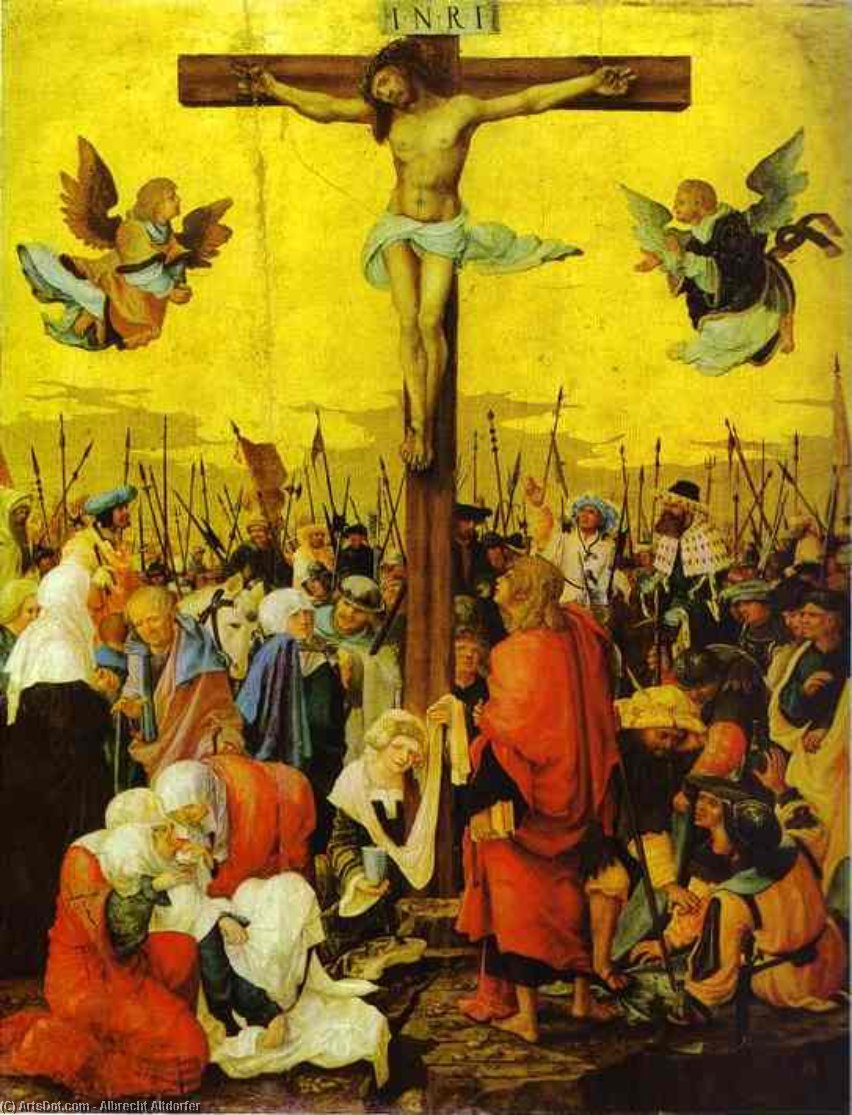
Albrecht Altdorfer's "Crucifixion" (1526) is a dramatic, evocative depiction of Christ’s suffering, showcasing the artist's pioneering landscape style and masterful use of color within the Northern Renaissance.
Biografija umetnika
Albrecht Altdorfer (1480-1538): Pionir nemačkog renesansnog pejzažnog slikarstva i ključna figura Danube škole. Istražite njegove gravure, religijske radove i inovativnu umetnost poput 'Bitke Aleksandra kod Isa' i 'Velike smreke'.
About the painting
The Weight of Sorrow: Albrecht Altdorfer’s “Crucifixion”
Albrecht Altdorfer's "Crucifixion," painted in 1526, isn’t merely a depiction of a pivotal religious event; it’s a visceral experience. Emerging from the burgeoning German Renaissance, Altdorfer wasn’t simply replicating biblical narratives; he was forging a new visual language, one deeply rooted in the natural world yet imbued with profound spiritual intensity. This particular rendition transcends simple illustration, becoming a landscape saturated with grief and a haunting meditation on sacrifice. The painting immediately commands attention not through grand scale – it's remarkably intimate, measuring just 29 x 21 cm – but through its masterful manipulation of light, color, and composition to evoke an overwhelming sense of sorrow.
The scene unfolds against a dramatically rendered landscape—a brooding, almost primeval forest. The trees, rendered in thick, layered brushstrokes of deep greens, browns, and purples, seem to writhe with the weight of the event. This isn’t a picturesque vista; it's a wilderness imbued with an unsettling energy. Altdorfer deliberately eschews traditional depictions of serene backgrounds, instead presenting a landscape actively participating in the drama. The distant mountains, shrouded in mist and shadow, amplify the feeling of isolation and despair. Notice how the artist uses atmospheric perspective – lighter hues for objects further away – to create a sense of depth and distance, drawing the viewer’s eye into the heart of the scene.
A Pioneer of Landscape
Albrecht Altdorfer stands as a pivotal figure in art history, largely credited with establishing landscape painting as an independent artistic subject within Europe. Prior to his work, landscapes were typically relegated to mere backgrounds for religious or mythological scenes. However, Altdorfer recognized the power of the natural world to convey emotion and meaning. His meticulous observation of nature—evident in the detailed rendering of foliage, rocks, and atmospheric conditions—transformed the landscape from a passive backdrop into an active participant in the narrative. This shift was revolutionary, paving the way for later generations of landscape artists like Albert Bierstadt and Frederic Church.
His background as a town architect and council member further informs his artistic approach. Altdorfer possessed a keen eye for spatial relationships and a deep understanding of how to create a sense of harmony and balance within a composition. This skill is brilliantly demonstrated in “Crucifixion,” where the human figure—Jesus—is carefully positioned within the landscape, creating a dynamic interplay between the earthly realm and the divine.
Symbolism and Emotional Resonance
Beyond its technical brilliance, "Crucifixion" resonates deeply with viewers through its potent symbolism. The stark simplicity of Jesus’s pose – arms outstretched, head bowed – is profoundly moving. Altdorfer avoids any overtly dramatic or theatrical elements, opting instead for a quiet, understated portrayal of suffering. The figures surrounding the cross—angels and soldiers—are rendered in muted tones, emphasizing the central tragedy. Even the light itself seems to weep, casting long shadows across the landscape.
The choice of a dark, foreboding forest as the setting is particularly significant. Forests have historically been associated with death, mourning, and the unknown. In this context, it serves as a powerful metaphor for the spiritual darkness surrounding Jesus’s sacrifice. The painting isn't simply depicting an event; it’s exploring the profound emotional consequences of that event—the grief, despair, and sense of loss experienced by those who witnessed it.
A Timeless Masterpiece
“Crucifixion” is more than just a religious painting; it’s a testament to Altdorfer's artistic genius and his ability to capture the essence of human emotion. The meticulous detail, masterful use of color and light, and profound symbolism combine to create an unforgettable image that continues to resonate with viewers centuries after its creation. Reproductions, like this one, offer a remarkable opportunity to experience the power and beauty of this iconic work, bringing its haunting message into our own spaces.
Pitanja i odgovori
O kojoj vrsti umetničkog dela je reč kod „Crucifixion”, autor Albrecht Altldorfer?
"Crucifixion" je delo u tehnici WallArt.
Šta "Crucifixion" deli sa ostatkom stvaralaštva umetnika Albrecht Altldorfer?
„Crucifixion“ deli sa ostalim delima umetnika Albrecht Altldorfer svoj German Renaissance Landscape stil i prepoznatljive teme: danube school landscape influence, medieval religious symbolism strong, early renaissance artistic trends, german cultural identity depicted, altdorfer's innovative landscape role.
Da li se "Crucifixion" nalazi u zemlji svog autora?
Ne – umetničko delo se nalazi u inostranstvu. Rodna zemlja umetnika Albrecht Altldorfer je Немачка, dok se muzej u kojem se čuva original dela „Crucifixion” nalazi u državi Germany.
Quick facts and art quiz
About Albrecht Altldorfer

Albrecht Altldorfer
1480 - 1538, Немачка
Biografija umetnika
Pionir Severno Renesansnog Pejzaža
Albrecht Altdorfer, rođen oko 1480. godine u Regensburgu, Nemačka, predstavlja ključnu figuru koja spaja kasni gotički period i procvet germanseke renesanse. On nije bio samo umetnik *svog* vremena; on je aktivno preoblikovao njegov umetnički tok, posebno u oblasti pejzažnog slikarstva. Potekao iz porodice duboko ukorenjene u umetničkoj tradiciji – njegov otac, Ulrich Altdorfer, bio je slikar i minijaturista – mlađi Altdorfer se brzo istakao ne kao sledbenik, već kao inovator. Regensburg, slobodni carski grad strateški smešten na Dunavu, pružao je dinamičan kulturni ambijent za njegove formativne godine. Ova lokacija je duboko uticala na njegov umetnički senzibilitet, negujući vezu sa prirodnim svetom koja će postati centralna u njegovom opusu. Pored svog umeća, Altdorfer je bio čovek građanske dužnosti, služeći i kao gradski arhitekta i član veća – svedočenje o njegovim raznovrsnim talentima. Međutim, upravo kroz njegovu umetnost – posebno rane gravure i crteže iz oko 1506. godine, poput *Stigmata Svete Franje* i *Svetog Jerema* – je prvi put otkrio jedinstveni umetnički glas, nagoveštavajući emocionalni intenzitet i precizne detalje koji će karakterisati njegov zreli stil.Dunačka Škola i Revolucionarna Vizija
Altdorfer je najpoznatiji kao vodeći član Dunačke škole, uticajne grupe umetnika aktivne u južnoj Nemačkoj tokom ranog 16. veka. Ovaj umetnički krug delio je zajedničku fascinaciju istraživanjem ekspresivnog potencijala pejzaža, uzdižući ga iz pukog pozadina i pretvarajući ga u centralnu temu samu po sebi. Pre Altdorfera, pejzaži su prvenstveno služili kao kulise za religijske ili istorijske priče; on se usudio da prikaže prirodu *zbog sebe same*, prožetu atmosferom i emocionalnom resonancijom. Transformatorsko putovanje niz Dunav i u Alpe oko 1511. godine pokazalo se ključnim za njegov umetnički razvoj. Dramatični pogledi, guste šume i impozantne planine potpale su u njemu strast da prikaže prirodu sa bez presedana vernošću i osećajem. Postao je, možda, prvi moderni pejzažni slikar, ne samo replicirajući ono što je video, već prenoseći emocionalni odziv – osećaj divljenja, misterije, čak i duhovne povezanosti. Nije se radilo samo o topografskoj tačnosti; u pitanju je bilo hvatanje *iskustva* boravka u pejzažu. Njegovo delo, poput “Velike smreke”, primer je ove promene, nudeći miran i detaljan prikaz lepote prirode.Remek-dela i Umetnički Uticaji
Tokom svoje karijere, Altdorfer je stvorio raznovrstan opus koji obuhvata slike, gravure, crteže i arhitektonske dizajne. Među njegovim najpoznatijim dostignućima spada *Bitka kod Isusa* (1529), naručena od vojvode Vilijama IV Bavarskog. Ovo monumentalno slikarstvo pokazuje ne samo njegovo majstorstvo kompozicije i detalja, već i njegovu inovativnu upotrebu pejzaža za pojačanje dramatične napetosti scene bitke. Vrtložni oblaci, oštre planine i haotična gužva vojnika stvaraju osećaj preplavljujuće energije i spektakla. Njegova saradnja sa carom Maksimilijanom I u Insbruku od 1513. godine dalje je proširila njegove umetničke horizonte i pružila prilike za projekte velikih razmera. Stil Altdorfera nije nastao u izolaciji; on je upijao uticaje iz različitih izvora. Poetska lirika Đorđonea, ekspresivne figure Lukasa Kranaha Starijeg i precizni detalji Alberta Dürera ostavili su traga na njegovom radu. Međutim, on je sintetisovao ove uticaje u jedinstvenu ličnu viziju, karakterisanu njenim emocionalnim intenzitetom, dramatičnim osvetljenjem i evocativnim pejzažima. Njegove gravure, poput “Venere posle kupanja”, demonstriraju njegovu veštinu u ovom mediju, pokazujući delikatne linije i složene detalje.Nasleđe i Trajni Uticaj
Umetničko nasleđe Albrehta Altdorfera proteže se daleko izvan 55 panela, 120 crteža i brojnih gravura koje je stvorio tokom svog života. On je fundamentalno promenio način na koji su umetnici pristupali pejzažnom slikarstvu, utirući put budućim generacijama da istraže njegove ekspresivne mogućnosti. Njegov uticaj se može videti u delima kasnijih nemačkih romantičnih slikara koji su takođe tražili da uhvate uzvišenu lepotu i emocionalnu snagu prirode. Danas je Altdorferova umetnost zastupljena u velikim muzejskim zbirkama širom sveta, uključujući Muzej Istočno Nemačke Galerije u Nemačkoj – koji poseduje njegovu *Madonu (Lepu Mariju iz Regensburga)* – i Kunstsammlungen und Museen Augsburg u Austriji. Njegov inovativni duh, tehnička veština i duboka povezanost sa prirodnim svetom nastavljaju da inspirišu umetnike i očaravaju publiku vekovima nakon njegove smrti 1538. godine. On ostaje uzvišena figura nemačke renesanse, istinski pionir koji se usudio da vidi pejzaž ne samo kao sceneriju, već kao moćnu silu sposobnu da izazove duboke emocije i duhovno značenje. Njegovo delo služi kao svedočenje o trajnoj snazi umetnosti da transformiše našu percepciju sveta oko nas – nasleđe koje nastavlja da rezonira sa gledaocima danas.Istraživanje Raznolikih Radova Altdorfera
Pored svojih ikoničnih pejzaža i bitaka, Altdorferov umetnički opseg obuhvatao je religijske teme, mitološke priče, pa čak i arhitektonske dizajne. Njegovi prikazi biblijskih priča, poput “Abrahamova žrtva”, prožeti su dramatičnim intenzitetom i emocionalnom dubinom koji ih izdvaja od ranijih interpretacija. On nije samo ilustrovao Sveto pismo; on je istraživao ljudsko stanje kroz sočivo vere.- Gravure: Altdorferove gravure, poput “Mucije Skavola spaljuje ruku”, demonstriraju njegovu majstorstvo linije i detalja, često prenoseći osećaj pokreta i drame.
- Crteži: Njegovi crteži nude intimne uvide u njegov kreativni proces, otkrivajući njegove pomnjive veštine posmatranja i ekspresivnu upotrebu senčenja.
- Arhitektonski Dizajni: Kao gradski arhitekta Regensburga, Altdorfer je doprineo utvrđenjima grada i urbanom planiranju, pokazujući svoje praktične kao i umetničke talente.
Quick facts about Albrecht Altldorfer
- Artistic Movement Or Style: Dunavska škola, Renesansa
- Artists Or Movements Influenced By This Artist: ['Nemački romantičari']
- Artists Who Influenced This Artist:
- Giorgione
- Lucas Cranach Stariji
- Albrecht Dürer
- Date Of Birth: oko 1480.
- Date Of Death: 1538.
- Full Name: Albrecht Altdorfer
- Nationality: Nemac
- Notable Artworks (List Of Titles):
- Bitka kod Isusa
- Velika smreka
- Sveti Đorđe i zmaj
- Place Of Birth (City And Country): Regensburg, Nemačka
Istražite umetnička dela organizovana prema temama, stilovima i karakteristikama.


Albrecht Altldorfer
Crucifixion
() ·
With its frame: · Hand-painted in oil on linen
Total