

 Pregledaj u prostoru
 Podeli
 Podeli
 Detalji
 Vodič
Vodič

 Preuzmi sliku
 Slični predmeti
 Rendgenski snimak
 Automatska prezentacija
 Statistika
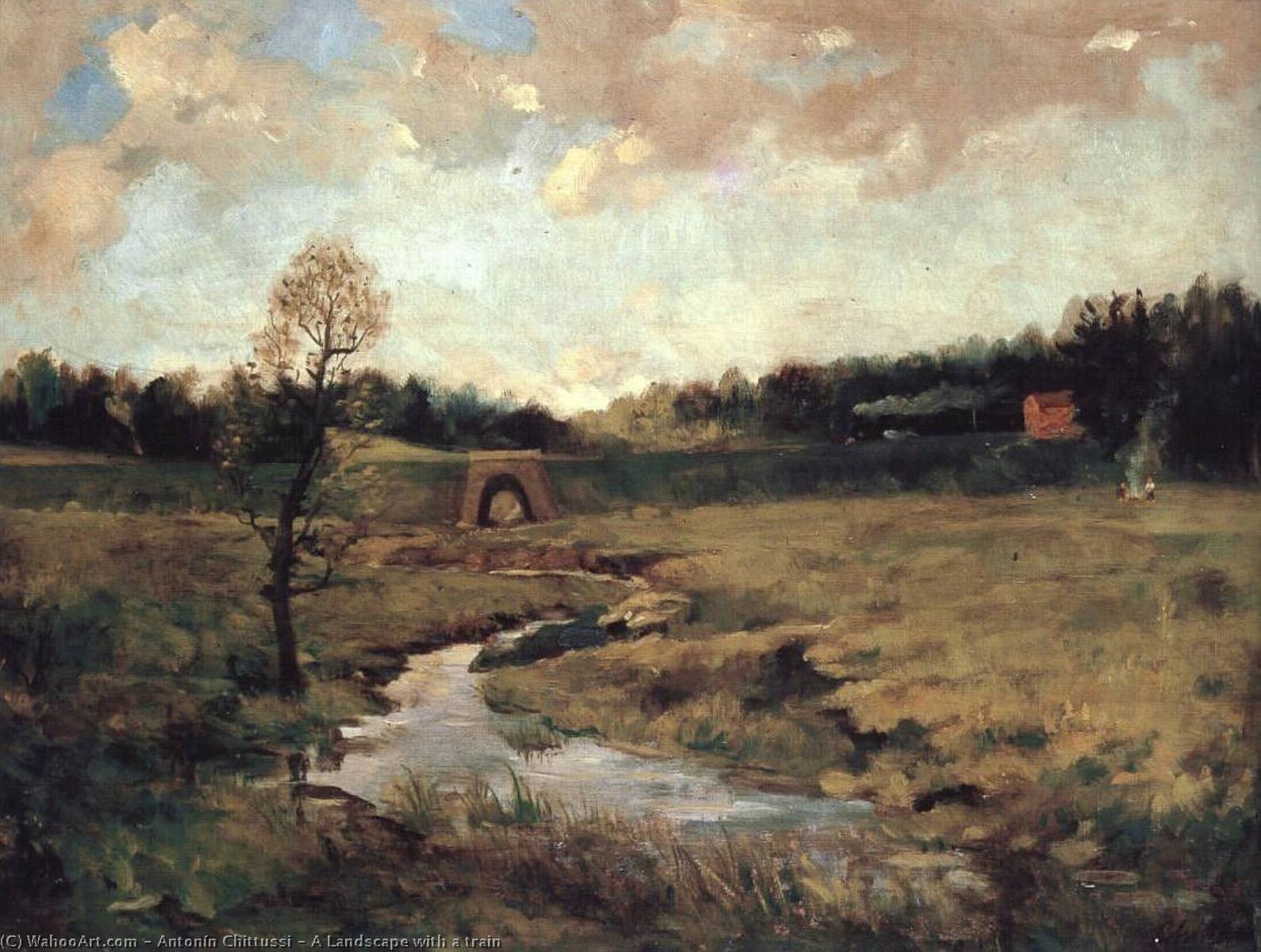
A Landscape with a train
 1884
1884 30.0 x 41.0 cm
 Národní Galerie v Praze
Discover Antonín Chittussi (1847-1891), a Czech Impressionist painter known for evocative landscapes & cityscapes. Explore his art, influenced by Barbizon School & Parisian styles.
 Pročitaj više
Ručno rađena uljana reprodukcija
Ručno oslikano uljanim bojama na platnu u dimenzijama i okviru po vašem izboru, izrađeno po porudžbini od strane naših umetnika. ( Pređi na prodaju štampanih primeraka Pređi na prodaju digitalnih slika)




































Standardne dimenzije
po meri
CM
INCH
Izaberite jednu od naših unapred definisanih veličina koje odgovaraju originalnim proporcijama umetničkog dela.
Loading sizes...

širina
visina
Unesite širinu i visinu koja vam je potrebna, kako bi se uklopili u vaš ram ili zid. Pošto je ovo ručno oslikano delo, umetnik može naslikati malo više prostora oko slike ili malo skratiti ivice za dimenzije drugačijeg oblika — izbor je na vama. Pre početka rada, poslaćemo vam digitalni prikaz radi potvrde. Slika prikazana na ovoj stranici ne predstavlja konačan rezultat — samo digitalni prikaz pokazuje stvarnu sliku.
Primeri mogućih izmena: Zamena lica fotografijom kupca; Dodavanje ljubimca (npr. zamena mačke psom); Uključivanje skrivene poruke u pozadini; Promena pejzaža ili elemenata pozadine.
Nakon narudžbine, tim TopImpressionists.com će klijentu putem e-pošte poslati uputstva i dostaviti prikaz predloženog rešenja
Nakon narudžbine, tim TopImpressionists.com će klijentu putem e-pošte poslati uputstva i dostaviti prikaz predloženog rešenja
Svetska isporuka () za 3/4 nedelje umesto uobičajenih 5 nedelja. (25 октобар). Bez kompromisa po pitanju kvaliteta.

Besplatna ekspresna dostava širom sveta

Visokokvalitetno laneno platno

Sveobuhvatno osiguranje transporta

Garancija povraćaja carine i uvoznih dažbina

Garancija vernosti boja i autentičnosti pri reprodukciji

Politika povraćaja u roku od 100 dana (samo u slučaju nedostataka)

Garancija povrata 100% novca

Popust pri većoj količini
 Opcija sa staklom dostupna je samo za dimenzije manje od 110 cm

A Landscape with a train
Tehnika izrade reprodukcije
Veličina reprodukcije
-


Ukupna cena
дин 27735
Biografija umetnika
The Soul of the Bohemian Landscape: The Life of Antonín Chittussi
In the tapestry of nineteenth-century European art, few threads are as delicately woven as those of Antonín Chittussi. Born on December 1, 1847, in the quiet town of Ronov nad Doubravou, Chittussi was a painter whose very essence seemed to bridge the gap between the rustic, grounded traditions of the Barbizon School and the shimmering, light-drenched innovations of Parisian Impressionism. His lineage was one of movement and commerce; born to an Italian father from a merchant family that had migrated to Bohemia during the Napoleonic Wars, Chittussi carried within him a cosmopolitan spirit that would later drive him far beyond the borders of his homeland. Though his early life in Bohemia suggested a path toward the family business or perhaps engineering, a profound, innate talent for capturing the nuances of light and shadow beckoned him toward the easel.
His formative years were marked by a restless search for artistic truth. After initial studies in Kutná Hora under František Bohumír Zvěřina, where he mastered the foundational rigors of drawing, Chittussi found himself at odds with the rigid academicism prevalent in Prague. This dissatisfaction propelled him toward Munich and eventually to the heart of the art world: France. It was during his years spent in France, particularly between 1879 and 1884, that his style truly blossomed. Immersed in the atmosphere of the French landscape movement, he became a successor to the Barbizon masters, learning to observe the subtle shifts in atmospheric perspective and the tonal harmonies of the natural world. His work began to breathe with a new vitality, capturing not just the scenery, and landscapes, but the very air that surrounded them.
A Legacy Forged in Light and Defiance
Chittussi’s career was not merely a pursuit of aesthetic beauty; it was also deeply intertwined with the turbulent political currents of his era. He was a man of conviction, a trait famously demonstrated in 1876 when he participated in a courageous student protest against the nationalist sentiments of Professor Alfred Woltmann at Charles University. This act of defiance led to his expulsion from the Academy and even a brief period of imprisonment alongside the renowned Mikoláš Aleš. Such moments of historical friction served to galvanize his artistic identity, pushing him to seek independence and refine a voice that was uniquely his own—one that could navigate both the patriotic social circles of Prague and the avant-garde salons of Paris.
As his technique matured, Chittussi’s oeuvre became a testament to the beauty of plein air realism. His landscapes and cityscapes are characterized by an evocative ability to render the ephemeral qualities of light—the way it filters through a canopy of trees or reflects off a quarry at Champigny. Through his work, he contributed decisively to the establishment of landscape painting as a leading genre within the Czech context, elevating it from mere topographical recording to a profound emotional experience. His later years, spent working in both Bohemia and France, saw him perfecting a style that celebrated the quiet majesty of the natural world, leaving behind a legacy that remains a cornerstone of modern Czech art.
The enduring significance of his contributions can be summarized through several key artistic pillars:
- Synthesis of Styles: The seamless integration of Barbizon-style tonalism with the burgeoning dynamism of Impressionist light.
- Plein Air Mastery: A dedicated commitment to painting outdoors, capturing the authentic, unmediated essence of the landscape.
- Cultural Bridge: Acting as a vital link between the French landscape tradition and the development of Czech national art.
- Emotional Resonance: The ability to transform simple subjects—a train passing through a valley or a quiet quarry—into profound meditations on nature and time.

Antonín Chittussi
1847 - 1891
Brzi pregled
- Artistic Movement Or Style: Impressionism
- Artists Or Movements Influenced By This Artist: ['Parisian styles']
- Artists Who Influenced This Artist:
- František Bohumír Zwěřina
- Barbizon School
- Date Of Birth: 1847
- Date Of Death: 1891
- Full Name: Antonín Chittussi
- Nationality: Czech
- Notable Artworks:
- A Landscape with a Quarry at Champigny
- A Landscape with a train
- Place Of Birth: Ronov nad Doubravou, Bohemia