

Prikazano: · Sa okvirom:
 Pošalji
 Podeli
 Detalji o delu
 Vodič
Vodič

 Preuzmi
 Slični predmeti
 Automatska prezentacija
 Pitanja i odgovori
 Statistika
- 26.0 x 33.0 cm


дин 28179
Ručno rađena uljana reprodukcija
Ručno oslikano uljanim bojama na platnu u dimenzijama i okviru po vašem izboru, izrađeno po porudžbini od strane naših umetnika. ( Pređi na štampu Pređi na digitalnu sliku)
Veličina
·Standardne dimenzije
po meri
CM
INCH
Izaberite jednu od naših unapred definisanih veličina koje odgovaraju originalnim proporcijama umetničkog dela.
Učitavanje dimenzija...

širina
visina
Unesite potrebnu širinu i visinu kako bi se slika uklopila u vaš ram ili zid. Pošto je ovo ručno oslikano delo, umetnik može za dimenzije drugačijeg oblika naslikati malo više prostora oko slike ili malo skratiti ivice — izbor je na vama. Pre početka rada, poslaćemo vam digitalni prikaz radi potvrde. Slika prikazana na ovoj stranici ne predstavlja konačan rezultat — samo digitalni prikaz pokazuje stvarnu sliku.
 Pročitajte više
Završetak
·
Beli rub дин1

zamrljene ivice дин1

Prošireno дин1

P118B дин10

P118H дин10

P118W дин10

P438Z дин10

P508JH дин12

P508YH дин12

P805H дин10

P805Z дин10

P919BZ дин10

P919G дин10

P919XJ дин10

P959ZH дин10

P968JZ дин12

W106C дин8

W218G дин10

W218JH дин8

W218Y дин10

W307PJ дин10

W316G дин10

W316PJ дин8

W316Y дин10

W398PJ дин8

W4111J дин10

W500HY дин15

W500JH дин15

W692G дин12

W849H дин8

W940BG дин15

W953PJ дин8

H24-GOLD дин30

H24-SILVER дин30

H36-GOLD дин45

H36-SILVER дин45
Isporućuje se u zaštitnoj tubi, spremno za ugradnju u vaš ram.
Dodatne usluge
opcionoŠta dodatne opcije uključuju?
Primeri onoga što se može promeniti: Zamena lica fotografijom kupca; Dodavanje ljubimca (npr. zamena mačke psom); Uključivanje skrivene poruke u pozadini; Promena pejzaža ili elemenata u pozadini.
Nakon porudžbine, tim TopImpressionists.com će poslati imejl klijentu radi dobijanja uputstava i dostaviti prikaz makete
Nakon porudžbine, tim TopImpressionists.com će poslati imejl klijentu radi dobijanja uputstava i dostaviti prikaz makete
Svetska isporuka () za 3/4 nedelje umesto uobičajenih 5 nedelja. (9 новембар). Bez kompromisa po pitanju kvaliteta.
Zaštitni lak
Kratki opis natpisa
Detalji gravirane bronze ploče
This elegant plaque features the artist's name and the title of the artwork, finely engraved for a timeless presentation.
It is made from bronze with a refined, elegant finish. The text is precisely laser-engraved for a sharp and permanent result. Measuring 9x2 cm, the plaque is compact yet easy to read. It's built to be durable and scratch-resistant, offering a professional, museum-quality look. Mounting is simple thanks to the included adhesive backing.
Detalji prozirne akrilne pločice
The plaque includes essential engraved details such as the artist's name, the title of the artwork, the date it was created, the type of media used-like oil on canvas or watercolor-a brief description of the piece, and a QR code that links to the complete artwork information.
It is crafted from clear acrylic, offering a sleek, modern appearance. The text is UV-engraved in black to ensure strong visual contrast. With a size of 10x15 cm, it ensures optimal readability. It comes equipped with two metal hooks for secure wall mounting. The plaque is designed to be weather-resistant, making it suitable for various environments, and it includes interactive features that work seamlessly with smartphone scanning.
Detalji crne akrilne pločice
This elegant plaque includes engraved information such as the artist's name, the title of the artwork, the date it was created, the type of media used (like oil on canvas or watercolor), a short description of the artwork, and a QR code for quick access to more information.
The plaque itself is made from refined black acrylic with a premium finish. The text is laser-engraved in white for high contrast and readability. Its size is 10x15 cm, designed to be easy to read. It comes with two metal hooks for professional mounting. The design is sleek and fits any interior style. It is also weather-resistant and durable, with built-in digital integration for mobile compatibility.
Opcija sa staklom dostupna je samo za dimenzije manje od 110 cm
 Opcija sa staklom dostupna je samo za dimenzije manje od 110 cm
- Besplatna ekspresna dostava širom sveta
- Visokokvalitetno laneno platno
- Potpuno osiguranje transporta
- Garancija povraćaja carine i uvoznih dažbina
- Garancija vernosti boja
- Politika povraćaja u roku od 100 dana (samo u slučaju nedostataka)
- Garancija povrata 100% novca
- Popust na više proizvoda


Opis predmeta
Marvel at Benvenuto Cellini's opulent 'Salt Cellar,' a Renaissance masterpiece of gold, enamel, and intricate symbolism—a testament to artistry & luxury from 1543 Vienna.
Biografija umetnika
Benvenuto Cellini (1500-1571): Majstor zlatar i vajar renesanse, poznat po dramatičnoj skulpturi 'Perzej' i raskošnom Soljaku. Istražite njegov život i umetnost manirizma!
O slici
A Gilded Echo of Antiquity
Benvenuto Cellini's Salt Cellar, a shimmering testament to the heights of Renaissance goldsmithing, isn’t merely a container for salt; it’s a miniature cosmos, a meticulously crafted allegory brimming with symbolism and technical brilliance. Completed in 1543 for King Francis I of France, this extraordinary object transcends its functional purpose, becoming a profound meditation on the relationship between earth and sea, divinity and humanity. It's a piece that whispers tales of ambition, artistry, and the intoxicating allure of the Italian Renaissance—a world where beauty was paramount and skill elevated to an almost religious pursuit.
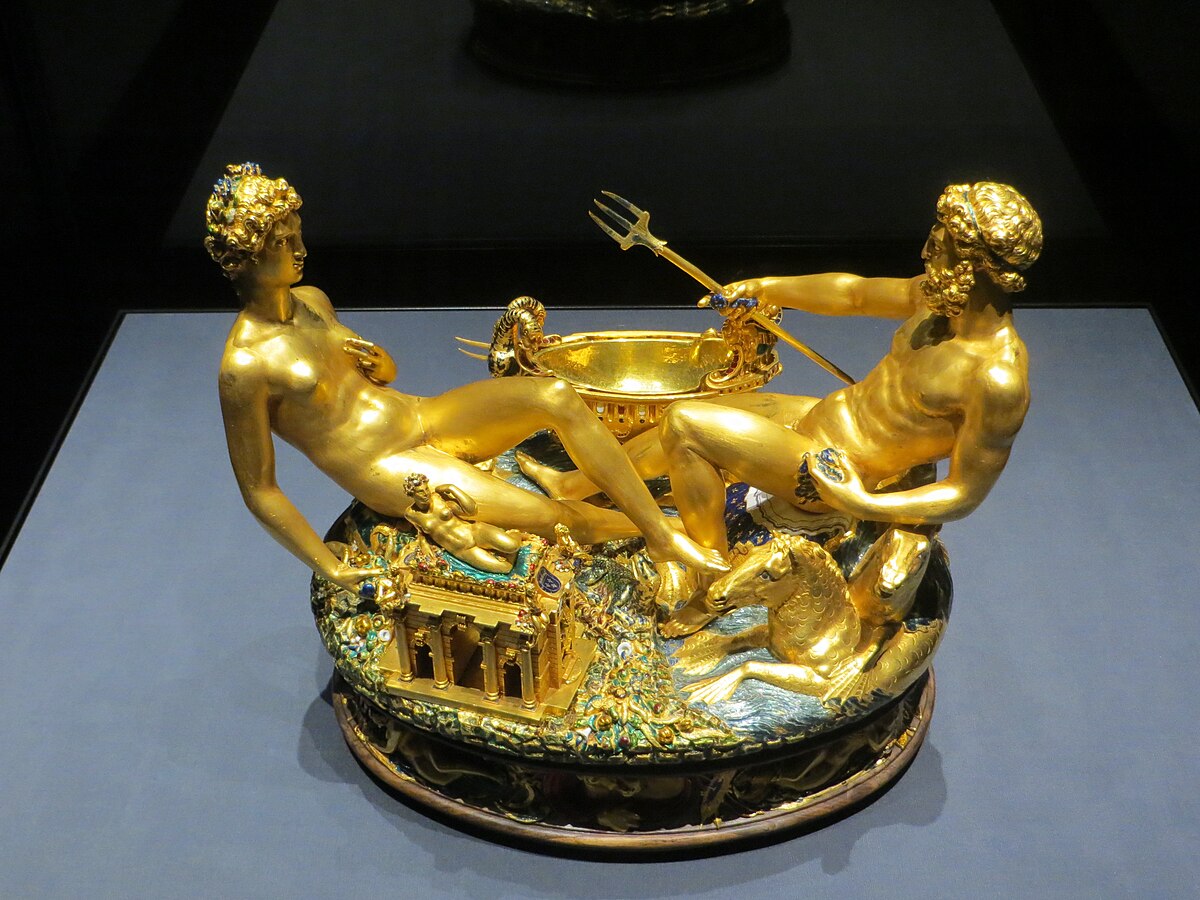
Image of Benvenuto Cellini’s Salt Cellar
The Anatomy of a Masterpiece
Crafted primarily from gold, the Salt Cellar is an astonishing feat of technical mastery. Cellini, renowned for his flamboyant personality and equally impressive skill, eschewed traditional casting methods, instead meticulously hammering the gold into its delicate, flowing form by hand. The base is elegantly fashioned from ebony, providing a striking contrast to the radiant gold, while ivory bearings allow the sculpture to gracefully roll across a banquet table – a deliberate feature designed for display and conversation. But it’s the enameling that truly elevates the piece; intricate scenes depicting figures representing the four seasons and the four winds are painstakingly applied, adding layers of visual complexity and narrative depth. The sheer scale of detail—from the meticulously rendered folds of clothing to the lifelike expressions on the faces of Neptune and Tellus – speaks volumes about Cellini’s dedication and unparalleled skill.
- Material: Gold, Ebony, Ivory, Enamel
- Dimensions: Approximately 10.5 inches (267 mm) tall, 13.1 inches (333 mm) wide
- Technique: Hand-hammered gold, intricate enamel work
A Dialogue with the Divine
The Salt Cellar’s symbolism is as captivating as its aesthetic beauty. At its heart lies a potent allegory of Terra e Mare – Earth and Sea – embodied by the figures of Neptune, god of the ocean, and Tellus, goddess of the earth. These two powerful deities are depicted in an intimate embrace, their legs intertwined, suggesting a harmonious connection between the terrestrial and aquatic realms. The sculpture is further enriched with symbolic details: a small boat carries the salt, representing the flow of commerce and sustenance; a temple dedicated to peppercorns stands alongside Tellus, signifying the pleasures of earthly life. The inclusion of animals—horses, dogs, dolphins—adds another layer of meaning, drawing upon classical iconography and reinforcing the sculpture’s connection to mythology and antiquity.
A Legacy Forged in Ambition
Cellini's autobiography, *Vita*, offers invaluable insight into the creation of this extraordinary piece. He recounts his initial reluctance to accept the commission from Cardinal Ippolito d’Este, dismissing the cardinal’s suggestions with characteristic arrogance and asserting sole credit for the design. The story is rife with anecdotes about Cellini’s daring exploits—including a dramatic escape from bandits while transporting the gold—further cementing his image as a larger-than-life figure of Renaissance Italy. The Salt Cellar, therefore, isn't just an artistic achievement; it’s a reflection of Cellini’s own complex and often contradictory personality – a testament to ambition, skill, and a profound appreciation for beauty. It remains one of the most celebrated examples of Renaissance goldsmithing, captivating viewers with its exquisite detail and enduring symbolism.
Pitanja i odgovori
Koliko je izražen kontrast u delu „Salt Cellar”, autor Беневеното Челини?
„Salt Cellar”, autor Беневеното Челини prikazuje Gentle kontrast između svojih svetlih i tamnih delova.
Kako se emocija i prilika za poklon spajaju kod dela „Salt Cellar”, autor Беневеното Челини?
Reflective ton dela „Salt Cellar”, autor Беневеното Челини savršeno odgovara preporučenoj prilici za poklon: Anniversary.
Na koju fazu karijere umetnika Беневеното Челини odgovara datum 1540 za delo "Salt Cellar"?
S obzirom na datum nastanka iz 1540. godine, delo "Salt Cellar" pripada Mature Renaissance periodu umetnika Беневеното Челини.
Brze činjenice i kviz o umetnosti
O Беневеното Челини

Беневеното Челини
1500 - 1571, Italija
Biografija umetnika
Бенвенуто Челини: Ренесансни полимат
Бенвенуто Челини (1500-1571) био је изузетан уметник и личност Италијанске ренесансе. Рођен у Фиренци, прославио се као мајстор златарства, вајар, цртач, војник, музичар и писац. Његов разнострани таленат и живописна личност су савршено заробљени у његовој знаменитој аутобиографији, која се сматра значајним књижевним делом поред његових уметничких достигнућа. Челини оличава дух манеризма – стилског правца који је следио Високу ренесансу и карактерише га драматичан израз и комплексност.
Рани живот и уметнички развој
Челини је рођен у породици са музичким склоностима; његов отац је био музичар и произвођач инструмената. У почетку је показао таленат за музику, али се у петнаестој години страсно определио за каријеру златара, убедивши свог невољног оца да га прими као ученика код Антонија ди Сандра (познатог као Марконе). Овим је започела његова формална уметничка обука. Рани период живота није прошао без инцидената; са шеснаест година се укључио у сукоб са пријатељима, што га је довело до изгнанства из Фиренце и периода рада у Сијени под златарством Фракастороа. Ово искуство је било кључно за његов развој као уметника.
Мастерство златараства и вајарства
Челини се брзо прославио као изузетан златар, познат по својој прецизности, детаљима и оригиналним дизајном. Његова способност да обликује племените метале у сложене форме била је без премца. Међутим, његов таленат није био ограничен на златарство; такође се истакао као вајар, стварајући монументална бронзана дела која су демонстрирала његово познавање анатомије, композиције и драматичног израза.
- Солоница: Ово елаборно сребрно ремек-дело, наручено од краља Франциска I Француског, је вероватно његово најпознатије дело. Показује изузетне детаље и динамичне фигуре, а данас се чува у Музеју историје уметности у Бечу.
- Персеј са главом Медузе: Бронзана скулптура која приказује Персеја како триумфално држи одсечену главу Медузе, ово дело је пример Челинијевог мајсторства у обликовању и драматичној композицији. Студирање покрета и емоција у металу је сведочанство његове вештине.
- Златна медаља Леде и лабуда: Направљена за Гонфалонијера Габријела Цесарина, ова медаља показује Челинијеву способност да споји класичну митологију са изузетном израдом.
Утицаји и стил
Челини је црпео инспирацију из класичне антике, посебно из дела древних грчких и римских вајара. Такође је био под утицајем Микеланђела, чије су моћне фигуре имале значајан утицај на његов стил. Међутим, Челини није само копирао своје претходнике; развио је сопсебен и препознатљив стил карактеристичан по динамизму, реализму и пажњи посвећеној детаљима. Његова дела често одликују издужени облици, претеране позе и осећај театралности – типичне карактеристике манеризма.
Живот ван уметности: Војник, музичар и аутобиографиста
Челинијев живот се протезао далеко изван радионице. Служио је као војник током опсада, тврдећи да је одиграо кључну улогу у одбрани Рима против царских снага. Био је и талентован музичар, свирајући корнет и флауту на папском двору. Међутим, његова аутобиографија га заиста издваја.
- Живот Бенвенута Челинија: Ова искрена и често хвалисава прича пружа непроцењиве увиде у ренесансну уметност, културу и друштво. То је задивљујућа нарација испуњена анегдотама о покровитељима, ривалима и личним авантурама, нудећи јединствену перспективу ере.
Његова аутобиографија није само препричавање догађаја; то је пажљиво конструисан само-портрет дизајниран да покаже његов таленат и оправда његове поступке. Иако понекад непоуздана због Челинијиних личних пристрасности, она остаје суштински примарни извор за разумевање ренесансног живота.
Наслеђе и историјска значајност
Бенвенуто Челини је умро у Фиренци 1571. године, остављајући иза себе наслеђе као један од најважнијих уметника манеризма. Његова техничка вештина, уметничка иновација и задивљујућа аутобиографија настављају да инспиришу уметнике и ентузиасте уметности широм света. Он представља квинтсенцијални ренесансни идеал – полимата вештог у различитим дисциплинама, вођеног амбицијом и неспремног да изрази своју индивидуаност. Његова дела се славе по лепоти, занатској умешности и драматичној моћи, учвршћујући његово место као кључне фигуре у западној историји уметности.
Kratke činjenice o umetniku Беневеното Челини
- Artistic Movement Or Style: Manirizam
- Artists Who Influenced This Artist: ['Michelangelo']
- Date Of Birth: 1. novembar 1500.
- Date Of Death: 13. februar 1571.
- Full Name: Benvenuto Cellini
- Nationality: Italijan
- Notable Artworks:
- Perzej sa Meduzinom glavom
- Solnica Cellinija
- Place Of Birth: Firenca, Italija
Istražite umetnička dela organizovana prema temama, stilovima i karakteristikama.


Беневеното Челини
Salt Cellar
() ·
Sa okvirom: · Ručno oslikano uljanim bojama na platnu od lana
Ukupno