


 Pregledaj u prostoru
 Podeli
 Podeli
 Detalji
 Vodič
Vodič

 Preuzmi sliku
 Slični predmeti
 Rendgenski snimak
 Automatska prezentacija
 Statistika
The Old Bedford
 Oil
Oil- WallArt
- Impressionism
 1895
1895- 19th Century
 76.0 x 60.0 cm
 National Museums Liverpool
A moody black and white exploration of London nightlife, this 1895 painting by Bernard Sickert captures the raucous atmosphere of the Bedford Music Hall through masterful lighting and shadows for your collection.
 Pročitaj više
Explore Bernard Sickert's evocative urban scenes & portraits – a pivotal figure in modern British art. Discover his dark palettes, press photo influence & Camden Town legacy.
Ručno rađena uljana reprodukcija
Ručno oslikano uljanim bojama na platnu u dimenzijama i okviru po vašem izboru, izrađeno po porudžbini od strane naših umetnika. ( Pređi na prodaju štampanih primeraka Pređi na prodaju digitalnih slika)




P118B дин10

P118H дин10

P118W дин10

P438Z дин10

P508JH дин12

P508YH дин12

P805H дин10

P805Z дин10

P919BZ дин10

P919G дин10

P919XJ дин10

P959ZH дин10

P968JZ дин12

W106C дин8

W218G дин10

W218JH дин8

W218Y дин10

W307PJ дин10

W316G дин10

W316PJ дин8

W316Y дин10

W398PJ дин8

W4111J дин10

W500HY дин15

W500JH дин15

W692G дин12

W849H дин8

W940BG дин15

W953PJ дин8




Standardne dimenzije
po meri
CM
INCH
Izaberite jednu od naših unapred definisanih veličina koje odgovaraju originalnim proporcijama umetničkog dela.
Loading sizes...

širina
visina
Unesite širinu i visinu koja vam je potrebna, kako bi se uklopili u vaš ram ili zid. Pošto je ovo ručno oslikano delo, umetnik može naslikati malo više prostora oko slike ili malo skratiti ivice za dimenzije drugačijeg oblika — izbor je na vama. Pre početka rada, poslaćemo vam digitalni prikaz radi potvrde. Slika prikazana na ovoj stranici ne predstavlja konačan rezultat — samo digitalni prikaz pokazuje stvarnu sliku.
Primeri mogućih izmena: Zamena lica fotografijom kupca; Dodavanje ljubimca (npr. zamena mačke psom); Uključivanje skrivene poruke u pozadini; Promena pejzaža ili elemenata pozadine.
Nakon narudžbine, tim TopImpressionists.com će klijentu putem e-pošte poslati uputstva i dostaviti prikaz predloženog rešenja
Nakon narudžbine, tim TopImpressionists.com će klijentu putem e-pošte poslati uputstva i dostaviti prikaz predloženog rešenja
Svetska isporuka () za 3/4 nedelje umesto uobičajenih 5 nedelja. (23 октобар). Bez kompromisa po pitanju kvaliteta.

Besplatna ekspresna dostava širom sveta

Visokokvalitetno laneno platno

Sveobuhvatno osiguranje transporta

Garancija povraćaja carine i uvoznih dažbina

Garancija vernosti boja i autentičnosti pri reprodukciji

Politika povraćaja u roku od 100 dana (samo u slučaju nedostataka)

Garancija povrata 100% novca

Popust pri većoj količini
 Opcija sa staklom dostupna je samo za dimenzije manje od 110 cm

The Old Bedford
Tehnika izrade reprodukcije
Veličina reprodukcije
-


Ukupna cena
дин 27786
Following the example of Édouard Manet (1832 – 1883) and Edgar Degas (1834 – 1917) and their paintings of Parisian cafes and theatres, Sickert painted the raucous nightlife of London’s music halls throughout his career. He was a regular visitor at the Bedford Music Hall in Camden Town, the subject of this painting. Sickert may have intended it as a sequel to his earlier picture of the child performer Little Dot Hetherington on the stage of the Bedford, in which she is shown pointing to this spot while singing the popular song, “The Boy I Love is up in the Gallery”. As well as recording vividly the atmosphere and setting of a late 19th century performance, this is a brilliant exercise in lighting and composition. Sickert exploits the contrast between the shadowy auditorium and the reflected glare of the stage, and creates tricks of space and perspective by means of the giant mirror on the left.
Pitanja i odgovori
U kom periodu karijere Bernard Sickert pripada delo "The Old Bedford"?
U okviru karijere umetnika Bernard Sickert, delo "The Old Bedford" pripada periodu Mature Period. Ova faza omogućava poređenje sa drugim delima ovog umetnika.
Kako je izgrađena koloristička kompozicija dela „The Old Bedford”, Bernard Sickert?
Analiza boja dela „The Old Bedford”, Bernard Sickert beleži Gentle kontrast i Unified Palette harmoniju.
O kakvoj vrsti umetničkog dela je „The Old Bedford”, Bernard Sickert?
"The Old Bedford" je delo u tehnici WallArt.
Srodna umetnička dela


Biografija umetnika
Bernard Sickert: A Shadowed Vision of London
Bernard Sickert (1863–1932) remains a figure of enduring fascination and subtle controversy within the annals of British art. Born in Munich to a family deeply rooted in artistic tradition – his father, Oswald, was himself a painter – Sickert’s journey led him from the vibrant hues of Germany to the grimy, atmospheric streets of London, where he ultimately forged a uniquely powerful and unsettling vision of the city. His work, often characterized by its dark palettes, press photo influence, and exploration of marginalized figures, positioned him as a pivotal transitional figure between Impressionism and the burgeoning movements of Modernism, yet his methods and subject matter frequently provoked debate and suspicion.
Early influences shaped Sickert’s artistic trajectory. Initially drawn to acting, he eventually embraced painting under the tutelage of James McNeill Whistler, absorbing the latter's emphasis on tonal harmony and formal structure. This early training provided a foundation for his later explorations of composition and color. However, it was Edgar Degas who exerted the most profound impact, particularly in his approach to depicting urban life – capturing fleeting moments of movement and revealing the underlying structures of the city through carefully observed details. Sickert’s fascination with the visual language of photography, evident in his cropped compositions and stark lighting, further distinguished his work from more traditional approaches.
The Camden Town Group and a Darker Palette
Sickert's artistic development gained significant momentum during the late 1890s and early 1900s, coinciding with the rise of the Camden Town Group – a collective of artists who sought to capture the gritty reality of London’s East End. This group, which included Walter Sickert, Vanessa Bell, and Duncan Grant, rejected the idealized landscapes favored by many of their contemporaries and instead focused on portraying the lives of ordinary people in their working-class surroundings. Sickert's involvement with Camden Town marked a shift towards darker palettes, more direct depictions of urban decay, and an exploration of themes such as prostitution, poverty, and social alienation – subjects that were often considered taboo at the time.
His association with the New English Art Club (NEAC) provided a platform for his work to be exhibited alongside other progressive artists. However, it was his depiction of Katie Lawrence at Gatti’s in 1888, a scene from a music hall frequented by prostitutes, that ignited considerable controversy. The painting's unflinching portrayal of female performers and their environment sparked outrage among critics who deemed it vulgar and morally objectionable. Despite the criticism, this work established Sickert’s reputation as an artist willing to confront difficult subjects and challenge conventional artistic norms.
London as a Subject: Portraits and Urban Landscapes
Sickert's oeuvre is remarkably diverse, encompassing portraits of prominent figures – including Whistler, Aubrey Beardsley, and members of the Bloomsbury Group – alongside numerous urban landscapes and scenes of everyday life. He possessed an uncanny ability to capture the atmosphere of London, imbuing his paintings with a sense of melancholy, isolation, and underlying tension. His use of press photographs as compositional models—often cropping figures into starkly framed images—created a distinctly modern aesthetic, anticipating developments in photography and film.
His fascination with the city’s underbelly is particularly evident in works such as “The Horses of St Mark,” a series of paintings depicting prostitutes and streetwalkers. These images are not romanticized or idealized; rather, they offer a brutally honest portrayal of poverty, exploitation, and social marginalization. Similarly, his depictions of Camden Town—the area where he established his studio—are characterized by their atmospheric gloom and sense of urban decay.
Legacy and Controversy
Despite the controversy surrounding some of his subjects and methods, Bernard Sickert’s influence on British art is undeniable. He played a crucial role in bridging the gap between Impressionism and Modernism, paving the way for subsequent generations of artists to explore new forms of expression and challenge established conventions. However, his association with Jack the Ripper—a theory that has been repeatedly investigated but never definitively proven—continues to cast a shadow over his legacy, fueling speculation about his involvement in the infamous crimes.
Regardless of this persistent speculation, Sickert remains a compelling figure – an artist who dared to look beyond the surface of London’s glittering facade and reveal its darker secrets. His work continues to resonate with viewers today, offering a poignant and unsettling glimpse into the heart of a rapidly changing city and the lives of those often overlooked by history.

Bernard Sickert
1863 - 1932
Brzi pregled
- Full Name: Bernard Sickert
- Nationality: British
- Date Of Birth: 1863
- Date Of Death: 1932
- Place Of Birth: Munich, Germany
- Notable Artworks:
- A Canal Scene
- Lincoln Cathedral
- The Horses of St Mark
- Artistic Movement Or Style: Post-Impressionism
- Artists Who Influenced This Artist:
- Walter Sickert
- James Whistler
- Artists Or Movements Influenced By This Artist: ['Camden Town Group']
Srodni članci
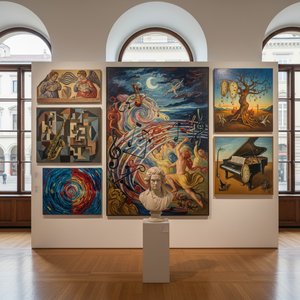
Harmonies on Canvas: Exploring the Visual Representation of Music in Art History
Explore the fascinating history of music's visual representation in art! From ancient symbolism to modern abstraction, discover how artists have captured sound and emotion on canvas. Expert insights & stunning examples.

Shadow & Soul: Why Black & White Photography Remains the Ultimate Power Move in Modern Art
Discover why black & white photography remains a powerful force in contemporary art. Explore the impact of light, shadow, and texture through a visual journey of monochrome mastery and learn how to elevate your space with timeless grayscale aesthetics.

White on Canvas: 10 Masterpieces & Timeless Elegance for Your Home Decor
Explore 10 iconic white paintings by Monet, Whistler & Rothko! Discover the stories behind these serene masterpieces and their impact on art history. Find museum-quality reproductions for your home decor at .

Monochrome Visions: Exploring the Aesthetic & Historical Significance of Black & White Photography
Explore the rich history & artistic power of black and white photography. From early techniques to iconic masters like Ansel Adams, discover why monochrome continues to captivate art lovers today. Expert insights for collectors.

Dark Masterpieces: 10 Iconic Paintings Dominated by Black Tones |
Explore 10 iconic paintings dominated by black tones, from Rembrandt’s chiaroscuro to Goya's dark expressions. Discover the stories behind these masterpieces & find museum-quality art reproductions for your home at .