

 Pregledaj u prostoru
 Podeli
 Podeli
 Detalji
 Vodič
Vodič

 Preuzmi sliku
 Slični predmeti
 Rendgenski snimak
 Automatska prezentacija
 Statistika
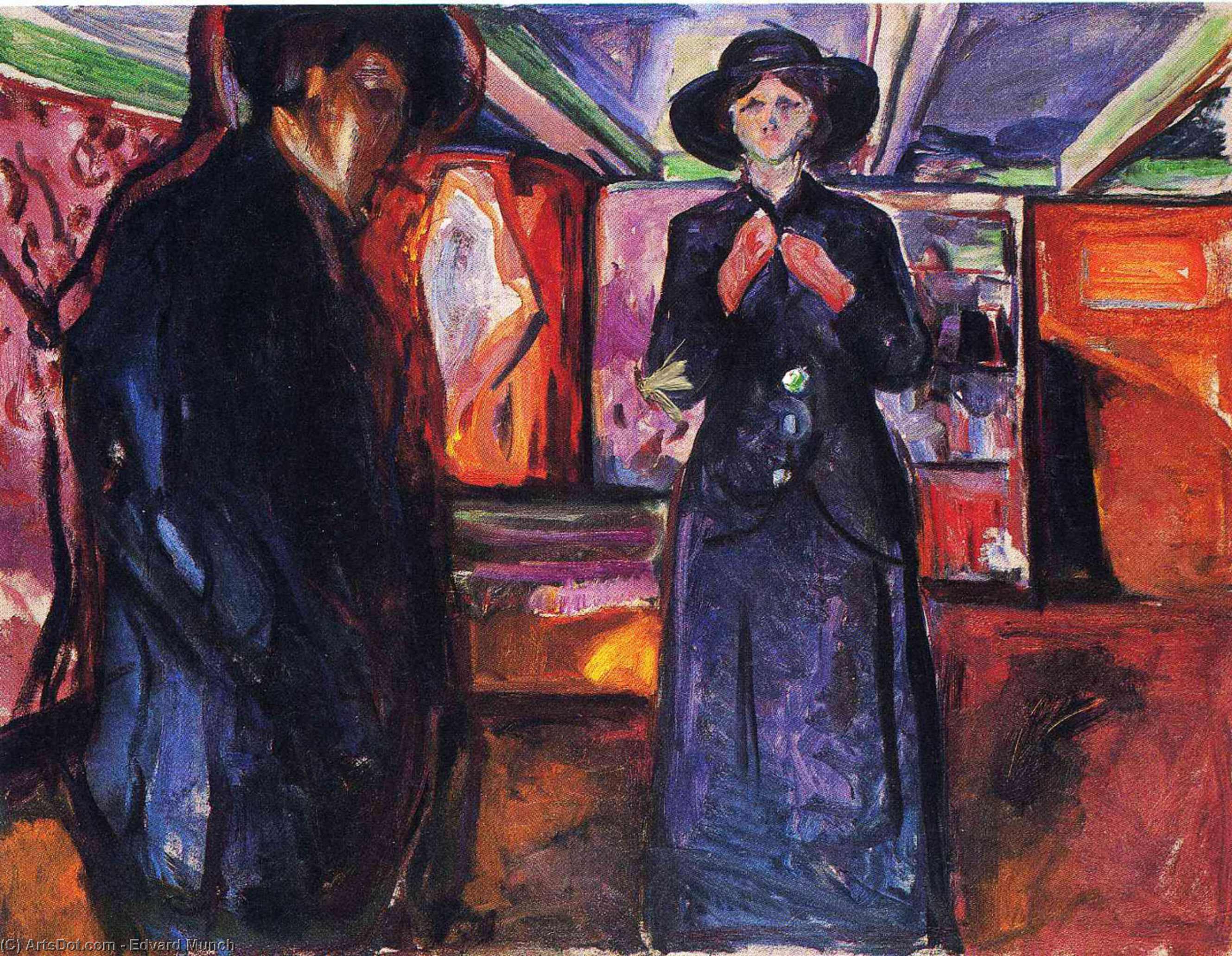
Man and Woman II
 Ulje na platnu
- Umetnost za zidove
- Expressionism
 1915
1915- Moderna umetnost
 98.0 x 111.0 cm
Edvard Munhova 'Čovek i žena II' – intenzivna ekspresija emocionalne napetosti iz 1912-1915. Posmatrajte distornu sliku ljudskih odnosa i dubok psihološki portret, idealan za kolekcionare! Otkrijte ovu umetničku lepotu.
 Pročitaj više
Edvard Munch (1863-1944), pionir ekspresionizma! Otkrijte 'Vrisak' i umetnost koja istražuje anksioznost, smrt, ljubav i psihološke teme. Norveški genije modernog slikarstva.
Ručno rađena uljana reprodukcija
Ručno oslikano uljanim bojama na platnu u dimenzijama i okviru po vašem izboru, izrađeno po porudžbini od strane naših umetnika. ( Pređi na prodaju štampanih primeraka Pređi na prodaju digitalnih slika)




P118B $10

P118H $10

P118W $10

P438Z $10

P508JH $12

P508YH $12

P805H $10

P805Z $10

P919BZ $10

P919G $10

P919XJ $10

P959ZH $10

P968JZ $12

W106C $8

W218G $10

W218JH $8

W218Y $10

W307PJ $10

W316G $10

W316PJ $8

W316Y $10

W398PJ $8

W4111J $10

W500HY $15

W500JH $15

W692G $12

W849H $8

W940BG $15

W953PJ $8




Standardne dimenzije
po meri
CM
INCH
Izaberite jednu od naših unapred definisanih veličina koje odgovaraju originalnim proporcijama umetničkog dela.
Loading sizes...

širina
visina
Možete uneti sopstvene dimenzije kako biste prilagodili umetničko delo određenom okviru ili prostoru. Ako odabrana veličina ne odgovara proporcijama originala, slika će biti isečena ili proširena dodatnim elementima koji se ručno oslikavaju. Digitalni prikaz će vam biti poslat na odobrenje pre početka proizvodnje.
Imajte na umu da pregled na ekranu ne odražava stvarno prisecanje ili proširenje. Samo mockup će precizno prikazati konačnu kompoziciju.
Iako su dostupne prilagođene veličine, preporučujemo da izaberete dimenziju iz unapred definisane liste kako biste sačuvali originalne proporcije.
Primeri mogućih izmena: Zamena lica fotografijom kupca; Dodavanje ljubimca (npr. zamena mačke psom); Uključivanje skrivene poruke u pozadini; Promena pejzaža ili elemenata pozadine.
Nakon narudžbine, tim TopImpressionists.com će klijentu putem e-pošte poslati uputstva i dostaviti prikaz predloženog rešenja
Nakon narudžbine, tim TopImpressionists.com će klijentu putem e-pošte poslati uputstva i dostaviti prikaz predloženog rešenja
Svetska isporuka () za 3/4 nedelje umesto uobičajenih 5 nedelja. (23 септембар). Bez kompromisa po pitanju kvaliteta.

Besplatna ekspresna dostava širom sveta

Visokokvalitetno laneno platno

Sveobuhvatno osiguranje transporta

Garancija povraćaja carine i uvoznih dažbina

Garancija vernosti boja i autentičnosti pri reprodukciji

Politika povraćaja u roku od 100 dana (samo u slučaju nedostataka)

Garancija povrata 100% novca

Popust pri većoj količini
 Opcija sa staklom dostupna je samo za dimenzije manje od 110 cm

Man and Woman II
Tehnika izrade reprodukcije
Veličina reprodukcije
-


Ukupna cena
$ 269
Man and Woman II: A Portrait of Psychological Tension
The world captured in Edvard Munch’s *Man and Woman II* isn't merely a scene; it’s an echo, a carefully constructed distillation of anxiety and isolation rendered with the raw intensity that defined his Expressionist vision. Painted between 1912 and 1915, this oil on canvas transcends its simple subject matter – two figures within a room – to become a profound meditation on the human condition, a testament to the artist’s ability to translate personal turmoil into universal emotion. Housed within the walls of the Munch Museum in Oslo, it remains a cornerstone of his oeuvre, inviting viewers into a space where silence speaks volumes and shadows hold untold stories. The room itself is deceptively simple – a sparsely furnished interior dominated by muted browns, grays, and blacks. Yet, it’s precisely this restraint that amplifies the painting's unsettling effect. Munch doesn’t employ realistic detail; instead, he utilizes bold, angular lines in the background to create an almost hallucinatory sense of depth, drawing the eye inward and intensifying the psychological divide between the man and woman. It’s a deliberate rejection of traditional perspective, mirroring the fractured emotional state of the figures within. The composition isn't about depicting a comfortable domestic tableau; it’s a stage set for unspoken tensions, a visual representation of profound isolation. The central figures – a man and a woman – are rendered with an almost unsettling ambiguity. The man, positioned to the left, is shrouded in shadow, his face obscured, suggesting introspection or perhaps even melancholy. He stands in a slightly slumped posture, conveying a sense of withdrawal and quiet contemplation. In contrast, the woman, on the right, presents a more assertive stance, though her expression remains enigmatic, hinting at resignation or a profound thoughtfulness. Her attire is dark, further emphasizing her detachment from the man’s shadowed space. Munch's signature technique—a potent blend of distorted forms and exaggerated colors—is powerfully evident here. The background isn’t rendered with realistic detail; instead, it’s fragmented and unsettling, mirroring the fractured emotional state of the subjects.The Roots of Anxiety: Context and Influences
To fully appreciate *Man and Woman II*, it's crucial to understand the artistic and personal context within which it was created. Edvard Munch’s life was marked by profound loss and psychological turmoil – the early deaths of his mother and sister, coupled with a lifelong struggle against illness and mental instability. These experiences deeply informed his art, shaping his preoccupation with themes of mortality, anxiety, love, and fear. The late 1890s, the period in which *Man and Woman II* was painted, saw Munch grappling with these personal demons while simultaneously engaging with the burgeoning Expressionist movement in Europe. Influenced by artists like Vincent van Gogh and Paul Gauguin, Munch sought to break free from traditional artistic conventions and explore the subjective experience of emotion. He embraced a raw, unvarnished style that prioritized emotional intensity over technical precision. This period also coincided with his involvement with the nihilistic philosopher Hans Jæger, who encouraged him to “paint his soul,” urging him to express his inner turmoil through art. *Man and Woman II* embodies this philosophy perfectly—a direct translation of Munch’s personal anxieties onto canvas.Decoding the Symbolism: A Narrative of Distance
Beyond its formal qualities, *Man and Woman II* is rich in symbolic meaning. The spatial arrangement between the figures—separated by a chair and a table—visually represents their emotional distance. They are not engaged in conversation or physical intimacy; rather, they exist in separate spheres of consciousness, each lost in their own thoughts. The man’s obscured face suggests a deliberate attempt to conceal his emotions, while the woman's enigmatic expression hints at a deeper sadness. It is important to note that Munch was deeply interested in portraying the inner life of his subjects, and *Man and Woman II* offers a poignant and unforgettable encounter with this psychological landscape.A Legacy of Emotional Intensity
*Man and Woman II* remains one of Edvard Munch’s most compelling works, exemplifying his mastery of Expressionist techniques and his profound exploration of human psychology. Its enduring power lies in its ability to evoke a visceral emotional response in the viewer—a sense of melancholy, isolation, and unspoken longing. The painting's stark simplicity and deliberate ambiguity invite contemplation and interpretation, ensuring that it continues to resonate with audiences today. For those seeking to delve deeper into Munch’s artistic vision or explore the broader context of Expressionism, *Man and Woman II* offers a poignant and unforgettable encounter with one of art history’s most influential figures. You can view this masterpiece in its entirety at the Munch Museum in Oslo, alongside other iconic works by the artist, including *The Scream*.Biografija umetnika
Život obavijen senkom: Svet Edvarda Munkа
Edvard Munk, rođen 1863. godine usred surove severnokaljske prirode, bio je umetnik čije delo postalo sinonim za anksioznost i emotivni nemir modernog doba. Njegov život, duboko obeležen gubicima i sveprisutnim melanholijama, predstavljao je izvor njegovog izuzetno ekspresivnog stvaralaštva. Od detinjstva koje je bilo u senci ranih smrti majke i sestre – obe žrtve tuberkuloze – Munk je razvio opsednutost smrtnošću, bolešću i krhkosti ljudskog postojanja. Ta iskustva nisu bila samo biografske činjenice; ona su postala srž njegovog umetničkog videnja, podstičući neprestano istraživanje unutrašnjeg pejzaža straha, tuge i čežnje. Očeve stroge verske ubeđene i sopstvene borbe sa mentalnim bolestima dodatno su doprineli osećaju užasa koji je prožimao Munkov svet, oblikujući ne samo njegov lični život, već i simbolički jezik njegovih slika. On nije jednostavno prikazivao scene; on je eksternalizovao unutrašnje stanje, prevodeći psihološku patnju u vizuelni oblik.Početak ekspresije: Uticaji i umetnički razvoj
Munkova umetnička priča započela je formalnim obrazovanjem na Kraljskoj školi za primenjene umetnosti u Kristianiji (Oslo), ali je njegov susret sa boemskim krugovima i nihilisitičkom filozofijom Hansа Jægera zaista razbuktao njegovu kreativnu vatru. Jæger ga je ohrabrio da napusti konvencionalne akademske stilove i umesto toga uroni u dubine sopstvenog subjektivnog iskustva, koncept koji je on nazvao „slikanje duše”. Ovaj ključni prelazak označio je početak Munkovog karakterističnog stila – jednog obeleženog sirove emocije, izobličenih oblika i odbacivanja naturalističke reprezentacije. Njegova putovanja u Pariz 1890-ih izložila su ga procvetavajućem pokretu Postimpresionizma, gde je upio uticaje umetnika kao što su Pol Gaugen, Vincent van Gog i Enri de Tuluz-Lotrek. Upotreba jarkih boja, ekspresivnih poteza kistom i psihološke intenzivnosti ovih majstora duboko je rezonirala sa Munkovim sopstvenim umetničkim sklonostima. On nije samo imitirao njihove tehnike; on ih je sintetizovao u nešto jedinstveno njegovo – vizuelni jezik sposoban da prenese najdublje i najuzbudljivije ljudske emocije. Njegovo vreme u Berlinu takođe se pokazalo ključnim, dovodeći ga u kontakt sa dramatikom Augustа Strindberga, čija istraživanja psiholoških tema dodatno su podstakla Munkove umetničke istrage.Ikonične vizije: Glavna dela i simbolička težina
Munkovo delo je ispunjeno slikama koje su postale duboko ukorenjene u kolektivnoj svesti. The Scream, možda njegovo najpoznatije delo, prevazilazi status slike da bi postao univerzalni simbol egzistencijalne anksioznosti. Spirala, vatrenog pejzaža i figura izobličena lica utelovljuju prvobitni vapis protiv ravnodušnosti univerzuma. Madonna, kontroverzno i duboko lično delo, istražuje teme seksualnosti, materinstva i smrtnosti sa uznemiravajućom iskrenošću. Ponovljeni motivi kao što je The Sick Child – inspirisan gubitkom njegove sestre Sofije – služe kao tužne opomene na Munkovu traumu iz detinjstva i večnu senku smrti. Melancholy I & II, moćni prikazovi duboke tuge i izolacije, otkrivaju ranjivost koja je istovremeno duboko lična i univerzalno relatable. Ova dela nisu samo reprezentacije spoljašnje stvarnosti; oni su prozori u dušu umetnika, nudeći gledaocima neustrašiv pogled u najmračnije kutke ljudske pshe. Munk nije težio da stvori lepe slike; on je želeo da prenese istinu – čak i ako je ta istina bila bolna i uznemiravajuća.Trajna zaostavština: Istorijski značaj i trajni uticaj
Munkov doprinos modernoj umetnosti je neprocenjiv. On stoji kao ključna figura u razvoju ekspresionizma, otvarajući put umetnicima koji su prioritet dali subjektivne emocije nad objektivnom reprezentacijom. Njegovo neustrašivo istraživanje univerzalnih ljudskih iskustava – ljubavi, gubitka, anksioznosti i smrti – nastavlja da rezonuje sa publikom i danas, čvrsto učvršćujući njegovo mesto kao jedne od najuticajnijih i trajnijih figura u istoriji umetnosti. Njegov rad je duboko uticao na sledeće generacije umetnika, utičući na pokrete poput nemačkog ekspresionizma i dalje. On se usudio da se suoči sa mračnijim aspektima ljudskog stanja, izazivajući konvencionalne ideje o lepoti i umetničkoj reprezentaciji. Čak i nakon što je postigao slavu i priznanje – kulminirajući osnivanjem Munkovog muzeja u Oslovu – njegov lični život je ostao turbulentan, obeležen periodima mentalne nestabilnosti i izolacije. Ipak, kroz sve to, nastavio je da stvara, ostavljajući iza sebe delo koje i dalje podstiče, izaziva i inspiriše. Munkova zaostavština nije samo o samim slikama; ona je o hrabrosti da se suočimo sa složenostima ljudskog postojanja i da ta iskustva pretočimo u umetnost koja govori najdubljim delovima našeg bića.
Едвард Мунх
1863 - 1944 , Шведска
Brzi pregled
- Datum Rođenja: 12. decembar 1863.
- Datum Smrti: 23. januar 1944.
- Mesto Rođenja: Adelsbruk, Švedska
- Na Njega Su Uticali: ['Nemački ekspresionizam']
- Nacionalnost: Norvežanin
- Puno Ime: Edvard Munch
- Umetnički Pokret: Ekspresionizam
- Uticali Na Njega:
- Pol Gaugen
- Van Gog
- Tuluz-Lotrek
- Značajna Dela:
- Vrisak
- Madona
- Bolesno dete
Srodni članci

Edvard Munch: 25 Remek-dela Koje Otkrivaju Dubinu Čovekove Duše | TopImpressionists
Istražite 25 remek-dela Edvarda Muncha i otkrijte dubinu ekspresionizma, tugu i anksioznost u njegovim ikončnim slikama. Kvalitetne reprodukcije za dekoraciju enterijera dostupne na TopImpressionists.com. Pronađite inspiraciju i kupite umetnička dela online!

Edvard Munch: Anxiety, Modernity & the Dawn of Expressionism
Explore the profound world of Edvard Munch, pioneer of Expressionism. Discover the origins of 'The Scream' & his haunting depictions of anxiety, mortality, and love. Expert analysis & high-quality reproductions at TopImpressionists.
Glavna dela ekspresionizma: 10 remek-dela koja su definisala umetnički pokret
Otkrijte 10 remek-dela ekspresionizma! Uronite u svet Edvarda Muncha, Ernsta Ludwiga Kirchnera i drugih. Istaknute umetničke slike, intenzivne boje i emocionalni izraz. Pronađite inspiraciju za svoj enterijer na TopImpressionists.com – vrhunski izbor reprodukcija slika!

Cubist Expressionism's 10 Defining Masterpieces | Art for Your Home
Explore 10 defining Cubist Expressionism masterpieces by Picasso, Braque & more. Discover the stories behind these bold, geometric paintings and bring museum-quality art to your home with TopImpressionists.com. Explore the full collection online.

The Raw Emotion of Expressionism: A Deep Dive into its History, Characteristics & Enduring Influence
Explore the raw emotion of Expressionism with TopImpressionists. Discover its history, key artists like Kirchner & Munch, and lasting influence on modern art. Expert insights for collectors & enthusiasts.
Istražite umetnička dela organizovana prema temama, stilovima i karakteristikama.


