

 Pregledaj u prostoru
 Pošalji
 Podeli
 Detalji o delu
 Vodič
Vodič

 Preuzmi
 Slični predmeti
 Rendgenski snimak
 Automatska prezentacija
 Q&A
Q&A Statistika
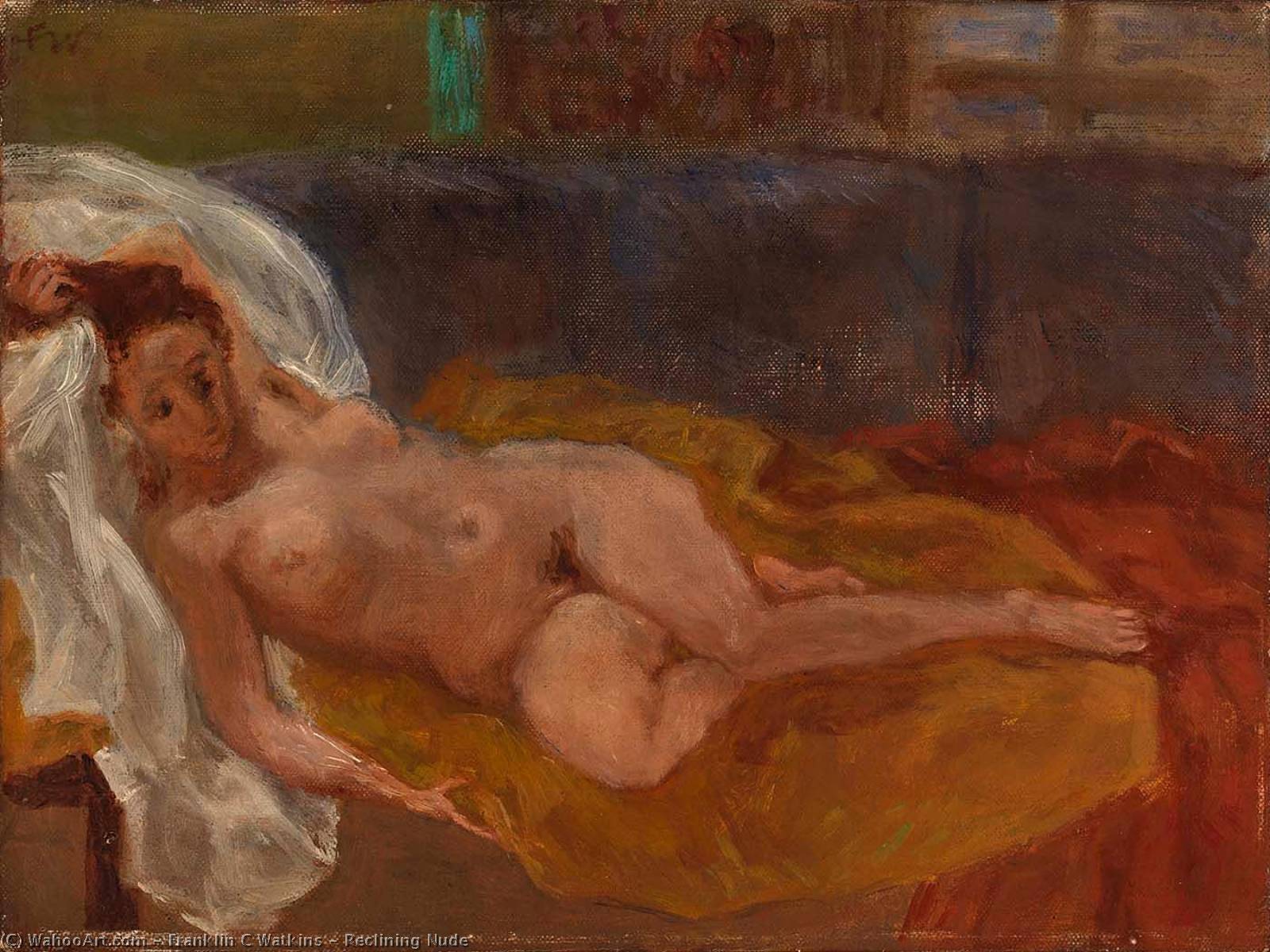
Reclining Nude
 Post-Impressionism
 23.0 x 31.0 cm
Reclining Nude by Franklin C. Watkins: An impressionistic masterpiece featuring a sensual female figure in warm tones. Explore post-impressionism & timeless beauty.
Explore the iconic architecture of Franklin C. Watkins! This American architect designed over 240 schools & buildings in the West, including Carnegie libraries. Discover his legacy.
 Pročitaj više
Nabavite datoteku spremnu za štampu koja prevazilazi kvalitet onlajn pregleda. Svaka digitalna slika koju prodajemo potiče iz visokorezolucičnog master fajla iz naše baze — obično širine od 5.000 do 15.000 piksela — tako da možete štampati u velikom formatu, tesno kadrirati ili sa sigurnošću reprodukovati najfinije detalje.
Nijedan fajl ne napušta naš studio netaknut. Digitalni stručnjak proverava boje u odnosu na originalno delo i ispravlja ih po potrebi, a zatim unapređuje jasnoću i detalje pomoću profesionalnih alata za retuširanje — uvek ostajući veran umetnikovim potezima četkice i stilu. Rezultat je slika koja izgleda kao pravo delo, a ne kao sken sa filterom.
Odobravate pre završetka: naš stručnjak vam šalje sliku putem e-pošte u roku od 72 sata na pregled. Niste zadovoljni? Zatražite poboljšanja ili ispravke, ili tražite povraćaj novca ako kvalitet ne ispunjava vaša očekivanja.
Ovo je kvalitet kojem veruju izdavači, dizajnerski studiji, galerije i štamparije.
Digitalna slika
Preuzmite datoteku visoke rezolucije za ličnu upotrebu, štampanje i kreativne projekte. ( Pređi na štampu Kupite ručno oslikano delo)
Uključeno uz svaku porudžbinu digitalne slike
Profesionalna digitalna isporuka, zagarantovana
Kada odaberete TopImpressionists.com, ne dobijate samo sliku – vi primate profesionalno unapređeno digitalno umetničko delo, izrađeno sa najvećom preciznošću i uz garanciju zadovoljstva. Evo svega što automatski dolazi uz vašu porudžbinu:

Brza dostava putem e-pošte
Vaša digitalna slika visoke rezolucije biće vam poslata putem e-pošte u roku od 72 sata od poručivanja – spremna za trenutnu upotrebu.

Digitalna datoteka unapređena veštačkom inteligencijom
Vaše umetničko delo je profesionalno optimizovano primenom naprednih AI alata i ručne obrade, čime se osiguravaju maksimalni detalji, oštrina i preciznost boja.

Besplatna doživotna ponovna isporuka
Slučajno ste obrisali ili izgubili svoju datoteku? Ne brinite – poslaćemo vam je ponovo u bilo kom trenutku, potpuno besplatno.

Bez troškova uvoza – zauvek
Uživajte u svojim umetničkim delima trenutno, bez carine, akciza ili troškova dostave – digitalni download je uvek bez poreza.

Garancija preciznosti boja
Uz pomoć profesionalnih alata i upravljanja bojama, osiguravamo da vaša digitalna slika što vernije odražava originalne boje.

Garancija zadovoljstva u roku od 100 dana
Ako niste zadovoljni svojom digitalnom slikom, izvršićemo reviziju ili ćemo vam vratiti 100% novca u roku od 100 dana – bez ikakvih pitanja.

100% garancija povrata novca
Niste zadovoljni? Dobijte puni povraćaj novca u roku od 100 dana od prijema digitalne datoteke – bez suvišnih pitanja.

Popusti na velike porudžbine
Kupite 3 slike, uštedite 10% - Kupite 5 slika, uštedite 15% - Kupite 10+ slika, uštedite 20%. Odlično za kreativne projekte, galerije i agencije.
Srodna umetnička dela


Biografija umetnika
A Legacy Etched in Stone: The Architectural Vision of Franklin C. Watkins
Franklin C. Watkins stands as a pivotal, yet often unsung, figure in the architectural landscape of the American West. His name isn’t immediately recognizable to many outside specialist circles, but his influence is profoundly visible – etched into the brick and mortar of over 240 schools, libraries, and public buildings that define towns and cities across Utah, Idaho, Wyoming, Nevada, and beyond. Born in a time of rapid expansion and community building, Watkins dedicated his career to crafting structures that weren’t merely functional spaces but embodiments of civic pride and educational aspiration. He wasn't an architect who sought grand monuments to personal glory; instead, he focused on the practical needs of burgeoning communities, leaving behind a remarkable portfolio of buildings that speak volumes about the spirit of the Intermountain West during the late 19th and early 20th centuries.Early Life and Formative Influences
Details surrounding Watkins’s earliest life remain somewhat scarce, a testament to his unassuming nature and dedication to his work rather than self-promotion. What is known is that he established his architectural practice in Salt Lake City, Utah, around the turn of the 20th century. This location proved crucial to his development as an architect. The region was experiencing significant growth fueled by railroad expansion, mining booms, and agricultural settlements. The demand for public buildings – schools to educate a growing population, libraries to foster intellectual pursuits, and commercial structures to support economic activity – was immense. Watkins quickly recognized this need and positioned himself to become a leading provider of these essential services. His early work demonstrates a clear understanding of prevailing architectural styles of the time, particularly those influenced by Victorian eclecticism and the emerging Prairie School movement. However, he wasn’t simply a mimic; he adapted these styles to suit the unique climate, materials, and cultural context of the Intermountain West.The Carnegie Library Boom & Watkins's Signature Style
Watkins truly distinguished himself through his prolific work designing Carnegie libraries. Andrew Carnegie’s philanthropic efforts provided funding for over 1,600 libraries across the United States, and Franklin C. Watkins secured a significant number of commissions to design these institutions throughout the West. This partnership allowed him to refine his architectural vision and develop a signature style characterized by practicality, durability, and understated elegance. His Carnegie libraries weren’t imposing structures; they were welcoming community hubs designed to encourage learning and civic engagement. He frequently employed red brick construction – readily available and well-suited to the region's climate – and incorporated large windows to maximize natural light. A hallmark of his designs was a symmetrical façade, often adorned with simple yet refined detailing such as decorative brickwork, cornices, and prominent entrances that emphasized the library’s role as a public institution. Beyond Carnegie libraries, Watkins designed numerous schoolhouses, courthouses, commercial buildings, and even residences, consistently applying these principles of functional design and regional sensitivity.A Commitment to Intermountain Design
Watkins's architectural philosophy was deeply rooted in a commitment to the specific needs and characteristics of the Intermountain West. He understood that buildings designed for eastern cities wouldn’t necessarily translate well to this rugged landscape. He prioritized materials that were locally sourced, construction techniques that were appropriate for the climate, and designs that reflected the cultural values of the communities he served. This pragmatic approach extended beyond mere aesthetics; Watkins was known for his meticulous attention to detail, ensuring that his buildings were structurally sound, energy-efficient, and adaptable to changing needs. He often incorporated features such as wide eaves to protect against harsh sunlight and snow loads, and strategically placed windows to maximize ventilation.- Schoolhouse Designs: Watkins designed hundreds of schoolhouses, each tailored to the specific size and needs of the local community.
- Courthouse Architecture: His courthouses were often built in a classical revival style, symbolizing justice and civic authority.
- Commercial Buildings: Watkins’s commercial structures blended functionality with aesthetic appeal, contributing to the economic vitality of western towns.
