John Frederick Kensett: The Luminist Vision
Born in Cheshire, Connecticut, in 1816, John Frederick Kensett’s journey to becoming a pivotal figure in American landscape painting was anything but straightforward. Initially apprenticed to his father as an engraver – a skill he diligently honed in New Haven and Albany – Kensett harbored a deep-seated desire to capture the ephemeral beauty of nature through brushstrokes, not lines. This yearning led him away from the precision of engraving and toward the burgeoning movement known as Luminism, a style characterized by its soft light, atmospheric perspective, and focus on capturing fleeting moments in time. His early years were marked by a restless pursuit of artistic refinement, punctuated by trips to England and ultimately, Italy – experiences that profoundly shaped his aesthetic sensibilities.
Kensett’s formative period was deeply influenced by the English landscape painters who preceded him, particularly Asher B. Durand and John W. Casilear, both of whom he encountered in New York City. His time in England, beginning in 1840, proved crucial. He immersed himself in the collections of the National Gallery and Dulwich College, studying the works of masters like Canaletto and Turner – artists who demonstrated a remarkable ability to render light and atmosphere. This exposure ignited within him a desire to emulate their techniques, leading him to Paris in 1842. There, amidst a vibrant community of American expatriates including Thomas Cole, Benjamin Champney, and Francis W. Edmonds, Kensett absorbed the lessons of the École Préparation des Beaux-Arts, refining his skills in drawing from life and studying the antique.
Following his return to America in 1847, Kensett’s artistic focus shifted decisively toward Italy. For nearly two years, he traveled extensively throughout the Italian peninsula, sketching and painting scenes of Rome, Naples, Florence, Venice, and the southern regions. This period marked a significant evolution in his style; he embraced the warm light and dramatic landscapes of Southern Italy, moving away from the cooler tones of his earlier works. His time in Italy wasn’t merely a vacation; it was an intensive study of color, composition, and the effects of light on the natural world – elements that would become hallmarks of his Luminist style. He found companionship with George Curtis and his brothers, who introduced him to New York's social circles and helped him navigate the art market.
The Luminist Style: Light and Atmosphere
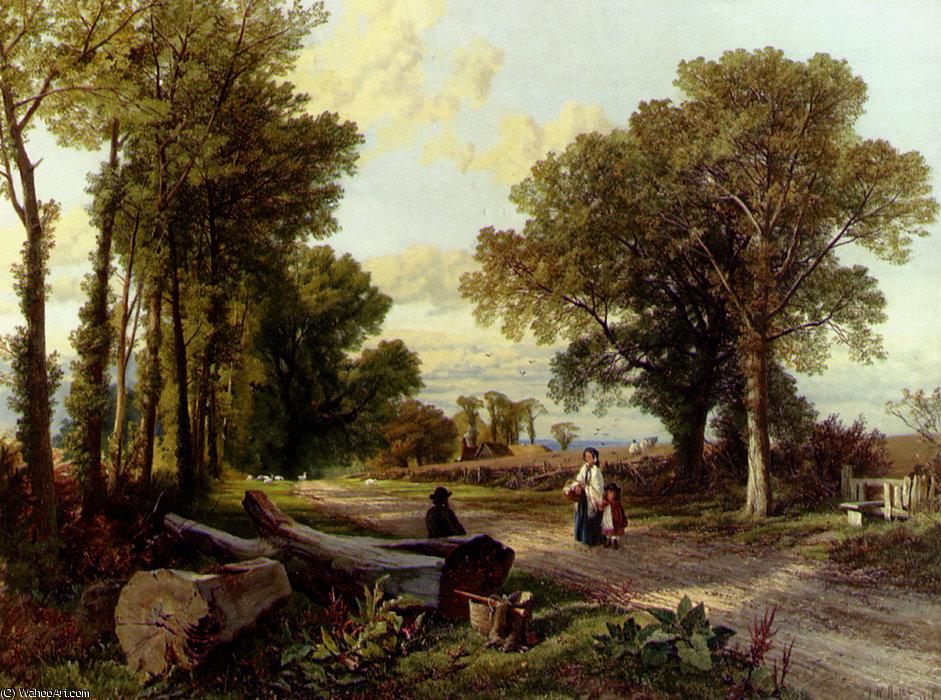
Kensett’s most distinctive contribution to American painting lies in his development of the Luminist style. Unlike the more dramatic and narrative-driven works of the Hudson River School, Kensett prioritized capturing the subtle nuances of light and atmosphere. His brushwork was characterized by a delicate texture, meticulously applied to create pure and exquisite states of light and atmosphere – a technique often referred to as “luminism.” He avoided sharp outlines and detailed rendering, instead favoring soft gradations of color and blurred edges to evoke a sense of tranquility and immediacy. His paintings rarely depict human figures; rather, they focus on the beauty of natural landscapes—forests, rivers, and shorelines—often bathed in the golden light of dawn or dusk.
Considered by many as the acknowledged master of Luminism, Kensett’s work reflects a deep appreciation for the ephemeral qualities of nature. He sought to capture not just the appearance of a scene but also its emotional resonance – the feeling of peace and serenity that one experiences when immersed in the natural world. His paintings are imbued with a sense of quiet contemplation, inviting the viewer to slow down and appreciate the beauty of the present moment.
Key Works and Influences
Kensett’s oeuvre is rich with iconic landscapes that exemplify his Luminist style. *The Oxbow*, painted in 1846, is arguably his most famous work – a breathtaking depiction of the Connecticut River Valley bathed in the golden light of sunset. Other notable paintings include *Twilight in the Adirondacks* (1857), *The First Snowfall* (1859), and numerous scenes from the Hudson River Valley. His early works, such as *View near Windsor Castle*, demonstrated his growing mastery of capturing atmospheric effects and establishing him as a leading figure in the movement.
Beyond the English and French artists he admired, Kensett was influenced by the Romantic tradition, particularly the emphasis on subjective experience and the sublime. He also drew inspiration from the Hudson River School, though he ultimately diverged from their more dramatic and narrative-driven approach. His connection to George Curtis, a prominent writer and editor for *Harper’s Monthly*, further shaped his artistic vision, exposing him to contemporary literary trends and fostering a shared appreciation for the beauty of American landscapes.
Legacy and Historical Significance
John Frederick Kensett died in 1884, leaving behind a significant body of work that continues to captivate viewers today. His pioneering approach to landscape painting—his emphasis on light, atmosphere, and the fleeting qualities of nature—laid the foundation for subsequent generations of American artists. He is considered one of the most important figures in the development of Luminism, a style that profoundly influenced the course of American art history. His paintings are now housed in major museums across the United States and Europe, testament to his enduring artistic legacy.
Kensett’s work stands as a reminder of the power of observation and the importance of capturing the beauty of the natural world. His Luminist vision continues to resonate with audiences today, offering a glimpse into a time when artists sought to connect with nature on a deeply personal level.


 Preview
 Kupi štampu
 Pošalji
 Podeli
 Detalji o delu

 Преузми
 Slični predmeti
 Rendgenski snimak
 Slajdovi
 Pročitaj više



