Atelje — Besplatna dostava širom sveta — Rok isporuke 2–6 nedelja
Slika iz fotografije Lista želja Korpa
Pregledaj u prostoruPregledaj u prostoru AR pregledAR pregled Pređi na štampu Pređi na štampuPrebacite na sliku Prebacite na sliku PošaljiPošalji
Detalji o deluDetalji o delu Dodaj u omiljene Dodaj u omiljene ПреузмиПреузми Slični predmetiSlični predmeti Rendgenski snimakRendgenski snimak SlajdoviSlajdovi

untitled (3690)

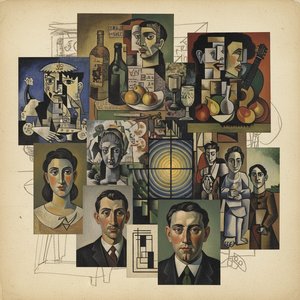
Delve into 'Untitled (3690)' by Georges Braque – a pivotal work of Cubism. Experience fragmented forms, a study in disarray, and the artist’s revolutionary approach to space and perception. Hand-painted reproduction available.

Жртва је био револуционар у модерној сликарству, познат по својим делима као што су Домови код Ла’Естаке и Пацијент, који су преобразили начин представљања света кроз аналитичну кубистичку технику и експериментисање са колажом.

Ručno rađena uljana reprodukcija

Ručno oslikano uljanim bojama na platnu u dimenzijama i okviru po vašem izboru, izrađeno po porudžbini od strane naših umetnika. (Pređi na štampu Pređi na štampuPrebacite na sliku Prebacite na sliku)

P118B $10
P118H $10
P118W $10
P438Z $10
P508JH $12
P508YH $12
P805H $10
P805Z $10
P919BZ $10
P919G $10
P919XJ $10
P959ZH $10
P968JZ $12
W106C $8
W218G $10
W218JH $8
W218Y $10
W307PJ $10
W316G $10
W316PJ $8
W316Y $10
W398PJ $8
W4111J $10
W500HY $15
W500JH $15
W692G $12
W849H $8
W940BG $15
W953PJ $8

Standard
custom
CM
INCH

Izaberite jednu od naših unapred definisanih veličina koje odgovaraju originalnim proporcijama umetničkog dela.

širina
visina

Можете унети сопствене димензије како бисте прилагодили дело одређеном оквиру или простору. Ако одабрана величина не одговара пропорцијама оригинала, слика ће бити исечена или проширена додатним елементима који се ручно насликавају. Дигитални prikaz ће вам бити послат на одобрење пре почетка производње.
Имајте на уму да преглед на екрану не одражава стварно исецање или проширење. Само приказ (mockup) ће тачно приказати коначну композицију.
Иако су доступне прилагођене величине, препоручујемо да одаберете димензију из дефинисане листе како бисте сачували оригиналне пропорције.

Primeri onoga što se može promeniti: Zamena lica fotografijom kupca; Dodavanje ljubimca (npr. zamena mačke psom); Uključivanje skrivene poruke u pozadini; Promena pejzaža ili elemenata pozadine.
Nakon narudžbine, tim TopImpressionists.com će klijentu putem e-pošte poslati uputstva i dostaviti prikaz predloženog rešenja

Isporuka širom sveta () za 3/4 nedelje umesto uobičajenih 5 nedelja. (31 јул). Bez kompromisa po pitanju kvaliteta.

why_choose_icon
Besplatna ekspresna dostava širom sveta
why_choose_icon
Visokokvalitetno laneno platno
why_choose_icon
Kompletno osiguranje transporta
why_choose_icon
Garancija povraćaja carine i uvoznih dažbina
why_choose_icon
Garancija vernosti boja
why_choose_icon
Politika povrata u roku od 60 dana (samo u slučaju nedostataka)
why_choose_icon
Garancija povrata novca od 100%
why_choose_icon
Popust pri grupnoj kupovini

Ukupna cena

$ 269

reproduction

untitled (3690)

Tehnika reprodukcije

Dimenzije reprodukcije

-

Konačna cena

$ 269

Osnovne informacije

  • Medium: Painting
  • Notable elements: Door, papers, book
  • Movement: Cubism
  • Artist: Georges Braque
  • Influences:
    • Cézanne
    • Fauvism
  • Title: untitled (3690)

Kviz o umetnosti

Svako pitanje ima samo jedan tačan odgovor.

Pitanje 1:
Based on the image description, what is the primary impression conveyed by the scene?
Pitanje 2:
The presence of scattered papers and a book suggests what about the depicted environment?
Pitanje 3:
Georges Braque was a key figure in the development of which art movement?
Pitanje 4:
What artistic influence is most strongly associated with Georges Braque's work during the period leading up to his involvement in Cubism?
Pitanje 5:
According to the biographical information, what was a significant aspect of Braque's early training that shaped his artistic approach?

Opis umetničkog dela

A Study in Disarray: Georges Braque’s ‘Untitled (3690)’

Georges Braque's “Untitled (3690),” a captivating work that seems to simultaneously invite and repel, offers a glimpse into the artist’s intensely productive period at the dawn of Cubism. Painted around 1910-1912, this piece isn’t merely a depiction of a room; it's an exploration of perception, fragmentation, and the very nature of representation. The image presents a seemingly chaotic scene: a weathered wooden door, its brown frame hinting at age and solidity, stands slightly ajar, revealing a shadowy interior. Scattered across the floor and surfaces are fragments of paper – sketches, notes, perhaps even preliminary studies – alongside a solitary book, anchoring the composition with an element of quiet contemplation amidst the surrounding disorder. The overall effect is one of controlled chaos, a deliberate disruption of traditional spatial relationships that speaks directly to the core tenets of Braque’s revolutionary approach to art. It's a visual embodiment of the intellectual and emotional turmoil characteristic of the era, reflecting the shifting realities of modern life as experienced through the lens of artistic innovation.

The Roots of Fragmentation: Braque’s Early Influences

Georges Braque’s journey toward becoming a pivotal figure in 20th-century art began not within the rarefied atmosphere of Parisian studios but in his family's workshop, where he learned the craft of house painting and decoration. This practical grounding—a deep understanding of materials, structure, and the manipulation of space – proved invaluable as he later dismantled and reimagined traditional artistic conventions. Born in Argenteuil in 1882, Braque’s upbringing instilled a keen eye for form and an appreciation for the technical aspects of visual representation. Crucially, his early exposure to Cézanne's work, particularly through the 1907 retrospective at the Salon d'Automne, proved transformative. Cézanne’s exploration of multiple perspectives and geometric forms laid the groundwork for Braque’s later experiments with Cubism, prompting him to question the established rules of pictorial space and delve into a more fractured, multi-dimensional approach to depicting reality. This lineage—a blend of artisanal skill and academic study—is evident in “Untitled (3690),” where the seemingly random arrangement of objects is governed by an underlying geometric logic.

Cubism’s Delicate Dance: Collaboration with Picasso

“Untitled (3690)” stands as a testament to the collaborative spirit that fueled the development of Cubism alongside Pablo Picasso. During this period, Braque and Picasso engaged in a dynamic exchange of ideas, each pushing the boundaries of artistic expression while simultaneously influencing the other. Initially, their work was almost indistinguishable, a phenomenon documented by art historian John Rewie who noted that “the effect of his encounter with Picasso was more to accelerate and intensify Braque’s exploration of Cézanne’s ideas, rather than to divert his thinking in any essential way.” This intense partnership resulted in a shared vocabulary of fragmented forms, overlapping planes, and multiple viewpoints – techniques vividly demonstrated in "Untitled (3690)." The painting's monochromatic palette—likely influenced by the desire to strip away superficial details and focus on underlying structure—further emphasizes this geometric exploration. The deliberate ambiguity of the interior space, glimpsed through the open door, mirrors the Cubist principle of presenting multiple perspectives simultaneously, challenging the viewer’s perception of depth and spatial relationships.

Symbolism in the Everyday: The Language of Disarray

Beyond its formal innovations, “Untitled (3690)” is rich with symbolic potential. The open door suggests a transition, an invitation into an unknown space—perhaps representing the anxieties and uncertainties of modern life. The scattered papers, reminiscent of a scholar’s workspace or an artist's studio, hint at intellectual activity, creative process, and the accumulation of knowledge. The solitary book offers a counterpoint to the surrounding chaos, suggesting a yearning for order, reflection, and perhaps even escape. Braque wasn’t simply depicting a room; he was exploring the relationship between the tangible world and the realm of ideas, capturing the essence of a mind grappling with complex concepts. The deliberate lack of clear narrative or emotional content allows the viewer to project their own interpretations onto the scene, making “Untitled (3690)” a profoundly personal and evocative work.

Bringing Braque’s Vision Home: A High-Quality Reproduction

TopImpressionists offers meticulously crafted hand-painted reproductions of Georges Braque's "Untitled (3690)," allowing you to experience the power and complexity of this seminal artwork in your own space. Our skilled artisans faithfully recreate Braque’s distinctive style, capturing the subtle nuances of color, texture, and composition with exceptional detail. Whether adorning a contemporary living room or a sophisticated study, this reproduction serves as a powerful reminder of Braque's revolutionary contribution to modern art—a testament to his ability to transform the ordinary into the extraordinary through the language of fragmentation and geometric abstraction. Explore our selection today and bring a piece of art history into your world.

Biografija umetnika

Early Life and Artistic Foundations

Georges Braque, geboren in Argenteuil, Frankreich, im Jahr 1882, begann eine Lebensbahn tief verwurzelt in der sich entwickelnden Landschaft der modernen Kunst. Seine Kindheit innerhalb einer Familie von Hausmalern und Dekorateuren vermittelte ihm nicht nur technische Meisterschaft über Materialien, sondern auch eine frühe Wertschätzung für Form und Struktur. Obwohl er zunächst seinem Vater folgte und dessen Beruf ausübte, führten seine natürlichen künstlerischen Neigungen ihn bald zu einer Ausbildung am École des Beaux-Arts in Le Havre hinweg, wodurch sein Weg zum Erreichen eines der einflussreichsten Maler des 20. Jahrhunderts begann. Diese Grundlage – eine Mischung aus praktischem Handwerk und akademischem Studium – würde sich als entscheidend herausstellen, als er später traditionelle künstlerische Konventionen aufbrach und neu imaginierte.

Er zog im Jahr 1902 nach Paris um und setzte seine Ausbildung an der Académie Humbert fort, indem er sich in der lebhaften künstlerischen Umgebung der Stadt eintauchte. Dort lernte er Künstler wie Marie Laurencin und Francis Picabia kennen und schuf Verbindungen, die seinen frühen Entwicklungsprozess prägten. Seine ersten Arbeiten reflektierten die vorherrschenden Einflüsse von Impressionismus und Post-Impressionismus, aber ein entscheidender Begegnung mit der lebhaften Farbe und dem expressiven Freiheitsgefühl des Fauvismus im Jahr 1905 entzündete eine neue Richtung in seiner künstlerischen Erkundung.

The Embrace of Fauvism and the Dawn of Cubism

Braques Übernahme von Fauvist Prinzipien – gekennzeichnet durch intensive, nicht natürliche Farbe und emotionale Ausdruckskraft – wird eindrucksvoll dargestellt in Gemälden wie Die Geduld. Diese Periode sah ihn bei der Arbeit mit Künstlern wie Henri Matisse und André Derain, die mit lebhaften Farbpaletten und vereinfachten Formen experimentierten. Braques Engagement mit Fauvismus war jedoch nicht nur imitativ; er infundierte es mit einer einzigartigen Sensibilität und ließ damit die ungezügelte Ekstase der Bewegung mit einem ausgeglicheneren und analytischeren Ansatz maßstabieren.

Ein Wendepunkt gelang ihm im Jahr 1907 durch seine Begegnung mit der Retrospektive Ausstellung von Paul Cézannes Werk. Cézannes Betonung geometrischer Formen und mehrfacher Perspektiven hatte tiefgreifenden Einfluss auf Braque und bereitete den Weg für seine bahnbrechende Zusammenarbeit mit Pablo Picasso vor. Seit 1908 begannen diese beiden künstlerischen Titanen eine intensive intellektuelle Begegnung, die zur Geburt von Kubismus führte – einer revolutionären Bewegung, die traditionelle Vorstellungen von Darstellung zerstörte.

Gemeinsam entwickelten Braque und Picasso Analytical Cubism, indem sie Objekte in fragmentierte geometrische Formen zerteilten und mehrere Perspektiven gleichzeitig präsentierten. Werke wie Haus Nr. L'Estaque demonstrieren diese frühe Phase und zeigen damit einen radikalen Bruch mit konventioneller Perspektive und eine Fokussierung auf die zugrunde liegende Struktur von Formen.

Innovation Through Fragmentation and Collage

Die Zusammenarbeit zwischen Braque und Picasso setzte sich fort und drängte die Grenzen künstlerischen Ausdrucks hinaus, was zur Entwicklung von Synthetischem Kubismus um 1912 führte. Diese Phase brachte die Einführung von Collage ein – die Aufnahme echter Weltmaterialien wie Zeitungsartikel, Tapeten und Stoff in Gemälde. Diese Innovation stellte die hierarchische Beziehung zwischen Malerei und Bildhauerei in Frage und verschwärte die Grenzen zwischen Kunst und Leben.

Braques Pionierarbeit mit *papier collé* (pasted paper) markierte einen bedeutenden Wendepunkt in seiner künstlerischen Entwicklung. Indem er Fragmente alltäglicher Objekte in seine Kompositionen integrierte, störte er den illusionistischen Raum traditioneller Malerei und brachte damit eine neue Ebene der Materialität und Textur hervor. Diese Technik erweiterte nicht nur die formalen Möglichkeiten von Kunst, sondern spiegelte auch ein wachsendes Interesse an der Beziehung zwischen Darstellung und Realität wider.

Die Ausbruch des Ersten Weltkriegs im Jahr 1914 unterbrach diese intensive Zusammenarbeit, als Braque zum Militärdienst verpflichtet wurde. Seine Kriegserfahrungen prägten seine künstlerische Vision tiefgreifend und führten ihn dazu, persönlichere und lyrische Themen in seinen Nachkriegsarbeiten zu erkunden.

Later Years and Enduring Legacy

Nach dem Krieg entwickelte sich Braques Stil über die engen Grenzen von Kubismus hinaus und integrierte Elemente klassischer Komposition und ein erneutes Interesse an Landschaftsgemälden. Während er die geometrischen Einflüsse bewahrte, die seine frühere Arbeit definiert hatten, entwickelte er einen nuancierteren und kontemplativeren Ansatz zum Malen. Seine späteren Landschaften und Innenräume zeichnen sich durch ihre ruhige Atmosphäre und subtile Harmonie von Farbe aus.

Er blieb seinen gesamten Karriere über seinem Ziel verpflichtet, die grundlegenden Prinzipien von Form, Raum und Darstellung zu erforschen. Er experimentierte weiterhin mit verschiedenen Materialien und Techniken und drängte damit die Grenzen künstlerischen Ausdrucks bis zu seinem Tod im Jahr 1963.

Braques Vermächtnis geht über seine einzelnen Gemälde hinaus; er veränderte grundlegend unser Verständnis davon, wie wir die Welt um uns herum wahrnehmen und darstellen. Seine Zusammenarbeit mit Picasso, geprägt von seinem einzigartigen künstlerischen Blickwinkel sowie seinem eigenen Mut zur Herausforderung von Konventionen und zum Neuwirken der Möglichkeiten von Malerei festigte seinen Platz als echter Pionier moderner Kunst – ein Meister, der sich nicht scheute, Traditionen aufzubrüchen und die Entwicklung der modernen Kunst zu prägen.

Influences and Notable Works

  • Influenced By: Henri Matisse, André Derain, Paul Cézanne
  • Key Works: Houses at L'Estaque, The Patience, Violin and Palette, Mandola
  • Impact on Art History: Revolutionized 20th-century art through Cubism; challenged traditional notions of perspective and representation.

Жорж Брак

Жорж Брак

1882 - 1963 , Франција

Osnovne informacije

  • Artistic Movement Or Style: Кубизам и Фавизам
  • Artists Or Movements Influenced By This Artist: ['Пабло Пикасо']
  • Artists Who Influenced This Artist:
    • Анри Матис
    • Андре Деран
    • Пол Цезан
  • Date Of Birth: Мај 13, 1882
  • Date Of Death: 1963
  • Full Name: Georges Braque
  • Nationality: Француски
  • Notable Artworks:
    • Дома код Л'Естаке
    • Трпење
    • Виолин и Палета
  • Place Of Birth: Аргентеуил, Француска
Istražite umetnička dela organizovana prema temama, stilovima i karakteristikama.
© TopImpressionists.com — Sva prava zadržana  ·  100% Ručno oslikano · Zagarantovano zadovoljstvo · Besplatna dostava širom sveta
VISA MASTERCARD