

Prikazano: · Sa okvirom:
 Pregledaj u prostoru
 Pošalji
 Podeli
 Detalji o delu
 Vodič
Vodič

 Preuzmi
 Slični predmeti
 Rendgenski snimak
 Automatska prezentacija
 Pitanja i odgovori
 Statistika

дин 28185
Ručno rađena uljana reprodukcija
Ručno oslikano uljanim bojama na platnu u dimenzijama i okviru po vašem izboru, izrađeno po porudžbini od strane naših umetnika. ( Pređi na štampu Pređi na digitalnu sliku)
Veličina
·Standardne dimenzije
po meri
CM
INCH
Izaberite jednu od naših unapred definisanih veličina koje odgovaraju originalnim proporcijama umetničkog dela.
Učitavanje dimenzija...

širina
visina
Unesite potrebnu širinu i visinu kako bi se slika uklopila u vaš ram ili zid. Pošto je ovo ručno oslikano delo, umetnik može za dimenzije drugačijeg oblika naslikati malo više prostora oko slike ili malo skratiti ivice — izbor je na vama. Pre početka rada, poslaćemo vam digitalni prikaz radi potvrde. Slika prikazana na ovoj stranici ne predstavlja konačan rezultat — samo digitalni prikaz pokazuje stvarnu sliku.
 Pročitajte više
Završetak
·
Beli rub дин1

zamrljene ivice дин1

Prošireno дин1

P118B дин10

P118H дин10

P118W дин10

P438Z дин10

P508JH дин12

P508YH дин12

P805H дин10

P805Z дин10

P919BZ дин10

P919G дин10

P919XJ дин10

P959ZH дин10

P968JZ дин12

W106C дин8

W218G дин10

W218JH дин8

W218Y дин10

W307PJ дин10

W316G дин10

W316PJ дин8

W316Y дин10

W398PJ дин8

W4111J дин10

W500HY дин15

W500JH дин15

W692G дин12

W849H дин8

W940BG дин15

W953PJ дин8

H24-GOLD дин30

H24-SILVER дин30

H36-GOLD дин45

H36-SILVER дин45
Isporućuje se u zaštitnoj tubi, spremno za ugradnju u vaš ram.
Dodatne usluge
opcionoŠta dodatne opcije uključuju?
Primeri onoga što se može promeniti: Zamena lica fotografijom kupca; Dodavanje ljubimca (npr. zamena mačke psom); Uključivanje skrivene poruke u pozadini; Promena pejzaža ili elemenata u pozadini.
Nakon porudžbine, tim TopImpressionists.com će poslati imejl klijentu radi dobijanja uputstava i dostaviti prikaz makete
Nakon porudžbine, tim TopImpressionists.com će poslati imejl klijentu radi dobijanja uputstava i dostaviti prikaz makete
Svetska isporuka () za 3/4 nedelje umesto uobičajenih 5 nedelja. (3 новембар). Bez kompromisa po pitanju kvaliteta.
Zaštitni lak
Kratki opis natpisa
Detalji gravirane bronze ploče
This elegant plaque features the artist's name and the title of the artwork, finely engraved for a timeless presentation.
It is made from bronze with a refined, elegant finish. The text is precisely laser-engraved for a sharp and permanent result. Measuring 9x2 cm, the plaque is compact yet easy to read. It's built to be durable and scratch-resistant, offering a professional, museum-quality look. Mounting is simple thanks to the included adhesive backing.
Detalji prozirne akrilne pločice
The plaque includes essential engraved details such as the artist's name, the title of the artwork, the date it was created, the type of media used-like oil on canvas or watercolor-a brief description of the piece, and a QR code that links to the complete artwork information.
It is crafted from clear acrylic, offering a sleek, modern appearance. The text is UV-engraved in black to ensure strong visual contrast. With a size of 10x15 cm, it ensures optimal readability. It comes equipped with two metal hooks for secure wall mounting. The plaque is designed to be weather-resistant, making it suitable for various environments, and it includes interactive features that work seamlessly with smartphone scanning.
Detalji crne akrilne pločice
This elegant plaque includes engraved information such as the artist's name, the title of the artwork, the date it was created, the type of media used (like oil on canvas or watercolor), a short description of the artwork, and a QR code for quick access to more information.
The plaque itself is made from refined black acrylic with a premium finish. The text is laser-engraved in white for high contrast and readability. Its size is 10x15 cm, designed to be easy to read. It comes with two metal hooks for professional mounting. The design is sleek and fits any interior style. It is also weather-resistant and durable, with built-in digital integration for mobile compatibility.
Opcija sa staklom dostupna je samo za dimenzije manje od 110 cm
 Opcija sa staklom dostupna je samo za dimenzije manje od 110 cm
- Besplatna ekspresna dostava širom sveta
- Visokokvalitetno laneno platno
- Potpuno osiguranje transporta
- Garancija povraćaja carine i uvoznih dažbina
- Garancija vernosti boja
- Politika povraćaja u roku od 100 dana (samo u slučaju nedostataka)
- Garancija povrata 100% novca
- Popust na više proizvoda


Opis predmeta
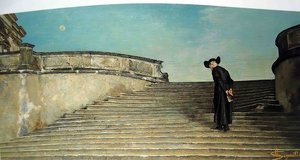
A moonlit night of mystery unfolds in Giovanni Segantini's post-impressionist masterpiece A messa prima where a woman watches a figure depart, inviting you to explore this ethereal moment through a fine oil reproduction.
Biografija umetnika
Đovani Segantini (1858-1899): Majstor alpskih pejzaža! Istražite njegove impresivne simvolističke i divizionističke slike koje prikazuju lepotu prirode i seoskog života. Jedan od najznačajnijih slikara Alpa.
O slici
A Nocturnal Encounter in Light and Shadow
In the quiet, silvered depths of Giovanni Segantini’s 1885 masterpiece, A messa prima, we are invited into a world where the boundaries between reality and dream begin to dissolve. This post-impressionist gem captures a profound moment of human connection—or perhaps, more poignantly, a moment of departure. At the heart of the composition stands a woman perched upon a staircase, her silhouette marked by an elegant ponytail, gazing downward with an expression that oscillates between longing and resignation. Below her, a figure retreats into the shadows, walking away into the mysteries of the night. The scene is not merely a depiction of a physical space, but an emotional landscape where every brushstroke serves to heighten the sense of intrigue and quiet melancholy that defines this nocturnal encounter.
The atmosphere of the painting is thick with the ethereal glow of a moonlit sky, a technique that Segantini employs to envelop the viewer in a soft, luminous haze. Through his masterful use of light, the artist transforms a simple architectural setting into a stage for symbolic storytelling. The moonlight does more than illuminate the figures; it acts as a celestial witness to the fleeting nature of human presence. As the light touches the edges of the stairs and the distant, shadowy figures in the background, it creates a sense of depth that pulls the observer deeper into the painting’s mystery. This interplay of light and dark—the chiaroscuro of the post-impressionist era—imbues the work with a spiritual weight, suggesting that even in the darkness, there is a profound beauty to be found in the transient moments of our lives.
The Mastery of Post-Impressionist Technique
Segantini’s approach to A messa prima showcases his unique ability to blend the structural precision of his training with the emotive, atmospheric qualities of Symbolism. The technique used here allows for a dreamy, almost otherworldly quality that is characteristic of his most celebrated works. Rather than focusing on harsh outlines, Segantini utilizes subtle transitions of tone to suggest movement and emotion. This soft-focus effect creates a sense of nostalgia, as if we are viewing a memory rather than a live event. For the discerning collector or interior designer, this painting offers a sophisticated textural depth that can anchor a room, providing a focal point that rewards prolonged contemplation.
Beyond its visual allure, the painting serves as a poignant reflection on the passage of time and the fragility of human bonds. The composition is meticulously balanced to guide the eye from the central woman, down the descending steps, and toward the receding figures in the distance, mirroring the very movement of life itself—a constant progression away from what was once close. To possess a high-quality reproduction of this work is to bring a piece of art history into one's personal sanctuary; it is an invitation to reflect on the beauty of the ephemeral and the enduring power of the human spirit. Whether placed in a contemporary gallery setting or a classic study, A messa prima remains a timeless testament to the evocative power of Segantini’s vision.
Pitanja i odgovori
Da li su boje dela „A messa prima”, autor Ђовани Сегантини zasićene ili prigušene?
„A messa prima”, autor Ђовани Сегантини je zabeležen sa Subtle Color zasićenjem.
Koji je format dela "A messa prima"?
„A messa prima”, autor Ђовани Сегантини je u Panoramic formatu. Format opisuje proporcije kompozicije.
Šta "A messa prima" deli sa ostatkom stvaralaštva umetnika Ђовани Сегантини?
„A messa prima“ deli sa ostalim delima umetnika Ђовани Сегантини svoj Post-Impressionism stil i prepoznatljive teme: post-impressionism and symbolism, human connection themes, fleeting nature of time, early career development.
Brze činjenice i kviz o umetnosti
O Ђовани Сегантини

Ђовани Сегантини
1858 - 1899, Аустрија
Biografija umetnika
Живот и рани године Ђовани Сегантинија
Ђовани Сегантини (рођен 15. јануара 1858. у Арку, тада Аустроугарска, умро 10. августа 1899. у Шјави ди Аббемађоре, близу Сондрија, Италија) био је италијански сликар познат по својим великим пасторалним пејзажима Алпа. Његов живот обележила је тешкоћа и коначни уметнички тријумф, кулминирајући у јединственом стилу који је спојио дивизионизам са симболистичком сликарством. Сегантинијева рана младост била је карактерисана сиромаштвом. Његов отац је био путујући трговац, оставивши његову мајку да га одгаја сама. Након мајчине смрти, побегао је из куће и завршио у миланском реформаторијуму. Управо је ту капелан препознао његов уметнички таленат и подстицао његов развој.
Уметнички развој и утицаји
Сегантини се школовао на престижној Академији Брера у Милану, где је упознао угледне личности покрета Скапиљатура. Ова група је заговарала одбацивање уметничких конвенција и прихватање сурове стварности живота. На његов рад значајан утицај су имали Антон Маув и Жан-Франсоа Миле, које му је представио Виторио Грубићи де Драгон, који је постао његов саветник и дилер. Ови уметници нагласили су реализам и приказ руралног живота. Сегантини је усвојио дивизионистички начин сликања, који је укључивао наношење малих тачака или потеза чисте боје једних поред других на платно. Ова техника је имала за циљ да створи оптичко мешање у оку посматрача, производећи живописне и светле ефекте.
Алпски пејзажи и симболистичка визија
Поред дивизионизма, Сегантини је у своје радове укључивао симболистичке елементе, уносећи дубље значење и алегоричне репрезентације живота, смрти и духовности. Његова слика "Капела Сант Антонија" стекла је признање због свог моћног квалитета и била је стечена од стране Друштва за лепе уметности у Милану. Сегантини је најпознатији по приказима Алпа, које је заробио у њихој величини и спокоју. Тежио је да представи не само физичку лепоту већ и духовну суштину ових пејзажа. У каснијим годинама провео је своје последње године у Швајцарској, где је створио нека од својих најзначајнијих дела, укључујући "Мртви срна", дубоко емотивни портрет смрти.
Наслеђе и историјски значај
Сегантинијева фузија дивизионизма и симболизма резултирала је препознатљивим стилом који га је издвојио од његових савременика. Запамћен је као један од најважнијих сликара Алпских пејзажа, успешно преносећи њихову лепоту и духовни значај. Његова иновативна употреба боје и светла утицала је на касније генерације уметника. Данас се Сегантинијева дела излажу у водећим музејима широм света, а његово наслеђе као мајстора сликарства наставља да инспирише љубитеље уметности. Радови попут "Две мајке" (Le due Madri) су снажни прикази материнства и руралног живота, док је "Живот" (La Vita) задивљујући приказ алпске лепоте и људских веза. Слика "Жена на извору" (Donna alla fonte), позната и као Alpenlandschaft mit Frau am Brunnen, је мирна сцена жене поред фонтане у Алпима.
Kratke činjenice o umetniku Ђовани Сегантини
- Artistic Movement Or Style: Симболизам, Дивизионизам
- Artists Who Influenced This Artist:
- Антон Мауве
- Жан-Франсоа Миле
- Date Of Birth: 15. јануар 1858.
- Date Of Death: 10. август 1899.
- Full Name: Ђовани Сегантини
- Nationality: Италијан
- Notable Artworks:
- The Chancel of Sant Antonio
- Lavandaia
- Life (La Vita)
- Place Of Birth: Арко, Аустрија
Ђовани Сегантини
A messa prima
() ·
Sa okvirom: · Ručno oslikano uljanim bojama na platnu od lana
Ukupno