

 Pregledaj u prostoru
 Pošalji
 Podeli
 Detalji o delu
 Vodič
Vodič

 Preuzmi
 Slični predmeti
 Rendgenski snimak
 Automatska prezentacija
 Pitanja i odgovori
 Statistika
Donna che si lava

- 115.0 x 63.0 cm


A vibrant 1954 portrait by Giuseppe Ajmone captures a woman in a colorful bathroom setting with expressive pink and yellow tones, offering a unique opportunity to bring this mid-century Italian masterpiece into your home.
 Pročitaj više
Otkrijte upečatljiva dela Đuzepea Đomonija: pejzaže i poluapstraktne figure pod uticajem Bonara i Pikasa. Istražite njegovo italijansko nasleđe na TopImpressionists.
Umetničko delo prikazano na ovoj stranici zaštićeno je autorskim pravima, što znači da zakonski nismo u mogućnosti da kreiramo niti prodajemo identičnu reprodukciju. Ova zaštita se sprovodi u skladu sa međunarodnim sporazumima kao što su Bernska konvencija i nacionalnim zakonima, uključujući i one koji su definisani u Američki zakon o autorskom pravu – Naslov 17.
Ovaj metod je u potpunosti usklađen sa regulativama o autorskim pravima jer ne podrazumeva kopiranje ili dupliranje zaštićenih umetničkih dela. Umesto toga, reč je o kreativnoj reinterpretaciji – novom slikarskom delu koje je inspirisano originalom, ali nije identično njemu.
Giclee štampa / Umetnički otisak
Giclée štampa ili print na platnu muzejskog kvaliteta uz brzu izradu i raznovrsne opcije završne obrade. ( Kupite ručno oslikano delo Pređi na digitalnu sliku)




P118B дин10

P118H дин10

P118W дин10

P438Z дин10

P508JH дин12

P508YH дин12

P805H дин10

P805Z дин10

P919BZ дин10

P919G дин10

P919XJ дин10

P959ZH дин10

P968JZ дин12

W106C дин8

W218G дин10

W218JH дин8

W218Y дин10

W307PJ дин10

W316G дин10

W316PJ дин8

W316Y дин10

W398PJ дин8

W4111J дин10

W500HY дин15

W500JH дин15

W692G дин12

W849H дин8

W940BG дин15

W953PJ дин8




Standardne dimenzije
po meri
CM
INCH
Izaberite jednu od naših unapred definisanih veličina koje odgovaraju originalnim proporcijama umetničkog dela.
Loading sizes...

širina
visina
Unesite željenu širinu i visinu kako bi se štampa uklopila u vaš ram ili zid. Štampu je moguće samo iseći, ali nikada povećati iznad dimenzija originalne slike, stoga format sa drugačijim proporcijama uzrokuje gubitak dela slike. Pre početka štampe, poslaćemo vam digitalni prikaz radi potvrde. Slika prikazana na ovoj stranici ne predstavlja stvarni isrez — to pokazuje samo digitalni prikaz.
Dostava širom sveta () za 2 nedelje umesto uobičajenih 4/5 nedelja. (6 новембар)

Besplatna ekspresna dostava širom sveta

Visokokvalitetno laneno platno

Potpuno osiguranje transporta

Garancija povraćaja carine i uvoznih dažbina

Garancija vernosti boja

Politika povraćaja u roku od 100 dana (samo u slučaju nedostataka)

Garancija povrata 100% novca

Popust na više proizvoda
 Opcija sa staklom dostupna je samo za dimenzije manje od 110 cm

Donna che si lava
Giclee štampa / Umetnički otisak
Dimenzije reprodukcije
-


Ukupna cena
дин 7339
An Intimate Encounter with Light and Form
In the quiet, private moments of domestic life, there exists a profound beauty that often escapes the hurried gaze of the world. Giuseppe Ajmone, a master of capturing these ephemeral instances, invites us into such a moment with his 1954 masterpiece, Donna che si lava (Woman Washing). The painting presents us with a figure seen from behind, her back turned to the viewer as she engages in a ritual of cleansing. This perspective creates an immediate sense of voyeuristic intimacy, yet it remains deeply respectful, drawing the observer into a private sanctuary rather than intruding upon it. The composition is a delicate dance of light and shadow, where the warmth of pinks and yellows breathes life into the skin, transforming a mundane bathroom setting into a stage of vibrant, chromatic expression.
The technique employed by Ajmone reflects his deep connection to the post-war Italian tradition, blending elements of semi-abstraction with a palpable sense of reality. Influenced by the luminous palettes of Pierre Bonnard and the structural boldness of Picasso, Ajmone utilizes color not merely as a descriptive tool but as an emotional language. The way the light dances across the woman's form suggests a fluid, almost rhythmic movement, where the boundaries between the subject and her environment begin to soften. Scattered throughout the scene, objects such as a delicate cup, a bottle, and various bowls are rendered with a painterly touch that emphasizes texture and light over rigid detail, contributing to a dynamic composition that feels both grounded and dreamlike.
A Legacy of Italian Modernism
To understand the depth of Donna che lava, one must look toward the rich historical tapestry of Ajmone’s career. Emerging from the prestigious Brera Academy under the tutelage of masters like Achille Funi and Carlo Carrà, Ajmone was a central figure in the mid-century Italian art scene. His participation in landmark exhibitions, such as the Manifesto del Realismo and the prestigious Venice Biennale, places this work within a period of intense artistic exploration following World War II. This era was defined by a search for a new visual language—one that could reconcile the weight of tradition with the burgeoning freedom of modern abstraction. In this painting, we see that reconciliation perfectly realized; it is a work that honors the human figure while embracing the expressive potential of color and light.
For the discerning collector or interior designer, this piece offers more than just visual appeal; it provides an emotional anchor for a sophisticated space. The warmth of the palette makes it an ideal centerpiece for rooms designed to evoke tranquility and refinement. Whether placed in a sun-drenched morning room or a moody, contemporary study, the painting’s ability to command attention through subtle nuance ensures it remains a conversation piece for years to come. Owning a reproduction of such a significant work allows one to bring a fragment of Italian modernism into the home, fostering an environment of cultured contemplation and timeless elegance.
Pitanja i odgovori
Koja je tehnika i dimenzija originalnog dela „Donna che si lava”, autor Đuzepe Ajmoone?
Delo "Donna che si lava" je izrađeno u tehnici Oil On Canvas i u svom izvornom obliku ima dimenzije 115 x 63 cm.
Koliko je godina imao/la Đuzepe Ajmoone u vreme nastanka dela "Donna che si lava"?
Đuzepe Ajmoone je kreirao/la "Donna che si lava" u uzrastu od 31 godina. Umetnik je rođen/a 1923, a delo je datirano na 1954. godinu.
Od čega je izrađeno "Donna che si lava" i u kom stilu?
U delu "Donna che si lava", tehnika Oil On Canvas susreće pokret Contemporary Realism.
Srodna umetnička dela


Biografija umetnika
Rano detinjstvo i obrazovanje
Giuseppe Ajmone, čuveni italijanski slikar, rođen je u mestu Carpignano Sesia u Italiji 1923. godine. Svoje umetničko putovanje započeo je preseljenjem u Milano 1941. godine, gde je studirao na prestižnoj Akademiji Brera, pod stručnim vođstvom i mentorstvom velikana poput Achille Funi i Carlo Carrà.Umetnička karijera
Ajmoneova umetnička karijera bila je obeležena značajnim učešćem na brojnim izložbama, uključujući i manifest Manifesto del Realismo (poznat i kao Oltre Guernica) 1946. godine. Njegov talenat nagrađen je na prvoj nacionalnoj izložbi slikarstva u Bellagiju, a vrhunac njegove rane slave stigao je 1950. godine kada je učestvovao na 25. Međunarodnoj izložbi na Venecijanskom bijenalu, nakon čega je 1951. godine dobio prestižnu nagradu Senatore Borletti za mlade italijanske slikare.Međunarodne izložbe i saradnje
Ajmoneovo delo pronašlo je priznanje širom sveta, predstavljeno na prestižnim svetskim scenama, uključujući:- Bijenale San Paolo u Brazilu (1951. i 1959. godine)
- Međunarodno bijenale u Tokiju (1959. godine)
- Pittsburgh International Museum of Art (1955. i 1958. godine)
- izložbe u Kopenhagenu, Dortmundu, Nürnbergu i Buenos Airesu
Značajna dela i stil
Ajmonejeva slikarstva često su prikazivala pejzaže i poluapstraktne figure, prožete dubokim emocijama. Njegov stil bio je prefinjen uticaj poznatih umetnika kao što su Bonnard, Picasso, Braque i Nicolas de Staël. Ipak, ono što najviše definiše Ajmoneovo delo jeste njegova suptilnost, melanholija i intimnost koja privlači posmatrača.Kasniji život i nasleđe
Ajmone se 1982. godine nastanio u Romagnano Sesia (Novara), gde je živeo sve do svoje smrti 2005. godine. Njegovo umetničko nasleđe i dalje se slavi kroz razne izložbe i pažljivu očuvanost njegovih radova koji ostaju svedočanstvo njegove genijalnosti. Pogledajte dela umetnika Giuseppe Ajmone na TopImpressionists:- Giuseppe Ajmone | 10 umetničkih dela
- Giuseppe Ajmone: Nudo alla finestra (Museo del Novecento, Milano, Italija)

Đuzepe Ajmoone
1923 - 2005 , Italija
Povezani članci

Angelo Chiacchio: A Mid-Century American Illustration Master & the Rise of Commercial Art
Explore the captivating world of Angelo Chiacchio, a master of mid-century American illustration. Discover his evolution, signature style, and lasting impact on commercial art & design. Learn about his legacy at the Museum of American Illustration.
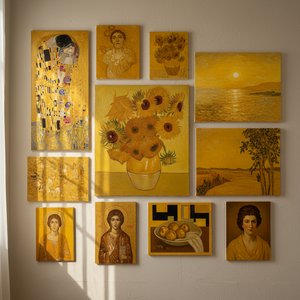
Golden Hues: Top 10 Paintings Dominated by Yellow Ochre |
Explore 10 iconic paintings bathed in golden yellow ochre! From Van Gogh's sunflowers to Monet’s haystacks, discover the stories behind these masterpieces. Find museum-quality art reproductions & elevate your home decor on .
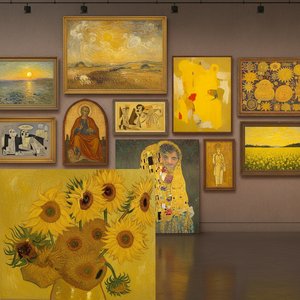
Golden Hues: 10 Masterpieces Dominated by Chrome Yellow | TopImpressionists
Immerse yourself in golden light! Explore 10 famous paintings dominated by 'Chrome Yellow', from Van Gogh’s Sunflowers to Monet's Haystacks. Discover the stories behind these iconic Impressionist & Post-Impressionist masterpieces and find museum-quality art reproductions at TopImpressionists.com.

The Golden Hue: Exploring Symbolism & Emotion in Yellow Art
Explore the rich symbolism & emotional power of yellow in art history! From Van Gogh to Kandinsky, discover how artists used this vibrant hue. Expert analysis & high-quality reproductions at TopImpressionists.

Blush & Brilliance: 10 Iconic Paintings Dominated by Light Pink Tones |
Explore 10 iconic paintings bathed in captivating light pink tones! From Monet's Impressionism to Renoir’s romance, discover the stories behind these blush-hued masterpieces. Find museum-quality art reproductions & decor inspiration at .