

 Pregledaj u prostoru
 Pošalji
 Podeli
 Detalji o delu
 Vodič
Vodič

 Preuzmi
 Slični predmeti
 Rendgenski snimak
 Automatska prezentacija
 Q&A
Q&A Statistika
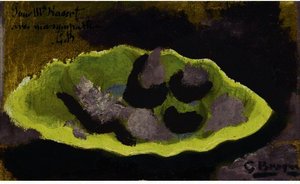
Hubert Schmalix - I’m having a Bad Time


A bleak watercolor by Hubert Schmalix depicting a desolate winter landscape. Explore this unfinished sketch’s realism & impressionistic brushwork – a poignant study in isolation.
Discover Hubert Schmalix's vibrant, expressive paintings! Part of the junge wilde movement, his work explores themes of identity & Berlin art scene. See his impactful art now.
 Pročitaj više
Umetničko delo prikazano na ovoj stranici zaštićeno je autorskim pravima, što znači da zakonski nismo u mogućnosti da kreiramo niti prodajemo identičnu reprodukciju. Ova zaštita se sprovodi u skladu sa međunarodnim sporazumima kao što su Bernska konvencija i nacionalnim zakonima, uključujući i one koji su definisani u Američki zakon o autorskom pravu – Naslov 17.
Ovaj metod je u potpunosti usklađen sa regulativama o autorskim pravima jer ne podrazumeva kopiranje ili dupliranje zaštićenih umetničkih dela. Umesto toga, reč je o kreativnoj reinterpretaciji – novom slikarskom delu koje je inspirisano originalom, ali nije identično njemu.
Giclee štampa / Umetnički otisak
Giclée štampa ili print na platnu muzejskog kvaliteta uz brzu izradu i raznovrsne opcije završne obrade. ( Kupite ručno oslikano delo Pređi na digitalnu sliku)




































Standardne dimenzije
po meri
CM
INCH
Izaberite jednu od naših unapred definisanih veličina koje odgovaraju originalnim proporcijama umetničkog dela.
Loading sizes...

širina
visina
Unesite željenu širinu i visinu kako bi se štampa uklopila u vaš ram ili zid. Štampu je moguće samo iseći, ali nikada povećati iznad dimenzija originalne slike, stoga format sa drugačijim proporcijama uzrokuje gubitak dela slike. Pre početka štampe, poslaćemo vam digitalni prikaz radi potvrde. Slika prikazana na ovoj stranici ne predstavlja stvarni isrez — to pokazuje samo digitalni prikaz.
Dostava širom sveta () za 2 nedelje umesto uobičajenih 4/5 nedelja. (1 новембар)

Besplatna ekspresna dostava širom sveta

Visokokvalitetno laneno platno

Potpuno osiguranje transporta

Garancija povraćaja carine i uvoznih dažbina

Garancija vernosti boja

Politika povraćaja u roku od 100 dana (samo u slučaju nedostataka)

Garancija povrata 100% novca

Popust na više proizvoda
 Opcija sa staklom dostupna je samo za dimenzije manje od 110 cm

Hubert Schmalix - I’m having a Bad Time
Giclee štampa / Umetnički otisak
Dimenzije reprodukcije
-


Ukupna cena
дин 7188
Srodna umetnička dela


Biografija umetnika
The Vibrant Legacy of Hubert Schmalix
Hubert Schmalix emerged as a pivotal figure in the landscape of Austrian art, serving as one of the most influential voices during the electric era of the junge wilde movement. Born in Graz on December 17, 1952, his artistic journey was forged amidst the burgeoning countercultural fervor of the late 1970s. This period was defined by a spirited reaction against the prevailing intellectual detachment of minimalist and conceptual art, seeking instead to reclaim the raw power of the brushstroke. Schmalix’s formative years were deeply rooted in the traditions of Austrian Expressionism, drawing profound inspiration from masters such as Ernst Fuchs and Viktor Mischiek. These early influences instilled in him a lifelong conviction that painting should serve as a visceral instrument for conveying human emotion and lived experience.
The trajectory of Schmalalix’s career was marked by a relentless pursuit of color and gesture. In 1978, he became a central participant in the junge wilde collective, standing alongside contemporaries like Siegfried Anzinger and Herbert Brandl. This movement sought to revitalize the medium through bold, rapid brushwork and a renewed focus on the immediacy of perception. His stylistic development was further refined by his studies at the Academy of Fine Arts Vienna under Maximilian Melcher, and later shaped by the academic rigor of Karl Horst Hödicke. Schmalix’s unique ability to fuse realism with impressionistic techniques allowed him to capture the essence of his subjects—whether they were the luminous, sweeping vistas of the Austrian Alps or intimate figurative studies exploring the complexities of psychological introspection.
A Global Journey and Academic Influence
While his roots remained firmly planted in the European tradition, Schmalix’s artistic horizons expanded far beyond the borders of Austria. His travels to Australia and the Philippines in the early 1980s brought new perspectives to his work, enriching his palette and thematic depth. A significant turning point occurred in 1987 when he relocated to Los Angeles, a move that would redefine his professional life and introduce his expressive style to a much broader, international audience. This transition from the historic art centers of Europe to the sprawling energy of Southern California allowed his work to resonate with a new sense of light and scale.
Beyond the canvas, Schmalix left an indelible mark on the next generation of artists through his dedication to pedagogy. From 1997 to 2006, he shared his profound technical knowledge and philosophical approach to painting while teaching at both the Academy of Fine Arts Vienna and the University of California, Los Angeles (UCLA). His career was punctuated by prestigious recognitions that honored both his creative output and his contributions to the cultural fabric of his homeland, including:
- City of Vienna Prize for Fine Arts (1998)
- Medal of Honor of the State of Styria for Science, Research and Art (2024)
As we reflect on the life of Hubert Schmalix, who passed away in Los Angeles on March 23, 2025, we see an artist who never wavered from his commitment to the palpable energy of paint. His oeuvre remains a testament to the power of color to evoke memory and emotion, ensuring his place as a cornerstone of contemporary expressionism.

Hubert Schmalix
1952 - , Austria
Osnovne informacije
- Full Name: Hubert Schmalix
- Nationality: Austrian
- Date Of Birth: 1952
- Date Of Death: March 23, 2025
- Place Of Birth: Vienna, Austria
- Notable Artworks: ['I’m having a Bad Time']
- Artistic Movement Or Style: Junge Wilde Movement
- Artists Who Influenced This Artist: Karl Horst Hödicke
- Artists Or Movements Influenced By This Artist: Young Wild Ones
Povezani članci

Capturing the Soul: The Most Emotionally Moving Impressionist and Post-Impressionist Masterpieces
Discover the profound emotional depth of Impressionist and Post-Impressionist masterpieces. Explore how legends like Monet, Van Gogh, and Gauguin captured light and soul through evocative landscapes and vibrant brushwork for a timeless connection to art history.
Golden Fields & Sun-Drenched Meadows: Capturing the Soul of Impressionist Landscapes
Immerse yourself in the luminous world of Impressionist landscapes. Discover how masters like Monet and Gauguin captured ephemeral light through plein air painting, and learn to bring the soul of sun-drenched meadows into your home with exquisite, hand-painted oil reproductions.

Beyond the Light: Capturing Raw Emotion and Subjective Vision in Post-Impressionist Landscapes
Explore the profound emotional depth of Post-Impressionist landscapes. Discover how masters like Van Gogh moved beyond light to capture raw human feeling through vibrant color and expressive texture in this expert art history retrospective.

The Beauty of Impermanence: Capturing Decay through Impressionist Eyes
Explore the profound beauty of impermanence through Impressionist and Post-Impressionist eyes. Discover how masters like Monet and Van Gogh captured fleeting light and the poetic essence of nature's transitions in our deep dive into art history and emotional landscapes.

Capturing Light: The Ethereal Beauty and Timeless Legacy of Watercolor Landscapes
Embark on a visual journey through the ethereal beauty of watercolor landscapes. Discover how Impressionist masters captured light and emotion, and learn to bring this timeless, luminous elegance into your home with expert art curation and hand-painted reproductions.