


 Pregledaj u prostoru
 Podeli
 Podeli
 Detalji
 Vodič
Vodič

 Preuzmi sliku
 Slični predmeti
 Rendgenski snimak
 Automatska prezentacija
 Statistika
Old Sailor
 Surrealism
 Modern
 45.0 x 56.0 cm
 Barjeel Art Foundation
A poignant portrait of an aged man capturing a sense of weathered character, this evocative painting by Inji Efflatoun invites you to explore the profound depth of modern Egyptian art through this timeless masterpiece.
A pioneer of modern Egyptian art and a leading feminist activist, Inji Efflatoun captured the resilience of rural life and political struggle in works like The Worker, inviting you to discover her profound visual legacy.
 Pročitaj više
Umetničko delo prikazano na ovoj stranici zaštićeno je autorskim pravima, što znači da zakonski nismo u mogućnosti da kreiramo niti prodajemo identičnu reprodukciju. Ova zaštita se sprovodi u skladu sa međunarodnim sporazumima kao što su Bernska konvencija i nacionalnim zakonima, uključujući i one koji su definisani u Američki zakon o autorskom pravu – Naslov 17.
Kao poštovana i legalna alternativa, nudimo prilagođene, ručno oslikane umetničke radove inspirisane originalom. Naši stručni i profesionalni umetnici pažljivo proučavaju stil, ambijent i umetničku suštinu originala kako bi kreirali novo, unikatno delo koje budi istu emociju – ostajući pritom potpuno autentično stvaranje.
Ovaj metod je u potpunosti usklađen sa regulativama o autorskim pravima jer ne podrazumeva kopiranje ili dupliranje zaštićenih umetničkih dela. Umesto toga, reč je o kreativnoj reinterpretaciji – novom slikarskom delu koje je inspirisano originalom, ali nije identično njemu.
Ručno rađena uljana reprodukcija
Ručno oslikano uljanim bojama na platnu u dimenzijama i okviru po vašem izboru, izrađeno po porudžbini od strane naših umetnika. ( Pređi na prodaju štampanih primeraka Pređi na prodaju digitalnih slika)




P118B дин10

P118H дин10

P118W дин10

P438Z дин10

P508JH дин12

P508YH дин12

P805H дин10

P805Z дин10

P919BZ дин10

P919G дин10

P919XJ дин10

P959ZH дин10

P968JZ дин12

W106C дин8

W218G дин10

W218JH дин8

W218Y дин10

W307PJ дин10

W316G дин10

W316PJ дин8

W316Y дин10

W398PJ дин8

W4111J дин10

W500HY дин15

W500JH дин15

W692G дин12

W849H дин8

W940BG дин15

W953PJ дин8




Standardne dimenzije
po meri
CM
INCH
Izaberite jednu od naših unapred definisanih veličina koje odgovaraju originalnim proporcijama umetničkog dela.
Loading sizes...

širina
visina
Unesite širinu i visinu koja vam je potrebna, kako bi se uklopili u vaš ram ili zid. Pošto je ovo ručno oslikano delo, umetnik može naslikati malo više prostora oko slike ili malo skratiti ivice za dimenzije drugačijeg oblika — izbor je na vama. Pre početka rada, poslaćemo vam digitalni prikaz radi potvrde. Slika prikazana na ovoj stranici ne predstavlja konačan rezultat — samo digitalni prikaz pokazuje stvarnu sliku.
Primeri mogućih izmena: Zamena lica fotografijom kupca; Dodavanje ljubimca (npr. zamena mačke psom); Uključivanje skrivene poruke u pozadini; Promena pejzaža ili elemenata pozadine.
Nakon narudžbine, tim TopImpressionists.com će klijentu putem e-pošte poslati uputstva i dostaviti prikaz predloženog rešenja
Nakon narudžbine, tim TopImpressionists.com će klijentu putem e-pošte poslati uputstva i dostaviti prikaz predloženog rešenja
Svetska isporuka () za 3/4 nedelje umesto uobičajenih 5 nedelja. (24 октобар). Bez kompromisa po pitanju kvaliteta.

Besplatna ekspresna dostava širom sveta

Visokokvalitetno laneno platno

Sveobuhvatno osiguranje transporta

Garancija povraćaja carine i uvoznih dažbina

Garancija vernosti boja i autentičnosti pri reprodukciji

Politika povraćaja u roku od 100 dana (samo u slučaju nedostataka)

Garancija povrata 100% novca

Popust pri većoj količini
 Opcija sa staklom dostupna je samo za dimenzije manje od 110 cm

Old Sailor
Tehnika izrade reprodukcije
Veličina reprodukcije
-


Ukupna cena
дин 27786


Biografija umetnika
A Vision of Resilience: The Life and Art of Inji Efflatoun
In the vibrant and often turbulent landscape of twentieth-century Egyptian art, few figures command as much respect and profound emotional resonance as Inji Efflatoun. A pioneer of modern Egyptian art, her life was a seamless tapestry woven from the threads of creative brilliance and fierce political activism. Born in Cairo, Egypt, into a family with deep intellectual roots, Efflatoun emerged not merely as a painter, but as a leading spokeswoman for the Marxist-progressive-nationalist-feminist movement during the transformative decades of the 1940s and 1950s. Her work serves as a visceral testament to the struggles of her era, capturing the very soul of a nation in flux.
Her artistic journey was deeply informed by her early exposure to diverse social realities. Growing up in Cairo, she navigated environments ranging from the traditional and bourgeois to the radical intellectual circles of the Art and Freedom Group. Under the mentorship of figures like Kamel El Telmissany, she developed a foundation that allowed her to bridge the gap between aesthetic innovation and social commentary. Her canvases often act as windows into everyday Egyptian life, utilizing earthy tones and intricate patterns to evoke a sense of heritage and connection to the land.
The Canvas as Witness: Themes and Technique
Efflatoun’s oeuvre is characterized by its ability to transcend mere depiction, moving into the realm of the symbolic and the haunting. Her technique often merged the raw, energetic spirit of expressionism with a stark, skeletal minimalism. This approach is perhaps most powerfully realized in her later works, where she stripped away the unnecessary to focus on the essential agony of human existence. In masterpieces such as Workers, one encounters a harrowing scene of figures suspended against bare trees—a tableau that captures the heavy cost of political and social upheaval with a rhythmic yet unsettling movement.
Her subject matter frequently turned toward the dignity of labor and the resilience of the common person. In works like The Worker, she employed an impressionistic style and warm tones to capture the essence of rural labor. Yet, this warmth was often juxtaposed against the darker realities of her lived experience. The following elements define much of her visual language:
- Social Realism: A profound commitment to depicting the struggles of the working class and the impact of political shifts on the populace.
- Symbolic Landscapes: The use of skeletal trees, desolate landscapes, and stark silhouettes to mirror internal and national desolation.
- Textural Depth: An exploration of historical textures and the use of negative space to create a sense of profound depth and emotional gravity.
Artistry Amidst Adversity
The most defining period of Efflatoun’s life, and perhaps the most poignant for her artistic development, was her time in prison. Imprisoned by the Nasserite regime between 1959 and 1963 due to her communist ties, she found herself in a position where her art became a tool for documenting the unrenewable. This period of incarceration produced works that are often considered the highlight of her oeuvre, serving as both a documentary record of the oppression faced by political opponents and a secret window into the reality of women’s prisons.
These paintings from her imprisonment possess an extraordinary intensity, shedding light on a hidden reality through a lens of raw honesty. Her ability to transform the trauma of confinement into profound visual testimony solidified her historical significance. She did not merely paint the world she saw; she painted the weight of existence itself, ensuring that the sacrifices and the resilience of the Egyptian people would be etched into the annals of modern art history.

Inji Efflatoun
1924 - 1989 , Egypt
Brzi pregled
- Artistic Movement Or Style: Modern Egyptian art; Expressionism
- Artists Who Influenced This Artist: ['Kamel El Telmissany']
- Full Name: Inji Efflatoun
- Nationality: Egyptian
- Notable Artworks:
- The Worker
- Workers
- Installation View
- Place Of Birth: Cairo, Egypt
- Date Of Birth: 1924
- Date Of Death: 1989
Srodni članci
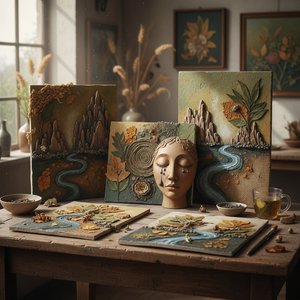
Earthy Tones & Emotional Resonance: Exploring the Vibe of Grounded Artworks
Explore the emotional power of earthy tones in art history! Discover how artists use color to evoke feelings & create grounded spaces. Expert advice on selecting artwork for your home – plus custom reproductions at TopImpressionists.

Sandstone & Sunlight: 10 Masterpieces of Earth-Toned Art |
Journey through 10 iconic paintings bathed in 'sand' tones – from Van Gogh to Monet. Explore the stories, techniques & warm palettes of these timeless masterpieces. Find museum-quality art reproductions at and bring classic beauty home.

Earthy Hues & Masterpieces: Top 10 Paintings Dominated by Clay Tones |
Explore 10 iconic paintings dominated by rich clay tones – from Rembrandt's warmth to Van Gogh’s earthy landscapes. Discover art history, techniques & find museum-quality reproductions at . Explore the full collection online!

Earthy Hues & Masterpieces: Top 10 Paintings with 'Mushroom' Tones |
Explore 10 iconic paintings with captivating 'mushroom' tones! Discover Van Gogh, Monet & Rembrandt’s masterpieces—earthy palettes, rich history & artistic techniques. Find museum-quality art reproductions and curated decor ideas at

Raw Umber's Majesty: 10 Paintings That Define Earth Tones |
Explore 10 iconic paintings where raw umber reigns supreme! Discover Rembrandt, Caravaggio & more – masters of earth tones and chiaroscuro. Find museum-quality art reproductions & elevate your home decor with .