

 Pregledaj u prostoru
 Podeli
 Podeli
 Detalji
 Vodič
Vodič

 Preuzmi sliku
 Slični predmeti
 Rendgenski snimak
 Automatska prezentacija
 Statistika
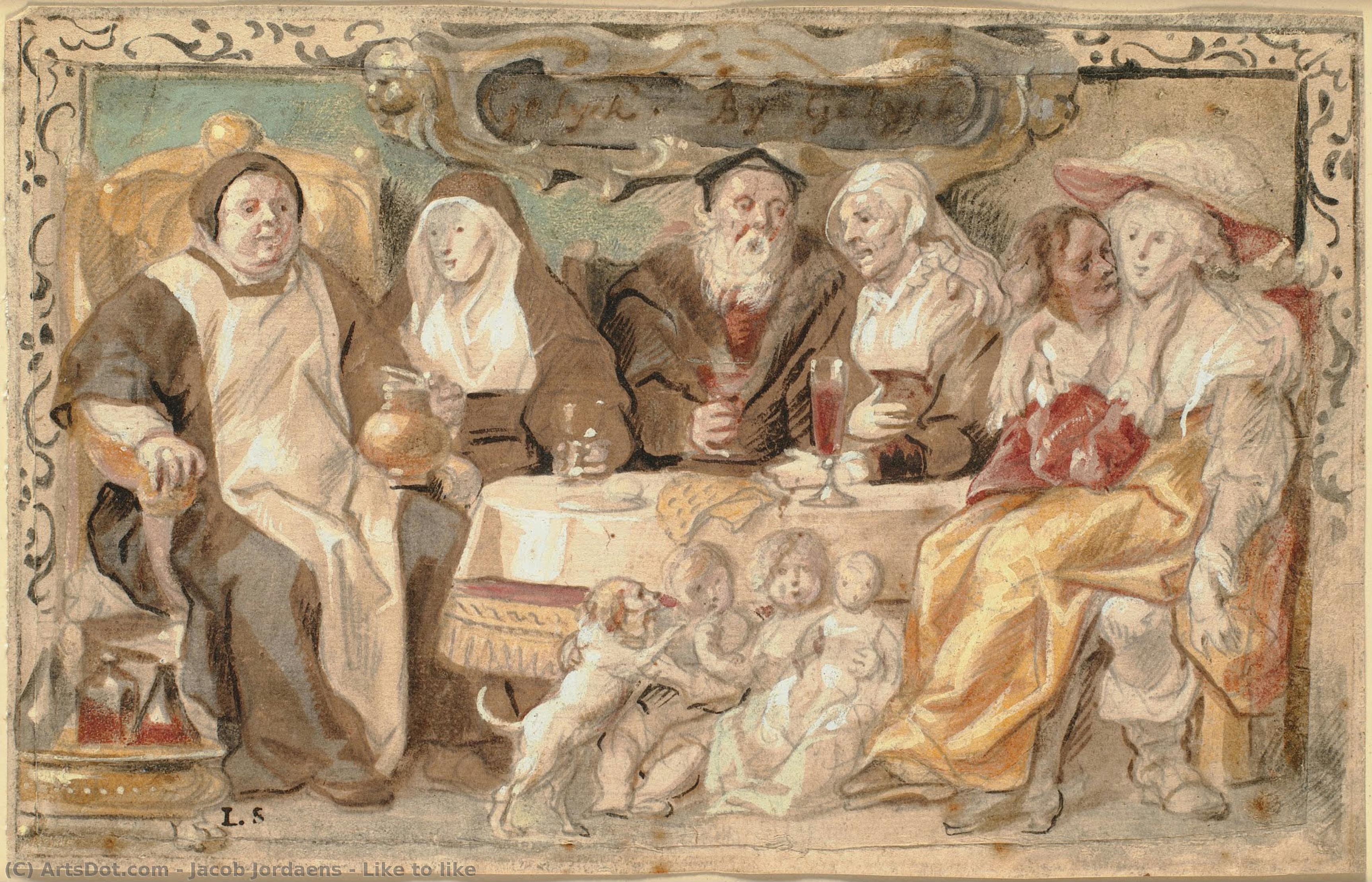
Like to like
 Oil On Canvas
- WallArt
- Baroque
 1645
1645- Renaissance
 21.0 x 13.0 cm
 Nacionalna galerija Danske
Jacob Jordaens’ ‘Like to Like’ captures a vibrant 17th-century Dutch proverb scene with richly detailed figures and a bustling dining table. This Baroque masterpiece celebrates everyday life, offering a timeless depiction of human connection and social order.
 Pročitaj više
Otkrijte Jakoba Jordansa (1593-1678), flamanski barokni majstor poznat po dinamičnim kompozicijama i realističkim prikazima svakodnevnog života. Istražite njegove živopisne slike, uključujući "Pijani kralj", i njegov uticaj na umetnike poput Jana Stena.
Giclee štampa / Umetnički otisak
Giclée štampa ili print na platnu muzejskog kvaliteta uz brzu izradu i raznovrsne opcije završne obrade. ( Naručite ručno oslikano reprodukciju Pređi na prodaju digitalnih slika)




P118B $10

P118H $10

P118W $10

P438Z $10

P508JH $12

P508YH $12

P805H $10

P805Z $10

P919BZ $10

P919G $10

P919XJ $10

P959ZH $10

P968JZ $12

W106C $8

W218G $10

W218JH $8

W218Y $10

W307PJ $10

W316G $10

W316PJ $8

W316Y $10

W398PJ $8

W4111J $10

W500HY $15

W500JH $15

W692G $12

W849H $8

W940BG $15

W953PJ $8




Standardne dimenzije
po meri
CM
INCH
Izaberite jednu od naših unapred definisanih veličina koje odgovaraju originalnim proporcijama umetničkog dela.
Loading sizes...

širina
visina
Možete uneti sopstvene dimenzije kako biste umetničko delo prilagodili specifičnom okviru ili prostoru. Ako odabrani format ne odgovara proporcijama originalne slike, mi ćemo ili iscrtati deo dela ili proširiti sliku pomoću ogledane ivice ili jednobojnog popunjavanja. Digitalni prikaz će vam biti poslat na odobrenje pre početka proizvodnje.
Imajte na umu da pregled na ekranu ne odražava stvarno iscrtavanje ili proširivanje. Samo će prikaz (mockup) precizno pokazati finalnu kompoziciju.
Iako su prilagođene dimenzije dostupne, preporučujemo da odaberete dimenziju sa unapred definisane liste kako biste očuvali originalne proporcije.
Dostava širom sveta () za 2 nedelje umesto uobičajenih 4/5 nedelja. (26 септембар)

Besplatna ekspresna dostava širom sveta

Visokokvalitetno laneno platno

Sveobuhvatno osiguranje transporta

Garancija povraćaja carine i uvoznih dažbina

Garancija vernosti boja i autentičnosti pri reprodukciji

Politika povraćaja u roku od 100 dana (samo u slučaju nedostataka)

Garancija povrata 100% novca

Popust pri većoj količini
 Opcija sa staklom dostupna je samo za dimenzije manje od 110 cm

Like to like
Giclee štampa / Umetnički otisak
Veličina reprodukcije
-


Ukupna cena
$ 69
A Window into Flemish Wisdom: Jordaens’ “Like to Like”
Jacob Jordaens' "Like to Like," painted in 1645, is more than just a group portrait; it’s a meticulously crafted visual sermon, a testament to the enduring power of proverb and social commentary within the vibrant world of Flemish Baroque art. Executed during a period when artists like Bosch and Bruegel had established the tradition of illustrating moral lessons through captivating scenes, Jordaens continues this legacy with remarkable clarity and detail. This particular work, measuring 21 x 13 cm, offers a poignant glimpse into the lives and values of a prosperous Antwerp family, inviting viewers to contemplate their own place within the social order.
- Subject Matter: The painting depicts a gathering around a richly appointed dining table, populated by a diverse cast of characters – men, women, and children – each embodying a specific facet of societal expectation.
- Composition: Jordaens’ masterful composition utilizes theatrical staging, with the figures arranged as if on a stage, their faces turned towards the viewer, drawing us directly into the scene.
- Details: The inclusion of wine glasses, cups, and bowls adds to the sense of conviviality and abundance, while the presence of a boy and girl further emphasizes the theme of familial bonds and generational continuity.
The Language of Proverbs and Symbolism
At its core, “Like to Like” is an illustration of a fundamental proverb: "Stick with one’s own class." This message is powerfully conveyed through the carefully constructed groupings within the painting. Four distinct couples represent this principle – a friar and nun, an elderly married couple, young lovers, and a simple family – each pair visually reinforcing the idea of maintaining social standing and adhering to established norms. The artist's didacticism isn’t heavy-handed; rather, it’s subtly woven into the fabric of the scene, inviting contemplation rather than demanding obedience.
Beyond this central theme, the painting is rich in symbolic detail. The vase positioned near the center adds an element of decorative elegance, while the presence of a boy and dog – or girl and doll – speaks to childhood innocence and the importance of nurturing young generations. Even the clothing worn by each figure contributes to the overall narrative, reflecting their respective social roles and status.
A Masterful Exercise in Technique
Jordaens’ skill as a painter is immediately apparent in the meticulous rendering of textures – from the velvet upholstery of the chairs to the folds of the fabrics worn by the figures. His use of light and shadow creates a sense of depth and realism, while his brushwork is both precise and expressive. The painting demonstrates a mastery of *alla prima* technique, applying paint directly to the canvas in broad strokes, creating a vibrant and dynamic effect. This approach, favored by Rubens himself, contributes significantly to the work’s energetic feel.
Emotional Resonance and Lasting Appeal
"Like to Like" transcends its historical context to offer a timeless meditation on social order, family values, and the enduring wisdom of proverbs. Jordaens' ability to capture human emotion – tenderness, affection, contemplation – ensures that this painting continues to resonate with viewers centuries later. This hand-painted reproduction offers an exceptional opportunity to own a piece of art history, bringing the richness and complexity of Flemish Baroque into your home or office.
Biografija umetnika
Flamanski Majstor Života i Obilja: Jakov Jordaens
Rođen u bogatoj antverpskoj porodici 1593. godine, Jakov Jordaens (Jacques Jordaens) izdiže se kao jedan od najznačajnijih i najživljih glasova flamanskog baroka. Za razliku od mnogih svojih savremenika koji su tražili obuku u Italiji, Jordaens je ostao ukorenjen u svojoj domovini Flandriji, razvijajući jedinstven, robustan i zemaljski stil koji slavi užitke i stvarnost svakodnevnog života. Njegov otac, uspešan trgovac lanom, obezbedio mu je udoban život, omogućavajući mu obrazovanje dostojno njegovog društvenog položaja pre nego što je započeo svoj umetnički put pod Adamom van Noortom – koji je takođe bio majstor Peter Paula Rubensa. Ova formativna obuka usadila je Jordaensu temeljnu tehniku i oštar osećaj za kompoziciju, ali se on brzo odvojio kako bi utabao sopstveni put. Godine 1616., učvršćujući svoju vezu sa etabliranim antverpskim umetničkim svetom, oženio je ćerku Van Noorta, Katarinu.Slikar Seljačkih Gozbi i Barokne Velikolepnosti
Jordaensov umetnički opus bio je izuzetno raznolik, obuhvatajući religijske priče, mitološke scene, alegorijske kompozicije, žanr slike pune života, pa čak i portrete. Ipak, možda ga najviše pamte po bujnim prikazima seljačkih festivala i taverni – delima koja zrače opipljivom energijom i neobuzdanom radošću u zemaljskim užicima. Slike poput *Kralj pije* (poznata i kao Gozba Kralja Pasulja) primer su ovog karakterističnog stila: prenatrpane kompozicije ispunjene snažnim figurama koje se upuštaju u živahne gozbe, prikazane toplim, sjajnim bojama i dramatičnim chiaroscuro-om. Ove scene nisu bile samo proslave veselja; često su bile prožete suptilnim moralizatorskim nijansama, odražavajući složen odnos između uživanja i uzdržanosti koji je bio prisutan u društvu 17. veka. Ipak, Jordaens je bio jednako sposoban da se uhvati grandioznijih, formalnijih narudžbina. Njegovo učešće u dekorisanju palate Huis ten Bosch blizu Haga – zajedno sa saradnjom sa Rubensom – pokazalo je njegovu sposobnost stvaranja monumentalnih alegorijskih dela koja su besprekorno integrisala slikarstvo i arhitekturu.Uticaji i Jedinstveni Umetnički Glas
Iako Jordaens nikada nije putovao u Italiju, duboko su ga inspirisali italijanski majstori poput Đakopa Basana, Paola Veronezea i Karavadža – umetnika čiji rad je stigao do Flandrije kroz gravure i slike koje su doneli drugi umetnici. Uticaj Karavadža je posebno očigledan u njegovoj dramatičnoj upotrebi svetlosti i senke, tehnici poznatoj kao tenebrism, koja pojačava emocionalni intenzitet njegovih scena. Međutim, Jordaens nije jednostavno imitirao ove uticaje; on ih je sintetisao sa sopstvenom flamanskom osetljivošću, stvarajući stil koji je bio jedinstven za njega. Razlikovao se od Rubensa i Van Dijka po svojoj preferenciji realizma u odnosu na idealizam, prihvatajući direktniji i neprerađeni pristup prikazivanju ljudskog oblika. Njegove figure su često supstancijalne, čak i gojazne, sa licima rumenim od zdravlja i vitalnosti. Ova posvećenost naturalizmu, u kombinaciji sa njegovim majstorstvom boja i kompozicije, izdvojila ga je iz redova savremenika i uspostavila kao vodeću figuru flamanskog baroknog slikarstva.Nasleđe i Trajni Uticaj
Tokom svoje duge i plodonosne karijere, Jordaens je obučio brojne učenike – petnaest ih je zvanično zabeležila Udruženje Svetog Luke između 1621. i 1667. godine – osiguravajući kontinuitet njegovog umetničkog nasleđa. Njegov uticaj se može videti u radu kasnijih umetnika poput Jana Stena, koji je delio njegovu sklonost prikazivanju živopisnih žanr scena. Pored svog direktnog uticaja na druge slikare, Jordaensove klasično inspirisane seljačke teme imale su trajan efekat na umetnički svet, osporavajući tradicionalne hijerarhije i slaveći dostojanstvo svakodnevnog života. Čak i danas, njegove slike nastavljaju da očaravaju publiku svojom energijom, vitalnošću i iskrenim prikazom ljudskog iskustva. Njegova sposobnost kombinovanja realizma sa alegorijom, senzualnosti sa moralom i veličine sa intimnošću čini ga jednim od najupečatljivijih i trajnijih likova baroknog perioda. Otkrijte više Jordaensovih remek-dela i istražite bogato umetničko okruženje barokne ere kroz resurse dostupne na mreži, uključujući detaljne baze podataka njegovih radova i uvide u njegov život i umetnost.
Јакоб Јорданс
1593 - 1678 , Belgijum
Brzi pregled
- Artistic Movement Or Style: Barok
- Artists Or Movements Influenced By This Artist: ['Jan Steen']
- Artists Who Influenced This Artist:
- Jacopo Bassano
- Paolo Veronese
- Caravaggio
- Date Of Birth: 19. maj 1593.
- Date Of Death: 1678.
- Full Name: Jacob Jordaens
- Nationality: Flamanski
- Notable Artworks:
- Adoracija pastira
- Argus i Merkuri
- Place Of Birth: Antwerp, Belgija
Srodni članci

Golden Light & Dutch Skies: The Timeless Magic of Dutch Golden Age Landscapes
Discover the breathtaking beauty of Dutch Golden Age landscapes. Explore the mastery of light, chiaroscuro, and 17th-century realism through an expert art history lens, celebrating the enduring legacy of the Dutch Masters for discerning collectors and art lovers.

Mastering Light & Shadow: A Journey Through the Dutch Golden Age's Luminous Legacy
Embark on a cultural journey through the Dutch Golden Age. Explore the masterful interplay of light and shadow in 17th-century masterpieces, from Rembrandt to Vermeer, and discover how this era of profound realism continues to inspire fine art collectors today.
Istražite umetnička dela organizovana prema temama, stilovima i karakteristikama.


