


 Pregledaj u prostoru
 Pošalji
 Podeli
 Detalji o delu
 Vodič
Vodič

 Preuzmi
 Slični predmeti
 Rendgenski snimak
 Automatska prezentacija
 Q&A
Q&A Statistika
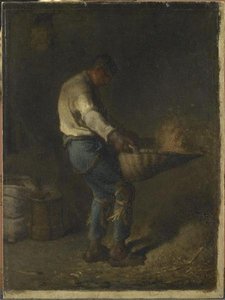
La lessiveuse


Discover 'La Lessiveuse' by Jean-François Millet! A poignant Realist masterpiece depicting a washerwoman in rural France, capturing daily life with remarkable detail. Explore this iconic work at the Louvre.
 Pročitaj više
Žan-Fransoa Mije je bio francuski slikar i osnivač Barbizonske škole, poznat po snažnim prikazima seoskog života i rada. Njegova dela, poput 'Berbača' i 'Angelusa', simbolizuju dostojanstvo seljaka i uticala su na impresionizam i realizam.
Giclee štampa / Umetnički otisak
Giclée štampa ili print na platnu muzejskog kvaliteta uz brzu izradu i raznovrsne opcije završne obrade. ( Kupite ručno oslikano delo Pređi na digitalnu sliku)




P118B дин10

P118H дин10

P118W дин10

P438Z дин10

P508JH дин12

P508YH дин12

P805H дин10

P805Z дин10

P919BZ дин10

P919G дин10

P919XJ дин10

P959ZH дин10

P968JZ дин12

W106C дин8

W218G дин10

W218JH дин8

W218Y дин10

W307PJ дин10

W316G дин10

W316PJ дин8

W316Y дин10

W398PJ дин8

W4111J дин10

W500HY дин15

W500JH дин15

W692G дин12

W849H дин8

W940BG дин15

W953PJ дин8




Standardne dimenzije
po meri
CM
INCH
Izaberite jednu od naših unapred definisanih veličina koje odgovaraju originalnim proporcijama umetničkog dela.
Loading sizes...

širina
visina
Unesite željenu širinu i visinu kako bi se štampa uklopila u vaš ram ili zid. Štampu je moguće samo iseći, ali nikada povećati iznad dimenzija originalne slike, stoga format sa drugačijim proporcijama uzrokuje gubitak dela slike. Pre početka štampe, poslaćemo vam digitalni prikaz radi potvrde. Slika prikazana na ovoj stranici ne predstavlja stvarni isrez — to pokazuje samo digitalni prikaz.
Dostava širom sveta () za 2 nedelje umesto uobičajenih 4/5 nedelja. (30 октобар)

Besplatna ekspresna dostava širom sveta

Visokokvalitetno laneno platno

Potpuno osiguranje transporta

Garancija povraćaja carine i uvoznih dažbina

Garancija vernosti boja

Politika povraćaja u roku od 100 dana (samo u slučaju nedostataka)

Garancija povrata 100% novca

Popust na više proizvoda
 Opcija sa staklom dostupna je samo za dimenzije manje od 110 cm

La lessiveuse
Giclee štampa / Umetnički otisak
Dimenzije reprodukcije
-


Ukupna cena
дин 7171
La Lessiveuse: A Window into Rural Life – Jean-François Millet’s Masterpiece
Jean-François Millet's "La Lessiveuse" (The Washerwoman) is more than just a depiction of a woman at work; it’s a profound meditation on the dignity and hardship of rural life in 19th-century France. Painted in 1849, this iconic scene captures a moment of quiet intensity within a humble kitchen, offering viewers an intimate glimpse into the daily existence of a peasant family. The painting's enduring power lies not just in its subject matter but also in Millet’s masterful Realist technique and his ability to imbue ordinary figures with extraordinary significance.
The composition itself is remarkably simple yet profoundly effective. The woman, her back to the viewer, dominates the foreground, meticulously pouring water into a large barrel – likely for washing clothes. Her posture, the slight curve of her spine, and the way she holds herself speak volumes about years of physical labor. The surrounding details—the worn wooden chair, the flickering fireplace casting a warm glow, the carefully arranged bottles and bowl—create a believable domestic setting, transporting us directly into this woman’s world.
Realism and the Barbizon School
Millet was a key figure in the Barbizon school of painting, a movement that rejected the idealized subjects favored by the established Salon. Instead, the Barbizon artists sought to depict rural life as it truly was – with its hardships, its beauty, and its inherent dignity. Millet’s work is characterized by its meticulous observation of detail, his use of earthy tones, and his commitment to portraying ordinary people without sentimentality or judgment. He wasn't interested in glorifying peasant life; he wanted to show it as it *was*, a testament to the resilience and strength of those who worked the land.
The painting’s realism extends beyond mere representation. Millet employed a technique of layering thin glazes of oil paint, building up color gradually to achieve a remarkable sense of texture and depth. The rough surface of the barrel, the worn fabric of the woman's apron, and the flickering flames in the fireplace are all rendered with astonishing accuracy, contributing to the painting’s palpable sense of authenticity.
Symbolism and Emotional Impact
“La Lessiveuse” is rich in symbolic meaning. The act of washing clothes itself can be interpreted as a metaphor for purification – both physical and spiritual. The woman's solitary activity suggests a quiet contemplation, a moment of respite from the relentless demands of daily life. The warm light of the fireplace offers a sense of comfort and security, while the cool tones of the barrel and water evoke a feeling of hard work and perseverance.
Millet’s ability to capture such profound emotion in a seemingly simple scene is what makes “La Lessiveuse” so enduringly powerful. It's a painting that invites us to reflect on themes of labor, dignity, and the human condition – themes that remain relevant today. The painting’s impact resonates with viewers because it speaks to something fundamental about our shared humanity.
Provenance and Significance
Originally created in 1849, “La Lessiveuse” was acquired by the Louvre Museum in 1902. It remains a central work within the museum’s collection of French Realist paintings, demonstrating Millet's pivotal role in shaping the course of art history. Its presence in the Louvre underscores its artistic merit and historical importance, offering a tangible connection to one of France’s most celebrated artists.
Pitanja i odgovori
Koju temu i atmosferu spaja „La lessiveuse”, autor Žan Fransoa Mile?
„La lessiveuse”, autor Žan Fransoa Mile prikazuje rural life, domestic scene, basket weaving, fireplace interior, laborer woman, agricultural tradition, barbizon school, millet painting, u Earthy raspoloženju. Motiv i atmosfera zajedno dočaravaju delo.
Pod kojim drugim imenima ili pseudonimima je poznat/a Žan Fransoa Mile?
Ostala imena zabeležena za Žan Fransoa Mile, autora dela "La lessiveuse", uključuju Žan-Fransoa Mile, Žan Fransoa Miler, Žan Fransoa Žanovič Mile.
Da li je "La lessiveuse" poznato delo Contemporary Realism pokreta?
„La lessiveuse“ je zabeležen/a kao Recognized među delima Contemporary Realism pokreta u katalogu.




Biografija umetnika
Život ukorenjen u zemlji: Svet Žana Fransoa Mijea
Žan Fransoa Mije, čije se ime nerazdvojno veže za dostojanstvo ruralnog života i procvat pokreta realizma u 19. veku, rođen je ne u umetničkom luksuzu, već u svetu koji će kasnije s ljubavlju i vernošću večno zabeležiti na platnu. Četvrtog oktobra 1814. godine dočekan je u Gruši, malom normandijskom selu urasnutom u tradiciji poljoprivrede. Ta sredina nije bila samo pozadina njegovog života; ona *je* bila njegov život, oblikujući njegov pogled i prožimajući njegovu umetnost autentičnošću koja je duboko odjeknula u društvu koje se ubrzano menjalo. Njegovi roditelji, Žan-Lujs-Nikola i Aime-Enrijet-Adelaid Enri Mije, bili su sami poljoprivrednici, uvodeći mladog Žana Fransoa u duboku povezanost sa zemljom i njenim radnicima. Rano obrazovanje nije dolazilo samo iz formalnog školovanja – olakšanog od strane lokalnih sveštenika koji su prepoznali njegov intelektualni potencijal – već i iz ritma poljskih radova: setve, žetve, mlacenja, zadaci koji će kasnije postati središnji motivi u njegovim slikama. To intimo znanje nije bilo samo posmatračko; ono je bilo iskustveno, visceralno razumevanje poteškoća i otpornosti.Od akademskih ambicija do ruralnog otkrića
Mijeova umetnička priča počela je formalnim obrazovanjem, prvo pod mentorstvom portretiste Bona Dimuela u Šerburgu, a zatim sa Toflom Lanjlo de Ševrevilom, učenikom Barona Groa. Godine 1837. uputio se u Pariz i upisao prestižnu školu le Bel arts, gde je učio pod Paulom Delarošem. Međutim, akademska očekivanja Salona su ga ugušila. Prvi uspesi bili su praćeni odbijanjima, a Mije se suočio sa umetničkim razočarenjem. Prethodnica je nastupila u 1840-im godinama, obeležena ličnom tragedijom – gubitkom supruge Polin Viržini Ono – i rastućom nezadovoljnošću prema preovlađujućim romantiziranim prikazima seoskog života. Počeo je da odbacuje idealizovane pastoralne scene, nastojeći umesto toga da portretira ruralni egzistenciju sa nepopravljivom iskrenošću. Ta promena je dodatno učvršćena njegovom povezanošću sa umetnicima poput Konstanta Trojona, Narsisa Diaza, Šarla Žaka i Teodora Rusoa, koji su činili jezgro škole Barbizon. Ovi slikari delili su posvećenost slikanju na otvorenom – radeći direktno iz prirode – i odbacivanje akademske lažnosti. Mijeova preseljenje u Barbizon 1849. godine označila je odlučan prekid sa pariških konvencija i prihvaćanje njegove umetničke sudbine, duboko ukorenjene u pejzaže i živote koji ga okružuju.Poetika rada: Tematika i tehnike
Mijeovo stvaralaštvo karakteriše duboka empatija prema radničkoj klasi, posebno seljačkim farmerima. On nije samo prikazivao njihov trud; on ga je podigao na nivo dostojanstva i duhovne važnosti koji se ranije retko viđao u umetnosti. Njegove slike nisu sentimentali idealizacije, već iskreni portreti poteškoća, otpornosti i tihe posvećenosti. Gleaners (1857), možda jedna od njegovih najpoznatijih dela, oličuje ovaj pristup. Tri žene prikazane kako skupljaju preostale zitarice nakon žetve nisu romantične figure; one su radnice, savijene pod teretom rada, ali poseduju tiho dostojanstvo koje zahteva poštovanje. The Angelus (1850-1861), još jedno remek-delo, hvata trenutak duboke duhovnosti – bračni par seljaka koji se zaustavlja na molitvi u zalasku sunca – pretvarajući svakodnevnu radnju u nešto sveto. The Sower (1850) je svesrdno prepoznatljiva slika, koja predstavlja cikličku prirodu poljoprivrednog rada i čovekovu vezu sa zemljom. Tehnički, Mije se inspirisao holandskim majstorima, posebno njihovom maestralnom upotrebom svetla i senke, kao i klasičnom skulpturom, što je vidljivo u monumentalnosti njegovih figura. Koristio je ograničenu paletu boja, fokusirajući se na zemljanim tonovima koji su odražavali boje polja, i gradio slojeve boje kako bi stvorio osećaj teksture i dubine.Trajno nasleđe: Mijeov uticaj i istorijski značaj
Žan Fransoa Mije umro je u Barbizonu 20. januara 1875. godine, ostavivši iza sebe delo koje je duboko uticalo na tok moderne umetnosti. On je igrao ključnu ulogu u uspostavljanju realizma kao dominantne sile u slikarstvu, izazivajući konvencije akademske umetnosti i otvarajući put budućim pokretima poput impresionizma i socijalnog realizma. Njegova posvećenost svakodnevnom životu i društvenim pitanjima rezonirala je sa umetnicima koji su težili da portretuju svet oko sebe iskreno i autentično. Njegov uticaj se protezao izvan slikarstva; njegove slike postale su simboli ruralne vrline i radničke solidarnosti, inspirisajući pisce, pesnike i političke mislioce. Umetnici poput Koree Benita Rebolleda nastavili su da istražuju teme ruralnog života i socijalne pravde, direktno pod uticajem Mijeovog primera. Danas, Mijeove slike nastavljaju da fasciniraju publiku svojom večnom lepotom, emotivnom dubinom i trajnim porukom ljudskog dostojanstva. Njegovo delo služi kao snažna opomena da se čak i u suočavanju sa poteškom može naći milost, otpornost i duboko duhovno značenje u najjednostavnijim životima.Glavna dela
- Gleaners (1857): Pojan prikaz žena koje skupljaju preostale zitarice.
- The Angelus (1850-1861): Simbol ruralne pobožnosti i trenutak tihe posvećenosti.
- The Sower (1850): Ikonična slika koja predstavlja ciklus poljoprivrednog rada.
- Man with a Hoe: Snažna reprezentacija fizičkog truda i ljudske izdržljivosti.
- Harvesters Resting: Prikaz trenutka odmora usred napornog rada.
- Woman Baking Bread: Prikaz kućnog rada prožetog dostojanstvom.

Žan Fransoa Mile
1814 - 1875 , Француска
Osnovne informacije
- Datum Rođenja: 4. oktobar 1814.
- Datum Smrti: 20. januar 1875.
- Mesto Rođenja: Gruši, Francuska
- Nacionalnost: Francuski
- Pokreti Pod Uticajem:
- Impresionizam
- Socijalni realizam
- Puno Ime: Žan-Fransoa Mije
- Umetnički Pokret: Realizam, Barbizon škola
- Uticajni Umetnici:
- Holandski majstori
- Pol Delaroš
- Značajna Dela:
- Sakupljači
- Angelus
- Sejalac
- Čovek sa motikom
Povezani članci

The Unvarnished Truth: A Cultural Journey Through the Soul of American Realism
Explore the profound beauty of American Realism. From the Ashcan School's urban grit to intimate portraits, discover how artists captured the authentic soul of a nation through unvarnished truth and masterful observation.

The Raw Truth: A Definitive Guide to the Power and Legacy of Social Realism Art
Explore the profound impact of Social Realism. Discover how masters like Courbet rejected idealism to capture the raw, socio-political truths of the working class through powerful, unvarnished art history and enduring visual critique.
Istražite umetnička dela organizovana prema temama, stilovima i karakteristikama.


