


 Pregledaj u prostoru
 Podeli
 Podeli
 Detalji
 Vodič
Vodič

 Preuzmi sliku
 Slični predmeti
 Rendgenski snimak
 Automatska prezentacija
 Statistika
Fruit Vendor


Jerome Myers (1867-1940): umetnik Ashcan škole poznat po empatičkim prikazima NYC života i imigrantskih zajednica. Organizator Armory Showa 1913., oslikan u crno-belu kombinaciju.
 Pročitaj više
Džerom Majers (1867-1940): Umetnik Školu pepela (Ashcan School) poznat po empatičnim prikazima života NYC, imigrantskih zajednica i urbanog realizma. Ključni organizator Armory sajma iz 1913. godine.
Kupite digitalnu sliku visoke rezolucije i poboljšanog kvaliteta, koja je znatno superiornija od onoga što vidite u online prikazu.
Svaka datoteka je pedantno pripremljena od strane naših stručnjaka koristeći napredne alate i profesionalnu ručnu retušu. Osiguravamo da svaka slika ima izuzetnu oštrinu, preciznu reprodukciju boja i fine detalje.
Konačna datoteka se dostavlja putem e-pošte u roku od 72 sata, optimizovana za neposrednu upotrebu u profesionalnim, izdavačkim i štamparskim okruženjima. To je isti kvalitet kojem veruju vrhunski studiji dizajna, izdavači i galerije.
Digitalna slika
Preuzmite datoteku visoke rezolucije za ličnu upotrebu, štampanje i kreativne projekte. ( Pređi na prodaju štampanih primeraka Naručite ručno oslikano reprodukciju)
Uključeno uz svaku porudžbinu digitalne slike
Ekspertska digitalna isporuka, zagarantovana
Kada odaberete TopImpressionists.com, ne dobijate samo sliku – vi primate profesionalno unapređeno digitalno umetničko delo, izrađeno sa najvećom preciznošću i uz garanciju zadovoljstva. Evo svega što automatski dolazi uz vašu porudžbinu:

Brza dostava putem e-pošte
Vaša digitalna slika visoke rezolucije biće vam poslata putem e-pošte u roku od 72 sata od poručivanja – spremna za trenutnu upotrebu.

Digitalna datoteka unapređena veštačkom inteligencijom
Vaše umetničko delo je profesionalno optimizovano primenom naprednih AI alata i ručne obrade, čime se osiguravaju maksimalni detalji, oštrina i preciznost boja.

Besplatna doživotna ponovna isporuka
Slučajno ste obrisali ili izgubili svoju datoteku? Ne brinite – poslaćemo vam je ponovo u bilo kom trenutku, potpuno besplatno.

Bez troškova uvoza – zauvek
Uživajte u svojim umetničkim delima trenutno, bez carine, akciza ili troškova dostave – digitalni download je uvek bez poreza.

Garancija preciznosti boja
Uz pomoć profesionalnih alata i upravljanja bojama, osiguravamo da vaša digitalna slika što vernije odražava originalne boje.

Garancija zadovoljstva u roku od 100 dana
Ako niste zadovoljni svojom digitalnom slikom, izvršićemo reviziju ili ćemo vam vratiti 100% novca u roku od 100 dana – bez ikakvih pitanja.

100% garancija povrata novca
Niste zadovoljni? Dobijte puni povraćaj novca u roku od 100 dana od prijema digitalne datoteke – bez suvišnih pitanja.

Popusti na velike porudžbine
Kupite 3 slike, uštedite 10% - Kupite 5 slika, uštedite 15% - Kupite 10+ slika, uštedite 20%. Odlično za kreativne projekte, galerije i agencije.
Jerome Myers: A Visionary of Urban Realism
Jerome Myers (1867-1940) stands as a pivotal figure in American art history, particularly within the Ashcan School movement. Born in Petersburg, Virginia, his life’s journey—marked by itinerant experiences shaped by his father's absences—fueled an artistic sensibility deeply attuned to the struggles and resilience of marginalized communities. This formative upbringing instilled within him a profound empathy for the everyday realities of ordinary people, a perspective that would permeate his prolific output.
Myers’s artistic trajectory began with diverse pursuits – acting and scene painting honed his skills in visual storytelling and dramatic composition—providing invaluable groundwork for his formal training at Cooper Union followed by eight years at the Art Students League under George de Forest Brush. However, it was New York City itself that truly captivated him; specifically, the Lower East Side’s vibrant immigrant neighborhoods became the crucible of his artistic vision.
The Ashcan School and Its Aesthetic
Myers's commitment to portraying urban life with unflinching honesty aligns perfectly with the ethos of the Ashcan School. Rejecting idealized landscapes and academic conventions, these artists sought to capture the gritty textures and emotional complexities of American cities—particularly during the Progressive Era. Myers’s canvases eschewed romantic embellishment in favor of direct observation and meticulous detail, prioritizing capturing the palpable atmosphere of his surroundings.
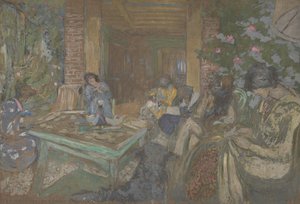
“Fruit Vendor,” painted circa 1920, exemplifies this stylistic approach. The monochrome palette—characteristic of Ashcan School artists—emphasizes form and texture, mirroring the starkness of urban life. Myers’s masterful technique utilizes broad brushstrokes to convey movement and dynamism, capturing the bustling energy of a busy marketplace.
The composition centers on a woman standing beside a fruit cart laden with apples – a deliberate choice reflecting Myers's fascination with immigrant communities and their daily struggles. Surrounding her are figures engaged in conversation and commerce, creating a tableau that speaks volumes about social interaction and economic hardship. The inclusion of a horse adds to the scene’s visual richness and reinforces its connection to the rural past juxtaposed against the burgeoning urban landscape.
Symbolism and Emotional Impact
Beyond mere depiction, “Fruit Vendor” carries symbolic weight. Myers's unwavering gaze at the human condition—particularly the dignity of labor and perseverance—resonates with humanist ideals prevalent during his time. The painting’s subdued tones evoke a sense of melancholy yet simultaneously convey hope – mirroring the spirit of resilience found within those navigating challenging circumstances.
Myers’s enduring legacy lies in his ability to transform observation into art, capturing not just what he saw but also what he felt. “Fruit Vendor,” like countless other works documenting the realities of American life, remains a testament to his artistic vision and its profound impact on the Ashcan School movement.
Srodna umetnička dela




Biografija umetnika
Život utkan u urbanu stvarnost
Džerom Majers, rođen u Petersburgu, u Virginiji, 1867. godine, bio je mnogo više od običnog slikara; bio je hroničar američkog urbanog iskustva u ključnom trenutku njegove istorije. Njegova životna priča, obeležena ranim nedaćama i stalnim selidbama zbog očevih odsustava, duboko je oblikovala njegov umetnički vid. Ovakvo nomadsko detinjstvo u njemu je usadilo oštru senzibilitetnost prema borbi i otpornosti onih koji žive na marginama – teme koja će postati centralna za njegovo celokupno delo. Njegov brat, Gustavus Myers, izgradio je put novinara i aktiviste, dodatno učvrstivši porodičnu posvećenost društvenom posmatranju i reformi. Pre nego što se potpuno posvetio umetnosti, Majers je probao život kao glumac i scenograf, iskustva koja su nesumnjivo izoštrila njegovo razumevanje vizuelnog pripovedanja i dramske kompozicije. Ova praktična osnova bila mu je od velike koristi kada je formalno započeo umetničko obrazovanje u Cooper Unionu godinu dana, nakon čega je proveo osam godina u Art Students League pod mentorstvom Džordža de Foresta Braša. Ipak, nisu evropski umetnički centri uspeli da istinski pokrenu Majersovu maštu; umesto toga, prepuna ulica i živopisni život Donjeg istočnog kraja Njujorka postali su njegova večna muza. Kratko boravište u Parizu 1896. godine izgledalo je bled u poređenju sa sirovom energijom i snažnim narativima koji su se odvijali u njegovom sopstvenom gradu.Škola pepela i jedinstveni umetnički glas
Majers se pojavio kao ključna figura povezane sa Školom pepela (Ashcan School), grupom umetnika koji su hrabro okrenuli pažnju dalje od tradicionalnih akademskih tema i ka sirovim realnostima urbanog života. Međutim, Majers nije samo replikao ono što je video; on je to interpretirao kroz duboko empatičnu prizmu. Namerno je izabrao da prikazuje svakodnevni život novih imigranata – ne kao objekte sažaljenja ili sociološke studije, već kao pojedince koji poseduju inherentni dostojanstvo i lepotu. Preko hiljade crteža, slika, litografija i akvarela svedoči o njegovoj posvećenosti, dokumentujući njihove rutine, borbe i trenutke radosti izvan tesnota tenementnih zidova. Čuveno je izrazio svoju umetničku filozofiju izjavom da je tamo gde drugi vide ružnoću i degradaciju, on uočavao „poeziju i lepotu“. To nije bio puki romantizam; bila je to duboka vera u suštinsku vrednost svakog ljudskog iskustva, bez obzira na okolnosti. Njegovo delo se izdvaja unutar Škole pepela ne zbog šok efekta – iako je svakako izazvao konvencionalne umetničke norme – već zbog svoje tihe saosećajnosti i nepokolebljivog fokusa na čovečnost svojih subjekata. Nije ga zanimala velika istorijska građa niti sveobuhvatne tvrdnje; očaravali su ga mali trenuci koji otkrivaju esenciju u potpunosti proživljenog života, čak i usred nedaća.Katalizator modernizma: Sajam Armory iz 1913. godine
Pored svog umetničkog doprinosa, Džerom Majers je odigrao presudnu ulogu u oblikovanju pravca američke umetnosti kroz svoj angažman u organizaciji istorijskog Sajma Armory iz 1913. godine. Ova izložba bila je prekretnica koja je evropskim modernističkim pokretima – kubizmu, fauvizmu i ekspresionizmu – predstavila američkoj javnosti koja je uglavnom bila neukusana za tako radikalna odstupanja od tradicije. Majersova posvećenost prikazivanju ovih novih umetničkih glasova pokazala je spremnost da se izazovu utvrđeni standardi i prihvati inovacija. Iako se njegovo sopstveno delo nije u potpunosti poklapalo sa apstraktnim tendencijama nekih od izloženih evropskih umetnika, njegovo učešće signaliziralo je širu otvorenost ka eksperimentu i odbacivanje konzervativnih estetskih vrednosti. Sajam Armory je neopozivo izmenio pejzaž američke umetnosti, postavljajući temelje za buduće generacije modernističkih slikara i vajara. Njegova slika „Backyard“ (Dvorište) iz 1888. godine smatra se jednim od najranijih primera tematike Škole pepela u Americi, učvršćujući njegovo mesto unutar ovog uticajnog pokreta i nagoveštavajući umetničku revoluciju koja je tek dolazila.Nasleđe i trajni uticaj
Tokom čitave svoje karijere, Majers je nastavio da istražuje teme urbanog života, beležeći scene uličnih proslava, imigrantskih zajednica i prolazne trenutke svakodnevnog postojanja u Njujorku. Rano je dobio podršku od trgovca umetninama Vilijama Makbeta, što mu je pomoglo da pokrene karijeru i osigura izložbe koje su učvrstile njegovu reputaciju. Međutim, kako se grad ubrzano menjao tokom kasnijih godina, izražavao je sve veću zabrinutost zbog erozije ljudske povezanom i topline. Žalio je zbog opadanja društvene interakcije na otvorenom, primećujući kako moderni život deluje kao da izoluje pojedince umesto da podstiče zajedništvo. Taj osećaj gubitka suptilno je utkan u njegova kasnija dela, dodajući još jedan sloj složenosti njegovim već nijansiranim prikazima urbanog postojanja. Nasleđe Džeroma Majersa počiva na njegovoj nepokolebljivoj posvećenosti prikazivanju života običnih ljudi sa dostojanstvom i saosećanjem. Nije težio senzacionalizmu niti eksploataciji; tražio je razumevanje i predstavljanje njihovih iskustava sa iskrenošću i empatijom. Njegovo delo nastavlja da odjekuje i danas, podsećajući nas na važnost uočavanja – i vrednovanja – čovečnosti u svakome, bez obzira na poreklo ili okolnosti. On ostaje ključna figura američkog realizma i Škole pepela, umetnik čiji vid nastavlja da inspiriše one koji žele da uhvate istinu i lepotu ljudskog stanja.Odabrana dela
- Recreation Pier (Molo za rekreaciju): Ova slika uljanim bojama prelepo beleži urbani život i dečiju nevinost uz impresionističke poteze četkicom i tople tonove, nudeći jedinstven uvid u istoriju američke umetnosti.
- Street Shrine (Ulični svetište): Živopisna slika uljanim bojama iz 1931. godine koja prikazuje noćnu religioznu procesiju, prikazujući dinamičnu kompoziciju, impasto teksturu i evocirajuću stil.
- The Italian Procession (Italijanska procesija): Postimpresionistička scena bučne parade, koja hvata energiju života u Njujorku uz gust impasto i ekspresivne boje.

Džerom Majers
1867 - 1940 , Sjedinjene Američke Države
Osnovne informacije
- Artistic Movement Or Style: Škola Ashcan, Realizam
- Artists Or Movements Influenced By This Artist: ['Američki realizam']
- Artists Who Influenced This Artist: ['George de Forest Brush']
- Date Of Birth: 1867
- Date Of Death: 1940
- Full Name: Jerome Myers
- Nationality: Američka
- Notable Artworks:
- Recreation Pier
- Street Shrine
- Italian Procession
- Backyard
- Place Of Birth: Petersburg, SAD