

Prikazano: · Sa okvirom:
 Pregledaj u prostoru
 Pošalji
 Podeli
 Detalji o delu
 Vodič
Vodič

 Preuzmi
 Slični predmeti
 Rendgenski snimak
 Automatska prezentacija
 Pitanja i odgovori
 Statistika

дин 28179
Ručno rađena uljana reprodukcija
Ručno oslikano uljanim bojama na platnu u dimenzijama i okviru po vašem izboru, izrađeno po porudžbini od strane naših umetnika. ( Pređi na štampu Pređi na digitalnu sliku)
Ovo umetničko delo je zaštićeno autorskim pravima
Umetničko delo prikazano na ovoj stranici zaštićeno je autorskim pravima, što znači da zakonski nismo u mogućnosti da kreiramo niti prodajemo identičnu reprodukciju. Ova zaštita se sprovodi u skladu sa međunarodnim sporazumima kao što su Bernska konvencija i nacionalnim zakonima, uključujući i one koji su definisani u Američki zakon o autorskom pravu – Naslov 17.
Kao poštovana i legalna alternativa, nudimo prilagođene, ručno oslikane umetničke radove inspirisane originalom. Naši stručni i profesionalni umetnici pažljivo proučavaju stil, ambijent i umetničku suštinu originala kako bi kreirali novo, unikatno delo koje budi istu emociju – ostajući pritom potpuno autentično stvaranje.
Ovaj metod je u potpunosti usklađen sa regulativama o autorskim pravima jer ne podrazumeva kopiranje ili dupliranje zaštićenih umetničkih dela. Umesto toga, reč je o kreativnoj reinterpretaciji – novom slikarskom delu koje je inspirisano originalom, ali nije identično njemu.
 Pročitajte više
Veličina
·Standardne dimenzije
po meri
CM
INCH
Izaberite jednu od naših unapred definisanih veličina koje odgovaraju originalnim proporcijama umetničkog dela.
Učitavanje dimenzija...

širina
visina
Unesite potrebnu širinu i visinu kako bi se slika uklopila u vaš ram ili zid. Pošto je ovo ručno oslikano delo, umetnik može za dimenzije drugačijeg oblika naslikati malo više prostora oko slike ili malo skratiti ivice — izbor je na vama. Pre početka rada, poslaćemo vam digitalni prikaz radi potvrde. Slika prikazana na ovoj stranici ne predstavlja konačan rezultat — samo digitalni prikaz pokazuje stvarnu sliku.
Završetak
·
Beli rub дин1

zamrljene ivice дин1

Prošireno дин1

P118B дин10

P118H дин10

P118W дин10

P438Z дин10

P508JH дин12

P508YH дин12

P805H дин10

P805Z дин10

P919BZ дин10

P919G дин10

P919XJ дин10

P959ZH дин10

P968JZ дин12

W106C дин8

W218G дин10

W218JH дин8

W218Y дин10

W307PJ дин10

W316G дин10

W316PJ дин8

W316Y дин10

W398PJ дин8

W4111J дин10

W500HY дин15

W500JH дин15

W692G дин12

W849H дин8

W940BG дин15

W953PJ дин8

H24-GOLD дин30

H24-SILVER дин30

H36-GOLD дин45

H36-SILVER дин45
Isporućuje se u zaštitnoj tubi, spremno za ugradnju u vaš ram.
Dodatne usluge
opcionoŠta dodatne opcije uključuju?
Primeri onoga što se može promeniti: Zamena lica fotografijom kupca; Dodavanje ljubimca (npr. zamena mačke psom); Uključivanje skrivene poruke u pozadini; Promena pejzaža ili elemenata u pozadini.
Nakon porudžbine, tim TopImpressionists.com će poslati imejl klijentu radi dobijanja uputstava i dostaviti prikaz makete
Nakon porudžbine, tim TopImpressionists.com će poslati imejl klijentu radi dobijanja uputstava i dostaviti prikaz makete
Svetska isporuka () za 3/4 nedelje umesto uobičajenih 5 nedelja. (9 новембар). Bez kompromisa po pitanju kvaliteta.
Zaštitni lak
Kratki opis natpisa
Detalji gravirane bronze ploče
This elegant plaque features the artist's name and the title of the artwork, finely engraved for a timeless presentation.
It is made from bronze with a refined, elegant finish. The text is precisely laser-engraved for a sharp and permanent result. Measuring 9x2 cm, the plaque is compact yet easy to read. It's built to be durable and scratch-resistant, offering a professional, museum-quality look. Mounting is simple thanks to the included adhesive backing.
Detalji prozirne akrilne pločice
The plaque includes essential engraved details such as the artist's name, the title of the artwork, the date it was created, the type of media used-like oil on canvas or watercolor-a brief description of the piece, and a QR code that links to the complete artwork information.
It is crafted from clear acrylic, offering a sleek, modern appearance. The text is UV-engraved in black to ensure strong visual contrast. With a size of 10x15 cm, it ensures optimal readability. It comes equipped with two metal hooks for secure wall mounting. The plaque is designed to be weather-resistant, making it suitable for various environments, and it includes interactive features that work seamlessly with smartphone scanning.
Detalji crne akrilne pločice
This elegant plaque includes engraved information such as the artist's name, the title of the artwork, the date it was created, the type of media used (like oil on canvas or watercolor), a short description of the artwork, and a QR code for quick access to more information.
The plaque itself is made from refined black acrylic with a premium finish. The text is laser-engraved in white for high contrast and readability. Its size is 10x15 cm, designed to be easy to read. It comes with two metal hooks for professional mounting. The design is sleek and fits any interior style. It is also weather-resistant and durable, with built-in digital integration for mobile compatibility.
Opcija sa staklom dostupna je samo za dimenzije manje od 110 cm
 Opcija sa staklom dostupna je samo za dimenzije manje od 110 cm
- Besplatna ekspresna dostava širom sveta
- Visokokvalitetno laneno platno
- Potpuno osiguranje transporta
- Garancija povraćaja carine i uvoznih dažbina
- Garancija vernosti boja
- Politika povraćaja u roku od 100 dana (samo u slučaju nedostataka)
- Garancija povrata 100% novca
- Popust na više proizvoda


Opis predmeta
Explore Joan Miró's 'Help Spain,' a powerful surrealist print reflecting the Spanish Civil War. Witness abstract forms, bold colors & a call to action – a poignant piece of art history.
Biografija umetnika
Жоан Миро је био каталонски сликар и скулптор који је оставио траг у модерној уметности својим прецизним облицима и бојама. Погледајте његове највеће радове и откријте суровост и лепоту каталонске културе!
O slici
A Testament to Turmoil: The Genesis of "Help Spain"
In the tumultuous landscape of 1937, as the Spanish Civil War raged across the Iberian Peninsula, Joan Miró responded with a work that transcended mere artistic expression – “Help Spain.” More than just a painting, it’s a visceral embodiment of the era's anxieties, a surrealist cry for aid against the encroaching darkness. Born into a family rooted in Barcelona’s Jewish heritage, Miró’s early life was shaped by the vibrant culture and traditions of Catalonia. This backdrop profoundly influenced his artistic vision, fostering a deep connection to his homeland that would become central to his work. The outbreak of the Civil War ignited within him a fierce sense of patriotism and outrage, prompting him to channel these emotions into “Help Spain.” It wasn’t a calculated political statement in the conventional sense; rather, it was an outpouring of raw feeling—a desperate plea rendered in the artist's uniquely evocative language.
The genesis of this powerful image began with a commission from the Republican government to design a one franc stamp. Miró, initially hesitant about engaging directly in political propaganda, ultimately embraced the challenge, transforming it into a deeply personal and symbolic work. He envisioned a Catalan peasant raising his fist – a gesture of solidarity and defiance against the fascist forces that threatened to engulf Spain. This initial sketch evolved into the vibrant print we know today, a testament to Miró’s ability to distill complex emotions into deceptively simple forms.
Decoding the Surrealist Language
“Help Spain” is a masterclass in surrealist technique, employing a deliberate distortion of reality and an embrace of the subconscious. The composition is dominated by bold, primary colors – fiery reds and cool blues – creating a sense of immediate tension and urgency. The central figure, a vaguely human form with outstretched arms, immediately commands attention, while the surrounding elements—a tennis racket, two sports balls, and fragmented shapes—seem to float in an indeterminate space. These seemingly random objects are not merely decorative; they’re imbued with symbolic weight. The tennis racket, for instance, can be interpreted as a representation of Spain's sporting prowess, juxtaposed against the looming threat of war. The balls evoke both the potential for joy and the fragility of life.
Miró’s use of stenciling and pochoir printing—a technique involving hand-cut blocks to create layered colors and textures—adds another layer of complexity to the work. The slightly blurred edges and gestural marks contribute to the painting's dreamlike quality, further immersing the viewer in a world where logic is suspended and the unconscious reigns supreme. The overall effect is one of controlled chaos, mirroring the turmoil of the Spanish Civil War.
A Legacy Forged in Crisis
“Help Spain” stands as a pivotal work within Miró’s oeuvre and a significant example of surrealism's engagement with social and political issues. It reflects a broader artistic movement that sought to challenge conventional modes of representation and explore the hidden depths of the human psyche. Alongside movements like Fauvism, Cubism, and Abstract Expressionism, Miró’s work helped revolutionize the visual arts by introducing new techniques and perspectives. His willingness to blend personal expression with political commentary paved the way for future generations of artists who sought to use their art as a vehicle for social change.
Beyond its immediate historical context, “Help Spain” continues to resonate today as a powerful symbol of resistance and hope. Its enduring appeal lies in its ability to tap into universal emotions—fear, compassion, and the desire for justice. Reproductions of this iconic artwork offer a tangible connection to a pivotal moment in history, allowing us to contemplate the complexities of war, the importance of solidarity, and the transformative power of art.
For those seeking to delve deeper into the world of Joan Miró, we encourage you to explore his extensive body of work at Joan Miró: Help Spain on TopImpressionists and consider visiting the Solomon R. Guggenheim Museum in New York City, a renowned institution that houses many modern and contemporary art pieces by surrealist artists like Joan Miró. Further insights can be found through resources such as Wikipedia (History of Painting) and the Metropolitan Museum of Art’s collection (Aidez L'Espagne [Help Spain] by Joan Miró).
Pitanja i odgovori
Mogu li da pregledam „Help Spain”, autor Жоан Миро pre naručivanja?
Pregled dela „Help Spain”, autor Жоан Миро možete pogledati na stranici Pregled u prostoru.
Iz kog je istorijskog perioda „Help Spain”, autor Жоан Миро?
Istorijska epoha dela „Help Spain”, autor Жоан Миро je Modernizam. Ova klasifikacija smešta delo u okvir istorije umetnosti.
Kada je "Help Spain" nastalo i kojem umetničkom pravcu pripada?
Delo "Help Spain" nastalo je 1937. godine u okviru Surrealism pravca. Datum i umetnički pravac čine temelj ovog dela u istoriji umetnosti.
Brze činjenice i kviz o umetnosti
O Жоан Миро

Жоан Миро
1893 - 1983, Шпанија
Biografija umetnika
Joana Mirea: Katalanski Vizionar i Majstor Apstraktnog Izražavanja
Joan Miró i Ferrà, rođen u Barseloni 1893. godine, zauvek je ostavio neizbrisiv trag na umetnost dvadesetog veka. Njegovo putovanje nije bilo samo evolucija kroz različite stilove, već duboko istraživanje unutrašnjih svetova, prevodeći snove, sećanja i katalanski identitet na platno jedinstvenim poetskim vizuelnim jezikom. Od skromnog početka, obeleženog bolešću i prvobitnim sumnjama roditelja u njegov umetnički poziv, Miró je uporno nastavljao svoj put, vođen urođenom potrebom da izrazi ono što je neopipljivo – emocije, senzacije i podsvestne struje koje leže ispod površine stvarnosti. Njegov rani život bio je prožet tradicijama Barselone, grada koji se ponosio arhitektonskim čudima zahvaljujući Antoni Gaudiju, čiji organski oblici su diskretno uticali na Miróve kasne apstrakcije. Zanat njegovog oca, zlatara, ugradio je poštovanje prema pomnom izradi, dok je surovo katalansko predeo postao ponavljajući motiv i izvor inspiracije tokom njegove karijere.Od Uticaja do Suraizma: Formiranje Vizuelnog Jezika
Miróva formalna umetnička obuka započela je u La Llotji u Barseloni, gde je usavršio svoje veštine tradicionalnim tehnikama. Međutim, izlaganje avangardnim pokretima koji su harali Parizom zaista je razbuktao njegovu kreativnu evoluciju. Žive boje fauvizma i fragmentirani oblici kubizma duboko su rezonirali sa njim, što ga je podstaklo da se preseli u Pariz 1920. godine. Ovaj period se pokazao ključnim jer je upoznao umetnike poput Pabla Pikasa i počeo eksperimentisati sa sve apstraktnijim kompozicijama. Ipak, Miró nije samo usvajao ove stilove; on ih je sintetizovao, kreirajući put ka svom prepoznatljivom estetskom izrazu. Težio je da forme destiluje do suštine, uklanjajući reprezentativne detalje u korist simboličnih oblika i evokativnih boja. Ovo istraživanje ga je odvelo u grupu Suraista 1924. godine, gde se uskladio sa umetnicima kao što su Maks Ernst i Salvador Dali. Iako je prihvatao surrealski interes za podsvest, Miró je zadržao jedinstvenu senzibilnost – njegova dela nisu bila samo o šokantnim slikama ili freudovskoj simbolici, već o kreiranju sveta igrivih oblika i poetskih sugestija.Jezik Simbola: Ključna Dela i Umetnički Inovacije
Tokom 1920-ih i 30-ih godina, Miró je razvio svoj prepoznatljivi vizuelni vokabular – svemir naseljen biomorfnim oblicima, lebdećim formama i živopisnim bojama. „Farmi“ (1922), često smatrana kamenom temeljcem njegovog dela, predstavlja ovaj prelaz. Nije samo prikaz ruralnog života, već evokacija katalanskog identiteta i simbolička reprezentacija prirodnog sveta. Njegova saradnička priroda dovela je do inovativnih tehnika kao što je *grattage*, koju je uveo sa Maksom Ernstom 1926. godine za dizajn namenjen Sergeju Djagiljevu baletu, gde su teksture otkrivane grebanjem boje preko platna. Serija „Holandski Enterijeri“ (1928) demonstrirala je njegovu sposobnost da reinterpretira Stare Maještore kroz izrazito modernu prizmu, transformišući domaće scene u snovidne apstrakcije. „Slikanje“ (1933), sa svojim hrbrim bojama i pojednostavljenim oblicima, kapsulira Miróvo istraživanje podsvesti i odbacivanje konvencionalnih umetničkih granica. Izvan slikarstva, Miró se bez straha eksperimentisao sa skulpturom, keramikom i grafičkim tehnikama, proširujući svoje kreativne horizonte i demonstrirajući izuzetnu raznolikost.Nasleđe i Trajni Uticaj
Joana Mirea uticaj na umetnost dvadesetog veka je neuporediv. On nije bio samo slikar; bio je vizionar koji je izazvao samu definiciju umetničkog izraza. Njegovo delo je prokrilo put za apstraktni ekspresionizam i nastavlja da inspiriše umetnike iz različitih disciplina. Osnovao je dve fundacije – Fundació Joan Miró u Barseloni (1975) i Fundació Pilar i Joan Miró na Majorki (1981), osiguravajući da će se njegovo nasleđe nastaviti, pružajući prostore za umetničko istraživanje i obrazovanje. Tokom svoje duge karijere, ostao je posvećen rušenju granica, osporavanju konvencija i istraživanju dubina ljudske mašte. Miróva dela su svedočanstvo moći apstrakcije, simbolizma i poetskog izraza – živahanski pozdrav životu, snovima i trajnom duhu katalanske kulture. Njegova dela nastavljaju da rezoniraju sa publikom širom sveta, pozivajući nas da uđemo u svet gde je sve moguće i granice između stvarnosti i fantastike nestaju u očaravajućem plesu boja i oblika.Kratke činjenice o umetniku Жоан Миро
- Datum Rođenja: 20. april 1893.
- Datum Smrti: 25. decembar 1983.
- Mesto Rođenja: Barselona, Španija
- Nacionalnost: Španski
- Puno Ime: Žan Mironi Fera
- Umetnici Ili Pokreti Pod Uticajem Ovog Umetnika:
- Surentizam
- Apstraktna umetnost
- Umetnici Koji Su Uticali Na Njega:
- Van Gog
- Sezan
- Umetnički Pokret Ili Stil: Surentizam, Apstraktna umetnost
- Značajna Dela:
- Farmi
- Holandski enterijeri
- Slika
Istražite umetnička dela organizovana prema temama, stilovima i karakteristikama.


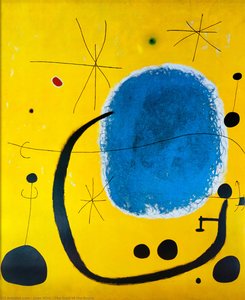

Жоан Миро
Help Spain
() ·
Sa okvirom: · Ručno oslikano uljanim bojama na platnu od lana
Ukupno