

 Pregledaj u prostoru
 Pošalji
 Podeli
 Detalji o delu
 Vodič
Vodič

 Preuzmi
 Slični predmeti
 Rendgenski snimak
 Automatska prezentacija
 Q&A
Q&A Statistika
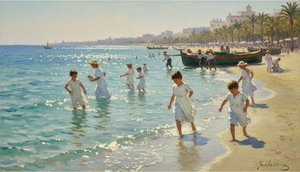
Srećan dan

- 83.0 x 116.0 cm


„Srećan dan” Hokijna Sorolje beleži trenutak jedinstva i radosti dok devet osoba sarađuje na projektu čamca, okruženo toplom svetlošću i živim bojama – svedočanstvo Soroljene vrhunske tehnike i slavljenja svakodnevnog života.
 Pročitaj više
Joakin Sorola, španski majstor svetlosti i boja! Otkrijte njegove živopisne portrete i prizore plaže koji hvataju suštinu mediteranskog života. Istražite njegovu umetničku baštinu danas!
Giclee štampa / Umetnički otisak
Giclée štampa ili print na platnu muzejskog kvaliteta uz brzu izradu i raznovrsne opcije završne obrade. ( Kupite ručno oslikano delo Pređi na digitalnu sliku)




P118B дин10

P118H дин10

P118W дин10

P438Z дин10

P508JH дин12

P508YH дин12

P805H дин10

P805Z дин10

P919BZ дин10

P919G дин10

P919XJ дин10

P959ZH дин10

P968JZ дин12

W106C дин8

W218G дин10

W218JH дин8

W218Y дин10

W307PJ дин10

W316G дин10

W316PJ дин8

W316Y дин10

W398PJ дин8

W4111J дин10

W500HY дин15

W500JH дин15

W692G дин12

W849H дин8

W940BG дин15

W953PJ дин8




Standardne dimenzije
po meri
CM
INCH
Izaberite jednu od naših unapred definisanih veličina koje odgovaraju originalnim proporcijama umetničkog dela.
Loading sizes...

širina
visina
Unesite željenu širinu i visinu kako bi se štampa uklopila u vaš ram ili zid. Štampu je moguće samo iseći, ali nikada povećati iznad dimenzija originalne slike, stoga format sa drugačijim proporcijama uzrokuje gubitak dela slike. Pre početka štampe, poslaćemo vam digitalni prikaz radi potvrde. Slika prikazana na ovoj stranici ne predstavlja stvarni isrez — to pokazuje samo digitalni prikaz.
Dostava širom sveta () za 2 nedelje umesto uobičajenih 4/5 nedelja. (31 октобар)

Besplatna ekspresna dostava širom sveta

Visokokvalitetno laneno platno

Potpuno osiguranje transporta

Garancija povraćaja carine i uvoznih dažbina

Garancija vernosti boja

Politika povraćaja u roku od 100 dana (samo u slučaju nedostataka)

Garancija povrata 100% novca

Popust na više proizvoda
 Opcija sa staklom dostupna je samo za dimenzije manje od 110 cm

Srećan dan
Giclee štampa / Umetnički otisak
Dimenzije reprodukcije
-


Ukupna cena
дин 7191
Proslava svetlosti i prijateljstva: Istraživanje dela „Srećan dan“ kneža Joaquína Sorolle
Joaquín Sorolla y Bastida (1863 – 1923), valencijski slikar čija platna svetlucaju zlatnim nijansama mediteranskog leta, ostaje jedna od najomiljenijih umetničkih figura Španije. Njegovo delo karakteriše nepokolebljiva posvećenost hvatanju prolaznih trenutaka radosti i povezanosti—filozofija koja pronalazi svoj najčistiji izraz u delu „Srećan dan“, završenom štelom 1892. godine.
- Tema: Slika prikazuje grupu od devet pojedinaca posvećenih zajedničkom radu na popravci čamca u okruženju radionice. Ova naizgled obična aktivnost dobija duboko značenje kroz Sorollin majstorski prikaz ljudske interakcije i zajedničkog iskustva.
- Stil: Sorollin stil je čvrsto ukorenjen u impresionizmu, ali on prevazilazi puko reprodukovanje vizuelnih senzacija. Umesto toga, on nastoji da prenese emocionalnu rezonancu—opipljiv osećaj topline, optimizma i zajedničkog duha.
Sorollina tehnika je izuzetna po svojoj sposobnosti da prikaže svetlost sa neprevaziđenom preciznošću. On koristi labave poteze četkicom, slojeve koji se preklapaju kako bi stvorili luminoznu površinu koja oponaša šarenu sunčevu svetlost koja se probija kroz lišće. Umetnik pažljivo posmatra kako svetlost transformiše boju, hvatajući suptilne varijacije u tonu i nijansi koje doprinose celokupnoj atmosferi slike.
- Tehnika: Sorolla je koristio uljane boje na platnu, nanoseći ih brzim, ekspresivnim potezima—što je zaštitni znak impresionističke prakse. Vešto je mešao boje kako bi postigao baršunastu teksturu i stvorio iluziju dubine, uvodeći posmatrače u živopisno okruženje scene.
- Paleta boja: Dominantna paleta boja na slici sastoji se od toplih žutih, narandžastih i crvenih tonova—boja koje evociraju asocijacije na sunce, toplotu i vitalnost. Ove nijanse su postavljene naspram hladnijih zelenih i plavih kako bi se stvorila harmonična ravnoteža i pojačao osećaj spokoštva.
Delo „Srećan dan“ čuva se u Galeriji moderne umetnosti u Udine, u Italiji, gde nastavlja da očarava publiku svojom vanvremenskom lepotom. Pored svojih estetskih vrednosti, slika govori o širim temama ljudske povezanom i transformativnoj moći zajedničkog truda. Sorollina namera nije bila samo da prikaže scenu u radionici; on je želeo da otelovori samu suštinu sreće—trenutak zamrznut u vremenu, koji zrači toplinom i poziva na kontemplaciju.
Istorijski kontekst:
Naslikan tokom Belle Époque, „Srećan dan“ odražava optimizam i dinamiku tog doba. Sorollino delo se uklapa u širi umetnički pokret koji je zastupao realizam uporedo sa ekspresivnom bojom—namerno odstupanje od akademskih konvencija koje su prioritet davale pedantnom detalju nad emocionalnim utiskom.
Simbolika:
Sam čamac služi kao moćan simbol—predstavljajući ne samo praktičan rad, već i težnju, progres i težnju ka zajedničkim ciljevima. Figure koje ga okružuju otelovljuju prijateljstvo i saradnju—vrednosti koje se slave kroz celokupno Sorollino delo.
Na kraju krajeva, „Srećan dan“ prevazilazi svoje formalne elemente kako bi preneo trajnu poruku: da prava radost leži u prihvatanju jednostavnih životnih zadovoljstava i negovanju smislenih veza sa drugima. On ostaje svedočanstvo Sorollinog umetničkog genija—remek-delo impresionizma koje nastavlja da inspiriše divljenje i čuđenje.
Pitanja i odgovori
Preporučena veličina i orijentacija štampe za "Srećan dan"?
Za "Srećan dan", preporučena dimenzija štampe je Veliki format i Pejzažni format orijentacija.
Kolika je zasićenost boja u delu „Srećan dan”, autor Joaquin Sorolla?
Paleta dela "Srećan dan" ima Suptilne boje zasićenost.
Da li je delo "Srećan dan" autora Joaquin Sorolla u javnom vlasništvu i zašto?
"Srećan dan" autora Joaquin Sorolla je u u javnom vlasništvu – autorska prava su istekla. Autorska prava se računaju od godine smrti umetnika, a Joaquin Sorolla je preminuo/la 1923.


Biografija umetnika
Joaquín Sorolla y Bastida – A Life Bathed in Light
Joaquín Sorolla y Bastida, a name synonymous with the radiant light and vibrant energy of Spain, was more than just a painter; he was a chronicler of his nation’s soul. Born in Valencia in 1863, Sorolla's early life was marked by tragedy. Orphaned at the tender age of two following a cholera epidemic that claimed both parents, young Joaquín and his sister were raised by their maternal aunt and uncle. This early experience with loss perhaps instilled within him a profound appreciation for the fleeting beauty of life – a sentiment that would permeate his art. Though hardship shadowed his beginnings, it did not dim the spark of artistic talent that quickly became apparent. He received initial instruction in Valencia, demonstrating an aptitude that led to studies under established artists like Cayetano Capuz and José Benlliure, eventually culminating in a four-year grant to study in Rome. It was there, amidst the classical grandeur of Italy, that Sorolla began to forge his unique artistic path, absorbing influences while simultaneously developing a style distinctly his own.Early Life and Influences
Joaquín Sorolla’s formative years instilled within him a deep sensitivity to loss – an experience profoundly shaping his artistic vision. Born on February 27, 1863, in Valencia, Spain, he was the eldest child of Joaquín Sorolla Bastida, a tradesman, and Concepción Bastida. Tragically, both parents succumbed to cholera just two years later, leaving him and his sister under the care of their maternal aunt and uncle. This early exposure to sorrow undoubtedly fueled his desire to capture moments of beauty before they vanished—a preoccupation that would become central to his oeuvre. Recognizing his exceptional talent at a young age, Sorolla pursued formal artistic training in Valencia, studying under prominent figures like Cayetano Capuz and José Benlliure. His dedication to mastering technique was further solidified by a scholarship enabling him to embark on a four-year journey of artistic exploration in Rome, Italy—a pivotal moment that exposed him to the stylistic innovations of Impressionism and Luminism. The influence of artists such as Francisco Pradilla Ortiz and Jules Bastien-Lepage proved particularly formative, shaping Sorolla’s approach to composition and color palettes.Rome and Artistic Development
Sorolla's time in Rome marked a decisive turning point in his artistic evolution. He enrolled at the Spanish Academy, immersing himself in the study of classical sculpture and painting—a deliberate effort to absorb the stylistic heritage of antiquity while simultaneously experimenting with new techniques. The atmosphere of the Italian capital fostered an openness to experimentation that would characterize his subsequent work. Sorolla’s fascination with Impressionism was palpable; he meticulously observed the effects of sunlight on surfaces, striving to reproduce its shimmering brilliance and transient nuances. This pursuit of luminosity—a hallmark of Luminism—became a defining element of his artistic style. He diligently copied works by masters like Velázquez and Rembrandt, honing his observational skills and refining his understanding of tonal gradation. Furthermore, Sorolla’s engagement with Parisian art circles exposed him to the avant-garde currents circulating at the time, broadening his artistic horizons and enriching his stylistic repertoire.The Valencian Coast: A Celebration of Light
Sorolla's artistic sensibilities found their most compelling expression in his depictions of the Valencian coast—a landscape he regarded as a source of endless inspiration. Unlike many artists of his era who favored studio settings, Sorolla championed *plein air* painting—working outdoors directly confronted with the challenges and rewards of capturing fleeting light conditions. This commitment to observation resulted in canvases brimming with vitality and immediacy—images infused with the warmth of Mediterranean sunshine and the dynamism of coastal life. His iconic beach scenes—such as Children on the Seashore and Sewing the Sail—are not merely picturesque representations; they are profound meditations on beauty, joy, and the ephemeral nature of existence. Sorolla’s technique—characterized by loose, energetic brushstrokes—was revolutionary for its time. He employed a bold palette dominated by yellows, oranges, and blues—colors he skillfully manipulated to convey the illusion of shimmering light and atmospheric haze. The resulting canvases possess an unparalleled sense of spontaneity and emotional depth—a testament to Sorolla’s mastery of Luminism and his unwavering devotion to capturing the essence of his beloved homeland.Legacy and Recognition
Joaquín Sorolla y Bastida achieved international renown during his lifetime, becoming one of Spain's most celebrated artists. His prolific output encompassed portraits, landscapes, historical narratives, and monumental murals—each infused with a distinctive stylistic signature. He exhibited extensively throughout Europe and the United States, garnering critical acclaim and securing commissions from prominent patrons. Sorolla’s magnum opus, Vision of Spain—a series of fourteen canvases commissioned by Archer Milton Huntington—stands as an enduring monument to his artistic vision and technical prowess. Completed posthumously, these murals captured the spirit of Spain's diverse regional cultures—celebrating its traditions, costumes, and landscapes with breathtaking grandeur. Sorolla’s influence extended far beyond his own era, inspiring generations of artists who embraced Luminism and sought to emulate his masterful technique. Today, Sorolla’s paintings reside in major museums worldwide—including the Museo Sorolla in Madrid—where they continue to captivate audiences with their luminous beauty and emotional resonance—affirming his place as one of Spain's greatest artistic treasures.
Joaquin Sorolla
1863 - 1923 , Испанија
Osnovne informacije
- Artistic Movement Or Style: Реализам, Луминизм, Импрессионизм
- Artists Who Influenced This Artist:
- Франсиско Прадила
- Жуль Бастиен-Лепаж
- АдОльф фон Мenzel
- Date Of Birth: 27 фебруара 1863.
- Date Of Death: 10 августа 1923.
- Full Name: Joaquín Sorolla y Bastida
- Nationality: Шпанија
- Notable Artworks:
- Италијанка са цвећењем
- Време купања
- Трагедија наслеђа
- Типични Соролиански
- Деца на обали
- Place Of Birth: Валенсија, Шпанија
Povezani članci
Joaquín Sorolla: Capturing Spanish Light & Life – A Legacy of Impressionism
Explore the luminous world of Joaquín Sorolla, Spanish master of Impressionism. Discover his life, techniques & legacy – a guide for art collectors and enthusiasts. Invest in timeless beauty.

Manuel Benedito Vives: A Study of Light, Color & Emotional Resonance in Contemporary Spanish Painting
Explore the captivating world of Manuel Benedito Vives, a celebrated Spanish painter influenced by Sorolla. Discover his masterful portraits, luminous landscapes & enduring legacy – a favorite of the Spanish Royal Family. Art collectors will appreciate this in-depth study.

Evocations of Open Air: A Comprehensive Exploration of Outdoor Scenes in Art History
Explore the rich history of outdoor painting! Discover Impressionism, en plein air techniques & renowned landscape artists. Learn about light, color & enduring artistic legacies with TopImpressionists.

Impressionism's Masterpieces: 10 Paintings That Defined a Movement | TopImpressionists
Journey through Impressionism's heart with 10 iconic paintings by Monet, Renoir & Degas. Explore light, color & the stories behind these masterpieces. Find museum-quality art reproductions and elevate your home decor on TopImpressionists.com.

Boats on Canvas: 10 Masterpieces of Maritime Art for Your Home Decor
Sail away with 10 iconic boat paintings! Explore masterpieces by Monet, Van Gogh & Turner. Discover the stories behind these timeless seascapes and find museum-quality art reproductions for your home decor at TopImpressionists.com.
Istražite umetnička dela organizovana prema temama, stilovima i karakteristikama.


