

 Pregledaj u prostoru
 Podeli
 Podeli
 Detalji
 Vodič
Vodič

 Preuzmi sliku
 Slični predmeti
 Rendgenski snimak
 Automatska prezentacija
 Statistika
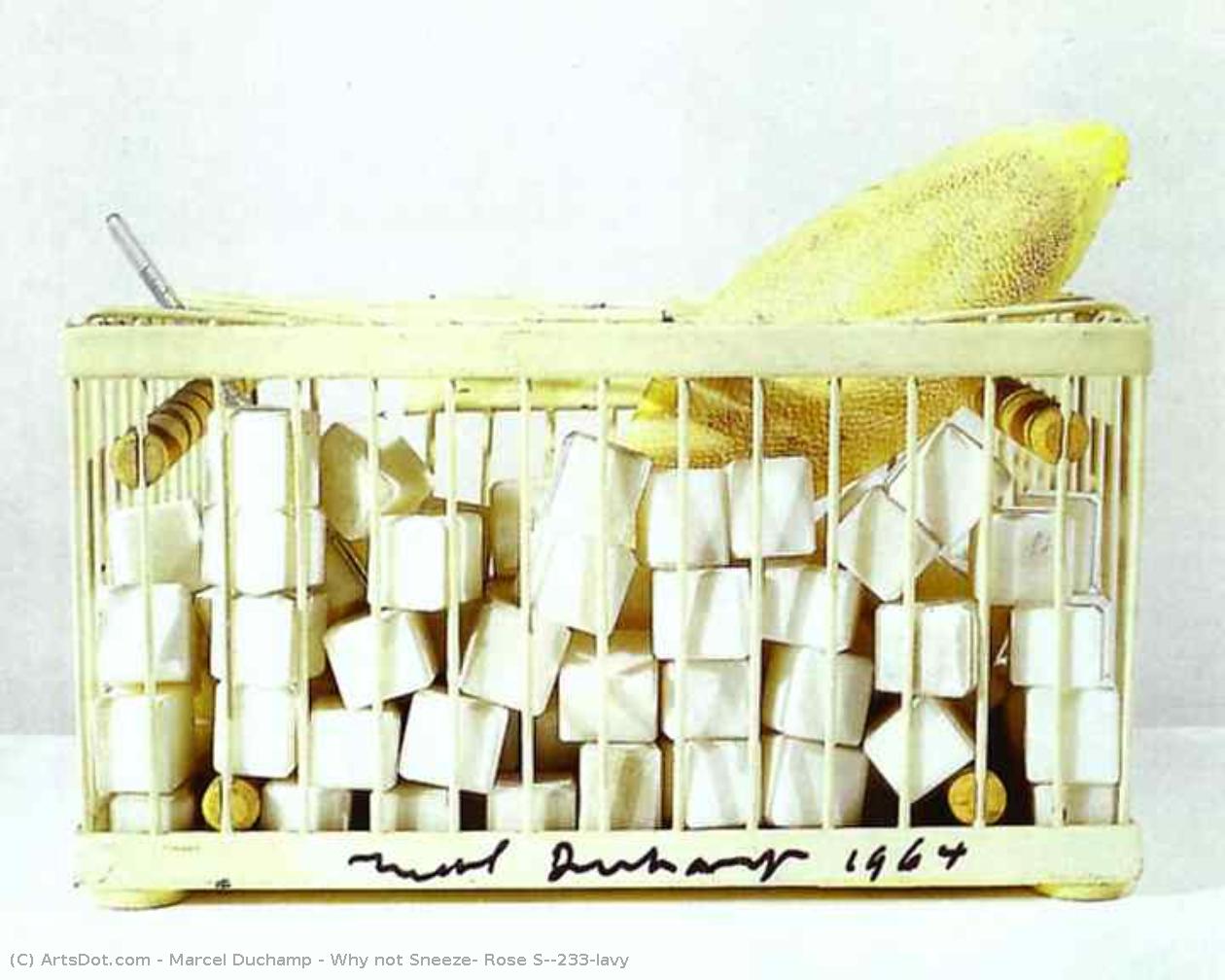
Why not Sneeze, Rose Sélavy
 Acrylic On Canvas
- WallArt
- Dada Gesamtkunstwerk
 1921
1921 12.0 x 22.0 cm
 Tate Modern
 Pročitaj više
Marcel Dušan je revolucionarni umetnik koji je postavio temelje konceptualne umetnosti sa radovima poput 'Fountains' i 'L.H.O.O.Q.'. Istražite njegov inovativni stil i uticaj na modernu umetnost!
Umetničko delo prikazano na ovoj stranici zaštićeno je autorskim pravima, što znači da zakonski nismo u mogućnosti da kreiramo niti prodajemo identičnu reprodukciju. Ova zaštita se sprovodi u skladu sa međunarodnim sporazumima kao što su Bernska konvencija i nacionalnim zakonima, uključujući i one koji su definisani u Američki zakon o autorskom pravu – Naslov 17.
Kao poštovana i legalna alternativa, nudimo prilagođene, ručno oslikane umetničke radove inspirisane originalom. Naši stručni i profesionalni umetnici pažljivo proučavaju stil, ambijent i umetničku suštinu originala kako bi kreirali novo, unikatno delo koje budi istu emociju – ostajući pritom potpuno autentično stvaranje.
Ovaj metod je u potpunosti usklađen sa regulativama o autorskim pravima jer ne podrazumeva kopiranje ili dupliranje zaštićenih umetničkih dela. Umesto toga, reč je o kreativnoj reinterpretaciji – novom slikarskom delu koje je inspirisano originalom, ali nije identično njemu.
Ručno rađena uljana reprodukcija
Ručno oslikano uljanim bojama na platnu u dimenzijama i okviru po vašem izboru, izrađeno po porudžbini od strane naših umetnika. ( Pređi na prodaju štampanih primeraka Pređi na prodaju digitalnih slika)




P118B дин10

P118H дин10

P118W дин10

P438Z дин10

P508JH дин12

P508YH дин12

P805H дин10

P805Z дин10

P919BZ дин10

P919G дин10

P919XJ дин10

P959ZH дин10

P968JZ дин12

W106C дин8

W218G дин10

W218JH дин8

W218Y дин10

W307PJ дин10

W316G дин10

W316PJ дин8

W316Y дин10

W398PJ дин8

W4111J дин10

W500HY дин15

W500JH дин15

W692G дин12

W849H дин8

W940BG дин15

W953PJ дин8




Standardne dimenzije
po meri
CM
INCH
Izaberite jednu od naših unapred definisanih veličina koje odgovaraju originalnim proporcijama umetničkog dela.
Loading sizes...

širina
visina
Unesite širinu i visinu koja vam je potrebna, kako bi se uklopili u vaš ram ili zid. Pošto je ovo ručno oslikano delo, umetnik može naslikati malo više prostora oko slike ili malo skratiti ivice za dimenzije drugačijeg oblika — izbor je na vama. Pre početka rada, poslaćemo vam digitalni prikaz radi potvrde. Slika prikazana na ovoj stranici ne predstavlja konačan rezultat — samo digitalni prikaz pokazuje stvarnu sliku.
Primeri mogućih izmena: Zamena lica fotografijom kupca; Dodavanje ljubimca (npr. zamena mačke psom); Uključivanje skrivene poruke u pozadini; Promena pejzaža ili elemenata pozadine.
Nakon narudžbine, tim TopImpressionists.com će klijentu putem e-pošte poslati uputstva i dostaviti prikaz predloženog rešenja
Nakon narudžbine, tim TopImpressionists.com će klijentu putem e-pošte poslati uputstva i dostaviti prikaz predloženog rešenja
Svetska isporuka () za 3/4 nedelje umesto uobičajenih 5 nedelja. (22 октобар). Bez kompromisa po pitanju kvaliteta.

Besplatna ekspresna dostava širom sveta

Visokokvalitetno laneno platno

Sveobuhvatno osiguranje transporta

Garancija povraćaja carine i uvoznih dažbina

Garancija vernosti boja i autentičnosti pri reprodukciji

Politika povraćaja u roku od 100 dana (samo u slučaju nedostataka)

Garancija povrata 100% novca

Popust pri većoj količini
 Opcija sa staklom dostupna je samo za dimenzije manje od 110 cm

Why not Sneeze, Rose Sélavy
Tehnika izrade reprodukcije
Veličina reprodukcije
-


Ukupna cena
дин 27572
A Provocative Pause: Unpacking “Why Not Sneeze, Rose Sélavy”
Marcel Duchamp’s "Why Not Sneeze, Rose Sélavy," painted in 1921, isn't merely a still life; it’s an audacious declaration. This deceptively simple image – a white box containing a yellow banana alongside several cups and spoons – immediately throws the viewer off balance, demanding they reconsider their assumptions about art itself. Duchamp, a pivotal figure in the Dada movement, wasn’t interested in replicating reality or expressing personal emotion through traditional means. Instead, he sought to dismantle established artistic conventions, forcing us to confront the very definition of what constitutes “art” and its role within society.
The painting's genesis lies within Duchamp’s exploration of chance and readymades – everyday objects presented as art without alteration. "Why Not Sneeze" exemplifies this approach perfectly. The choice of a banana, an utterly mundane item, elevates it to the status of subject matter through its placement within the box, transforming it into something worthy of contemplation. The inclusion of the cups and spoons further complicates the scene, suggesting a potential for consumption or ritual – elements deliberately devoid of inherent meaning, yet imbued with a subtle tension.
Dadaist Disruptions: Style and Technique
“Why Not Sneeze” is firmly rooted in the principles of Dadaism, a movement born from the disillusionment following World War I. Rejecting logic and reason, Dada artists embraced absurdity, chance, and anti-art sentiments. Duchamp’s technique reflects this ethos; he employed a precise, almost clinical approach to rendering the objects, using oil paint on canvas with a smooth, matte finish. There's no attempt at illusionistic depth or vibrant color – instead, the focus is entirely on the arrangement of the elements and their juxtaposition. The stark white box acts as a frame, isolating the objects and intensifying their impact.
Interestingly, Duchamp’s process involved a degree of chance. He reportedly placed the banana in the box after it had been emptied, allowing the positioning to be determined by accident. This element of randomness underscores the movement's core belief that art should not be dictated by conscious intention but rather emerge from unexpected encounters and unforeseen circumstances.
Symbolic Whispers: Interpretation and Context
The symbolism within “Why Not Sneeze” is deliberately ambiguous, inviting multiple interpretations. The banana itself has been suggested to represent fertility, sexuality, or even a subtle critique of consumer culture – a small, yellow object placed in an enclosed space, hinting at both abundance and confinement. The cups and spoons could symbolize hospitality, offering, or perhaps the act of consuming – again, devoid of any specific narrative but laden with potential meanings.
Furthermore, the title itself, “Why Not Sneeze?”, is a direct challenge to conventional artistic expectations. Duchamp’s question implies that there are no rules governing art, no prescribed methods for creating it. It's an invitation to embrace spontaneity and reject rigid constraints. The painting can be viewed as a meditation on the absurdity of artistic norms and a playful provocation against established aesthetic values.
A Timeless Dialogue: Emotional Impact and Legacy
Despite its seemingly simple composition, “Why Not Sneeze, Rose Sélavy” possesses a profound emotional impact. It’s unsettling, humorous, and thought-provoking – qualities that have cemented its place as one of the most significant works in modern art history. Duchamp's work continues to resonate today, prompting us to question our own perceptions of beauty, value, and the very nature of artistic expression. A reproduction of this iconic piece offers a unique opportunity to engage with a pivotal moment in art history and contemplate the enduring legacy of Marcel Duchamp’s revolutionary spirit.
Pitanja i odgovori
Da li je "Why not Sneeze, Rose Sélavy" dostupan kao umetnička štampa?
Da biste naručili print dela „Why not Sneeze, Rose Sélavy”, Марсел Дјушан, jednostavno ga poručite na njegovoj stranici Umetski print: umetnička štampa na pamučnom platnu ili arhivskom kanvas papiru.
Ko se raspoloženje i emocija spajaju u "Why not Sneeze, Rose Sélavy"?
U delu "Why not Sneeze, Rose Sélavy", Playful raspoloženje prati Playful emocija.
U kom periodu karijere Марсел Дјушан pripada delo "Why not Sneeze, Rose Sélavy"?
„Why not Sneeze, Rose Sélavy“ pripada Dada Phase u karijeri umetnika Марсел Дјушан. Ova klasifikacija povezuje delo sa razvojem samog umetnika.
Biografija umetnika
Марсел Дјушан: Револуционар уметности који је поставио нова питања
Марсел Дјушан, рођено име Анри-Робер-Марсел Дјушан, рођен 1887. године у близини Руана, Француска, био је више од уметника; био је филозофски провокатор који је дубински изменио ток модерне уметности. Иако је потекао из породице која цени уметност – са браћом који су били успешни уметници – Дјушан је рано показао тенденцију да изазива, да руши усталене норме. Није био задовољан само приказом света; желео је да изазове како га посматрамо и шта чини уметничку вредност. Та немилосрдна интелектуална љубопитљивост дефинисала је његову плодну каријеру.Од кубизма до дадаизма: Одбацивање конвенција
Уметничко путовање Дјушана било је обележено сталном еволуцијом, свесним одбацивањем устаљених норми. Његов рани ангажман са кубизмом, видљив у делима као што је *Портрет играча шаха* (1911), показао је интересовање за фрагментиране облике и више перспектива – одступање од традиционалног представљања. Међутим, брзо је прешао даље од чисто естетских брига, препознајући да једноставно преуређивање визуелних елемената није довољно да се решавају дубинска питања која су га занимала. Ужаси Првог светског рата наговелили су тај немир, што је Дјушана довело до прихватања дадаизма, покрета који је настао из разочарања и одбацивања логике, разума и традиционалних уметничких вредности. У оквиру дадаизма Дјушан је заиста почео да руши конвенционалне идеје о уметности. Није био заинтересован за стварање лепих објекта; желео је да провоцира размишљања, изазове претпоставке и разоткрије произвољност естетског суђења.Реади-мејди и подривање уметности
Увођење реади-меја – обичних производа који се бирају и представљају као уметност – било је Дјушанова најзначајнија доприноса 20. веку. То нису били само пронађени објекти; то су била свесне чинове уметничког подривања. Узимањем свакодневног предмета, као што је увез (*Фонтана*, 1917), потписивањем га „Р. Мут“ и слањем на изложбу уметности, Дјушан је поставио питање саме дефиниције уметничке вештине и ауторства. Да ли је рука уметника створила дело или је идеја уметника? Ово питање постало је централно за његову праксу и положило основу за Концептуалну уметност. Други познати реади-меји као што је *L.H.O.O.Q.* (1919), постерна репродукција Моне Лизе коју је исцртао мустаћем и брадом, били су шаљиви али проницни критике уметности и утврђених културних икона. Ова дела нису била намењена да се цене по естетским квалитетима; била су намењена да провоцирају дебату и натерају гледаоце да преиспитају своја предрасуду о томе шта чини уметност. Дјушан је веровао да уметност треба да борави у уму, а не само у оку.Наслеђе и трајни утицај
Утицај Марсела Дјушана на касније генерације уметника неизмерив је. Он је фундаментално променио наше разумевање уметности, отварајући пут за покрете као што су Концептуална уметност, Минимализам, Поп арт и безброј других. Његов нагласак на идеји иза дела – концепту иза рада – уместо његових естетских квалитета наставља да инспирише уметнике данас.- Кубизам: Раније истраживање фрагментираних облика и просторне репрезентације.
- Дадаизм: Одбацивање логике, разума и традиционалних уметничких вредности као одговор на Први светски рат.
- Концептуална уметност: Нагласак на идеји иза дела уметности, а не на његовим естетским квалитетима.

Марсел Дјушан
1887 - 1968 , Francuska
Brzi pregled
- Datum Rođenja: 28. jul 1887.
- Datum Smrti: 2. oktobar 1968.
- Istaknuta Dela:
- Fontana
- L.H.O.O.Q.
- Veliko staklo
- Boîte-en-valise
- Mesto Rođenja: Blanvil-sur-Mer, Francuska
- Nacionalnost: Francusko-Američki
- Puno Ime: Marsel Dšoampa
- Umetnici Ili Pokreti Pod Uticajem Ovog Umetnika:
- Konceptualna umetnost
- Pop Art
- Minimalizam
- Umetnički Pokret Ili Stil:
- Kubizam
- Dadaizam
- Konceptualna umetnost
Srodni članci

Dadaism Unveiled: The Beautiful Chaos of Art's Most Rebellious Movement
Explore the profound rebellion of Dadaism. Discover how this avant-garde movement emerged from the chaos of WWI to redefine art through absurdity, anti-logic, and a legacy that shaped Surrealism and Pop Art. A deep dive into the beautiful chaos of art history for the true enthusiast.

Pop Surrealism Unveiled: The Sophisticated Intersection of Vibrant Pop Art and Dreamlike Subconscious Landscapes
Explore the captivating world of Pop Surrealism. Discover how vibrant Pop Art meets dreamlike subconscious imagery through the works of masters like Jeff Soto and Ryan Heshka. An expert guide for discerning collectors seeking to understand this profound contemporary art movement.
Istražite umetnička dela organizovana prema temama, stilovima i karakteristikama.


