


 Pregledaj u prostoru
 Podeli
 Podeli
 Detalji
 Vodič
Vodič

 Preuzmi sliku
 Slični predmeti
 Rendgenski snimak
 Automatska prezentacija
 Statistika
Hunters Resting


Discover Martin Johnson Heade’s ‘Hunters Resting,’ a serene 1863 landscape painting. Romanticism meets tranquility in this oil masterpiece – explore its luminous beauty & evocative symbolism.
 Pročitaj više
Otkrijte Martina Džonsona Hejda (1819-1904): majstora luminizma poznatog po mirnim scenama močvara, živopisnim slikama kolibrija i prefinim cvetnim mrtvim prirodama. Istražite njegova ponovno otkrivena remek-dela!
Giclee štampa / Umetnički otisak
Giclée štampa ili print na platnu muzejskog kvaliteta uz brzu izradu i raznovrsne opcije završne obrade. ( Naručite ručno oslikano reprodukciju Pređi na prodaju digitalnih slika)




P118B дин10

P118H дин10

P118W дин10

P438Z дин10

P508JH дин12

P508YH дин12

P805H дин10

P805Z дин10

P919BZ дин10

P919G дин10

P919XJ дин10

P959ZH дин10

P968JZ дин12

W106C дин8

W218G дин10

W218JH дин8

W218Y дин10

W307PJ дин10

W316G дин10

W316PJ дин8

W316Y дин10

W398PJ дин8

W4111J дин10

W500HY дин15

W500JH дин15

W692G дин12

W849H дин8

W940BG дин15

W953PJ дин8




Standardne dimenzije
po meri
CM
INCH
Izaberite jednu od naših unapred definisanih veličina koje odgovaraju originalnim proporcijama umetničkog dela.
Loading sizes...

širina
visina
Unesite širinu i visinu koja vam je potrebna, kako bi se uklopili u vaš ram ili na vaš zid. Štampa se može samo iseći, nikada ne može biti veća od originalne slike, stoga format sa drugačijim proporcijama gubi deo slike. Poslaćemo vam digitalni prikaz radi potvrde pre nego što započnemo štampu. Slika prikazana na ovoj stranici ne pokazuje stvarni rez — to pokazuje samo digitalni prikaz.
Dostava širom sveta () za 2 nedelje umesto uobičajenih 4/5 nedelja. (23 октобар)

Besplatna ekspresna dostava širom sveta

Visokokvalitetno laneno platno

Sveobuhvatno osiguranje transporta

Garancija povraćaja carine i uvoznih dažbina

Garancija vernosti boja i autentičnosti pri reprodukciji

Politika povraćaja u roku od 100 dana (samo u slučaju nedostataka)

Garancija povrata 100% novca

Popust pri većoj količini
 Opcija sa staklom dostupna je samo za dimenzije manje od 110 cm

Hunters Resting
Giclee štampa / Umetnički otisak
Veličina reprodukcije
-


Ukupna cena
дин 7127
A Moment of Quietude: Martin Johnson Heade’s “Hunters Resting”
Martin Johnson Heade's "Hunters Resting," painted in 1863, isn't merely a landscape; it’s an invitation to pause and contemplate the subtle poetry of nature. This evocative work, now housed at the Museum of Fine Arts, Boston, captures a fleeting moment within the vast expanse of the New England salt marsh – a scene rendered with a luminous quality that speaks volumes about Heade’s mastery of Luminism. The painting depicts two figures, seemingly anonymous and lost in quiet contemplation, seated beside a small, still body of water nestled amongst rolling hills draped in an overcast sky. It's a composition brimming with understated drama, a testament to the artist’s ability to distill profound emotion from the simplest of natural settings.
Heade, born in Pennsylvania and deeply influenced by the Hudson River School, moved beyond the grand vistas often associated with that movement, instead focusing on the intimate details and atmospheric effects of the marshlands. This shift reflects a broader artistic trend – a desire to capture not just what was seen, but also how it *felt*. The muted palette—dominated by soft browns, mossy greens, and hazy blues—creates an atmosphere of tranquility and solitude. The brushstrokes are deliberately loose and visible, contributing to the painting’s sense of immediacy and inviting the viewer to feel as though they're standing within this serene landscape themselves. Notice how Heade uses light not to illuminate a specific subject, but to bathe the entire scene in a diffused glow, suggesting either the pre-dawn or late afternoon hours – times often associated with reflection and introspection.
The Language of Luminism
Heade’s style is quintessential Luminism, an artistic movement characterized by its emphasis on capturing the effects of light and atmosphere. Unlike the more detailed and narrative-driven works of his contemporaries, Heade prioritized creating a sense of luminosity—a shimmering quality that seems to emanate from within the canvas itself. This technique involved layering thin washes of paint, allowing them to dry before adding subsequent layers, resulting in a delicate and almost ethereal effect. The subtle gradations of color and tone create an illusion of depth and distance, drawing the viewer into the scene. The artist’s careful attention to detail—the texture of the grasses, the ripples on the water's surface, the distant hills—is balanced by his willingness to sacrifice precise representation in favor of capturing the overall mood and atmosphere.
Technically, “Hunters Resting” is executed with remarkable skill. Heade’s use of color is particularly noteworthy – he masterfully employs complementary colors (such as blue and orange) to create visual interest and enhance the painting's luminosity. The composition itself is carefully balanced, with the two figures positioned in a way that draws the eye across the canvas. The subtle variations in brushstroke—some areas are more heavily textured than others—add depth and dimension to the scene. It’s a testament to Heade’s understanding of both color theory and painting technique.
Symbolism and Emotional Resonance
Beyond its technical brilliance, “Hunters Resting” is rich in symbolism. The two figures, their faces obscured by shadow, represent humanity's connection to nature—a quiet communion with the vastness and beauty of the natural world. They are not actively engaged in any particular activity; instead, they seem lost in contemplation, suggesting a desire for peace and solitude. The marsh itself – often associated with transition and liminal spaces – further reinforces this theme. The painting evokes feelings of serenity, introspection, and perhaps even melancholy—a recognition of our own mortality within the context of the enduring cycle of nature.
Interestingly, Heade’s fascination with the salt marshes stemmed from his travels to Brazil, where he was captivated by the vibrant colors and textures of the tropical landscape. This experience profoundly influenced his artistic vision, leading him to explore similar themes in his later works. “Hunters Resting” stands as a powerful example of how an artist can transcend geographical boundaries and create universal images that resonate with viewers across cultures and time periods. It’s a painting that invites us to slow down, breathe deeply, and appreciate the quiet beauty of the natural world—a timeless reminder of our place within it.
A Timeless Masterpiece
Reproductions of “Hunters Resting” offer an exceptional opportunity to bring this evocative landscape into your home or office. The luminous quality of the original is faithfully captured in high-resolution prints, allowing you to experience the painting’s beauty and serenity firsthand. Whether displayed as a focal point in a living room or as a calming addition to a workspace, this artwork will undoubtedly serve as a source of inspiration and tranquility for years to come. Consider it not just a decoration, but a window into the artistic vision of Martin Johnson Heade—a master who understood that true beauty lies often in the simplest of moments.
Pitanja i odgovori
Da li se prikaz „Hunters Resting”, Мартин Џонсон Хиде može slobodno reprodukovati?
Status autorskih prava za „Hunters Resting”, Мартин Џонсон Хиде: delo je u javnom vlasništvu – autorska prava su istekla. Ovo određuje da li se reprodukcije slike mogu slobodno izrađivati.
O čemu je delo "Hunters Resting"?
Motivi dela "Hunters Resting" su landscape, nature, tranquility, reflection, human figures, atmospheric, serene, pastoral.
Mogu li da vidim „Hunters Resting”, Мартин Џонсон Хиде na svom zidu pre kupovine?
Delo "Hunters Resting" ima pregled proširene stvarnosti: stranica AR pregled prikazuje umetničko delo u vašem sopstvenom prostoru pomoću kompatibilnog uređaja.
Biografija umetnika
Tiha Vizija Luministe: Život i Rad Martina Džonsona Hejda
Martin Džonson Hejd, rođen u mirnoj ruralnoj Pensilvaniji 1819. godine, ostaje fascinantna figura u istoriji američke umetnosti – slikar čiji su svetli pejzaži i intimni prikazi prirode postepeno izlazili iz relativne nepoznanice da bi zauzeli zasluženo mesto među najznačajnijim umetničkim dostignućima nacije. Njegov rani život u Lumbervilu, pored reke Delaver, usađuje u njega duboku zahvalnost za prirodni svet, naklonost negovana prvim studijama pod lokalnim umetnicima Edvardom i moguće Tomasom Hiksom. Ove temeljne lekcije obezbedile su Hejdu tehničke veštine koje bi kasnije procvetale u prepoznatljiv stil, iako njegov put do priznanja nije bio lak. U početku fokusiran na portretiranje, njegovi rani radovi pokazuju kompetentnu ruku, ali nedostaju mu jedinstvena vizija koja će definisati njegov zreli opus. Period putovanja Evropom proširio je njegove umetničke horizonte, izloživši ga različitim uticajima i postavljajući pozornicu za konačni prijem pejzažnog slikarstva.Od Portreta do Panoramskog Svetla
Ključni pomak u Hejdovoj umetničkoj orijentaciji dogodio se kroz susrete sa članovima Škole reke Hadson – umetnicima poput Džona Frederika Kenseta i Bendžamina Čempnija – koji su probudili u njemu strast za hvatanjem veličanstva i suptilne lepote američkog pejzaža. Ovaj uticaj, u kombinaciji sa njegovom urođenom osetljivošću na svetlo i atmosferu, doveo je do razvoja stila karakterizovanog mirnim kompozicijama i pedantnom pažnjom prema detaljima. Hejdov rad se počeo razlikovati kroz svoju tihu intenzivnost, izbegavajući dramatične priče koje su favorizovali neki njegovi savremenici u korist kontemplativnih studija močvara, morskih pejzaža i na kraju, tropske flore i faune. Značajan trenutak došao je sa njegovim putovanjem u Brazil 1863-1864. godine, putovanje koje je duboko uticalo na njegov umetnički izlaz. Uronjen u živopisne boje i egzotične oblike brazilske prašume, Hejd se upustio u niz malih slika koje prikazuju kolibrije među bujnim orhidejama – radova koji pokazuju njegovu tehničku veštinu i fascinaciju delikatnom interakcijom između života i okoline. Ovi “dragulji Brazila”, kako ih je zvao, prvobitno su bili namenjeni za objavljivanje, ali su ostali uglavnom nerealizovani tokom njegovog života, a danas predstavljaju neka od njegovih najslavljenijih dela. Kasnija putovanja u Centralnu Ameriku i Jamajku dalje su podstakla njegovo istraživanje tropskih tema, obogaćujući njegovu paletu boja i proširujući njegov umetnički vokabular.Močvare, Magnolije i Ponovno Otkriće Majstora
U kasnijim godinama, Hejd se nastanio u St. Augustinu na Floridi, gde je usmerio pažnju na mrtvu prirodu – posebno izuzetne prikaze magnolija aranžiranih na bogatim velunima. Ove slike, sa svojim baršunastim teksturama i svetlim svetlom, primer su njegove majstorije u boji i formi. Međutim, uprkos proizvodnji značajnog korpusa dela tokom svoje karijere, Hejd je ostao uglavnom nepoznat tokom svog života. Tek 1940-ih godina su naučnici počeli da prepoznaju značaj njegovog doprinosa američkoj umetnosti. Izvanredna serija otkrića – slike koje su se pojavile na neočekivanim mestima poput garažnih rasprodaja i buvljaka – vratila je pažnju na njegov rad, otkrivši prethodno zanemarenog majstora Luminizma. Sam termin “Luminizam”, kovan da opiše stil koji dele Hejd i umetnici poput Fica Henrija Lejna, hvata suštinu njegove umetničke vizije: naglasak na atmosferskim efektima, suptilnim gradacijama svetla i osećaju tišine i mira.Nasleđe Tihe Kontemplacije
Nasleđe Martina Džonsona Hejda proteže se dalje od njegove tehničke veštine i estetskih osetljivosti. Njegove slike nude gledaocima prostor za tiho razmišljanje – poziv da se urone u lepotu i mir prirodnog sveta. Iako možda nije postigao široku slavu tokom svog života, njegov rad je duboko rezonirao sa publikom od ponovnog otkrića, učvršćujući njegov položaj kao glavne figure američke umetnosti. Danas se njegove slike nalaze u istaknutim muzejskim zbirkama širom sveta, uključujući zbirku Martina Džonsona Hejda na TopImpressionists, i nastavljaju da inspirišu divljenje zbog svoje svetle lepote i trajne snage. Hejдова способност да зароби пролазне квалитете светлости и атмосфере – да трансформише обичне сцене у моменте трансцендентне лепоте – обезбеђује његово место међу највољенијим и утицајним америчким сликарима 19. века. Njegova umetnost служи као подсећање на важност очувања и цењења природног света, и проналажења утехе у његовом тихом сјају.Кључне карактеристике Хејдовог стила
- Luminizam: Дефинишућа карактеристика, која наглашава атмосферске ефекте и суптилне градиране светлости.
- Мирне композиције: Избегавање драматичних наратива у корист мирних сцена.
- Педантна детаљност: Прецизно рендерирање природних облика и текстура.
- Предмет сликања: Мочвари, морски пејзажи, тропске птице (посебно колибрији), магнолије и мртва природа.
- Романтичан приступ: Фокус на емоционалном утицају природе и њеној лепоти.

Мартин Џонсон Хиде
1819 - 1904 , Sjedinjene Američke Države
Brzi pregled
- Artistic Movement Or Style: Lumimizam
- Artists Who Influenced This Artist:
- Edward Hicks
- John F. Kensett
- Date Of Birth: 11. avgust 1819.
- Date Of Death: 4. septembar 1904.
- Full Name: Martin Johnson Heade
- Nationality: Amerikanac
- Notable Artworks:
- Orhideje i kolibri
- Močvare sa solju
- Cvetovi kolibrija
- Place Of Birth (City And Country): Lumberville, SAD
Srodni članci

Capturing the Soul: The Emotional Magic and Sublime Grandeur of Romantic Landscape Painting
Explore the profound emotional depth of Romantic landscape painting. Discover how masters like Friedrich and Turner captured the sublime through light, shadow, and nature's power in this expert art history retrospective for discerning collectors.

Capturing the Soul of Nature: A Journey Through the Sublime Majesty of American Romanticism
Explore the breathtaking beauty of American Romanticism. Discover how Hudson River School masters captured the sublime spirit of the wilderness through luminous oil landscapes and emotional depth. A journey into the soul of nature for the true art enthusiast.
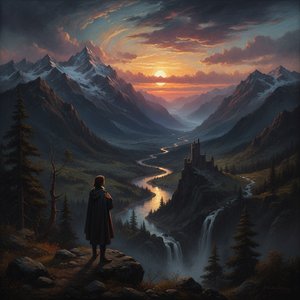
Capturing the Soul: The Emotional Majesty and Sublime Power of Romantic Landscape Painting
Explore the profound emotional depth of Romantic landscape painting. Discover how masters like Turner and Friedrich captured the sublime power of nature through intuition and imagination in this expert art history retrospective.