
 Pregledaj u prostoru
 Pošalji
 Podeli
 Detalji o delu
 Vodič
Vodič

 Preuzmi
 Slični predmeti
 Rendgenski snimak
 Automatska prezentacija
 Q&A
Q&A Statistika
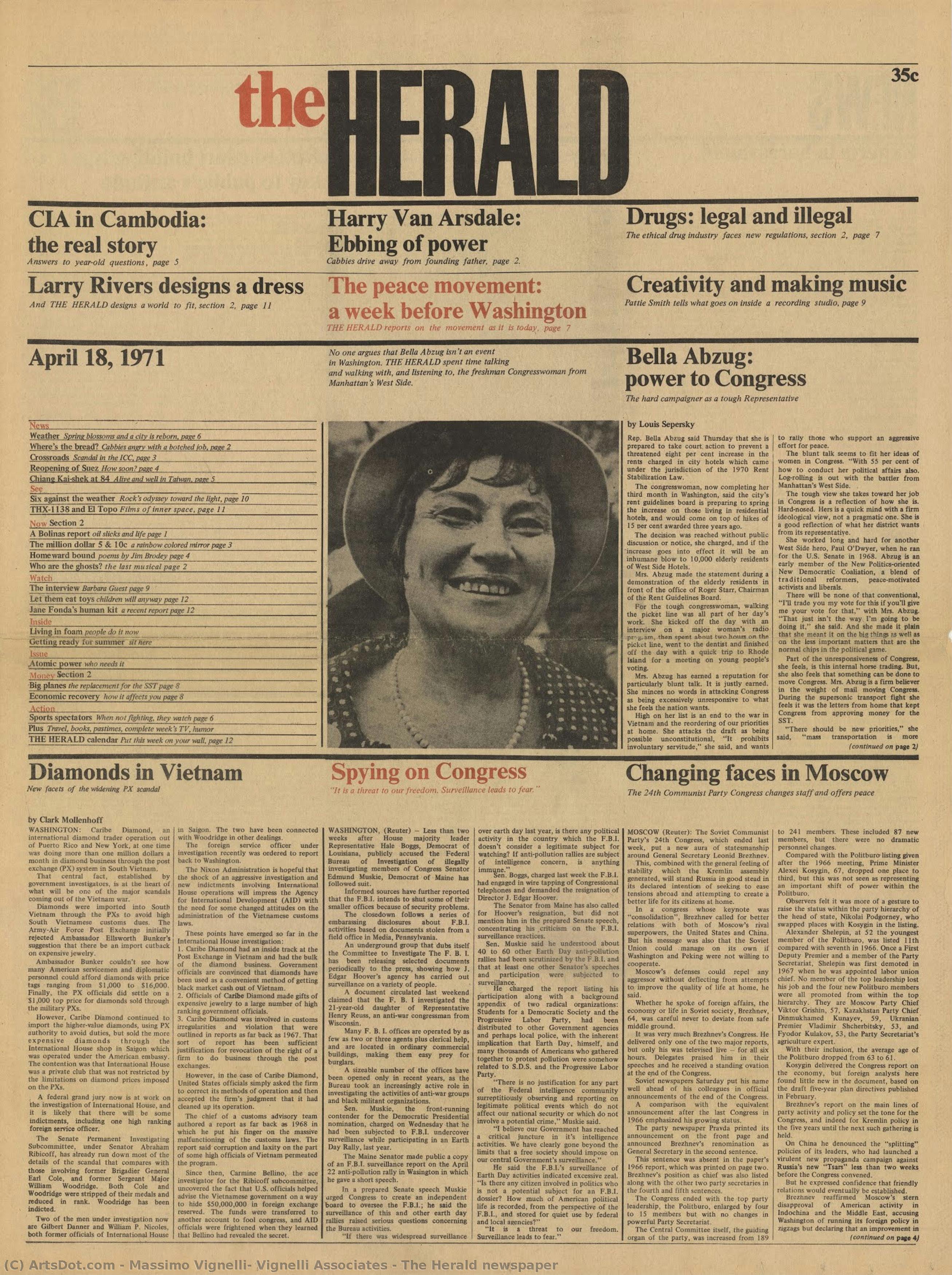
The Herald newspaper

- 43.0 x 57.0 cm


Experience the modernist grid design of The Herald newspaper by Massimo Vignelli (1971), showcasing vintage graphic communication art; discover this iconic piece today.
 Pročitaj više
Masimo Vinjeli (1931-2014): Ikona italijanskog dizajna poznata po minimalističkom grafičkom dizajnu, uključujući mapu metroa u NYC i korporativne identitete. Istražite njegovo nasleđe!
Umetničko delo prikazano na ovoj stranici zaštićeno je autorskim pravima, što znači da zakonski nismo u mogućnosti da kreiramo niti prodajemo identičnu reprodukciju. Ova zaštita se sprovodi u skladu sa međunarodnim sporazumima kao što su Bernska konvencija i nacionalnim zakonima, uključujući i one koji su definisani u Američki zakon o autorskom pravu – Naslov 17.
Ovaj metod je u potpunosti usklađen sa regulativama o autorskim pravima jer ne podrazumeva kopiranje ili dupliranje zaštićenih umetničkih dela. Umesto toga, reč je o kreativnoj reinterpretaciji – novom slikarskom delu koje je inspirisano originalom, ali nije identično njemu.
Giclee štampa / Umetnički otisak
Giclée štampa ili print na platnu muzejskog kvaliteta uz brzu izradu i raznovrsne opcije završne obrade. ( Kupite ručno oslikano delo Pređi na digitalnu sliku)




P118B дин10

P118H дин10

P118W дин10

P438Z дин10

P508JH дин12

P508YH дин12

P805H дин10

P805Z дин10

P919BZ дин10

P919G дин10

P919XJ дин10

P959ZH дин10

P968JZ дин12

W106C дин8

W218G дин10

W218JH дин8

W218Y дин10

W307PJ дин10

W316G дин10

W316PJ дин8

W316Y дин10

W398PJ дин8

W4111J дин10

W500HY дин15

W500JH дин15

W692G дин12

W849H дин8

W940BG дин15

W953PJ дин8




Standardne dimenzije
po meri
CM
INCH
Izaberite jednu od naših unapred definisanih veličina koje odgovaraju originalnim proporcijama umetničkog dela.
Loading sizes...

širina
visina
Unesite željenu širinu i visinu kako bi se štampa uklopila u vaš ram ili zid. Štampu je moguće samo iseći, ali nikada povećati iznad dimenzija originalne slike, stoga format sa drugačijim proporcijama uzrokuje gubitak dela slike. Pre početka štampe, poslaćemo vam digitalni prikaz radi potvrde. Slika prikazana na ovoj stranici ne predstavlja stvarni isrez — to pokazuje samo digitalni prikaz.
Dostava širom sveta () za 2 nedelje umesto uobičajenih 4/5 nedelja. (1 новембар)

Besplatna ekspresna dostava širom sveta

Visokokvalitetno laneno platno

Potpuno osiguranje transporta

Garancija povraćaja carine i uvoznih dažbina

Garancija vernosti boja

Politika povraćaja u roku od 100 dana (samo u slučaju nedostataka)

Garancija povrata 100% novca

Popust na više proizvoda
 Opcija sa staklom dostupna je samo za dimenzije manje od 110 cm

The Herald newspaper
Giclee štampa / Umetnički otisak
Dimenzije reprodukcije
-


Ukupna cena
дин 7188
The Grid of Modern Communication: Vignelli's The Herald
To encounter this piece is to step directly into the vibrant, structured chaos of mid-century New York journalism. This reproduction of The Herald newspaper from April 1971, conceived by Massimo Vignelli and his associates, is far more than mere ephemera; it is a meticulously designed artifact of visual communication history. It captures a moment when design principles—simplicity, functionality, and rigorous structure—were being aggressively applied to the seemingly unruly medium of print journalism. The very act of presenting this newspaper front page transforms what might be considered disposable media into a profound study in modernist graphic discipline.
A Masterclass in Structured Design
Vignelli’s genius, always rooted in an almost architectural understanding of space, is on full display here. The description notes the structure: a rigid grid of six columns and sixteen modules per column. This underlying skeleton dictates every element—the placement of headlines like "Diamonds in Vietnam," the accompanying portrait of the smiling woman, and the smaller articles detailing everything from spying congress to changing leaves in Moscow. Vignelli’s commitment to using a single typeface, Times Roman, across various weights and sizes, speaks volumes about his belief in universal legibility. It is a powerful testament to the idea that restraint—the disciplined use of negative space and consistent typography—can generate an overwhelming sense of order and sophistication.
Historical Resonance and Materiality
The year 1971 places this work within a fascinating cultural nexus, post-war modernism grappling with the burgeoning media landscape. While the paper itself ultimately folded due to distribution issues, its surviving design remains potent. For the collector or designer, understanding this context is key. This piece speaks to an era obsessed with efficiency and clarity in information transfer. When considering a reproduction for your space, you are not just acquiring art; you are curating a dialogue about how we consume knowledge—a conversation between the fleeting headline and the enduring power of good design.
Symbolism of the Grid
The grid itself functions as the primary symbolic element. In an age where digital information often feels overwhelming, this physical manifestation of order offers a visual anchor. It symbolizes control, but not oppressive control; rather, it suggests that even complex narratives—the confluence of international events and local interest—can be organized into digestible, beautiful patterns. The interplay between the large, arresting photograph and the tightly packed textual modules creates a dynamic tension, mirroring the very energy of a bustling city like New York in that era.
Bringing Modernist Precision Home
For interior design or gallery display, this piece offers an unparalleled opportunity to inject intellectual rigor into a space. It pairs beautifully with minimalist furniture, mid-century modern accents, or any setting that appreciates the clean lines of 20th-century industrial aesthetics. Owning this reproduction is an homage to Massimo Vignelli’s lifelong dedication to elevating the mundane—the daily newspaper—into something enduringly beautiful and intellectually stimulating.
Pitanja i odgovori
Koji umetnički pravac pripada delu "The Herald newspaper"?
Umetnički pravac koji se povezuje sa delom „The Herald newspaper”, autor Masimo Vinjeli, Vignelli Associates je Modernism. Ova klasifikacija smešta rad među srodne umetnike i umetnička dela.
Za šta se preporučuje korišćenje printa dela "The Herald newspaper"?
Preporučena upotreba printa dela "The Herald newspaper" je Statement.
Kakvih je proporcija „The Herald newspaper”, autor Masimo Vinjeli, Vignelli Associates i koje su joj dimenzije?
Format dela "The Herald newspaper" je Portrait, a originalne dimenzije iznose 43 x 57 cm. Obe informacije su korisne prilikom planiranja reprodukcije.
Biografija umetnika
Život posvećen formi: Svet Masima Vinjelija
Rođen u Milanu, u Italiji, 1931. godine, put Masima Vinjelija bio je put nepokolebljive posvećenosti principima modernističkog dizajna. Od najranijih godina pokazivao je urođeno razumevanje vizuelne komunikacije, započevši formalno obrazovanje u arhitekturi na Politecnico di Milano, koje je kasnije nastavio na Università Iuva di Venezia. Ipak, upravo je stažiranje kod cenjenog braće Kastiljoni – pionira italijanskog industrijskog dizajna – istinski rasplamsalo njegovu strast prema oblikovanju sveta kroz promišljeno stvaranje. Ovo rano iskustvo u njemu je utisnulo veru u funkcionalnost, jednostavnost i moć elegantnih rešenja za svakodnevne probleme. On nije samo dizajnirao predmete; on je stvarao iskustva, pojednostavljivao interakcije i uzdizao običnu svakodnevicu u nešto nezaboravno. Ovaj formativni period postavio je temelje za karijeru koja će redefinisati vizuelnu kulturu na više kontinenata.Od Italije do Njujorka: Transatlantska vizija
Vinjelijev put vodio ga je u Ameriku 1966. godine, gde je igrao ključnu ulogu u osnivanju njujorške kancelarije kompanije Unimark International. Ovo je označilo presudan trenutak, ne samo za njegovu karijeru, već i za sam pejzaž američkog dizajna. Unimark se brzo istakao, a Vinjelijevi doprinosi – najpre svega trajni logo za American Airlines – učvrstili su njegovu reputaciju majstora korporativnog identiteta. Međutim, rastuća divergencija u kreativnoj filozofiji podstakla ga je da krene u samostalni poduhvat. Godine 1971, zajedno sa svojom suprugom i doživotnom saradnicom, Lela Vinjeli, osnovao je Vignelli Associates. Ovo partnerstvo se pokazalo izuzetno plodnim, postajući sinonim za sofisticirana dizajnerska rešenja koja su obuhvatila grafički dizajn, dizajn enterijera, dizajn proizvoda i arhitekturu. Etos firme bio je ukorenjen u verovanju da dobar dizajn treba da bude pristupačan, vanvremenski i duboko koristan – principima kojima su se dosledno zastupali tokom čitave svoje karijere.Ikonična stvaralaštva: Nasleđe jasnoće
Uticaj Masima Vinjelija utkan je u samu tkaninu modernog života. Možda njegovo najprepoznatljivije dostignuće je redizajn mape metroa u Njujorku iz 197acija. Iako je u početku izazvao kontroverze zbog odstupanja od stroge geografske preciznosti, bio je to hrabar iskaz jasnoće i upotrebljivosti. Vinjeli je davao prioritet čitljivosti i intuitivnoj navigaciji iznad doslovnog prikaza, kreirajući diagramatsku mapu koja svakodnevno vodi milione putnika. Ovaj projekat je oličenje njegove osnovne dizajnerske filozofije: postavljanja komunikacije iznad svega ostalog. Pored mape metroa, Vignelli Associates ostavio je neizbrisiv trag na bezbroj brendova i institucija. Njihov rad za Bloomingdale’s – uključujući kultnu braon papnu torbu sa jednostavnim belim logotipom – transformisao je iskustvo kupovine u izraz stila. Dizajnirali su nameštaj za Knoll, ambalažu za Heller i korporativne identitete koji su postali trenutno prepoznatljivi simboli kvaliteta i inovacije. Njegov set Heller Rainbow Dinnerware stoji kao svedočanstvo njegove minimalističke estetike, prikazujući živopisne boje unutar čistih geometrijskih formi. Poster Tredicesima Triennale di Milano primer je njegove hrabre upotrebe boje i oblika, dok korica Knoll Design demonstrira njegovu sposobnost stvaranja upečatljivih vizuala za renomirane brendove.Trajni uticaj: Iznad estetike
Uticaj Masima Vinjelija proteže se daleko izvan pojedinačnih projekata; on je suštinski preoblikovao način na koji percipiramo sam dizajn. Bio je nepokolebljivi zagovornik tipografske discipline, čuveno zastupajući ograničenu paletu fontova – verujući da prava kreativnost ne leži u beskrajnim opcijama, već u majstorskoj izvedbi pomoću pažljivo odabranih alata. Njegova knjiga, The Vignelli Canon, postala je manifest za dizajnere, izlažući njegove principe jasnoće, jednostavnosti i trajnog elegancije. On nije samo stvarao vizuelno prijatne predmete; on je težio stvaranju reda iz haosa, efikasnoj komunikaciji i uzdizanju ljudskog iskustva kroz promišljeni dizajn. Njegov rad nastavlja da inspiriše generacije dizajnera, podsećajući ih da prava inovacija leži u uklanjanju suvišnog i fokusiranju na suštinu. Vignelli Center for Design Studies na Rochester Institute of Technology služi kao trajni omaž njegovom nasleđu, čuvajući opsežnu arhivu njegovog rada i podstičući dalja istraživanja njegovih revolucionarnih ideja. Preminuo je 2014. godine, ali njegovi dizajni ostaju snažno prisutni, oblikujući naš svet svojom trajnom elegancijom i nepokolebljivom posvećenošću jasnoći.
Masimo Vinjeli, Vignelli Associates
1931 - 2014 , Italija
Osnovne informacije
- Artistic Movement Or Style: Modernizam, Minimalizam
- Date Of Birth: 10. januar 1931.
- Date Of Death: 27. maj 2014.
- Full Name: Massimo Vignelli
- Nationality: Italijan
- Notable Artworks:
- Heller Rainbow Dinnerware
- Tredicesima Triennale di Milano
- Knoll Design (korica)
- Place Of Birth: Milano, Italija
Povezani članci

TopImpressionists.com F.A.Q.: Discover the Vibrant Beauty of Our Premium Art Poster Prints
Explore the technical excellence of TopImpressionists.com's premium art poster prints. Discover how our 12-color pigment system and archival inks capture the luminous beauty of Impressionist masterpieces with unmatched color fidelity and museum-grade durability for the discerning collector.
Istražite umetnička dela organizovana prema temama, stilovima i karakteristikama.


