


 Pregledaj u prostoru
 Pošalji
 Podeli
 Detalji o delu
 Vodič
Vodič

 Preuzmi
 Slični predmeti
 Rendgenski snimak
 Automatska prezentacija
 Q&A
Q&A Statistika
Village

Discover 'Village' by Otakar Kubin – a serene Impressionistic landscape painting of a rural settlement. Explore muted tones & atmospheric brushwork, reflecting tranquility and timelessness.
Explore the evocative world of Otakar Kubín, a Czech painter & sculptor known for his Impressionistic figures & landscapes. Discover his unique style influenced by Van Gogh & Picasso.
 Pročitaj više
Umetničko delo prikazano na ovoj stranici zaštićeno je autorskim pravima, što znači da zakonski nismo u mogućnosti da kreiramo niti prodajemo identičnu reprodukciju. Ova zaštita se sprovodi u skladu sa međunarodnim sporazumima kao što su Bernska konvencija i nacionalnim zakonima, uključujući i one koji su definisani u Američki zakon o autorskom pravu – Naslov 17.
Ovaj metod je u potpunosti usklađen sa regulativama o autorskim pravima jer ne podrazumeva kopiranje ili dupliranje zaštićenih umetničkih dela. Umesto toga, reč je o kreativnoj reinterpretaciji – novom slikarskom delu koje je inspirisano originalom, ali nije identično njemu.
Giclee štampa / Umetnički otisak
Giclée štampa ili print na platnu muzejskog kvaliteta uz brzu izradu i raznovrsne opcije završne obrade. ( Kupite ručno oslikano delo Pređi na digitalnu sliku)




































Standardne dimenzije
po meri
CM
INCH
Izaberite jednu od naših unapred definisanih veličina koje odgovaraju originalnim proporcijama umetničkog dela.
Loading sizes...

širina
visina
Unesite željenu širinu i visinu kako bi se štampa uklopila u vaš ram ili zid. Štampu je moguće samo iseći, ali nikada povećati iznad dimenzija originalne slike, stoga format sa drugačijim proporcijama uzrokuje gubitak dela slike. Pre početka štampe, poslaćemo vam digitalni prikaz radi potvrde. Slika prikazana na ovoj stranici ne predstavlja stvarni isrez — to pokazuje samo digitalni prikaz.
Dostava širom sveta () za 2 nedelje umesto uobičajenih 4/5 nedelja. (29 октобар)

Besplatna ekspresna dostava širom sveta

Visokokvalitetno laneno platno

Potpuno osiguranje transporta

Garancija povraćaja carine i uvoznih dažbina

Garancija vernosti boja

Politika povraćaja u roku od 100 dana (samo u slučaju nedostataka)

Garancija povrata 100% novca

Popust na više proizvoda
 Opcija sa staklom dostupna je samo za dimenzije manje od 110 cm

Village
Giclee štampa / Umetnički otisak
Dimenzije reprodukcije
-


Ukupna cena
дин 7144
Srodna umetnička dela


Biografija umetnika
Otakar Kubín: Bridging Impressionism and the Spirit of Provence
Otakar Kubín (Othon Coubine), a name often whispered in circles of European art, remains a compelling figure whose career spanned decades and continents. Born in Boskovice, Moravia, in 1883, into a family steeped in teaching, his artistic journey began not with formal training but with an apprenticeship as a stone sculptor – a grounding that would subtly inform the solidity and textural depth of his later paintings. His early life was marked by both familial expectations and a burgeoning desire to capture the world through a different medium, ultimately leading him to the Academy of Fine Arts in Prague, where he honed his skills before embarking on a transformative move to Paris in 1912.
Paris proved to be a crucible for Kubín’s artistic evolution. Initially drawn to the dynamism of Cubism – a movement he embraced with a measured approach, balancing geometric rigor with an underlying sensitivity – he quickly recognized the limitations of its radical departure from traditional representation. He sought not merely to deconstruct form but to imbue it with spiritual resonance, a characteristic that would define his distinctive style. Influenced profoundly by Vincent van Gogh’s expressive brushwork and Paul Gauguin's evocative use of color, Kubín developed a unique visual language characterized by muted palettes, atmospheric perspective, and a profound connection to the landscapes he inhabited. His friendships with artists like Pablo Picasso further broadened his artistic horizons, exposing him to new ideas and techniques while simultaneously reinforcing his commitment to personal expression.
Kubín’s early works in Prague reflected an Impressionistic sensibility, capturing fleeting moments of light and atmosphere with a delicate touch. However, it was in France that he truly blossomed, establishing himself as a significant figure within the avant-garde circles of Herwarth Walden's Galerie Sturm. Walden, a key champion of Expressionism, recognized Kubín’s ability to convey profound emotion through seemingly simple landscapes – a skill honed by his earlier apprenticeship with stone carving, which instilled in him an appreciation for texture and form. The artist’s subject matter shifted gradually towards the rugged beauty of Provence, where he eventually settled permanently, finding inspiration in the region's dramatic hillsides, ancient villages, and sun-drenched fields. This move marked a significant turning point, solidifying his artistic identity and allowing him to fully realize his vision.
The Language of Landscape: Form, Color, and Spirit
Kubín’s paintings are not mere depictions of scenery; they are meditations on the relationship between humanity and nature. He rarely presented landscapes in a purely objective manner, instead employing a highly subjective approach that prioritized emotional resonance over literal accuracy. His use of color was particularly noteworthy – he favored earthy tones, ochres, browns, and muted greens, creating a sense of depth and atmosphere that evoked the timelessness of the natural world. Brushstrokes were often loose and expressive, conveying movement and texture with remarkable subtlety.
The artist’s compositions frequently featured solitary figures – often rendered in profile – set against expansive landscapes. These figures, typically small in scale, served as anchors for the viewer, inviting contemplation on themes of solitude, resilience, and the enduring power of nature. His work is characterized by a remarkable sense of stillness, achieved through careful attention to detail and a masterful control of light and shadow. The influence of Van Gogh’s expressive brushwork is evident in Kubín's ability to imbue his landscapes with a palpable sense of energy and emotion.
Key Works and Artistic Evolution
Several paintings stand out as particularly representative of Kubín’s artistic development. “Village” (1952), for example, captures the tranquility of a rural settlement bathed in the golden light of late summer, showcasing his mastery of atmospheric perspective and his ability to evoke a sense of timelessness. “The Duel” (circa 1913) demonstrates his early engagement with Cubism, albeit tempered by his inherent sensitivity to form and color. Later works, such as “Cubist Figure” (1914), reveal a continued exploration of geometric abstraction while retaining a strong connection to the natural world. His later paintings in Provence are characterized by an even greater sense of serenity and spiritual depth.
A Legacy of Quiet Intensity
Otakar Kubín’s artistic legacy is one of quiet intensity – a testament to his unwavering commitment to personal expression and his profound connection to the landscapes he inhabited. Despite never achieving widespread fame during his lifetime, his work has gained increasing recognition in recent decades, appreciated for its evocative beauty, spiritual depth, and unique blend of Impressionism and Expressionism. His paintings continue to resonate with viewers who seek solace and inspiration in the timeless beauty of the natural world. Kubín’s life and art serve as a reminder that true artistic greatness often lies not in grand gestures or revolutionary innovations, but in the quiet dedication to one's craft and the unwavering pursuit of personal vision. He died in Marseille in 1969, leaving behind a body of work that continues to captivate and inspire.

Otakar Kubin
1883 - 1969
Osnovne informacije
- Full Name: Otakar (Othon) Coubine
- Nationality: Czech/French
- Date Of Birth: 1883
- Date Of Death: 1969
- Place Of Birth: Boskovice, Moravia
- Notable Artworks:
- Village
- The duel
- Cubist Figure
- Artistic Movement Or Style: Impressionism, Expressionism
- Artists Who Influenced This Artist:
- Van Gogh
- Gauguin
- Picasso
- Artists Or Movements Influenced By This Artist:
- Kokoschka
- Chagall
Povezani članci

The Beauty of Impermanence: Capturing Decay through Impressionist Eyes
Explore the profound beauty of impermanence through Impressionist and Post-Impressionist eyes. Discover how masters like Monet and Van Gogh captured fleeting light and the poetic essence of nature's transitions in our deep dive into art history and emotional landscapes.
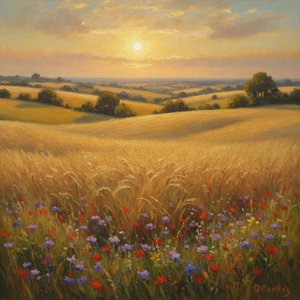
Golden Fields & Sun-Drenched Meadows: Capturing the Soul of Impressionist Landscapes
Immerse yourself in the luminous world of Impressionist landscapes. Discover how masters like Monet and Gauguin captured ephemeral light through plein air painting, and learn to bring the soul of sun-drenched meadows into your home with exquisite, hand-painted oil reproductions.

Capturing the Soul: The Most Emotionally Moving Impressionist and Post-Impressionist Masterpieces
Discover the profound emotional depth of Impressionist and Post-Impressionist masterpieces. Explore how legends like Monet, Van Gogh, and Gauguin captured light and soul through evocative landscapes and vibrant brushwork for a timeless connection to art history.

Harvesting Light: Exploring the Eternal Soul of the Farmer in Impressionist Masterpieces
Immerse yourself in the soulful landscapes of Impressionism. From Van Gogh’s rural toil to Renoir’s sun-drenched fields, discover the beauty of the harvest through our exquisite, hand-painted oil reproductions. Expertly crafted for true art lovers at TopImpressionists.com.

Beyond the Light: Capturing Raw Emotion and Subjective Vision in Post-Impressionist Landscapes
Explore the profound emotional depth of Post-Impressionist landscapes. Discover how masters like Van Gogh moved beyond light to capture raw human feeling through vibrant color and expressive texture in this expert art history retrospective.