


 Pregledaj u prostoru
 Pošalji
 Podeli
 Detalji o delu
 Vodič
Vodič

 Preuzmi
 Slični predmeti
 Rendgenski snimak
 Automatska prezentacija
 Q&A
Q&A Statistika
The Grammar


Paul Sérusier's 'The Grammar' (1892) is an iconic Cloisonnism painting, pioneering abstract art & inspiring the Nabis movement. Explore its symbolism and artistic innovation.
 Pročitaj više
Istražite umetnost Paula Serusiera (1864-1927), francuskog postimpresioniste i pionira apstraktne umetnosti. Otkrijte njegov stil klouazonizma, uticaj na pokret Nabisi i ključna dela poput 'Talismana'.
Giclee štampa / Umetnički otisak
Giclée štampa ili print na platnu muzejskog kvaliteta uz brzu izradu i raznovrsne opcije završne obrade. ( Kupite ručno oslikano delo Pređi na digitalnu sliku)




P118B дин10

P118H дин10

P118W дин10

P438Z дин10

P508JH дин12

P508YH дин12

P805H дин10

P805Z дин10

P919BZ дин10

P919G дин10

P919XJ дин10

P959ZH дин10

P968JZ дин12

W106C дин8

W218G дин10

W218JH дин8

W218Y дин10

W307PJ дин10

W316G дин10

W316PJ дин8

W316Y дин10

W398PJ дин8

W4111J дин10

W500HY дин15

W500JH дин15

W692G дин12

W849H дин8

W940BG дин15

W953PJ дин8




Standardne dimenzije
po meri
CM
INCH
Izaberite jednu od naših unapred definisanih veličina koje odgovaraju originalnim proporcijama umetničkog dela.
Loading sizes...

širina
visina
Unesite željenu širinu i visinu kako bi se štampa uklopila u vaš ram ili zid. Štampu je moguće samo iseći, ali nikada povećati iznad dimenzija originalne slike, stoga format sa drugačijim proporcijama uzrokuje gubitak dela slike. Pre početka štampe, poslaćemo vam digitalni prikaz radi potvrde. Slika prikazana na ovoj stranici ne predstavlja stvarni isrez — to pokazuje samo digitalni prikaz.
Dostava širom sveta () za 2 nedelje umesto uobičajenih 4/5 nedelja. (30 октобар)

Besplatna ekspresna dostava širom sveta

Visokokvalitetno laneno platno

Potpuno osiguranje transporta

Garancija povraćaja carine i uvoznih dažbina

Garancija vernosti boja

Politika povraćaja u roku od 100 dana (samo u slučaju nedostataka)

Garancija povrata 100% novca

Popust na više proizvoda
 Opcija sa staklom dostupna je samo za dimenzije manje od 110 cm

The Grammar
Giclee štampa / Umetnički otisak
Dimenzije reprodukcije
-


Ukupna cena
дин 7171
The Grammar: A Pioneering Exploration of Abstraction
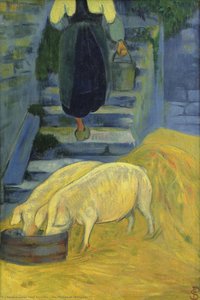
Paul Sérusier’s “Grammar,” painted in 1892, stands as a pivotal work not just within the artist's oeuvre but also as a foundational piece in the development of modern art. More than simply a portrait, it’s an intensely personal and experimental exploration of color, form, and the very nature of representation – a bold step towards abstraction that profoundly influenced generations of artists to come. The painting depicts a woman seated on the ground, absorbed in reading a book, a scene rendered with remarkable intimacy and a deliberate departure from traditional academic styles.
Sérusier’s artistic journey was deeply intertwined with the burgeoning Nabis movement, a group of Symbolist painters who sought to move beyond mere imitation of nature towards expressing inner emotions and spiritual truths. He initially studied at the Académie Julian, but it was his summer sojourn in Pont-Aven, Brittany, that proved transformative. There, under the tutelage of Paul Gauguin – a figure whose influence extended far beyond technique – Sérusier encountered the revolutionary approach of Cloisonnism, championed by Gauguin himself. This style, characterized by sharply defined outlines and areas of flat color applied in small, separate strokes, aimed to mimic the appearance of stained glass, creating a sense of luminous clarity and symbolic resonance.
Cloisonnism and the Language of Color
“Grammar” exemplifies this Cloisonnism technique with striking precision. The woman’s figure is not rendered through subtle gradations of tone but rather defined by bold, distinct outlines – a deliberate simplification that prioritizes color and form over meticulous detail. Sérusier employs a vibrant palette, dominated by deep blues, greens, and ochres, creating an atmosphere both serene and slightly melancholic. The colors aren’t blended; instead, they are applied in small, separate strokes, building up layers of hue and texture. This technique, combined with the flattened perspective, creates a sense of immediacy and directness, as if the painting is capturing a fleeting moment of contemplation.
Crucially, Sérusier’s use of color isn't merely descriptive; it carries symbolic weight. The blues evoke a sense of introspection and mystery, while the greens suggest connection to nature – a key theme in Symbolist art. The muted ochres contribute to the painting’s overall feeling of quietude and contemplation. The deliberate choice of colors, rather than realistic representation, is central to the work's expressive power.
A Study in Form and Abstraction
Beyond its technical mastery, “Grammar” represents a significant shift towards abstraction. While not entirely devoid of recognizable forms – the woman’s figure, the book, the surrounding objects – the painting prioritizes the exploration of color and form over strict representation. The simplified shapes, flattened perspective, and emphasis on pure color anticipate later developments in abstract art, foreshadowing the work of artists like Kandinsky and Mondrian. It's a deliberate move away from photographic realism towards a more subjective and expressive approach to visual language.
The painting’s title, “Grammar,” is particularly intriguing. It suggests that Sérusier was not simply depicting a scene but rather exploring the fundamental building blocks of artistic expression – the elements of color, line, and form – in a way that transcends traditional representation. The book itself becomes a symbol of knowledge and contemplation, inviting the viewer to engage with the painting on a deeper level.
Legacy and Inspiration
“Grammar” remains a vital work in the history of modern art, demonstrating Sérusier’s pioneering spirit and his profound influence on subsequent generations. It's a testament to the power of abstraction to convey emotion, ideas, and spiritual truths. Reproductions of this evocative painting continue to inspire artists and collectors alike, offering a glimpse into the heart of artistic innovation and the enduring quest for new forms of visual expression.
Pitanja i odgovori
Mogu li da koristim proširenu stvarnost kako bih video/la „The Grammar”, autor Пол Серизије u svojoj prostoriji?
Delo „The Grammar”, autor Пол Серизије možete isprobati na svom zidu putem stranice AR prikaz, koristeći proširenu stvarnost na kompatibilnom uređaju.
Na koji način se stil dela "The Grammar" odnosi na epohu njegovog tvorca?
„The Grammar”, autor Пол Серизије pripada Cloisonnism / Nabis pravcu, unutar 19. vek ere svog tvorca.
Kolika je zasićenost i intenzitet boja u delu „The Grammar”, autor Пол Серизије?
Zasićenost boja u delu "The Grammar" iznosi Muted, dok je intenzitet Monochromatic.
Srodna umetnička dela




Biografija umetnika
Рани живот и образовање
По́л Серизије, француски сликар, рођен је 9. новембра 1864. године у Паризу. Његов уметнички пут започео је на Академији Жулијан, где је постао монитор средином осамдесетих година деветнаестог века. Ово је био почетак његове каријере која ће га одвести до пионирских истраживања апстрактне уметности и инспирисати авангардни покрет Набиста, као и стилове Синтетизма и Клоазонизма. Серизије је био човек који је неуморно тражио нове начине изражавања, често се одмичући од утабаних стаза традиционалне сликарске школе. Његова рана дела показују интересовање за импресионизам, али га брзо надмашује жеља да пронађе сопствени, препознатљив стил.Уметничка каријера и покрет Набиста
Лета 1888. године Серизије је отпутовао у Пон-Авен, где се придружио кругу уметника који су се окупљали око Пола Гогена. Под строгим надзором Гогена, Серизије је насликао "Талисман", дело које представља екстреман пример Клоазонизма и приступа апстракцији. Овај комад био је манифестација његовог иновативног духа и спремности да експериментише са новим техникама, одбацујући реалистичку прецизност у корист симболичног садржаја и декоративне лепоте. Као представник постимпресионизма, Серизије је био део групе Ле Наби (Les Nabis), заједно са Пјером Бонаром, Едуаром Виларом и Морисом Денијем. Иако није добио толику пажњу као неки од његових колега, Серизијев допринос развоју апстрактне уметности је неоспоран. Група Набиста тежила је да премости јаз између сликарства и других визуелних уметности, стварајући дела која су била интимна, симболична и често натприродна.Клоазонизам и Синтетизам: Серизијева техника
Серизијев рад је био снажно обележен Клоазонизмом – стилом карактеристичним по смелим, равним облицима раздвојеним тамним контурама. Овај приступ, који подсећа на технику израде емајла, омогућио му је да се ослободи реалистичке репрезентације и фокусира се на декоративне квалитете боје и композиције. Клоазонизам није био само техника; то је била филозофија сликарства која је тежила да врати сликању њену суштинску, симболичку моћ. Уз Клоазонизам, Серизије се бавио и Синтетизмом – стилом који је настојао да комбинује различите уметничке елементе у кохерентну целину. Ово је значило одбацивање имитације природе и стварање дела која су била самостална, аутентична изражавања уметникове визије.Позната дела и наслеђе
Нека од Серизијеових најзначајнијих радова укључују:- L'Averse (1893), Музеј Орсе, Париз
- Портрет Пола Рансона (1890), Музеј Орсе, Париз
- Меланхолија (1890)
- Змијски ловци (1894), Музеј Народни, Варшава
Утицај и значај
Кључни закључци: * Пол Серизије је био француски сликар који је пионирским радом у апстракцији инспирисао покрет Набиста. * Студирао је на Академији Жулијан и касније предавао на Академији Рансон. * Серизијев рад био је под утицајем Клоазонизма, стила карактеристичног по смелим, равним облицима. Његов допринос развоју апстрактне уметности и Синтетизма остао је трајан спомен на његову креативност и визионарски приступ сликарству.
Пол Серизије
1864 - 1927 , Француска
Osnovne informacije
- Artistic Movement Or Style: Postimpresionizam
- Artists Or Movements Influenced By This Artist: ['Nabis']
- Artists Who Influenced This Artist: ['Paul Gauguin']
- Date Of Birth: 9. novembar 1864.
- Date Of Death: 7. oktobar 1927.
- Full Name: Louis-Paul-Henri Sérusier
- Nationality: Francuz
- Notable Artworks:
- Talisman
- L'averse
- Portret Paula Ransona
- Place Of Birth: Pariz, Francuska
Povezani članci

The Soul of Color: A Journey into the Emotional Resonance of Lyrical Abstraction
Embark on a cultural journey through Lyrical Abstraction. Explore how masters like Kandinsky used color and motion to translate emotion into visual poetry. Discover the profound beauty of abstract expressionism and learn to curate emotional resonance in your own art collection.