

Prikazano: · Sa okvirom:
 Pregledaj u prostoru
 Pošalji
 Podeli
 Detalji o delu
 Vodič
Vodič

 Preuzmi
 Slični predmeti
 Rendgenski snimak
 Automatska prezentacija
 Pitanja i odgovori
 Statistika

дин 28179
Ručno rađena uljana reprodukcija
Ručno oslikano uljanim bojama na platnu u dimenzijama i okviru po vašem izboru, izrađeno po porudžbini od strane naših umetnika. ( Pređi na štampu Pređi na digitalnu sliku)
Veličina
·Standardne dimenzije
po meri
CM
INCH
Izaberite jednu od naših unapred definisanih veličina koje odgovaraju originalnim proporcijama umetničkog dela.
Učitavanje dimenzija...

širina
visina
Unesite potrebnu širinu i visinu kako bi se slika uklopila u vaš ram ili zid. Pošto je ovo ručno oslikano delo, umetnik može za dimenzije drugačijeg oblika naslikati malo više prostora oko slike ili malo skratiti ivice — izbor je na vama. Pre početka rada, poslaćemo vam digitalni prikaz radi potvrde. Slika prikazana na ovoj stranici ne predstavlja konačan rezultat — samo digitalni prikaz pokazuje stvarnu sliku.
 Pročitajte više
Završetak
·
Beli rub дин1

zamrljene ivice дин1

Prošireno дин1

P118B дин10

P118H дин10

P118W дин10

P438Z дин10

P508JH дин12

P508YH дин12

P805H дин10

P805Z дин10

P919BZ дин10

P919G дин10

P919XJ дин10

P959ZH дин10

P968JZ дин12

W106C дин8

W218G дин10

W218JH дин8

W218Y дин10

W307PJ дин10

W316G дин10

W316PJ дин8

W316Y дин10

W398PJ дин8

W4111J дин10

W500HY дин15

W500JH дин15

W692G дин12

W849H дин8

W940BG дин15

W953PJ дин8

H24-GOLD дин30

H24-SILVER дин30

H36-GOLD дин45

H36-SILVER дин45
Isporućuje se u zaštitnoj tubi, spremno za ugradnju u vaš ram.
Dodatne usluge
opcionoŠta dodatne opcije uključuju?
Primeri onoga što se može promeniti: Zamena lica fotografijom kupca; Dodavanje ljubimca (npr. zamena mačke psom); Uključivanje skrivene poruke u pozadini; Promena pejzaža ili elemenata u pozadini.
Nakon porudžbine, tim TopImpressionists.com će poslati imejl klijentu radi dobijanja uputstava i dostaviti prikaz makete
Nakon porudžbine, tim TopImpressionists.com će poslati imejl klijentu radi dobijanja uputstava i dostaviti prikaz makete
Svetska isporuka () za 3/4 nedelje umesto uobičajenih 5 nedelja. (10 новембар). Bez kompromisa po pitanju kvaliteta.
Zaštitni lak
Kratki opis natpisa
Detalji gravirane bronze ploče
This elegant plaque features the artist's name and the title of the artwork, finely engraved for a timeless presentation.
It is made from bronze with a refined, elegant finish. The text is precisely laser-engraved for a sharp and permanent result. Measuring 9x2 cm, the plaque is compact yet easy to read. It's built to be durable and scratch-resistant, offering a professional, museum-quality look. Mounting is simple thanks to the included adhesive backing.
Detalji prozirne akrilne pločice
The plaque includes essential engraved details such as the artist's name, the title of the artwork, the date it was created, the type of media used-like oil on canvas or watercolor-a brief description of the piece, and a QR code that links to the complete artwork information.
It is crafted from clear acrylic, offering a sleek, modern appearance. The text is UV-engraved in black to ensure strong visual contrast. With a size of 10x15 cm, it ensures optimal readability. It comes equipped with two metal hooks for secure wall mounting. The plaque is designed to be weather-resistant, making it suitable for various environments, and it includes interactive features that work seamlessly with smartphone scanning.
Detalji crne akrilne pločice
This elegant plaque includes engraved information such as the artist's name, the title of the artwork, the date it was created, the type of media used (like oil on canvas or watercolor), a short description of the artwork, and a QR code for quick access to more information.
The plaque itself is made from refined black acrylic with a premium finish. The text is laser-engraved in white for high contrast and readability. Its size is 10x15 cm, designed to be easy to read. It comes with two metal hooks for professional mounting. The design is sleek and fits any interior style. It is also weather-resistant and durable, with built-in digital integration for mobile compatibility.
Opcija sa staklom dostupna je samo za dimenzije manje od 110 cm
 Opcija sa staklom dostupna je samo za dimenzije manje od 110 cm
- Besplatna ekspresna dostava širom sveta
- Visokokvalitetno laneno platno
- Potpuno osiguranje transporta
- Garancija povraćaja carine i uvoznih dažbina
- Garancija vernosti boja
- Politika povraćaja u roku od 100 dana (samo u slučaju nedostataka)
- Garancija povrata 100% novca
- Popust na više proizvoda


Opis predmeta
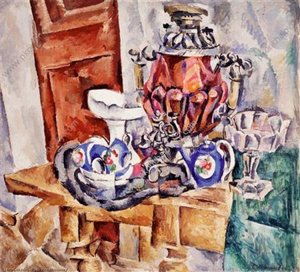
Explore Pyotr Konchalovsky's captivating Begonia – a still life masterpiece depicting vibrant red and pink flowers within elegant vases alongside delicate cups, capturing the spirit of Russian art history.
Biografija umetnika
Piotr Končalovski (1876-1956) – ruski slikar koji je spojio impresionizam, fauvizam i socijalistički realizam. Istražite njegove pejzaže, portrete i ključna dela ruskog avangarda!
O slici
A Portrait of Turbulent Russia: Exploring Pyotr Konchalovsky’s “Begonia”
Pyotr Petrovich Konchalovsky's "Begonia," painted circa 1908, stands as a poignant emblem of the Russian avant-garde’s fascination with capturing fleeting moments of beauty amidst societal upheaval. More than just a depiction of flowers—specifically a begonia blossom—the painting embodies a broader artistic impulse to distill emotion and intellect into visual form, reflecting the anxieties and aspirations of a nation grappling with rapid modernization.
Style & Technique: Konchalovsky’s approach aligns squarely with Neo-Impressionism, championed by artists like Georges Seurat and Paul Cézanne. Unlike Impressionists who sought to capture atmospheric effects, Konchalovsky meticulously applied small dots of pure pigment—primarily reds, pinks, and yellows—to build up tonal variations within the flower petals and vases. This technique, known as Pointillisme, wasn’t merely a stylistic choice; it represented a deliberate rejection of traditional brushstrokes in favor of scientific observation and mathematical precision. The artist painstakingly analyzed how light interacts with color, striving to reproduce its nuances with unparalleled accuracy.
Historical Context: Painted during the Belle Époque—a period characterized by optimism and artistic experimentation—"Begonia" speaks to a Russia undergoing significant transformations under Tsar Nicholas II’s reign. While outward appearances suggested prosperity and grandeur (the opulent palaces of St. Petersburg), beneath the surface simmered discontent fueled by social inequalities and burgeoning revolutionary sentiment. The painting's stillness contrasts sharply with this turbulent backdrop, inviting contemplation on themes of fragility and resilience.
Symbolism & Composition: The begonia itself carries considerable symbolic weight. Traditionally associated with femininity, beauty, and rebirth—often depicted as a symbol of resurrection—the flower’s delicate petals symbolize the ephemeral nature of life and the importance of savoring every moment. The vases serve as containers for this beauty, mirroring the role of art in preserving and transmitting cultural values. Furthermore, the arrangement of objects – the vases, cups, and begonia – contributes to a carefully constructed visual narrative that emphasizes balance and harmony despite the underlying tension.
Emotional Impact: Viewing “Begonia” evokes a sense of quiet contemplation and melancholic beauty. The artist’s masterful use of color and technique captures not only the physical appearance of the flower but also its emotional essence—a subtle suggestion of vulnerability amidst grandeur, mirroring the complexities of Russian society at the turn of the century. It's a piece that lingers in the mind long after viewing, prompting reflection on themes of beauty, decay, and the enduring power of artistic expression.
- Artist: Pyotr Petrovich Konchalovsky
- Year Painted: Circa 1908
- Style: Neo-Impressionism
- Technique: Pointillisme (Dot Painting)
Pitanja i odgovori
Koji emocionalni ton prati stil Russian Symbolism u delu "Begonia"?
„Begonia“ odiše Tranquil emocijom u okviru pokreta Russian Symbolism.
Kakav osećaj izazivaju boje dela „Begonia”, autor Petar Končalovski?
Neutrals paleta dela „Begonia”, autor Petar Končalovski skladno se uklapa sa njegovim Tranquil emocionalnim tonom. Boja je jedan od načina na koji umetničko delo prenosi osećaj.
Gde bi najbolje bilo okačiti reprodukciju dela „Begonia”, autor Petar Končalovski?
Format (Portrait) i preporučeni prostor (Living Room) su dve navedene činjenice o postavljanju za „Begonia”, autor Petar Končalovski.
Brze činjenice i kviz o umetnosti
O Petar Končalovski

Petar Končalovski
1876 - 1956, Русија
Biografija umetnika
Petar Končalovski: Hroničar Ruske Duše i Umjetničkih Previranja
Petar Petrovč Končalovski, rođen 21. februara 1876. godine u Slavianku blizu Harkova, bio je mnogo više od običnog slikara; on je bio vizuelni hroničar Rusije koja se suošava sa dubokim transformacijama. Njegovo umetničko putovanje odrazilo se na nemirnu tranziciju nacije kroz revolucije i ideološke promene, obeleženo neumornom potragom za novim oblicima ekspresije. Končalovsko je odrastao u atmosferi bogatoj intelektualnim i kreativnim strujama. Njegov otac, Petr Petrovč Končalovski, bio je cenjeni prevodilac i izdavač umetnosti, čiji je moskovski dom postao živopisno središte gde su se sastajali vodeći ruski umetnici tog vremena – Valentin Serov, Mihail Vrubel, Vasilij Surikov. Ova rana izloženost nije bila samo posmatračkog karaktera; ona je u mladom Petru probudila duboku zahvalnost za umetničku ekspresiju i postavila temelje za njegovu buduću karijeru. Vikendi provedeni upijajući se u remek-dela Trećakovske galerije bili su formativni, oblikujući njegove estetske senzibilitete snagom ruskih majstora.Od Pariskih Uticaja do Avangardne Inovacije
Končalovskovo formalno obrazovanje započelo je u Moskvi na Školi za slikarstvo, skulpturu i arhitekturu, ali ključni period usledio je u Parizu od 1896. do 1898. godine na Akademiji Žulijan. Ovaj potonji susret sa francuskim umetničkim svetom bio je transformativan. On se upoznao sa revolucionarnim delima Pola Sezana i Vincenta van Goga, umetnika koji su osporavali konvencionalnu reprezentaciju i istraživali nove načine percepcije oblika i boje. Kasnija poseta Arlu omogućila mu je dublje razumevanje Van Gogove umetničke vizije – hodočašće u srce ekspresivne intenzivnosti. Po povratku u Rusiju, nastavio je svoje studije na Carskoj akademiji umetnosti u Sankt Petersburgu, diplomirajući 1907. godine. Međutim, upravo po povratku Končalovski je zaista počeo da kova svoj jedinstveni stil. Postao je središnja figura u ruskog avangardnog pokreta, suosnivač uticajne grupe „Bubni Valet“ (Knave of Diamonds) 1910. godine. Ova grupa je odbacila akademske tradicije i zagovarala eksperimentisanje, tražeći inspiraciju ne samo iz zapadnoevropskog modernizma, već i iz sopstvenih ruskih folklornih tradicija – ikona, gostionskih znakova i živopisnih popularnih štamparija poznatih kao *lubok*. Kao prvi predsednik grupe, Končalovski je igrao vitalnu ulogu u oblikovanju njenog pravca i promovisanju njenih radikalnih ideja.Navigacija Promenljivim Ideologijama: Stil i Tematika
Končalovskov umetnički stil evoluirao je tokom njegove karijere, odražavajući kako lično istraživanje tako i promenljivu političku klimu Rusije. U početku pod uticajem Fauvizma i Sezana, njegova rana dela su se karakterizovala hrbrim bojama, pojednostavljenim oblicima i fokusom na strukturu. Slike poput „Natura mrtva sa šoljom kafe“ ilustruju ovaj period, prikazujući živopisnu paletu i dinamičnu kompoziciju. Nakon služenja u ruskoj vojsci tokom Prvog svetskog rata, Končalovski stil je počeo da se menja. Uspon socijalističkog realizma pod Sovjetskom vladom zahtevao je umetnost koja služi ideološkim ciljevima, slaveći socijalističke ideale i prikazujući istaknute ličnosti. Iako je ovo predstavljalo odmak od njegovih ranijih avangardnih istraživanja, Končalovski se prilagodio, postajući poznat po svojim ceremonijalnim portretima. Uprkos ovim promenama, održao je svoj prepoznatljiv umetnički glas, uvodeći osećaj čvrstine i monumentalnosti čak i u svoja politički opterećenija dela. Ogroman broj njegovih radova – preko 5000 komada – svedoči o njegovoj neumornoj predanosti i neprestanoj posvećenosti umetnosti slikanja.Nasleđe i Trajna Značajnost
Končalovski doprinos ruskoj umetnosti je neuporediv. On je prevazišao jaz između ranog modernizma i socijalističkog realizma, navigirajući složenim političkim strujama dok je ostao značajna umetnička snaga. Njegova prva samostalna izložba u Trećakovskoj galeriji 1922. godine učvrstila je njegovu reputaciju kao jednog od vodećih ruskih umetnika. Izvan sopstvenog rada, Končalovski je podsticao porodicu duboko uključenu u umetnost; njegov sin, Mihail Petrovč Končalovski, postao je poznati filmski reditelj, a njegova ćerka, Natalija Končalovska, bila je uspešna umetnica. Njegove slike nisu samo estetski ugodni predmeti, već i istorijski dokumenti koji odražavaju burno razdoblje u kojem su stvoreni. Oni nude dragocena saznanja o evoluciji ruske umetnosti i izazovima s kojima se suočavali umetnici koji rade unutar brzo promenljivog društva. Končalovskijeva sposobnost da se prilagođava, zadržavajući svoj prepoznatljivi stil, učvrstila je njegovo mesto kao ključne figure u ruskoj istoriji umetnosti, ostavljajući za sobom nasleđe koje i dalje inspiriše i fascinira publiku širom sveta. Njegov rad je svedoštvo o otpornosti umetničke ekspresije usred političkih nemira, a njegov uticaj se i dalje može videti u savremenoj ruskoj umetnosti.Kratke činjenice o umetniku Petar Končalovski
- Datum Rođenja: 21. februar 1876.
- Datum Smrti: 2. februar 1956.
- Mesto Rođenja: Harkov, Rusija
- Nacionalnost: Ruski
- Pokreti Pod Uticajem: ['Ruska avangarda']
- Puno Ime: Pyotr Petrovich Konchalovsky
- Umetnički Pokret: Avangarda, Fauvizam, Realizam
- Uticajni Umetnici:
- Paul Cézanne
- Vincent van Gogh
- Značajna Dela:
- Pejzaž
- Portret sa šoljom
- Novgorodijanci
Srodna umetnička dela




Petar Končalovski
Begonia
() ·
Sa okvirom: · Ručno oslikano uljanim bojama na platnu od lana
Ukupno