Opis umetničkog dela
Victor Joseph DeManet: Luminary Petals on a Wet, Black Bough – A Descent into Surrealist Echoes
Victor deManet (1895-1964), born in Brussels, Belgium, was a sculptor whose artistic endeavors resonated deeply within the cultural landscape of his time. Notably recognized for participation in Olympic art competitions and celebrated as a pioneer of Belgian sculpture, DeManet’s oeuvre embodies a distinctive blend of formal innovation and psychological exploration—a characteristic that aligns seamlessly with the broader currents of Surrealism. His magnum opus, “Untitled (from the series Luminary Petals on a Wet, Black Bough),” exemplifies this artistic vision, presenting a haunting tableau that transcends mere visual representation to delve into realms of mythic allusion and unsettling contemplation.
Composition and Technique: Shadow’s Embrace
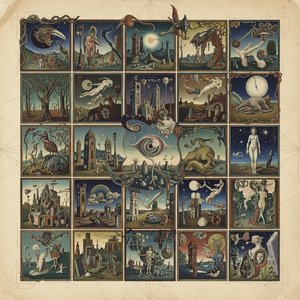
The artwork itself is rendered in marble with gold outline—a testament to DeManet's mastery of sculptural technique. The photograph captures a meticulously crafted piece, showcasing smooth surfaces achieved through painstaking polishing and highlighting the subtle textural nuances inherent in the material. Dominating the visual field is a vertical composition emphasizing the central figure draped in black fabric, whose stylized floral appendages extend upwards from its back—a deliberate departure from conventional anatomical depictions. Lines delineate the form of the figure with precision, while geometric shapes contribute to an overall sense of spatial ambiguity and surrealist distortion. Dramatic lighting casts long shadows across the surface, intensifying the artwork’s mood and creating striking contrasts that underscore its enigmatic character. The artist's meticulous attention to detail speaks volumes about his dedication to capturing not just form but also emotion—a hallmark of Surrealist aesthetics.
Symbolism: Fractured Reality and Mythic Resonance
“Untitled” operates on multiple symbolic levels, drawing heavily from literary sources and artistic precedents that grapple with existential anxieties. Recurring motifs – notably decapitation – serve as a visual shorthand for themes of vulnerability, transformation, and confronting mortality—concepts central to Surrealist thought. The ambiguous gender identity of the principal figure echoes references to biblical narratives like Judith and Holofernes and Salome and John the Baptist, highlighting DeManet’s engagement with archetypal imagery and exploring the complexities of human psychology. Furthermore, the artwork's title itself – “Luminary Petals on a Wet, Black Bough” – evokes associations with Saint Nicholas (Virgács) and Krampus—a juxtaposition that introduces elements of folklore and pagan ritual into the artistic discourse. This deliberate layering of references amplifies the artwork’s unsettling atmosphere and invites viewers to engage in active interpretation.
Emotional Impact: A Journey Into Darkness
Ultimately, “Untitled” succeeds in conveying a profound emotional resonance—one characterized by mystery, unease, and a palpable sense of horror. The dark color palette reinforces this mood, transporting the viewer into an inner landscape marked by introspection and confronting primal fears. Unlike many artworks that aim for explicit representation or didactic instruction, DeManet’s piece eschews explanations, instead fostering a contemplative experience where meaning emerges from subtle suggestion and allusion. It is precisely this refusal to offer easy answers—this embrace of ambiguity—that elevates “Untitled” beyond mere visual spectacle, transforming it into an enduring emblem of Surrealist artistic ambition and a captivating exploration of the human condition.
Historical Context: The Surrealist Vanguard
DeManet’s work stands firmly within the vanguard of Surrealism – a movement that emerged in Europe during the interwar years as a reaction to rationalism and psychoanalysis. Influenced by thinkers like Sigmund Freud and Carl Jung, Surrealists sought to liberate creativity from the constraints of logic and reason, prioritizing dreams, subconscious impulses, and irrational associations. DeManet’s sculptural explorations mirrored this ethos, reflecting a fascination with distorted forms, unsettling juxtapositions, and evocative symbolism—elements that resonated powerfully with the artistic sensibilities of his era. His contribution to Olympic art competitions solidified his reputation as a visionary artist who dared to challenge conventional aesthetic norms and delve into the depths of human psychology.



 Kupi štampu
 Pošalji
 Podeli
 Detalji o delu

 Преузми
 Slični predmeti
 Rendgenski snimak
 Slajdovi


 Pročitaj više






































 Opcija sa staklom dostupna je samo za dimenzije manje od 110 cm