Pregledaj u prostoru
 Podeli
 Podeli
 Detalji
 Vodič
Vodič

 Preuzmi sliku
 Slični predmeti
 Rendgenski snimak
 Automatska prezentacija
 Statistika
Лава

Уживајте у дивним геометриjskim апстракцијама Виктора Васарелија, пионера Оп Арта и кинетичке слике! Откријте његову утицајну естетику и трајно наслеђе на модерну уметност и дизајн.
 Pročitaj više
Otkrijte fascinantan svet Viktora Vaserelija (1906-1997), pionira Op Art! Istražite njegove geometrijske apstrakcije, optičke iluzije i trajni uticaj na modernu umetnost i dizajn.
Giclee štampa / Umetnički otisak
Giclée štampa ili print na platnu muzejskog kvaliteta uz brzu izradu i raznovrsne opcije završne obrade. ( Naručite ručno oslikano reprodukciju Pređi na prodaju digitalnih slika)




P118B $10

P118H $10

P118W $10

P438Z $10

P508JH $12

P508YH $12

P805H $10

P805Z $10

P919BZ $10

P919G $10

P919XJ $10

P959ZH $10

P968JZ $12

W106C $8

W218G $10

W218JH $8

W218Y $10

W307PJ $10

W316G $10

W316PJ $8

W316Y $10

W398PJ $8

W4111J $10

W500HY $15

W500JH $15

W692G $12

W849H $8

W940BG $15

W953PJ $8




Standardne dimenzije
po meri
CM
INCH
Izaberite jednu od naših unapred definisanih veličina koje odgovaraju originalnim proporcijama umetničkog dela.
Loading sizes...

širina
visina
Možete uneti sopstvene dimenzije kako biste umetničko delo prilagodili specifičnom okviru ili prostoru. Ako odabrani format ne odgovara proporcijama originalne slike, mi ćemo ili iscrtati deo dela ili proširiti sliku pomoću ogledane ivice ili jednobojnog popunjavanja. Digitalni prikaz će vam biti poslat na odobrenje pre početka proizvodnje.
Imajte na umu da pregled na ekranu ne odražava stvarno iscrtavanje ili proširivanje. Samo će prikaz (mockup) precizno pokazati finalnu kompoziciju.
Iako su prilagođene dimenzije dostupne, preporučujemo da odaberete dimenziju sa unapred definisane liste kako biste očuvali originalne proporcije.
Dostava širom sveta () za 2 nedelje umesto uobičajenih 4/5 nedelja. (23 септембар)

Besplatna ekspresna dostava širom sveta

Visokokvalitetno laneno platno

Sveobuhvatno osiguranje transporta

Garancija povraćaja carine i uvoznih dažbina

Garancija vernosti boja i autentičnosti pri reprodukciji

Politika povraćaja u roku od 100 dana (samo u slučaju nedostataka)

Garancija povrata 100% novca

Popust pri većoj količini
 Opcija sa staklom dostupna je samo za dimenzije manje od 110 cm

Лава
Giclee štampa / Umetnički otisak
Veličina reprodukcije
-


Ukupna cena
$ 69
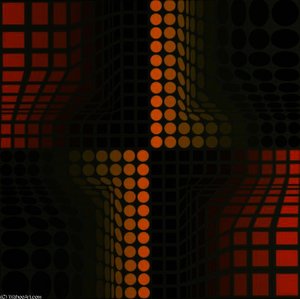
Lava: A Geometric Symphony of Color
Victor Vasarely’s “Lava” isn't merely a painting; it’s an invitation into a realm where visual perception bends and dances, embodying the very essence of Op Art – Optical Art. Born Károly Vaszary in Pécs, Croatia, in 1906, Vasarely embarked on a singular artistic journey fueled by a fascination with mathematics and geometry, disciplines that would become inseparable from his groundbreaking style.
The artwork itself presents a mesmerizing composition dominated by a large central sphere encircled by smaller spheres of varying sizes. These aren’t randomly placed; they adhere to Vasarely's meticulously crafted system—a method rooted in the Bauhaus movement’s pursuit of functional design and abstract geometric forms. This systematic approach ensured that every element contributed to an overall illusion of movement, creating a captivating kaleidoscope effect.
Vasarely’s technique involved applying pigment onto canvas with a spatula, achieving a textured surface that enhances the visual dynamism. The palette explodes with vibrant hues—reds, blues, greens, yellows, purples, oranges, and pinks—carefully chosen to maximize their impact on the eye. These colors aren't simply decorative; they’re strategically deployed to stimulate retinal stimulation, triggering an unconscious response in the viewer.
Historical Context: Bauhaus Influence & The Rise of Kinetic Art
“Lava” emerged during a period marked by significant artistic experimentation and intellectual ferment—the mid-1960s. Vasarely’s work directly responded to the burgeoning interest in kinetic art, which sought to engage viewers actively through movement and illusion. Simultaneously, it reflected the Bauhaus ethos – prioritizing simplicity, functionality, and geometric abstraction as responses to the challenges of postwar Europe.
The Bauhaus school championed a radical rethinking of artistic expression, rejecting traditional conventions in favor of exploring new visual languages. Vasarely embraced this spirit wholeheartedly, developing his distinctive style as a deliberate challenge to established aesthetic norms. His canvases became emblems of optimism and innovation, reflecting the broader cultural landscape of their time.
Symbolism & Perception: Beyond Representation
Unlike representational art that strives to depict reality faithfully, Vasarely’s “Lava” deliberately eschews illusionistic techniques. Instead, it focuses on manipulating perception—creating an experience that transcends mere visual observation. The sphere symbolizes wholeness and unity, while the interconnected circles and squares embody order and structure.
The artwork's power lies in its ability to provoke a subconscious reaction within the viewer. Vasarely’s system aimed to bypass rational thought, tapping into primal sensory responses—a testament to his conviction that art could communicate directly with the human psyche. It’s an invitation to contemplate the fundamental nature of visual experience and the transformative potential of geometric abstraction.
Emotional Impact & Artistic Legacy
"Lava" resonates deeply with viewers through its mesmerizing beauty and captivating movement. The artwork evokes feelings of wonder, excitement, and contemplation—a reflection of Vasarely’s profound belief in art's capacity to inspire awe and stimulate intellectual curiosity.
Victor Vasarely’s contribution to modern art is undeniable. He solidified Op Art as a dominant aesthetic force, influencing generations of artists and designers alike. His pioneering approach continues to captivate audiences today, demonstrating the enduring relevance of geometric abstraction and its ability to transcend temporal boundaries.
Biografija umetnika
Виктор Васарели: Мајстор оптичких илузија и отац оп-арта
Рођен као Карољ Вашархељи у Печу, тада у Аустроугарској (а сада у Хрватској), 1906. године, Виктор Васарели је био сликар који је револуционисао свет уметности својим иновативним приступима геометрији и перцепцији. Иако је првобитно студирао медицину на Универзитету Еђвш Лоранд у Будимпешти, Васарели је брзо увидео да га привлачи моћ визуелне изражавања. Одустајући од медицинске каријере, посветио се сликарству и уписао Подолини-Волкман академију, чиме је означио почетак животног пута посвећеног истраживању фундаменталних принципа који управљају перцепцијом и обликом. Кључни тренутак у његовом развоју био је упис у радионицу Сандора Бортњика – Мyљех, школе дубоко под утицајем Баухаус покрета. Овде је Васарели усвојио принципе функционалног дизајна и геометријске апстракције, који су касније цветали у његовом препознатљивом стилу.
Од ране апстракције до зоре оп-арта
Крај осамдесетих и почетак деведесетих година двадесетог века били су сведоци Васарелијеве постепене дистанце од репрезентативне уметности, како би се дубље посветио свету геометријске апстракције. Радови као што су "Плава студија" и "Зелена студија", настали 1929. године, оличавају овај прелазак – свесни одрицање од наративног садржаја у корист чистих облика и односа боја. Иако је био под утицајем мајстора као што су Пит Мондријан и Казимир Маљевић, Васарели није желео само да их имитира. Тражио је начин да надмаши статичне композиције својих претходника, тежећи динамици која би активно ангажовала перцепцију посматрача. Овај траг га је одвео у Париз 1930. године, где се етаблирао као графички дизајнер и рекламни асистент, усвршавајући своје вештине док је наставио да развија своју јединствену уметничку визију.
Систематска илузија: Дефинисање покрета
Шездесетих година двадесетог века, Виктор Васарели се потпуно етаблирао као водећа фигура у развојном оп-арт покрету. За разлику од многих уметника који су се ослањали на интуицију и спонтану изражаваност, Васарели је свом раду приступио са посебно систематском методологијом. Користио је мреже и математичке принципе да генерише обрасце који стварају моћне оптичке илузије – визуелне вибрације, вртложуће ефекте и осећај дубине где физички није било ништа такво. Није реч о превари; него о откривању уграђене динамике саме перцепције. Верујући у репродуковање и масовну привлачност, тежио је да демократизује уметност чинећи је доступном изван галерија и музеја. Његов рад је изазивао посматраче да посумњају у сопствено визуелно искуство, принуђујући их да активно учествују у стварању значења. Овај намерни ангажман са перцепцијом одвојио је оп-арт и учврстио Васарелијево место на његовом врху.
Изван платно: Кинетичка експорација и трајно наслеђе
Васарелијева уметничка истраживања нису се зауставила на статичним илузијама. Све више је кренуо у кинетичку уметност, стварајући радове који укључују стварно кретање или делују као да се крећу кроз пажљиво осмишљене визуелне ефекте. "Жорж Помпиду" (1976), велико кинетичко дело инсталирано у Центру Помпиду у Паризу, сведочи о овој амбицији – интеграцији уметности са архитектуром и градским дизајном на велику скалу. Такође је показао изузетну иновацију применом својих дизајна на комерцијалне производе, најпознатије кроз сарадњу са Rosenthal порцеланом, што је резултирало познатом серијом посуђа "Suomi". Ова спремност да укине границе између фине уметности и функционалних објеката додатно је нагласила његову веру у потенцијал уметности да прошири свакодневни живот. Етаблирање Фондације Васарели у Аксу-ан-Провансу осигурало је чување и промоцију његовог опсежног дела, док је изузетан догађај – укључивање серigraphs на француско-совјетској летелици Salyut 7, 1982. године – симболизовао глобално признање његове уметности и њену везу са ширим човековим подухватима истраживања.
Историјски значај
Васарелијев допринос историји уметности је вишеструки. Прешао је изван традиционалних техника сликања да би створио радове који активно ангажују перцепцију посматрача. Његов систематски приступ изазвао је конвенционална схватања уметничке креативности и отворио пут за рачунарски генерисану уметност и дигитални дизајн. Прихватајући репродуковање и комерцијалне примене, Васарели је избрисао границе између фине уметности и популарне културе, остављајући трајан утисак на обе. Није стварао само естетски пријатне објекте; спроводио је визуелне експерименте који су откривали фундаменталне истине о томе како видимо свет.

Viktor Vasereli
1906 - 1997 , Хрватска
Brzi pregled
- Datum Rođenja: 9. april 1906.
- Datum Smrti: 15. mart 1997.
- Mesto Rođenja: Peč, Hrvatska
- Nacionalnost: Mađarsko-francuska
- Pokreti/Umetnici Pod Uticajem:
- Grafički dizajn
- Enterijer
- Puno Ime: Viktor Vasareli
- Umetnički Pokret: Op Art, Kinetička umetnost
- Uticajni Umetnici:
- Piet Mondrian
- Kazimir Malevič
- Značajna Dela:
- Plava studija
- Zebra
- Suomi
Srodni članci

The Beauty of Less: A Sophisticated Guide to the Soul of Minimalist Art and Geometric Harmony
Discover the profound elegance of minimalist art. Explore how geometric abstraction and the beauty of reduction create serene, sophisticated spaces through our expert guide to finding soul and harmony in every line and shape.

The Beauty of Order: A Journey Through the Timeless Elegance of Geometric Abstraction
Discover the profound elegance of geometric abstraction. Explore a curated journey through minimalist mastery, from De Stijl to modern textures, and learn how structured beauty brings timeless order and sophisticated serenity to your art collection.
Istražite umetnička dela organizovana prema temama, stilovima i karakteristikama.