

 Pregledaj u prostoru
 Pošalji
 Podeli
 Detalji o delu
 Vodič
Vodič

 Preuzmi
 Slični predmeti
 Rendgenski snimak
 Automatska prezentacija
 Pitanja i odgovori
 Statistika
Chez Mouquin


Delve into William James Glackens' masterpiece 'Chez Mouquin,' a captivating Ashcan School painting depicting Parisian social life and capturing the spirit of early 1905 New York.
 Pročitaj više
Istražite realističke slike Vilijama Džejmsa Glakensa (1870-1938), pionira škole Ešken, koji je prikazivao živopisne scene života u ranom 20. veku u Njujorku i Parizu. Otkrijte detaljne prikaze urbanog života i njegov uticaj na američku umetnost.
Giclee štampa / Umetnički otisak
Giclée štampa ili print na platnu muzejskog kvaliteta uz brzu izradu i raznovrsne opcije završne obrade. ( Kupite ručno oslikano delo Pređi na digitalnu sliku)




































Standardne dimenzije
po meri
CM
INCH
Izaberite jednu od naših unapred definisanih veličina koje odgovaraju originalnim proporcijama umetničkog dela.
Loading sizes...

širina
visina
Unesite željenu širinu i visinu kako bi se štampa uklopila u vaš ram ili zid. Štampu je moguće samo iseći, ali nikada povećati iznad dimenzija originalne slike, stoga format sa drugačijim proporcijama uzrokuje gubitak dela slike. Pre početka štampe, poslaćemo vam digitalni prikaz radi potvrde. Slika prikazana na ovoj stranici ne predstavlja stvarni isrez — to pokazuje samo digitalni prikaz.
Dostava širom sveta () za 2 nedelje umesto uobičajenih 4/5 nedelja. (3 новембар)

Besplatna ekspresna dostava širom sveta

Visokokvalitetno laneno platno

Potpuno osiguranje transporta

Garancija povraćaja carine i uvoznih dažbina

Garancija vernosti boja

Politika povraćaja u roku od 100 dana (samo u slučaju nedostataka)

Garancija povrata 100% novca

Popust na više proizvoda
 Opcija sa staklom dostupna je samo za dimenzije manje od 110 cm

Chez Mouquin
Giclee štampa / Umetnički otisak
Dimenzije reprodukcije
-


Ukupna cena
дин 7334
Chez Mouquin: A Snapshot of Parisian Bohemia
William James Glackens’ “Chez Mouquin,” completed in 1905, stands as a quintessential emblem of the Ashcan School—a movement that irrevocably altered the course of American art. Rejecting the idealized landscapes and mythological narratives favored by their predecessors, Glackens and his fellow artists sought to portray the gritty realities of urban life with unflinching honesty.
The painting depicts a scene within Mouquin’s Restaurant, a popular Parisian establishment frequented by artists and intellectuals during the Belle Époque. At its center is Jeanne Mouquin, the proprietor's wife, engaged in conversation with James B. Moore, a wealthy playboy known for his patronage of the arts. Glackens himself subtly captures the atmosphere of the dining room, reflecting the faces of fellow attendees—Charles Fitzgerald, an art critic and Edith Glackens, his wife—creating a tableau vivant that encapsulates the spirit of artistic camaraderie.
Glackens’ masterful technique exemplifies Ashcan Realism. Employing muted tones—primarily browns, ochres, and blacks—he skillfully captures the dim lighting of the restaurant, enhancing the sense of intimacy and immediacy. The brushstrokes are loose and expressive, conveying movement and capturing the subtle nuances of facial expressions. Glackens' deliberate use of chiaroscuro – dramatic contrasts between light and dark – draws attention to key figures and contributes to the painting’s overall mood.
A Reflection of Artistic Vision
“Chez Mouquin” isn’t merely a depiction of a social gathering; it’s a profound statement about Glackens' artistic philosophy. Like many Ashcan artists, he eschewed grand narratives in favor of capturing everyday moments—the conversations, gestures, and expressions that define human experience. This approach aligns with the broader Ashcan ethos: to portray American life as it truly is – flawed, vibrant, and brimming with potential.
Glackens’ influence extends beyond his stylistic choices. He championed a rejection of academic conventions, prioritizing observation and emotional resonance over meticulous detail. His work anticipates the modernist impulse toward simplification and abstraction, foreshadowing developments that would reshape art in subsequent decades.
Historical Context: The Belle Époque
The painting’s setting—Paris during the Belle Époque (roughly 1871-1914)—provides crucial context for understanding its significance. This era witnessed unprecedented social and cultural transformation, fueled by industrialization, urbanization, and burgeoning artistic experimentation. Artists like Glackens sought to document these changes, capturing the dynamism of a society undergoing rapid modernization.
Mouquin’s Restaurant itself was a hub of intellectual discourse and artistic activity—a place where writers, painters, and musicians convened to discuss ideas and inspire one another. Glackens' portrayal captures this atmosphere perfectly, reflecting the optimism and ambition that characterized the Belle Époque.
Symbolism & Emotional Impact
"Chez Mouquin" speaks volumes about the human condition—the desire for connection, the pursuit of beauty amidst chaos, and the celebration of shared experience. The muted palette contributes to a contemplative mood, inviting viewers to linger on the faces of the figures depicted.
Glackens’ ability to convey emotion through subtle gestures and expressions underscores his commitment to realism as a means of capturing psychological truth. “Chez Mouquin” remains a powerful reminder that art can illuminate the complexities of human life and inspire us to appreciate the beauty found in ordinary moments—a legacy cemented by its prominent place within the Art Institute of Chicago’s collection.
Pitanja i odgovori
Koja boja najviše dolazi do izražaja u delu "Chez Mouquin"?
Dominantna boja dela „Chez Mouquin”, autor Виљем Џејмс Глекенс je Gray (#959982).
Kojom tehnikom i stilom se odlikuje „Chez Mouquin”, autor Виљем Џејмс Глекенс?
„Chez Mouquin”, autor Виљем Џејмс Глекенс spaja tehniku Oil On Canvas sa stilom Contemporary Realism. Tehnika i pravac opisuju način izrade i stil dela.
Koja veličina se preporučuje za "Chez Mouquin" u prostoriji tipa Living Room?
Za prostoriju kao što je Living Room, za delo "Chez Mouquin" preporučujemo štampu u veličini od Large.
Srodna umetnička dela


Biografija umetnika
Почетак пута: Филаделфија и формирање уметника
Виљем Џејмс Глекенс, један од пионира Ашкан школе, оставио је неизбрисив траг на америчкој сликарској сцени. Рођен у Филаделфији, Пенсилванија, 1870. године, Глекенсов живот био је посвећен страсном изразу стварности кроз реалистичке композиције. Његов рани период обележен је природном склоношћу према уметности, што га је одвело на Пенсилванијску академију финих уметности. Ту је, под менторством Томаса Аншуца, прослављеног реалисте, развијао своје вештине и постао један од оснивача Ашкан школе – покрета који се буну против конвенционалних идеја лепоте, усмеравајући фокус на сурову стварност градског живота. Глекенс није желео да идеализује свет; желео је да га представи онаквог какав јесте, са свим његовим манама и лепотама.Париз, Њујорк и суштина свакодневног живота
Глекенсов рад се одликује тамним нијансама и живим приказима улица пре Првог светског рата у Њујорку и Паризу. Као илустратор за новине и часописе, Глекенс је стекао драгоцено искуство посматрања живота изблиза. У његовим каснијим делима види се утицај Реноара, који доноси светлије тонове и одражавају еволуцију уметника. Глекенс је био мајстор у заробљавању суштине обичног живота – тренутака које многи други не би запазили. Његова способност да пренесе атмосферу, звук и осећања градске средине била је изузетна. Слика "Поглед на Харлем са просторима за бељење", дело Јакоба Исааксона ван Рујсдаела, представља ниво детаља и мајсторства који дефинишу Глекенсов рад. Ово ремек-дело се данас налази у колекцији Крислер музеја уметности."Купци": Урбана симфонија
Једно од најзначајнијих дела Виљема Џејмса Глекенса, "Купци", савршено илуструје његов таленат за хватање суштине градског живота. Ова слика, која се може пронаћи у колекцији Нови реализам на TopImpressionists.com, је права урбана симфонија – жива сцена пуна покрета, боја и емоција. Глекенс не приказује само људе који купују; он нам нуди увид у живот, друштвене односе и атмосферу града. Композиција је динамична, а палета боја богата и изражајна.Наслеђе и трајан утицај
Глекенсов допринос америчкој уметности је вишеструки. Поред свог сопственог рада, одиграо је кључну улогу у помоћи Алберту К. Барнсу да стекне европска дела за Фондацију Барнс у Филаделфији – збирку која је постала камен темељац америчке историје уметности. Његов рад је инспирисао многе касније генерације уметника, а његова посвећеност реалистичком приказу стварности остаје релевантна и данас. Кључна дела и колекције:- "Купци" (Нови реализам, уље на платну, Крислер музеј уметности)
- "Поглед на Харлем са просторима за бељење" (Рујсдаел, Замак Сфорца, Милано, Италија)
- https://TopImpressionists.com/@/william-james-glackens - истражите опширну колекцију Глекенсових дела на TopImpressionists.com.
- https://en.wikipedia.org/wiki/william_glackens - удубите се у детаљну биографију Виљема Џејмса Глекенса на Википедији.

Виљем Џејмс Глекенс
1870 - 1938 , Србија
Osnovne informacije
- Artistic Movement Or Style: Aškanska škola
- Artists Or Movements Influenced By This Artist: ['Pjer Ogist Renoir']
- Artists Who Influenced This Artist: ['Tomas Anšuc']
- Date Of Birth: Filadelfija, SAD (1870)
- Date Of Death: Vestport, Konektikat (1938)
- Full Name: Vilijam Džejms Glakens
- Nationality: Amerikanac
- Notable Artworks:
- Šoping hol
- Pogled na Harlem
- Place Of Birth: Filadelfija, SAD
Povezani članci

Capturing the Light: A Journey Through the Soul of American Impressionism and the Hudson River School
Explore the luminous beauty of American Impressionism and the Hudson River School. Discover a curated journey through light, landscape, and history, celebrating the enduring legacy of masters through exquisite, hand-painted oil reproductions for the discerning art lover.

The Unvarnished Truth: A Cultural Journey Through the Soul of American Realism
Explore the profound beauty of American Realism. From the Ashcan School's urban grit to intimate portraits, discover how artists captured the authentic soul of a nation through unvarnished truth and masterful observation.
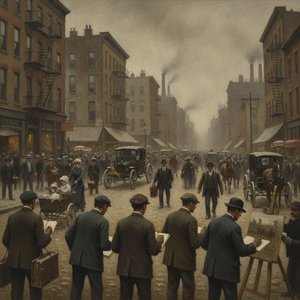
The Ashcan School: Capturing the Raw, Unfiltered Soul of Urban Life through American Realism
Discover the raw beauty of the Ashcan School. Explore how masters like Bellows and Henri captured the gritty, vibrant soul of early 20th-century New York through profound American Realism and evocative urban landscapes.
Istražite umetnička dela organizovana prema temama, stilovima i karakteristikama.
